Adhyaya 58: Gajendra’s Deliverance and the Protective Power of Remembrance (Japa)
गजेन्द्रमोक्षण-स्तोत्रकथनम् (Gajendramokṣaṇa-Stotra-Kathanam)
Power of Remembrance
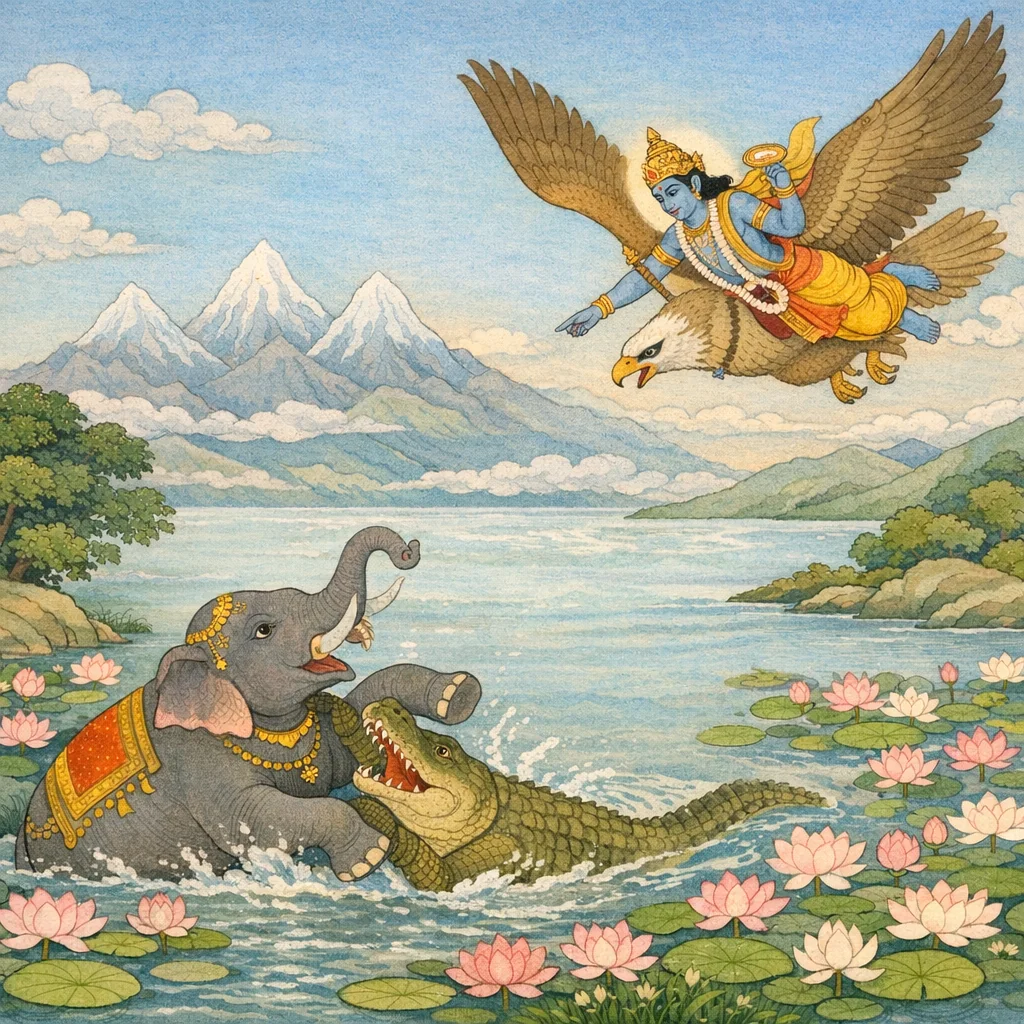
Within the Pulastya–Nārada dialogue-frame, this adhyāya enumerates four “japya” (recitable, recollectable) sacred units—beginning with the Gajendra-mokṣaṇa—whose hearing, recitation, and mindful recollection are said to destroy duḥsvapna (inauspicious dreams) and loosen pāpa-bandhana (bonds of sin). The narrative sanctifies a mythic landscape centered on Trikūṭa, a jewel-like mountain rising from the Kṣīroda (Milk Ocean), with iconographic luxuriance (three peaks associated with Sūrya, Candra, and a Brahma-sadana). In a lotus-lake on its slopes, the elephant-king is seized by a crocodile (a cursed Gandharva), and, through single-pointed Nārāyaṇa-parāyaṇatā, offers an extended stotra to Viṣṇu that also employs Śaiva epithets (e.g., “Śiva,” “Śānta”), exemplifying the Purāṇa’s syncretic theology. Viṣṇu arrives on Garuḍa, slays the grāha with the Sudarśana-cakra, grants liberation to both, and proclaims a mnemonic catalogue (Aśvattha, Bhāskara, Gaṅgā, Naimiṣāraṇya, etc.) whose remembrance yields auspiciousness and moral-ritual protection.
Divine Beings
Sacred Geography
Mortal & Asura Figures
Key Content Points
- Pulastya answers Nārada by listing four japya units; the first is the Gajendra-mokṣaṇa, explicitly linked to duḥsvapna-nāśa and pāpa-praśamana through śravaṇa, smaraṇa, and kīrtana.
- Topographical sanctification through a detailed cosmographic setting: Trikūṭa (son of Sumeru) with three radiant peaks and a lotus-filled lake encircled by divine beings and luxuriant flora/fauna.
- The Gajendra-stotra: a long hymn to Nārāyaṇa employing nirguṇa–saguṇa theology and occasional Śaiva honorifics, followed by Viṣṇu’s epiphany on Garuḍa, the cakra-slaying of the grāha, and liberation of both elephant and crocodile (Hūhū).
Shlokas in Adhyaya 58
Verse 3
गजेन्द्रमोक्षणं त्वादौ शृणुष्व तदनन्तरम् सारस्वतं ततः पुण्यौ पापप्रशमनौ स्तवौ
“First, listen to the account of the deliverance of Gajendra; thereafter (hear) the Sarasvata (account/praise). Then (I shall relate) two holy hymns that quell sins.”
Verse 4
सर्वरत्नमयः श्रीमांस्त्रिकूटो नाम पर्वतः सुतः पर्वतराजस्य सुमेरोर्भास्करद्युतेः
“There is a splendid mountain made of all jewels, named Trikūṭa—(said to be) a son of the king of mountains, Sumeru, radiant like the Sun.”
Verse 5
क्षीरोदजलवीच्यग्रैर्धैतामलशिलातलः उत्थितः सागरं भित्त्वा देवर्षिगणसेवितः
“Its rock-surface was washed/brightened by the crests of the waves of the Milk-Ocean’s waters; it rose up, splitting the ocean, and was attended by hosts of divine seers.”
Verse 6
अपसरोभिः परिवृतः श्रीमान् प्रस्वणाकुलः गन्धर्वैः किन्नरैर्यक्षैः सिद्धचारणपन्नगैः
The glorious (sacred place/lake-region), encircled by subsidiary lakes (or waters), is filled with resonant sounds; it is thronged with Gandharvas, Kinnaras, Yakṣas, Siddhas, Cāraṇas, and serpent-beings (Pannagas).
Verse 7
विद्याधरैः सपत्नीकैः संयतैश्च तपस्विभिः वृकद्वीपिगजेन्द्रश्च वृगात्रो विराजते
It shines with Vidyādharas accompanied by their wives, and with disciplined ascetics; and it is splendid with wolves, leopards, and lordly elephants, and with deer (or antelope) herds.
Verse 8
पुन्नागैः कर्णिकारैश्च बिल्वामलकपाटलैः चूतनीपकदम्बैश्च चन्दनागुरुचम्पकैः
(The region) is adorned with Punnāga and Karṇikāra trees, with Bilva, Āmalaka, and Pāṭalā; with mango (Cūta), Nīpa, and Kadamba; and with sandalwood, aguru (aloeswood), and Campaka.
Verse 9
शालैस्तालैस्तमालैश्च सरलार्जुनपर्पटैः तथान्यैर्विविधैर्वृक्षैः सर्वतः समलङ्कृतः
It was adorned on every side with śāla trees, tāla palms, tamāla trees, and with sarala pines, arjuna trees, and parpaṭa plants, as well as with many other kinds of trees.
Verse 10
नानाधात्वङ्कितैः शृङ्गैः प्रस्रवद्भिः समन्ततः शोभितो रुचिरप्रख्यैस्त्रिभिर्विस्तीर्णसानुभिः
It was beautified by peaks marked with many-colored mineral streaks, with streams flowing forth on all sides, and by three broad, expansive ridges renowned for their loveliness.
Verse 11
मृगैः शाखामृगैः सिंदैर्मातङ्गैश्च सदामदैः जीवञ्जीवकसंघुष्टैश्चकोरशिखिनादितैः
It resounded with deer, with monkeys (the ‘branch-deer’), with lions, and with elephants ever in rut; it was filled with the calls of jīvañjīvaka birds and with the cries of cakoras and peacocks.
Verse 12
तस्यैकं काञ्चनं शृङ्गं सेवते यं दिवाकरः नानापुष्पसमाकीर्णं नानागन्धाधिवासितम्
snow
Verse 13
द्वितीयं राजतं शृङ्गं सेवते यं निशाकरः पाण्डुराम्बुदसंकाशं तुषारचयसंनिभम्
The second peak is of silver; the Moon (Niśākara) attends upon it. It resembles a pale cloud and is like a mass of frost (or snow).
Verse 14
वज्रेन्द्रनीलवैडूर्यतेजोभिर्भासयन् दिशः तृतीयं ब्रह्मसदनं प्रकृष्टं शृङ्गमुत्तमम्
Illuminating the directions with the splendors of diamond, sapphire (indranīla), and beryl (vaiḍūrya), the third—an excellent, preeminent summit—is the abode of Brahmā.
Verse 15
न तत्कृतघ्नाः पश्यन्ति न नृशंसा न नास्तिकाः नातप्ततपसो लोके ये च पापकृतो जनाः
Those who are ungrateful (who destroy or deny benefits received) do not behold it; nor do the cruel, nor the unbelievers; nor those who have not undertaken austerities in the world; nor people who commit sinful acts.
Verse 17
कुमुदोत्पलकह्लारैः पुण्डरीकैश्च मण्डितम् कमलैः शतपत्रैश्च काञ्चनैः समलङ्कृतम्
It is adorned with kumuda, utpala, kahlāra, and puṇḍarīka lotuses; embellished with golden kamalas and hundred-petalled lotuses.
Verse 18
पत्रैर्मरकतप्रख्यैः पुष्पैः काञ्चनसंनिभैः गुल्मैः कीचकवेणूनां समन्तात् परिवेष्टितम्
[That lake] was encircled on all sides by thickets of kīcaka-bamboos, with leaves shining like emeralds and blossoms resembling gold.
Verse 19
तस्मिन् सरसि दुष्टात्मा विरूपो ऽन्तर्जलेशयः आसीद् ग्राहो गजेन्द्राणां रिपुराकेकरेक्षमः
ਬ੍ਰਾਹਮਣ ਨੇ ਕਿਹਾ—ਹੇ ਭਦ੍ਰ ਪੁਰਖ, ਦੱਸੋ ਕਿ ਕੀ ਕਰਨਾ ਹੈ; ਕਿਹੜੇ ਕਾਰਨ ਕਰਕੇ ਮੈਨੂੰ ਫੜਿਆ ਗਿਆ ਹੈ? ਉਹ ਗੱਲ ਮੈਨੂੰ ਸਾਫ਼ ਦੱਸੋ। ਤੁਹਾਡਾ ਭਲਾ ਹੋਵੇ; ਮੈਂ ਇੱਥੇ ਹਾਜ਼ਰ ਹਾਂ—ਹੁਣ ਮੈਨੂੰ ਉਪਦੇਸ਼ ਦਿਓ।
Verse 20
अथ दन्तोज्ज्वलमुखः कदाचिद् गजयूथपः मदस्रावी जलाकाङ्क्षी पादचारीव पर्वतः
Then, at some time, the leader of the elephant-herd—his face shining with tusks—oozing rut-fluid and longing for water, came on foot like a moving mountain.
Verse 21
वासयन्मदगन्धेन गिरिमैरावतोपमः गजो ह्यञ्जनसंकाशो मदाच्चलितलोचनः
“Scenting the mountain with the fragrance of his rut, that elephant—comparable to Airāvata—was dark like collyrium, his eyes unsteady from intoxication (musth).”
Verse 22
तृषितः पातुकामो ऽसौ अवतीर्णश्च तज्जलम् सलीलः पङ्कजवने यूथमध्यगतश्चरन्
“Thirsty and wishing to drink, he descended into that water. Moving playfully in the lotus-grove, he wandered about, having entered the midst of his herd.”
Verse 23
गृहीतस्तेन रौद्रेण ग्राहेणाव्यक्तमूर्तिना पश्यन्तीनां करेणूनां क्रोशन्तीनां च दारुणम्
{"cosmic_form_present": false, "three_steps_described": false, "step_one_bhuloka": null, "step_two_bhuvarloka": null, "step_three_svarloka": null, "cosmic_scale_imagery": null, "universe_measurement": null}
Verse 25
वेष्ट्यमानः सुघोरैस्तु पाशैर्नागो दृढैस्तथा विस्फूर्य च यथाशक्ति विक्रोसंश्च महारवान्
That nāga, being tightly wrapped by those very dreadful, firm nooses, thrashed about with all his strength and let out cries—great, resounding roars.
Verse 26
व्यथितः स निरुत्साहो गृहीतो घोरकर्मणा परमापदमापन्नो मनसाचिन्तयद्धरिम्
Afflicted and devoid of resolve, seized by that dreadful agent, having fallen into the utmost calamity, he contemplated Hari in his mind.
Verse 27
स तु नागवरः श्रीमन् नारायणपरायणः तमेव शरणं देवं गतः सर्वात्मना तदा
That foremost of Nāgas, O illustrious one, being wholly devoted to Nārāyaṇa, then went to that very God alone as his refuge, with his entire being.
Verse 28
एकात्मा निगृहीतात्मा विशुद्धेनान्तरात्मना जन्मजन्मान्तराभ्यासात् भक्तिमान् गरुडध्वजे
Single-minded, self-restrained, and inwardly purified in his inner self, through practice carried on across birth after birth, he became devoted to the One whose banner is Garuḍa.
Verse 29
नान्यं देवं महादेवात् पूजयामास केशवात् मथितामृतफेनाभं शङ्खचक्रगदाधरम्
{"has_teaching": true, "teaching_type": "dharma", "core_concept": "bālya-kṛta-pāpa and karmic consequence; possibility of mokṣa through prescribed means", "teaching_summary": "Even sins committed in childhood can mature into painful births/conditions; the speaker seeks the specific upāya that releases one from the karmic bondage and its resultant ‘wretched womb’.", "vedantic_theme": "karma-bandha and anugraha through right instruction (upadeśa) leading toward liberation", "practical_application": "Acknowledge wrongdoing without self-justification; seek competent guidance (dvija/ācārya) for expiations, vows, and tirtha-based remedies appropriate to one’s condition."}
Verse 32
नम आद्याय बीजाय आर्षेयाय प्रवर्तिने अन्तराय चैकाय अव्यक्ताय नमो नमः
Salutation to the Primordial One; to the Seed (the causal source); to the Vedic/ṛṣi-grounded One; to the Initiator (who sets creation and order in motion); to the Inner One; to the One alone; to the Unmanifest—salutation, salutation.
Verse 33
नमो गुह्याय गूढाय गुणाय गुणवर्तिने अप्रर्क्याप्रमेयाय अतुलाय नमो नमः
Salutation to the Mysterious One, the Hidden One; to Him who is (the very) Guṇa and who moves/operates through the guṇas; to the Unperceivable and Immeasurable One; to the Incomparable—salutation, salutation.
Verse 34
नमः शिवाय शान्ताय निश्चिन्ताय यशस्विने सनातनाय पूर्वाय पुराणाय नमो नमः
Salutation to Śiva, the Peaceful One; to the Carefree/Untroubled One; to the Glorious One; to the Eternal One; to the Primordial One; to the Ancient One—salutation, salutation.
Verse 35
नमो देवाधिदेवाय स्वभावाय नमो नमः नमो जगत्प्रतिष्ठाय गोविन्दाय नमो नमः
Salutation to the God above gods; salutation to the One whose very nature is (the ground of all). Salutation to the Support/Foundation of the universe; salutation to Govinda—salutation, salutation.
Verse 36
नमो ऽस्तु पदमनाभाय नमो योगोद्भवाय च विश्वेश्वराय देवाय शिवाय हरये नमः
Homage be to Padmanābha; homage also to Him who is born of Yoga. Homage to the Lord of the universe, the divine one—to Śiva, to Hari—homage.
Verse 37
नमो ऽस्तु तस्मै देवाय निर्गुणाय गुणात्मने नारायणाय विश्वाय देवानां परमात्मने
Homage to that God—without attributes, yet the very essence of attributes; to Nārāyaṇa, who is the universe; to the Supreme Self of the gods.
Verse 38
नमो नमः कारणवामनाय नारायणायामितविक्रमाय श्रीशार्ङ्गचक्रासिगदाधराय नमो ऽस्तु तस्मै पुरुषोत्तमाय
Repeated homage to Kāraṇa-Vāmana; to Nārāyaṇa of immeasurable stride; to Him who bears the auspicious Śārṅga bow, the discus, the sword, and the mace. Homage be to that Puruṣottama.
Verse ["Indra", "Pitṛs"]
गुह्याय वेदनिलयाय महोदराय सिंहाय दैत्यनिधनाय चतुर्भुजाय ब्रह्मेन्द्ररुद्रमुनिचारणसंस्तुताय देवोत्तमाय वरदाय नमो ऽच्युताय // वम्प्_58.39 नागेन्द्रदेहशयनासनसुप्रियाय गोक्षीरहेमशुकनीलघनोपमाय पीताम्बराय मधुकैटभनाशनाय विश्वाय चारुमुकुटाय नमो ऽजराय // वम्प्_58.40 नाभिप्रजातक्रमलस्थचतुर्मखाय श्रीरोदकार्णवनिकेतयशोधराय ना�Vamana Purana
Tirtha Mahima
Verse 48
कार्यं क्रिया कारणमप्रमेयं हिरण्यबाहुं वरपद्मनाभम् महाबलं वेदनिधिं सुरेशं व3जामि विष्णुं शरणं जनार्दनम्
I go for refuge to Viṣṇu, Janārdana—who is the effect, the action, and the cause; immeasurable; golden-armed; the excellent lotus-naveled one; of great might; the treasury of the Vedas; and the Lord of the gods.
Verse 54
त्रिविक्रमं त्रिलोकेशं सर्वेषां प्रपितामहम् योगात्मानं महात्मानं प्रपद्ये ऽहं जनार्दनम्
["Vishnu (Narayana)"]
Verse 57
एकाय लोकत्त्वाय परतः परमात्मने नमः सहस्रशिरसे अनन्ताय महात्मने
{"location": null, "location_type": null, "region": null, "sacred_significance": "Generalized theological stuti; not tied to a named tirtha in this verse.", "cosmic_realm": "svarloka"}
Verse 59
नमस्ते पुण्डरीकाक्ष भक्तानामभयप्रद सुब्रह्मण्य नमस्ते ऽस्तु त्राहि मां शरणागतम्
Salutations to you, Lotus-eyed One; giver of fearlessness to devotees. O supremely auspicious (and) most benevolent, salutations to you—protect me, who has come seeking refuge.
Verse 60
पुलस्त्य उवाच भक्तिं तस्यानुसंचिन्त्य नागस्यमोघसंभवः प्रीतिमानभवद् विष्णुः शङ्खचक्रगदाधरः
Pulastya said: Reflecting upon the devotion of that Nāga, Viṣṇu—whose manifestation is unfailing—became pleased, the bearer of conch, discus, and mace.
Verse 80
य इदं शृणुयान्तित्यं प्रातरुत्थाय मानवः प्राप्नुयात् परमां सिद्धिं दुःस्वप्नस्तस्य नश्यति
one is here and now immediately released from sin through (the account of) Gajendra’s deliverance."
Verse 82
एतत्पवित्रं परमं सुपुण्यं संकीर्तनीयं चरितं मुरारेः यस्मिन् किलोक्ते बहुपापबन्धनात् लभ्येत मोक्षो द्विरदेन यद्वत्
This is supremely purifying, exceedingly meritorious, and to be sung aloud—the sacred deed of Murāri. When it is indeed proclaimed, liberation is obtained from the many bonds of sin, just as (liberation was obtained) by the two-tusked one (the elephant, Gajendra).
Verse 83
अजं वरेण्यं वरपद्मनाभं नारायणं ब्रह्मनिधिं सुरेशम् तं देवगुह्यं पुरुषं पुराणं वन्दाम्यहं लोकपतिं वरेण्यम्
Vamana-Bali Narrative
Verse 84
पुलस्त्य उवाच एतत् तवोक्तं प्रवरं स्तवानां स्तवं मुरारेर्वरनागकीर्तनम् यं कीर्त्य संश्रुत्य तथा विचिन्त्य पापापनोदं पुरुषो लभेत
Pulastya to Nārada (narrative continuation into a moral-historical exemplum).
Frequently Asked Questions
Although the episode is decisively Vaiṣṇava (Nārāyaṇa’s epiphany, Sudarśana-cakra, Garuḍa), the Gajendra-stotra applies Śaiva epithets such as “Śiva” and “Śānta” to Viṣṇu, indicating a syncretic theology where auspiciousness (śivatva) and supreme lordship are not sectarian monopolies. The hymn’s nirguṇa–saguṇa language further supports a shared metaphysical horizon in which the supreme is beyond attributes yet approachable through devotion.
The adhyāya sacralizes a mythic pilgrimage-topography: Trikūṭa rising from the Kṣīroda-sāgara, its three luminous peaks (linked to Sūrya, Candra, and a Brahma-sadana), and a lotus-lake where the salvific event occurs. Additionally, Viṣṇu’s concluding mnemonic list (including Gaṅgā and Naimiṣāraṇya) functions as a portable tīrtha-map: remembrance itself becomes a ritual substitute that confers protection and auspicious dreaming.
The chapter foregrounds śaraṇāgati (total refuge) and bhakti as efficacious even in extremis: Gajendra’s single-minded recollection and stotra draw Viṣṇu’s immediate presence. The liberation of both victim (elephant) and aggressor (crocodile as cursed Hūhū) frames divine grace as both protective and purificatory, while repeated claims about śravaṇa–kīrtana–smaraṇa establish the episode as a japya text for pāpa-praśamana and duḥsvapna-nāśa.