Sarga 67
अयोध्यायां शोक-रात्रिः तथा अराजक-राष्ट्रस्य नीतिविचारः (The Night of Lamentation in Ayodhya and the Political Ethics of a Kingless Realm)
अयोध्याकाण्ड
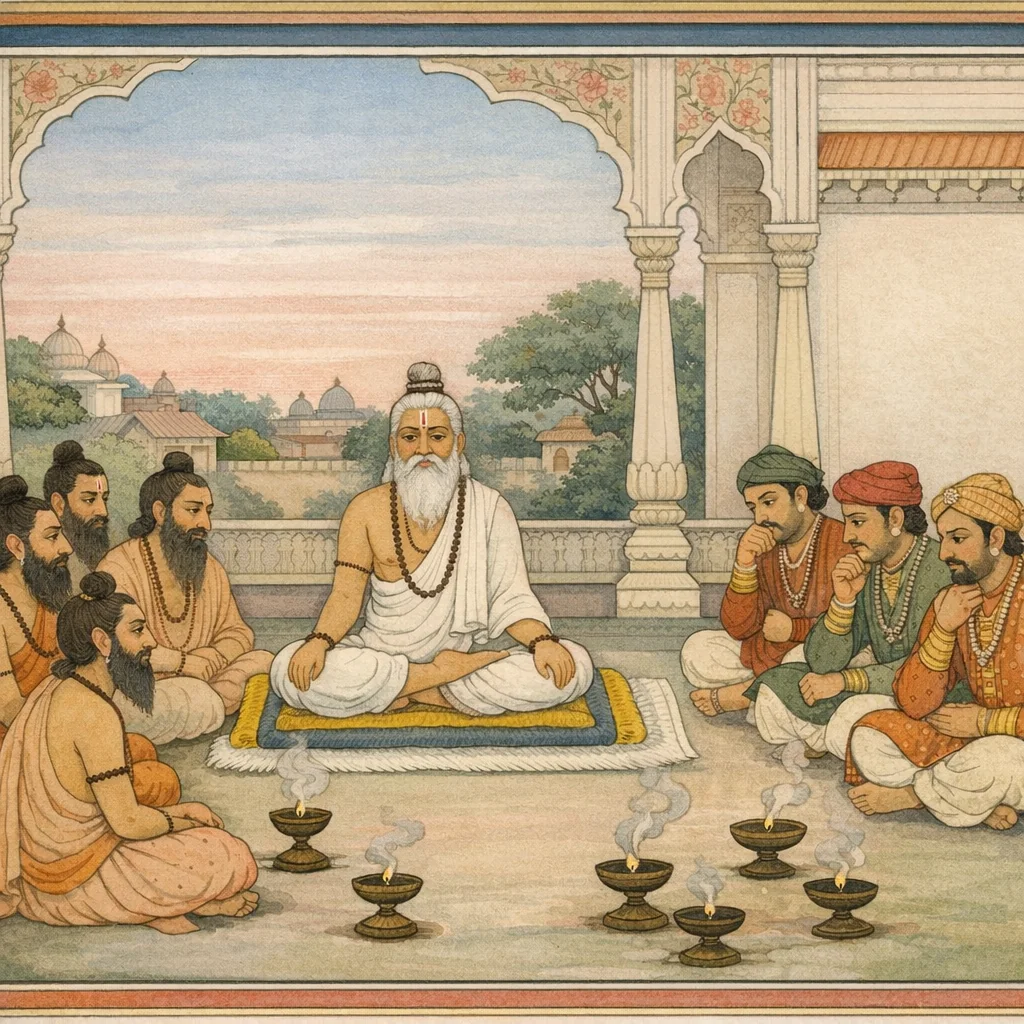
सर्गे अयोध्यायाः रात्रिः “आक्रन्दित-निरानन्दा” इति वर्ण्यते—दशरथ-निधनानन्तरं रामस्य वनवासे च नगरं शोकाकुलं भवति। प्रातःकाले राजाभिषेक-कर्तारः द्विजातयः सभां प्रविशन्ति, वसिष्ठं राजपुरोहितं प्रति मार्कण्डेय-प्रमुखाः ब्राह्मणाः तथा अमात्याः पृथक् मतानि निवेदयन्ति। केन्द्रीय-उपदेशः ‘अराजक’ स्थितेः सामाजिक-विघटनम्: वर्षा-नियमः, कृषिः, धन-सुरक्षा, न्याय-व्यवहारः, यज्ञ-प्रवृत्तिः, उत्सव-संस्कृतिः, व्यापार-मार्ग-सुरक्षा, सैन्य-प्रतिरोधः—एते सर्वे राजसत्ता-विना क्षीयन्ते इति क्रमशः प्रतिपाद्यते। उपमान-श्रृङ्खलया (नद्यः अनुदकाः, वनम् अतृणम्, गावः अगोपाला) राज्यस्य ‘पालक’ तत्त्वं स्पष्टं भवति। अन्ते राजा सत्य-धर्मयोः प्रभवः, माता-पिता-तुल्यः हितकरः इति राज-धर्म-मीमांसा स्थाप्य, इक्ष्वाकु-कुले कश्चित् कुमारः (व्यवहारतः भरतस्य आगमन-पूर्वं) अभिषेचनीय इति वसिष्ठं प्रति प्रार्थना क्रियते।
Shlokas
Verse 1
आक्रन्दितनिरानन्दा सास्रकण्ठजनाकुला।अयोध्यायामवतता सा व्यतीयाय शर्वरी।।।।
In Ayodhyā, joyless with wailing and crowded with people whose throats choked with tears, that night dragged on endlessly and at last passed away.
Verse 2
व्यतीतायां तु शर्वर्यामादित्यस्योदये ततः।समेत्य राजकर्तारः सभामीयुर्द्विजातयः।।।।
When the night had passed and the sun rose, the twice-born brahmins—those who conduct the rites of royal consecration—assembled and went to the council hall.
Verse 3
मार्कण्डेयोऽथ मौद्गल्यो वामदेवश्च काश्यपः।कात्यायनो गौतमश्च जाबालिश्च महायशाः।।।।एते द्विजा स्सहामात्यैः पृथग्वा च मुदीरयन्।वसिष्ठमेवाभिमुखाः श्रेष्ठं राजपुरोहितम्।।।।
Then Mārkaṇḍeya, Maudgalya, Vāmadeva, Kāśyapa, Kātyāyana, Gautama, and the renowned Jābāli—these brahmins, together with the ministers—approached Vasiṣṭha, the foremost royal priest, and voiced their respective views.
Verse 4
मार्कण्डेयोऽथ मौद्गल्यो वामदेवश्च काश्यपः।कात्यायनो गौतमश्च जाबालिश्च महायशाः।।2.67.3।।एते द्विजा स्सहामात्यैः पृथग्वा च मुदीरयन्।वसिष्ठमेवाभिमुखाः श्रेष्ठं राजपुरोहितम्।।2.67.4।।
Then Mārkaṇḍeya, Maudgalya, Vāmadeva, Kāśyapa, Kātyāyana, Gautama, and the renowned Jābāli—these brahmins, together with the ministers—approached Vasiṣṭha, the foremost royal priest, and voiced their respective views.
Verse 5
अतीता शर्वरी दुःखं या नो वर्षशतोपमा।अस्मिन्पञ्चत्वमापन्ने पुत्रशोकेन पार्थिवे।।।।
Since this king, consumed by grief for his son, has met death and returned to the five elements, the night that has passed has been for us a sorrowful one—like a hundred years.
Verse 6
स्वर्गतश्च महाराजो रामश्चारण्यमाश्रितः।लक्ष्मणश्चापि तेजस्वी रामेणैव गतस्सह।।।।
The great king has gone to heaven; Rāma has taken refuge in the forest; and radiant Lakṣmaṇa too has gone along with Rāma.
Verse 7
उभौ भरतशत्रुघ्नौ केकयेषु परन्तपौ।पुरे राजगृहे रम्ये मातामहनिवेशने।।।।
Both Bharata and Śatrughna, subduers of enemies, are in the Kekaya country—at the lovely city of Rājagṛha, in the residence of their maternal grandfather.
Verse 8
इक्ष्वाकूणामिहाद्यैव कश्चिद्राजा विधीयताम्।अराजकं हि नो राष्ट्रं विनाशं समवाप्नुयात्।।।।
Therefore, let someone from the line of Ikṣvāku be installed as king here, this very day; for a kingdom without a king would indeed fall into ruin.
Verse 9
नाराजके जनपदे विद्युन्माली महास्वनः।अभिवर्षति पर्जन्यो महीं दिव्येन वारिणा।।।।
In a land without a king, Parjanya—the thunderous one, wreathed with lightning—does not pour celestial rain upon the earth.
Verse 10
नाराजके जनपदे बीजमुष्टिः प्रकीर्यते।नाराजके पितुः पुत्रो भार्या वा वर्तते वशे।।।।
In a land without a king, not even a handful of seed is properly sown. In a kingless realm, even a son or a wife does not remain under the father’s guidance.
Verse 11
नाराजके धनं चास्ति नास्ति भार्या प्यराजके।इद मत्याहितं चान्यत्कुतस्सत्य मराजके।।।।
Where there is no king, wealth cannot truly endure; even a wife will not remain secure. And there is yet another grave danger: where could truth stand in a kingless land?
Verse 12
नाराजके जनपदे कारयन्ति सभां नराः।उद्यानानि च रम्याणि हृष्टाः पुण्यगृहाणि च।।।।
In a country without a king, people do not convene assemblies; nor, in joyful confidence, do they build delightful gardens and sacred edifices.
Verse 13
नाराजके जनपदे यज्ञशीला द्विजातयः।सत्राण्यन्वासते दान्ता ब्राह्मणा स्संशितव्रताः।।।।
In a country without a king, even self-controlled brahmins devoted to sacrifice—firm in their vows—do not continue the great sacrificial sessions (satra).
Verse 14
नाराजके जनपदे महायज्ञेषु यज्वनः।ब्राह्मणा वसुसम्पन्ना विसृजन्त्याप्तदक्षिणाः।।।।
In a country without a king, wealthy brahmins who sponsor great sacrifices do not distribute the due sacrificial fees and gifts to the officiating priests.
Verse 15
नाराजके जनपदे प्रभूतनटनर्तकाः।उत्सवाश्च समाजाश्च वर्धन्ते राष्ट्रवर्धनाः।।।।
In a country without a king, festivals and public gatherings—those that foster the realm’s well-being—do not flourish, nor do troupes of actors and dancers thrive.
Verse 16
नाराजके जनपदे सिद्धार्था व्यवहारिणः।कथाभिरनुरज्यन्ते कथाशीलाः कथाप्रियैः।।।।
In a country without a king, litigants do not attain success in their cases; and storytellers do not delight those who love listening to tales.
Verse 17
नाराजके जनपदे उद्यानानि समागताः।सायाह्ने क्रीडितुं यान्ति कुमार्यो हेमभूषिताः।।।।
In a country without a king, maidens adorned with gold—though gathered together—do not go in the evening to the gardens to play and enjoy themselves.
Verse 18
नाराजके जनपदे वाहनै शशीघ्रगामिभिः।नरा निर्यान्त्यरण्यानि नारीभिस्सह कामिनः।।।।
In a country without a king, pleasure-seeking men do not drive out with women in swift vehicles to the woods for recreation.
Verse 19
नाराजके जनपदे धनवन्तस्सुरक्षिताः।शेरते विवृतद्वाराः कृषिगोरक्षजीविनः।।।।
In a country without a king, even wealthy people who live by farming and cattle-rearing cannot sleep securely with their doors left open.
Verse 20
नाराजके जनपदे बद्धघण्टाविषाणिनः।अटन्ति राजमार्गेषु कुञ्जरा षष्टिहायनाः।।।।
In a country without a king, even sixty-year-old elephants, their tusks adorned with bells, do not roam about on the royal highways.
Verse 21
नाराजके जनपदे शरान्सन्ततमस्यताम्।श्रूयते तलनिर्घोष इष्वस्त्राणामुपासने।।।।
In a land without a king, the steady practice of archery and weapons declines—one no longer hears the sharp snap of the bowstring striking the protective hand-guard while arrows are loosed without pause.
Verse 22
नाराजके जनपदे वणिजो दूरगामिनः।गच्छन्ति क्षेममध्वानं बहुपण्यसमाचिताः।।।।
In a land without a king, merchants who travel far with many kinds of goods cannot proceed along the roads in safety.
Verse 23
नाराजके जनपदे चरत्येकचरो वशी।भावयन्नात्मनाऽत्मानं यत्र सायंगृहो मुनिः।।।।
In a land without a king, even a self-controlled ascetic—who usually wanders alone, absorbed in contemplation—does not travel about or find restful lodging by evening.
Verse 24
नाराजके जनपदे योगक्षेमं प्रवर्तते।नचाप्यराजके सेना शत्रून्विषहते युधि।।।।
In a land without a king, there is no secure enjoyment or protection of what people possess; and without kingship, the army too cannot withstand enemies in battle.
Verse 25
नाराजके जनपदे हृष्टैः परमवाजिभिः।नरास्संयान्ति सहसा रथैश्च परिमण्डिताः।।।।
In a land without a king, even well-adorned men do not set out briskly in fine chariots drawn by excellent horses; public confidence and festive vigor fade.
Verse 26
नाराजके जनपदे नराश्शास्त्रविशारदाः।संवदन्तोऽवतिष्ठन्ते वनेषूपवनेषु च।।।।
In a land without a king, people learned in the śāstras do not remain calmly in forests or pleasure-groves, conversing and debating; learning too loses its secure refuge.
Verse 27
नाराजके जनपदे माल्यमोदकदक्षिणाः।देवताभ्यर्चनार्थाय कल्प्यन्ते नियतैर्जनैः।।।।
In a land without a king, even disciplined and devout people do not duly arrange garlands, sweet offerings, and gifts for the worship of the gods.
Verse 28
नाराजके जनपदे चन्दनागरुरूषिताः।राजपुत्रा विराजन्ते वसन्त इव शाखिनः।।।।
In a land without a king, even princes anointed with sandal and agaru do not shine with splendor—like trees that fail to look like springtime bloom.
Verse 29
यथा ह्यनुदका नद्यः यथा वाऽप्यतृणं वनम्।अगोपाला यथा गावस्तथा राष्ट्रमराजकम्।।।।
A kingdom without a king is like rivers without water, a forest without grass, and cows without cowherds—its very life-support and guidance are gone.
Verse 30
ध्वजो रथस्य प्रज्ञानं धूमो ज्ञानं विभावसोः।तेषां यो नो ध्वजो राजा स देवत्वमितो गतः।।2.66.30।।
A banner is the sign by which a chariot is recognized; smoke is the sign by which fire is known. So too, the king was the distinguishing emblem by which we were known—and that king has now departed from here to the world of the gods.
Verse 30
ध्वजो रथस्य प्रज्ञानं धूमो ज्ञानं विभावसोः।तेषां यो नो ध्वजो राजा स देवत्वमितो गतः।।2.66.30।।
A banner is the sign by which a chariot is recognized; smoke is the sign by which fire is known. So too, the king was the distinguishing emblem by which we were known—and that king has now departed from here to the world of the gods.
Verse 31
नाराजके जनपदे स्वकं भवति कस्यचित्।मत्स्या इव नरा नित्यं भक्षयन्ति परस्परम्।।।।
In a country without a king, nothing truly remains anyone’s own; people, like fish, ceaselessly devour one another.
Verse 32
ये हि सम्भिन्नमर्यादा नास्तिकाश्छिन्नसंशयाः।तेऽपि भावाय कल्पन्ते राजदण्डनिपीडिताः।।।।
Even those who shatter moral boundaries—atheists who cast off all scruples—are still brought to right conduct when pressed by the king’s punishment.
Verse 33
यथा दृष्टि श्शरीरस्य नित्यमेव प्रवर्तते।तथा नरेन्द्रो राष्ट्रस्य प्रभवस्सत्यधर्मयोः।।।।
As sight constantly serves the body, so the king is the sustaining source of truth and righteousness for the realm.
Verse 34
राजा सत्यं च धर्मश्च राजा कुलवतां कुलम्।राजा माता पिता चैव राजा हितकरो नृणाम्।।।।
The king is truth and dharma; the king is the very standing of noble families. The king is mother and father as well—the king is the doer of welfare for the people.
Verse 35
यमो वैश्रवण श्शक्रः वरुणश्च महाबलः।विशेष्यन्ते नरेन्द्रेण वृत्तेन महता ततः।।।।
Therefore, by his great conduct, the king surpasses even mighty Yama, Vaiśravaṇa, Śakra (Indra), and Varuṇa.
Verse 36
अहो तम इवेदं स्यान्नप्रज्ञायेत किञ्चन।राजा चे न्न भवे ल्लोके विभज साध्वसाधुनी।।।।
Alas—this world would be like darkness, and nothing could be discerned, if there were no king to distinguish between good and evil deeds.
Verse 37
जीवत्यपि महाराजे तवैव वचनं वयम्।नातिक्रमामहे सर्वे वेलां प्राप्येव सागरः।।।।
Even while the great king lived, we all never transgressed your command—just as the ocean, upon reaching the shore, does not overstep its boundary.
Verse 38
स न स्समीक्ष्य द्विजवर्य वृत्तं नृपं विना राज्यमरण्यभूतम्।कुमारमिक्ष्वाकुसुतं वदान्यं त्वमेव राजानमिहाभिषिञ्च।।।।
Therefore, O best of brāhmaṇas, having considered what has occurred—and seeing that a kingdom without a king becomes like a forest—do you yourself consecrate here, as our king, the generous prince born of the Ikṣvāku line.
Frequently Asked Questions
The dilemma is immediate succession after Dasaratha’s death: elders argue that a kingdom without a king (arājaka) collapses into insecurity and moral disorder, so Vasistha should consecrate an Ikshvaku prince to prevent systemic breakdown.
The sarga teaches that rājā is an institutional guardian of satya and dharma: through danda (lawful punishment) and protection, even those inclined to transgress are restrained, enabling agriculture, ritual life, commerce, and truthful social relations to function.
Ayodhya and its sabhā (assembly hall) frame the political discourse; Kekaya’s Rajagriha is noted as Bharata and Shatrughna’s location; culturally, the text highlights abhiṣeka rites, yajña institutions, and public assemblies/utsavas as markers of an ordered polity.