Sarga 53
पञ्चाशत्तमः सर्गः (Sarga 53) — Rāma’s Lament, Vigil for Sītā, and Lakṣmaṇa’s Consolation
अयोध्याकाण्ड
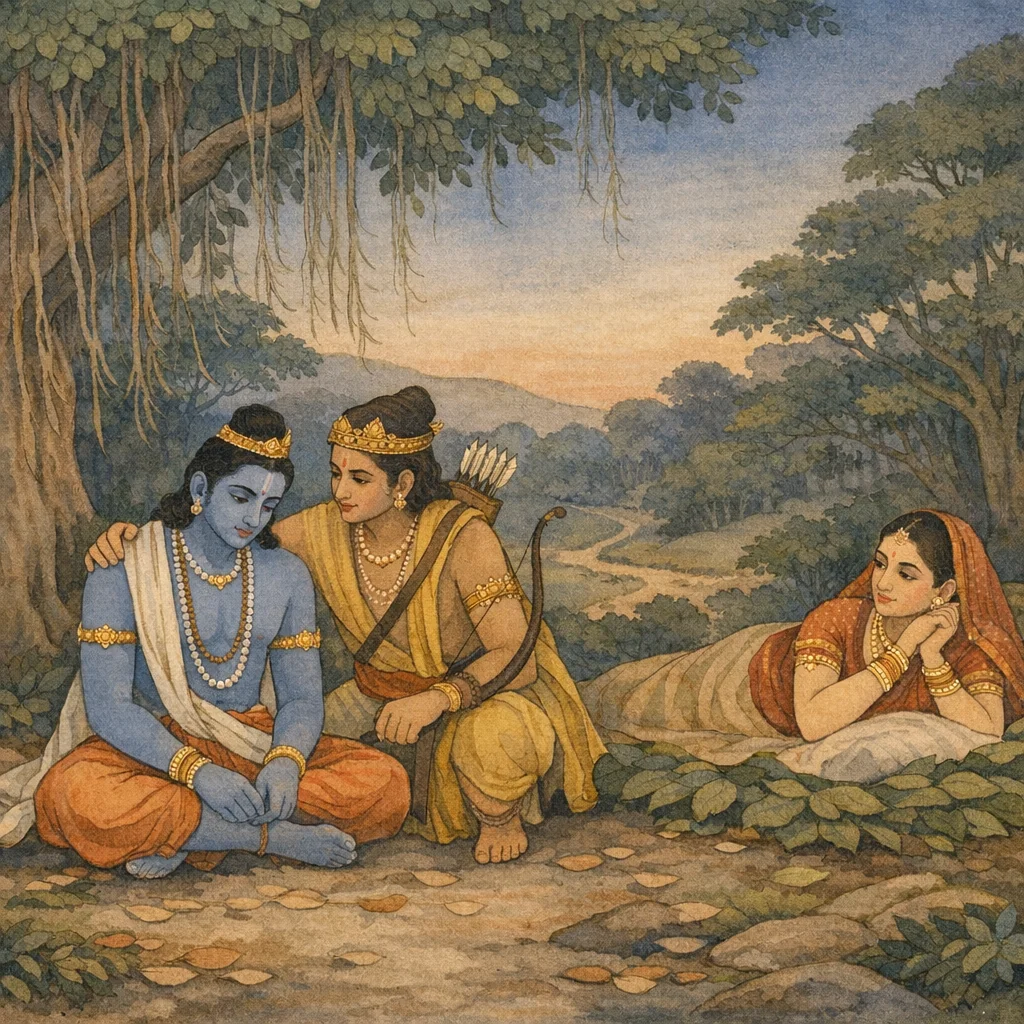
This sarga stages the first night outside settled habitation, framing exile as both ritual transition and ethical trial. Reaching a tree, Rāma performs the western sandhyā rites, then instructs Lakṣmaṇa on night vigilance because Sītā’s safety (yogakṣema) depends on them. Lying on the ground despite being fit for royal luxury, Rāma reflects on Ayodhyā: Daśaratha’s suffering, Kaikeyī’s ambition, and the political future in which Bharata may rule as sole chief. He articulates a governance lesson—kāma overpowering artha and dharma—and warns that a king abandoning righteousness for pleasure falls swiftly, as with Daśaratha’s present ruin. The lament turns inward: anxiety for Kauśalyā and Sumitrā, proposals that Lakṣmaṇa return to protect the mothers, and self-reproach for causing Kauśalyā grief at the moment of fruition. The discourse culminates in a restraint ethic: although Rāma claims the capacity to subdue Ayodhyā and the earth with arrows, he rejects purposeless display of force and declines coronation out of fear of adharma and concern for the other world. After Rāma falls silent with tears, Lakṣmaṇa counters with loyalty and encouragement, describing Ayodhyā as moonless without Rāma and insisting that neither he nor Sītā can live apart from him. The trio then settles on a prepared bed beneath a banyan (nyagrodha), and Rāma accepts Lakṣmaṇa’s resolve to share the full forest term by adhering to prescribed forest-dharma; the brothers remain fearless in the desolate wood, likened to lions.
Shlokas
Verse 1
स तं वृक्षं समासाद्य सन्ध्यामन्वास्यपश्चिमाम्।रामो रमयतां श्रेष्ठ इति होवाच लक्ष्मणम्।।।।
Reaching that tree, Rāma performed the evening Sandhyā facing the west; then Rāma—foremost among those who bring solace—spoke to Lakṣmaṇa.
Verse 2
अद्येयं प्रथमा रात्रिर्याता जनपदाद्बहिः।या सुमन्त्रेण रहिता तां नोत्कण्ठितुमर्हसि।।।।
This is the first night we must spend outside the inhabited country, and without Sumantra; yet you should not give way to anxiety over it.
Verse 3
जागर्तव्यमतन्द्रिभ्यामद्यप्रभृति रात्रिषु।योगक्षेमौ हि सीताया वर्तेते लक्ष्मणावयोः।।।।
O Lakṣmaṇa, from this day onward we must keep watch at night without negligence; for Sītā’s safety and well-being depend upon us both.
Verse 4
रात्रिं कथञ्चिदेवेमां सौमित्रे वर्तयामहे।अपावर्तामहे भूमावास्तीर्य स्वयमार्जितैः।।।।
O Saumitri (Lakṣmaṇa), we must somehow pass this night; we shall lie down upon the ground, spreading what we ourselves have gathered.
Verse 5
स तु संविश्य मेदिन्यां महार्हशयनोचितः।इमाः सौमित्रये रामो व्याजहार कथाः शुभाः।।।।
Though worthy of a costly couch, Rāma lay down upon the earth and spoke these wholesome words to Saumitri (Lakṣmaṇa).
Verse 6
ध्रुवमद्य महाराजो दुःखं स्वपिति लक्ष्मण।कृतकामा तु कैकेयी तुष्टा भवितुमर्हति।।।।
Surely tonight the great king sleeps in sorrow, O Lakṣmaṇa; but Kaikeyī, her desire accomplished, must be feeling satisfied.
Verse 7
सा हि देवी महाराजं कैकेयी राज्यकारणात्।अपि न च्यावयेत्प्राणान् दृष्ट्वा भरतमागतम्।।।।
For that queen Kaikeyī—on account of the kingdom—might even not refrain from endangering the great king’s life, once she sees Bharata returned.
Verse 8
अनाथश्च हि वृद्धश्च मया चैव विनाकृतः।किं करिष्यति कामात्मा कैकेयी वशमागतः।।।।
For he is old and, separated from me, left helpless—what can the king do, being desire-led and fallen under Kaikeyī’s control?
Verse 9
इदं व्यसनमालोक्य राज्ञश्च मतिविभ्रमम्।काम एवार्थधर्माभ्यां गरीयानिति मे मतिः।।।।
Seeing this calamity and the king’s confusion of judgment, I conclude that desire alone proves weightier than both wealth and righteousness.
Verse 10
को ह्यविद्वानपि पुमान् प्रमदायाः कृते त्यजेत्।छन्दानुवर्तिनं पुत्रं तातो मामिव लक्ष्मण।।।।
O Lakṣmaṇa, what man—even if unlearned—would abandon, for a woman’s sake, an obedient son like me, as my father has done?
Verse 11
सुखी बत सभार्यश्च भरतः केकयीसुतः।मुदितान् कोसलानेको यो भोक्ष्यत्यधिराजवत्।।।।
Bharata, Kaikeyī’s son—happy, and with his wife—will alone enjoy Kosala, its people rejoicing, like an emperor.
Verse 12
स हि सर्वस्य राज्यस्य मुखमेकं भविष्यति।ताते च वयसाऽतीते मयि चारण्यमास्थिते।।।।
For he will become the single head of the whole kingdom—since, dear one, my father is advanced in years and I have taken up life in the wilderness.
Verse 13
अर्थधर्मौ परित्यज्य य काममनुवर्तते।एवमापद्यते क्षिप्रं राजा दशरथो यथा।।।।
A king who casts aside artha and dharma and follows desire soon falls into calamity—just as King Daśaratha has done.
Verse 14
मन्ये दशरथान्ताय मम प्रव्राजनाय च।कैकेयी सौम्य सम्प्राप्ता राज्याय भरतस्य च।।।।
O gentle Lakṣmaṇa, I think Kaikeyī has come here for Daśaratha’s ruin, for my banishment, and for Bharata’s accession to the kingdom.
Verse 15
अपीदानीं तु कैकेयी सौभाग्यमदमोहिता।कौसल्यां च सुमित्रां च सम्प्रबाधेत मत्कृते।।।।
And now, will not Kaikeyī—deluded by the intoxication of her good fortune—torment Kausalyā and Sumitrā because of me?
Verse 16
मा स्म मत्कारणाद्देवी सुमित्रा दुःखमावसेत्।अयोध्यामित एव त्वं काल्ये प्रविश लक्ष्मण।।।।
Lakshmana, let not queen Sumitra suffer sorrow on my account; therefore, return from here itself and enter Ayodhya tomorrow morning.
Verse 17
अहमेको गमिष्यामि सीतया सह दण्डकान्।अनाथाया हि नाथस्त्वं कौशल्याया भविष्यसि।।।।
I shall go alone with Sita to the Dandaka forests; you must become the protector of Kausalya, who will be left without support.
Verse 18
क्षुद्रकर्मा हि कैकेयी द्वेष्यमन्याय्यमाचरेत्।परिदद्याहि धर्मज्ञे भरते मम मातरम्।।।।
For Kaikeyi, given to petty and cruel conduct, may commit hateful and unjust acts out of hostility; therefore, entrust my mother to Bharata, who knows dharma.
Verse 19
नूनं जात्यन्तरे कस्मिन् स्त्रियः पुत्रैर्वियोजिताः।जनन्या मम सौमित्रे तस्मादेतदुपस्थितम्।।।।
Lakshmana, surely in some former birth my mother separated women from their sons; therefore this calamity has now come upon her.
Verse 20
मया हि चिरपुष्टेन दुखसंवर्धितेन च।विप्रयुज्यत कौशल्या फलकाले धिगस्तु माम्।।।।
Kausalya, who nourished me long and raised me through hardship, is separated from me just when the time of fruition had come—shame upon me!
Verse 21
मा स्म सीमन्तिनी काचिज्जनयेत्पुत्रमीदृशम्।सौमित्रे योऽहमम्बाया दद्मि शोकमनन्तकम्।।।।
Lakshmana, since I am the kind of son who gives my mother endless grief, may no woman ever give birth to a son like me.
Verse 22
मन्ये प्रीतिविशिष्टा सा मत्तो लक्ष्मण शारिका।यस्यास्तच्छ्रूयते वाक्यं शुक पादमरेर्दश।।।।
Lakshmana, I think that my mother’s myna is dearer to her than I—for from her it is heard: ‘O parrot, bite the foot of the enemy!’
Verse 23
शोचन्त्या अल्पभाग्याया न किञ्चिदुपकुर्वता।पुत्रेण किमपुत्राया मया कार्यमरिन्दम।।।।
For my mother—grieving and ill-fated—what purpose is served by a son like me who can do nothing to help her, as though she were sonless? O subduer of foes!
Verse 24
अल्पभाग्या हि मे माता कौशल्या रहिता मया।शेते परमदुःखार्ता पतिता शोकसागरे।।।।
My mother Kausalya, bereft of me, is indeed ill-fated; overwhelmed by extreme sorrow, she must be lying as though fallen into an ocean of grief.
Verse 25
एको ह्यहमयोध्यां च पृथिवीं चापि लक्ष्मण।तरेयमिषुभिः क्रुद्धो ननु वीर्यमकारणम्।।।।
O Lakṣmaṇa, if I were enraged, I could, all alone, subdue Ayodhyā—even the whole earth—by my arrows. Yet to display one’s prowess without a just cause is not right.
Verse 26
अधर्मभयभीतश्च परलोकस्य चानघ।तेन लक्ष्मण नाद्याह मात्मानमभिषेचये।।।।
O blameless Lakṣmaṇa, fearing unrighteousness—and mindful also of the world beyond—therefore I did not have myself consecrated (as king) today.
Verse 27
एतदन्यश्च करुणं विलप्य विजने वने।अश्रुपूर्णमुखो रामो निशि तूष्णीमुपाविशत्।।।।
Lamenting thus—and in other piteous ways—in that lonely forest, Rāma, his face filled with tears, sat down in silence in the night.
Verse 28
विलप्योपरतं रामं गतार्चिषमिवानलम्।समुद्रमिव निर्वेगमाश्वासयत लक्ष्मणः।।।।
When Rāma ceased lamenting—like a fire whose flames have died down, like a sea grown still—Lakṣmaṇa comforted him.
Verse 29
ध्रुवमद्य पुरी राजन्नयोध्यायुधिनां वर।निष्प्रभा त्वयि निष्क्रान्ते गतचन्द्रेव शर्वरी।।।।
O King—best among weapon-bearers—surely today the city of Ayodhyā, since you have departed, is without splendor like a night bereft of the moon.
Verse 30
नैतदौपयिकं राम यदिदं परितप्यते।विषादयसि सीतां च मां चैव पुरुषर्षभ।।।।
This grief of yours is not fitting, O Rāma. O best of men, by such lamentation you dishearten Sītā—and me as well.
Verse 31
न च सीता त्वया हीना न चाहमपि राघव।मुहूर्तमपि जीवावो जलान्मत्स्याविनोद्धृतौ।।।।
O Rāghava, neither Sītā without you—nor I—could live even for a moment, like fish pulled out of water.
Verse 32
नहि तातं न शत्रुघ्नं न सुमित्रां परन्तप।द्रष्टुमिच्छेयमद्याहं स्वर्गं चापि त्वया विना।।।।
Without you, O tormentor of foes, I would wish to see neither father, nor Śatrughna, nor Sumitrā—nor even heaven itself.
Verse 33
ततस्तत्र सुखासीनौ नातिदूरे निरीक्ष्य ताम्।न्यग्रोधे सुकृतां शय्यां भेजाते धर्मवत्सलौ।।।।
Then, seated at ease there, the two—devoted to righteousness—seeing nearby a well-made resting place beneath a banyan tree, lay down upon that bed.
Verse 34
स लक्ष्मणस्योत्तमपुष्कलं वचोनिशम्य चैवं वनवासमादरात्।समाः समस्ता विदधे परन्तपःप्रपद्य धर्मं सुचिराय राघवः।।।।
Rāghava (Rāma), a tormentor of enemies, listened with affection to Lakṣmaṇa’s excellent and ample counsel; embracing the dharma proper to forest-dwelling, he granted him life in the forest for the full span of years, for a long time to come.
Verse 35
ततस्तु तस्मिन् विजने वने तदामहाबलौ राघववंशवर्धनौ।न तौ भयं सम्भ्रममभ्युपेयतुर्यथैव सिंहौ गिरिसानुगोचरौ।।।।
Then, in that lonely forest, those two mighty upholders of the Rāghava line did not succumb to fear or agitation—like two lions roaming the mountain slopes.
Frequently Asked Questions
Rāma confronts the tension between capability and legitimacy: he asserts he could overpower Ayodhyā and even the earth with his arrows, yet refuses to act from anger or seize power, choosing dharma and concern for moral consequence over coercive victory.
The sarga teaches that kāma can eclipse artha and dharma, destabilizing kingship and judgment; therefore, righteous restraint, ritual discipline (sandhyā), and responsible protection of dependents are superior to impulsive displays of strength.
Key markers include Ayodhyā and Kosala as the political homeland, the Daṇḍaka trajectory as the exile destination, and the cultural practices of western sandhyā worship and night vigilance; the nyagrodha (banyan) and forest campsite function as symbolic thresholds from court to wilderness-dharma.