Sarga 2
यौवराज्य-प्रस्तावः (Proposal for Rāma’s Installation as Heir-Apparent)
अयोध्याकाण्ड
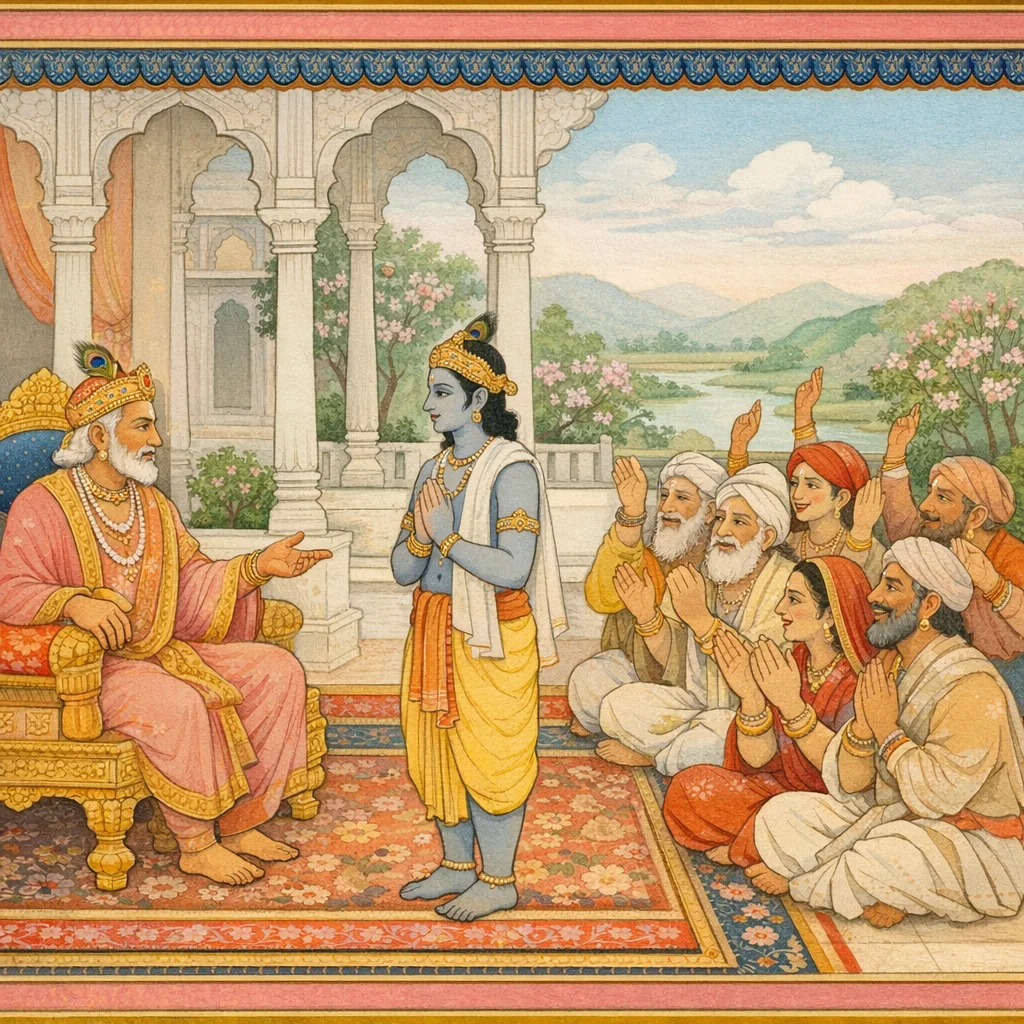
In the royal assembly, Daśaratha invites the full council and addresses allied kings with a deep, resonant, dignified voice. He frames his intent as welfare-oriented statecraft: having ruled vigilantly in the ancestral manner and feeling the weariness of age and the burden of dharma, he seeks rest by entrusting governance to his eldest son. He praises Rāma’s inherited virtues and proposes the auspicious timing of Puṣya for the yauvarājya. Requesting consent and even alternative counsel for the kingdom’s good, he invites deliberation. The gathered rulers and the public respond with acclaim, and a reverberant joy fills the palace. Brāhmaṇas, prominent citizens, and inhabitants of towns and villages deliberate to unanimity and urge immediate coronation. They then present an extended virtue-catalogue: Rāma’s truthfulness, self-mastery, compassion, rhetorical restraint, martial competence, concern for citizens, and capacity for universal rule. The chapter closes with a collective petition that Daśaratha install Rāma promptly for the welfare of the realm and the world.
Shlokas
Verse 1
ततः परिषदं सर्वामामन्त्र्य वसुधाधिपः।हितमुद्धर्षणं चैवमुवाच प्रथितं वचः।।2.2.1।।
Thereafter, the lord of the earth (Daśaratha), having convened the entire assembly, spoke renowned words—beneficial in intent and stirring in effect.
Verse 2
दुन्दुभिस्वनकल्पेन गम्भीरेणानुनादिना। स्वरेण महता राजा जीमूत इव नादयन्।।2.2.2।। राजलक्षणयुक्तेन कान्तेनानुपमेन च। उवाच रसयुक्तेन स्वरेण नृपतिर्नृपान्।।2.2.3।।
King Daśaratha, lord of men, addressed the assembled rulers in a great voice—deep and reverberant like the resonance of a kettledrum, like thunder-clouds that rumble. Endowed with the marks of royalty, his speech was attractive, incomparable, and richly pleasing as he spoke to the kings.
Verse 3
दुन्दुभिस्वनकल्पेन गम्भीरेणानुनादिना। स्वरेण महता राजा जीमूत इव नादयन्।।2.2.2।। राजलक्षणयुक्तेन कान्तेनानुपमेन च। उवाच रसयुक्तेन स्वरेण नृपतिर्नृपान्।।2.2.3।।
King Daśaratha, lord of men, addressed the assembled rulers in a great voice—deep and reverberant like the resonance of a kettledrum, like thunder-clouds that rumble. Endowed with the marks of royalty, his speech was attractive, incomparable, and richly pleasing as he spoke to the kings.
Verse 4
विदितं भवतामेतद्यथा मे राज्यमुत्तमम्।पूर्वकैर्मम राजेन्द्रैस्सुतवत्परिपालितम्।।2.2.4।।
You all know well how this excellent kingdom of mine was governed by my royal predecessors—great kings who protected their subjects as tenderly as their own children.
Verse 5
सोऽहमिक्ष्वाकुभि स्सर्वैर्नरेन्द्रैः परिपालितम्।श्रेयसा योक्तुकामोऽस्मि सुखार्हमखिलं जगत्।।2.2.5।।
I wish to secure the welfare of this entire world—worthy of happiness—long protected by all the kings of the Ikṣvāku line.
Verse 6
मयाप्याचरितं पूर्वैः पन्थानमनुगच्छता। प्रजा नित्यमनिद्रेण यथाशक्त्यभिरक्षिताः।।2.2.6।।
Following the path practiced by my forefathers, I have protected the people constantly, with sleepless vigilance, to the best of my ability.
Verse 7
इदं शरीरं कृत्स्नस्य लोकस्य चरता हितम्।पाण्डुरस्याऽतपत्रस्यच्छायायां जरितं मया।।2.2.7।।
This body of mine has grown old while I strove for the welfare of the entire world, ruling under the shade of the white royal parasol.
Verse 8
प्राप्य वर्षसहस्राणि बहून्यायूंषि जीवतः।जीर्णस्यास्य शरीरस्य विश्रान्तिमभिरोचये।।2.2.8।।
Having lived through many thousands of years and many spans of life, I see this body as worn down; therefore I desire rest.
Verse 9
राजप्रभावजुष्टां हि दुर्वहामजितेन्द्रियैः।परिश्रान्तोऽस्मि लोकस्य गुर्वीं धर्मधुरं वहन्।।2.2.9।।
For this heavy yoke of dharma in ruling the world is hard to bear for those whose senses are unconquered; carrying it, I have grown weary.
Verse 10
सोऽहं विश्रममिच्छामि पुत्रं कृत्वा प्रजाहिते।सन्निकृष्टानिमान्सर्वाननुमान्य द्विजर्षभान्।।2.2.10।।
Therefore, after winning the assent of all you foremost Brāhmaṇas assembled here, I wish to take rest, having installed my son for the welfare of the people.
Verse 11
अनुजातो हि मां सर्वैर्गुणैर्ज्येष्ठो ममात्मजः।पुरन्दरसमो वीर्ये रामः परपुरञ्जयः।।2.2.11।।
Indeed my eldest son Rāma has inherited all my virtues; in prowess he is equal to Purandara (Indra), a conqueror of hostile cities.
Verse 12
तं चन्द्रमिव पुष्येण युक्तं धर्मभृतां वरम्।यौवराज्ये नियोक्ताऽस्मि प्रीतः पुरुषपुङ्गवम्।।2.2.12।।
Pleased, I intend to appoint him as heir-apparent—him, the foremost of men, best among upholders of dharma—like the moon shining in conjunction with the Puṣya star.
Verse 13
अनुरूपस्स वै नाथो लक्ष्मीवान् लक्ष्मणाग्रजः।त्रैलोक्यमपि नाथेन येन स्यान्नाथवत्तरम्।।2.2.13।।
He—Lakṣmaṇa’s elder brother, endowed with royal excellence—is truly a fitting lord; with him as protector, even the three worlds would be better protected.
Verse 14
अनेन श्रेयसा सद्यस्संयोज्यैवमिमां महीम्।गतक्लेशो भविष्यामि सुते तस्मिन्निवेश्य वै।।2.2.14।।
By promptly entrusting this realm to that son, thus securing its good, I shall be free of anxiety and hardship.
Verse 15
यदिदं मेऽनुरूपार्थं मया साधु सुमन्त्रितम्।भवन्तो मेऽनुमन्यन्तां कथं वा करवाण्यहम्।।2.2.15।।
If this plan, fitting for me and well deliberated, seems right, then let you grant your approval; otherwise, tell me what I should do.
Verse 16
यद्यप्येषा मम प्रीतिर्हितमन्यद्विचिन्त्यताम्।अन्या मध्यस्थचिन्ता हि विमर्दाभ्यधिकोदया।।2.2.16।।
Though this is what pleases me, let another course—one that brings welfare—also be considered; for the reflection of impartial minds, through deliberation, yields greater benefit.
Verse 17
इति ब्रुवन्तं मुदिताः प्रत्यनन्दन्नृपा नृपम्।वृष्टिमन्तं महामेघं नर्दन्त इव बर्हिणः।।2.2.17।।
As he spoke thus, the kings joyfully acclaimed the king, like peacocks calling out at the sight of a great rain-bearing cloud.
Verse 18
स्निग्धोऽनुनादी संजज्ञे तत्र हर्षसमीरितः।जनौघोद्घुष्टसन्नादो विमानं कम्पयन्निव।।2.2.18।।
There arose an affectionate, echoing roar, stirred by joy—the tumult of a multitude’s shouts, as though it were shaking the palace itself.
Verse 19
तस्य धर्मार्थविदुषो भावमाज्ञाय सर्वशः।ब्राह्मणा जनमुख्याश्च पौरजानपदै स्सह।।2.2.19।।समेत्य मन्त्रयित्वा तु समतागतबुद्धयः।ऊचुश्च मनसा ज्ञात्वा वृद्धं दशरथं नृपम्।।2.2.20।।
Having fully understood the intention of Daśaratha—skilled in dharma and statecraft—Brāhmaṇas, leading citizens, and the people of town and countryside gathered together and deliberated. Reaching a single, unanimous view, they then addressed the aged King Daśaratha, having settled the matter in their minds.
Verse 20
तस्य धर्मार्थविदुषो भावमाज्ञाय सर्वशः।ब्राह्मणा जनमुख्याश्च पौरजानपदै स्सह।।2.2.19।।समेत्य मन्त्रयित्वा तु समतागतबुद्धयः।ऊचुश्च मनसा ज्ञात्वा वृद्धं दशरथं नृपम्।।2.2.20।।
Having fully understood the intention of Daśaratha—skilled in dharma and statecraft—Brāhmaṇas, leading citizens, and the people of town and countryside gathered together and deliberated. Reaching a single, unanimous view, they then addressed the aged King Daśaratha, having settled the matter in their minds.
Verse 21
अनेकवर्षसाहस्रो वृद्धस्त्वमसि पार्थिव।स रामं युवराजानमभिषिञ्चिस्व पार्थिवम्।।2.2.21।।
O king, you have become aged with the passing of countless years. Therefore, consecrate Rāma as yuvarāja—the ruler-to-be of the earth.
Verse 22
इच्छामो हि महाबाहुं रघुवीरं महाबलम्।गजेन महताऽयान्तं रामं छत्रावृताननम्।।2.2.22।।
Indeed, we long to see Rāma—the mighty-armed hero of the Raghus, powerful in strength—riding a great elephant, his face shaded beneath the royal parasol.
Verse 23
इति तद्वचनं श्रुत्वा राजा तेषां मनःप्रियं।अजानन्निव जिज्ञासुरिदं वचनमब्रवीत्।।2.2.23।।
Hearing those words—so pleasing to their hearts—the king spoke again, as though unaware, wishing to ascertain their intention more clearly.
Verse 24
श्रुत्वैव वचनं यन्मे राघवं पतिमिच्छथ।राजान स्संशयोऽयं मे किमिदं ब्रूत तत्त्वतः।।2.2.24।।
O kings, as soon as you heard my words, you wished Rāma of the Raghu line to be lord (king). Yet a doubt arises in me: tell me truly—does this come from your inmost conviction?
Verse 25
कथं नु मयि धर्मेण पृथिवीमनुशासति।भवन्तो द्रष्टुमिच्छन्ति युवराजं ममात्मजम्।।2.2.25।।
When I am governing the earth in accordance with dharma, why indeed do you wish to see my son installed as yuvarāja?
Verse 26
ते तमूचुर्महात्मानं पौरजानपदैस्सह।बहवो नृप कल्याणा गुणाः पुत्रस्य सन्ति ते।।2.2.26।।
They replied to the great-souled king, together with the townspeople and countryfolk: “O king, your son possesses many auspicious and admirable virtues.”
Verse 27
गुणान् गुणवतो देव देवकल्पस्य धीमतः।प्रियानानन्दनान्कृत्स्नान्प्रवक्ष्यामोऽद्य तान् शृणु।।2.2.27।।
O king, listen: today we shall set forth in full the virtues of that virtuous, wise prince—godlike in stature—virtues that are dear to all and bring delight.
Verse 28
दिव्यैर्गुणैश्शक्रसमो रामस्सत्यपराक्रमः।इक्ष्वाकुभ्योऽपि सर्वेभ्यो ह्यतिरिक्तो विशांपते।।2.2.28।।
O lord of the people, Rāma—endowed with divine virtues—is equal to Śakra (Indra). His valor is proven true; indeed, he stands distinguished even among all the Ikṣvāku descendants.
Verse 29
राम स्सत्पुरुषो लोके सत्यधर्मपरायणः।साक्षाद्रामाद्विनिर्वृत्तो धर्मश्चापि श्रिया सह।।2.2.29।।
In this world, Rāma is a true noble man, devoted to truth and righteousness; indeed, from Rāma himself, righteousness—along with prosperity—seems to flow forth directly.
Verse 30
प्रजासुखत्त्वे चन्द्रस्य वसुधायाः क्षमागुणैः।बुद्ध्या बृहस्पतेस्तुल्यो वीर्ये साक्षाच्छचीपतेः।।2.2.30।।
In bringing joy to the people he is like the Moon; in forbearance, like the Earth; in wisdom, equal to Bṛhaspati; and in valor, as if Indra himself.
Verse 31
धर्मज्ञः सत्यसन्धश्च शीलवाननसूयकः। क्षान्तः सान्त्वयिता श्लक्ष्णः कृतज्ञो विजितेन्द्रियः।।2.2.31।।
He knows dharma, keeps faith with his vows, is of fine conduct and free from envy; forbearing, consoling to others, gentle, grateful, and master of his senses.
Verse 32
मृदुश्च स्थिरचित्तश्च सदा भव्योऽनसूयकः।प्रियवादी च भूतानां सत्यवादी च राघवः।।2.2.32।।बहुश्रुतानां वृद्धानां ब्राह्मणानामुपासिता।तेनास्येहाऽतुला कीर्तिर्यशस्तेजश्च वर्धते।।2.2.33।।
Rāghava is gentle and steady-minded, ever gracious and free from envy; he speaks pleasingly to all beings and speaks the truth. He attends upon aged brāhmaṇas learned in many scriptures; therefore, in this world, his incomparable fame, renown, and splendor continue to grow.
Verse 33
मृदुश्च स्थिरचित्तश्च सदा भव्योऽनसूयकः।प्रियवादी च भूतानां सत्यवादी च राघवः।।2.2.32।।बहुश्रुतानां वृद्धानां ब्राह्मणानामुपासिता।तेनास्येहाऽतुला कीर्तिर्यशस्तेजश्च वर्धते।।2.2.33।।
Rāghava is gentle and steady-minded, ever gracious and free from envy; he speaks pleasingly to all beings and speaks the truth. He attends upon aged brāhmaṇas learned in many scriptures; therefore, in this world, his incomparable fame, renown, and splendor continue to grow.
Verse 34
देवासुरमनुष्याणां सर्वास्त्रेषु विशारदः।सम्यग्विद्याव्रतस्नातो यथावत्साङ्गवेदवित्।।2.2.34।।
He is expert in every weapon known among gods, asuras, and men; he has duly completed the disciplines of learning and properly knows the Vedas together with their auxiliaries.
Verse 36
द्विजैरभिविनीतश्च श्रेष्ठैर्धर्मार्थनैपुणैः।यदा व्रजति सङ्ग्रामं ग्रामार्थे नगरस्य वा।।2.2.36।।गत्वा सौमित्रिसहितो नाऽविजित्य निवर्तते।
Well trained by excellent brāhmaṇas skilled in dharma and statecraft, whenever he goes to battle for the sake of a village or a city, he goes with Saumitrī and does not return without victory.
Verse 37
सङ्ग्रामात्पुनरागम्य कुञ्जरेण रथेन वा।2.2.37।।पौरान् स्वजनवन्नित्यं कुशलं परिपृच्छति।।पुत्रेष्वग्निषु दारेषु प्रेष्यशिष्यगणेषु च।2.2.38।।निखिलेनानुपूर्व्याच्च पितापुत्रानिवौरसान्।।
Returning from battle, whether by elephant or chariot, he always asks after the citizens’ welfare as though they were his own kin—inquiring, in full detail and in proper order, about their children, sacred fires, wives, and their servants and pupils, like a father asking after his own sons.
Verse 38
सङ्ग्रामात्पुनरागम्य कुञ्जरेण रथेन वा।2.2.37।।पौरान् स्वजनवन्नित्यं कुशलं परिपृच्छति।।पुत्रेष्वग्निषु दारेषु प्रेष्यशिष्यगणेषु च।2.2.38।।निखिलेनानुपूर्व्याच्च पितापुत्रानिवौरसान्।।
Returning from battle, whether by elephant or chariot, he always asks after the citizens’ welfare as though they were his own kin—inquiring, in full detail and in proper order, about their children, sacred fires, wives, and their servants and pupils, like a father asking after his own sons.
Verse 39
शुश्रूषन्ते च व श्शिष्याः कच्चित्कर्मसु दंशिताः।।2.2.39।।इति नः पुरुषव्याघ्र स्सदा रामोऽभिभाषते।
“Do your disciples attend upon you and carry out their duties well?”—so, always, does Rāma, the tiger among men, inquire of us.
Verse 40
व्यसनेषु मनुष्याणां भृशं भवति दुःखितः।।2.2.40।।उत्सवेषु च सर्वेषु पितेव परितुष्यति।
In the misfortunes of the people he becomes deeply distressed; and in all their celebrations he rejoices like a father.
Verse 41
सत्यवादी महेष्वासो वृद्धसेवी जितेन्द्रियः।।2.2.41।।स्मितपूर्वाभिभाषी च धर्मं सर्वात्मना श्रितः।
He is a speaker of truth, a great archer, a servant of elders, and one who has conquered his senses; he speaks with a smile and, with his whole being, takes refuge in dharma.
Verse 42
सम्यग्योक्ता श्रेयसां च न विगृह्य कथारुचिः।।2.2.42।।उत्तरोत्तरयुक्तौ च वक्ता वाचस्पतिर्यथा।
He speaks rightly for what is beneficial, and he has no taste for talk that breeds division; yet in higher and higher reasoning and debate, he speaks like Vācaspati (Bṛhaspati).
Verse 43
सुभ्रूः आयतताम्राक्षः साक्षाद्विष्णुरिव स्वयम्।।2.2.43।। रामो लोकाभिरामोऽयं शौर्यवीर्यपराक्रमैः।
This Rāma—delightful to the whole world—has beautiful brows and long, copper-hued eyes; by his heroism, strength, and valor he is as though Viṣṇu himself made manifest.
Verse 44
प्रजापालनतत्त्वज्ञो न रागोपहतेन्द्रियः।।2.2.44।।शक्तस्त्रैलोक्यमप्येको भोक्तुं किन्नु महीमिमाम्।
He understands the true principles of protecting the people, and his senses are not overpowered by passion; alone he is capable of ruling even the three worlds—what then of this earth?
Verse 45
नास्य क्रोधः प्रसादश्च निरर्थोऽस्ति कदाचन।।2.2.45।।हन्त्येव नियमाद्वध्यानवध्ये न च कुप्यति।
Neither his anger nor his favor is ever without purpose: by rule and justice he punishes those who deserve punishment, and toward one who should not be harmed he does not grow wrathful.
Verse 46
युनक्त्यर्थैः प्रहृष्टश्च तमसौ यत्र तुष्यति।।2.2.46।।शान्तै स्सर्वप्रजाकान्तैः प्रीतिसञ्जननैर्नृणाम्।गुणैर्विरुरुचे रामो दीप्त स्सूर्य इवांशुभिः।।2.2.47।।
Whenever he is pleased, that Rāma gladly bestows wealth; and with tranquil virtues—beloved of all subjects and delight-giving to people—Rāma shines, like the radiant sun with its rays.
Verse 47
युनक्त्यर्थैः प्रहृष्टश्च तमसौ यत्र तुष्यति।।2.2.46।।शान्तै स्सर्वप्रजाकान्तैः प्रीतिसञ्जननैर्नृणाम्।गुणैर्विरुरुचे रामो दीप्त स्सूर्य इवांशुभिः।।2.2.47।।
Whenever he is pleased, that Rāma gladly bestows wealth; and with tranquil virtues—beloved of all subjects and delight-giving to people—Rāma shines, like the radiant sun with its rays.
Verse 48
तमेवंगुणसम्पन्नं रामं सत्यपराक्रमम्।लोकपालोपमं नाथमकामयत मेदिनी।।2.2.48।।
The Earth herself longed for Rama as her lord—so richly endowed with virtues, steadfast in proven valor, and comparable to the world’s guardian deities.
Verse 49
वत्सश्श्रेयसि जातस्ते दिष्ट्याऽसौ तव राघव।दिष्ट्या पुत्रगुणैर्युक्तो मारीच इव काश्यपः।।2.2.49।।
O Rāghava, by good fortune this son has been born to you for the sake of welfare—endowed, by good fortune, with the virtues an ideal son should possess, like Kāśyapa’s son Mārīca.
Verse 50
बलमारोग्यमायुश्च रामस्य विदितात्मनः। देवासुरमनुष्येषु सगन्धर्वोरगेषु च।।2.2.50।। आशंसते जनस्सर्वो राष्ट्रे पुरवरे तथा। आभ्यन्तरश्च बाह्यश्च पौरजानपदो जनः।।2.2.51।।
All people—among gods, asuras, humans, gandharvas, and nāgas—wish for Rama, whose worth is well known, strength, health, and long life; so too do the townsfolk and villagers, near and far, throughout the realm and the capital.
Verse 51
बलमारोग्यमायुश्च रामस्य विदितात्मनः। देवासुरमनुष्येषु सगन्धर्वोरगेषु च।।2.2.50।। आशंसते जनस्सर्वो राष्ट्रे पुरवरे तथा। आभ्यन्तरश्च बाह्यश्च पौरजानपदो जनः।।2.2.51।।
O Rāghava, by good fortune this son has been born to you for the sake of welfare—endowed, by good fortune, with the virtues an ideal son should possess, like Kāśyapa’s son Mārīca.
Verse 52
स्त्रियो वृद्धास्तरुण्यश्च सायं प्रातस्समाहिताः।सर्वान् देवान् नमस्यन्ति रामस्यार्थे यशस्विनः।।2.2.52।।
Women—both aged and young—steady in devotion at dusk and at dawn, bow to all the gods for the sake of illustrious Rama.
Verse 53
तेषामायाचितं देव त्वत्प्रसादात्समृद्ध्यताम्।राममिन्दीवरश्यामं सर्वशत्रुनिबर्हणम्।।2.2.53।।पश्यामो यौवराज्यस्थं तव राजोत्तमात्मजम्।
O King, by your favor may their prayer be fulfilled: may we see your son Rama—dark as the blue lotus, destroyer of all foes—installed in the office of prince-regent.
Verse 54
तं देव देवोपममात्मजं तेसर्वस्य लोकस्य हिते निविष्टम्।हिताय नः क्षिप्रमुदारजुष्टंमुदाऽभषेक्तुं वरद त्वमर्हसि।।2.2.54।।
O boon-giver, you ought—joyfully and without delay—to consecrate your son, godlike among men, devoted to the welfare of the whole world and inclined to noble virtues, as heir-apparent, for our good.
Frequently Asked Questions
Daśaratha’s pivotal action is initiating a lawful succession by proposing Rāma’s installation as heir-apparent; the ethical tension lies in balancing personal weariness and desire for rest with the public requirement of consent, deliberation, and welfare-based legitimacy.
The chapter teaches that stable governance depends on dharma-grounded qualifications (truth, self-control, compassion), transparent consultation, and collective assent; kingship is portrayed not as privilege but as a duty accountable to public welfare.
The setting is the Ayodhyā court-assembly (parिषद्/सभा) with coronation culture-markers such as the Puṣya nakṣatra timing, the abhिषेक rite, royal parasol (छत्र), and public processional imagery (elephant and chariot).