Adhyaya 68
Balarāma Humbles the Kurus and Rescues Sāmba
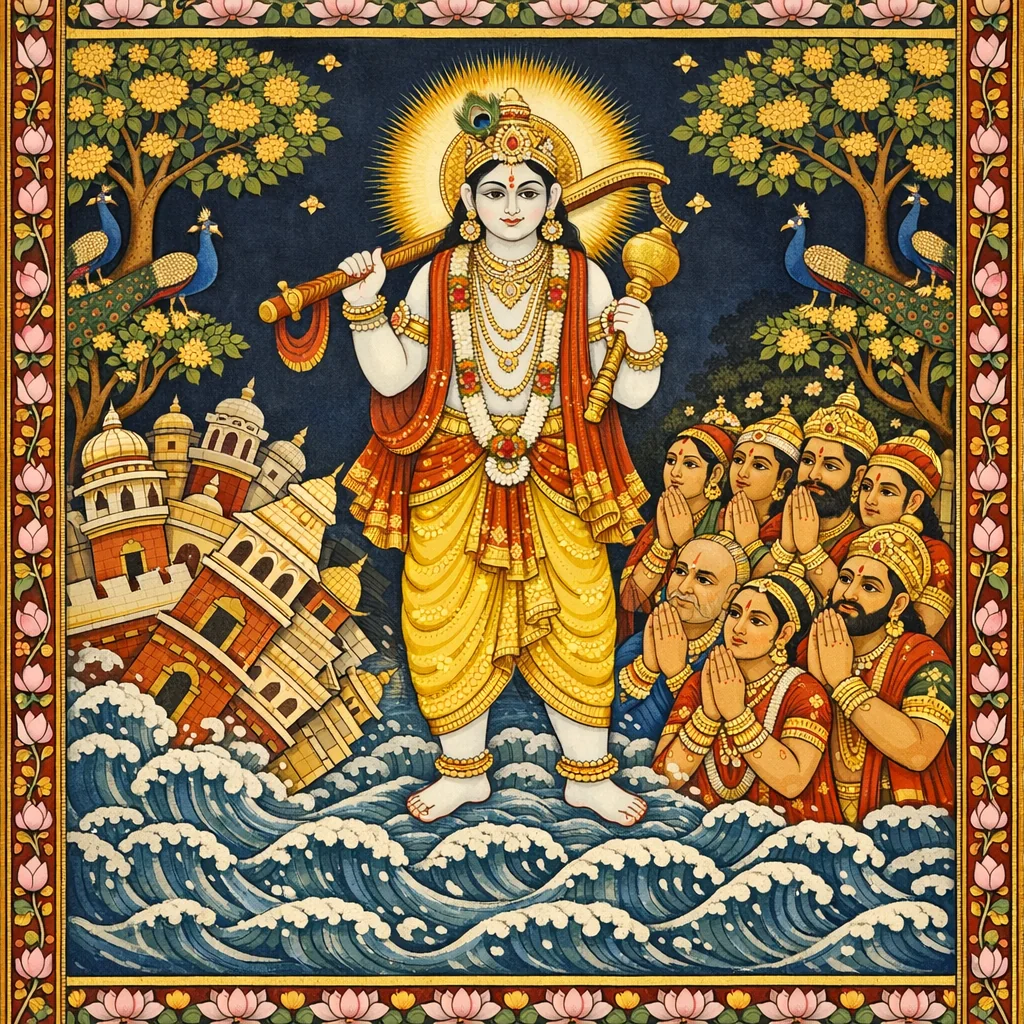
Following the broader Dvārakā-cycle of Yadu affairs and royal diplomacy in the late Tenth Canto, this chapter turns to a crisis triggered by Sāmba, son of Jāmbavatī, who abducts Lakṣmaṇā, Duryodhana’s daughter, from her svayaṁvara. The Kurus, inflamed by dynastic pride, denounce the Yadus as beneficiaries of Kuru “grace,” arrest Sāmba, and reclaim the princess. When Nārada informs the Yādavas, they prepare to retaliate, but Baladeva restrains them to prevent a ruinous internecine war. He personally goes to Hastināpura with elders and brāhmaṇas, sends Uddhava to assess intentions, and delivers Ugrasena’s demand—tempered by tolerance for the sake of family unity. The Kurus respond with contempt, provoking Baladeva’s righteous fury: He drags Hastināpura toward the Gaṅgā with His plow, forcing the terrified Kurus to surrender with Sāmba and Lakṣmaṇā brought forward. Pacified, Baladeva accepts their submission; Duryodhana gives an immense dowry, and Baladeva returns to Dvārakā, reporting the settlement—setting the stage for continued political-realistic tensions around Yadu–Kuru relations while reaffirming divine sovereignty over royal arrogance.
Shlokas
Verse 1
श्रीशुक उवाच दुर्योधनसुतां राजन् लक्ष्मणां समितिंजय: । स्वयंवरस्थामहरत् साम्बो जाम्बवतीसुत: ॥ १ ॥
Śukadeva Gosvāmī said: O King, Jāmbavatī’s son Sāmba, ever victorious in battle, kidnapped Duryodhana’s daughter Lakṣmaṇā from her svayaṁvara ceremony.
Verse 2
कौरवा: कुपिता ऊचुर्दुर्विनीतोऽयमर्भक: । कदर्थीकृत्य न: कन्यामकामामहरद् बलात् ॥ २ ॥
The angry Kurus said: This ill-behaved boy has offended us, forcibly kidnapping our unmarried daughter against her will.
Verse 3
बध्नीतेमं दुर्विनीतं किं करिष्यन्ति वृष्णय: । येऽस्मत्प्रसादोपचितां दत्तां नो भुञ्जते महीम् ॥ ३ ॥
Arrest this ill-behaved Sāmba! What will the Vṛṣṇis do? By our grace they are ruling land that we have granted them.
Verse 4
निगृहीतं सुतं श्रुत्वा यद्येष्यन्तीह वृष्णय: । भग्नदर्पा: शमं यान्ति प्राणा इव सुसंयता: ॥ ४ ॥
If the Vṛṣṇis come here when they learn that their son has been captured, we will break their pride. Thus they’ll become subdued, like bodily senses brought under strict control.
Verse 5
इति कर्ण: शलो भूरिर्यज्ञकेतु: सुयोधन: । साम्बमारेभिरे योद्धुं कुरुवृद्धानुमोदिता: ॥ ५ ॥
After saying this and having their plan sanctioned by the senior member of the Kuru dynasty, Karṇa, Śala, Bhūri, Yajñaketu and Suyodhana set out to attack Sāmba.
Verse 6
दृष्ट्वानुधावत: साम्बो धार्तराष्ट्रान् महारथ: । प्रगृह्य रुचिरं चापं तस्थौ सिंह इवैकल: ॥ ६ ॥
Seeing Duryodhana and his companions rushing toward him, Sāmba, the great chariot-fighter, took up his splendid bow and stood alone like a lion.
Verse 7
तं ते जिघृक्षव: क्रुद्धास्तिष्ठ तिष्ठेति भाषिण: । आसाद्य धन्विनो बाणै: कर्णाग्रण्य: समाकिरन् ॥ ७ ॥
Determined to capture him, the angry bowmen led by Karṇa shouted at Sāmba, ‘Stand and fight! Stand and fight!’ They came straight for him and showered him with arrows.
Verse 8
सोऽपविद्ध: कुरुश्रेष्ठ कुरुभिर्यदुनन्दन: । नामृष्यत्तदचिन्त्यार्भ: सिंह क्षुद्रमृगैरिव ॥ ८ ॥
O best of the Kurus, as Kṛṣṇa’s son Sāmba was being unjustly harassed by the Kurus, that darling of the Yadu dynasty did not tolerate their attack, any more than a lion would tolerate an attack by puny animals.
Verse 9
विस्फूर्ज्य रुचिरं चापं सर्वान् विव्याध सायकै: । कर्णादीन् षड्रथान् वीरस्तावद्भिर्युगपत् पृथक् ॥ ९ ॥ चतुर्भिश्चतुरो वाहानेकैकेन च सारथीन् । रथिनश्च महेष्वासांस्तस्य तत्तेऽभ्यपूजयन् ॥ १० ॥
Twanging his wonderful bow, heroic Sāmba struck with arrows the six warriors headed by Karṇa. He pierced the six chariots with as many arrows, each team of four horses with four arrows, and each chariot driver with a single arrow, and he similarly struck the great bowmen who commanded the chariots. The enemy warriors congratulated Sāmba for this display of prowess.
Verse 10
विस्फूर्ज्य रुचिरं चापं सर्वान् विव्याध सायकै: । कर्णादीन् षड्रथान् वीरस्तावद्भिर्युगपत् पृथक् ॥ ९ ॥ चतुर्भिश्चतुरो वाहानेकैकेन च सारथीन् । रथिनश्च महेष्वासांस्तस्य तत्तेऽभ्यपूजयन् ॥ १० ॥
Twanging his wonderful bow, heroic Sāmba struck with arrows the six warriors headed by Karṇa. He pierced the six chariots with as many arrows, each team of four horses with four arrows, and each chariot driver with a single arrow, and he similarly struck the great bowmen who commanded the chariots. The enemy warriors congratulated Sāmba for this display of prowess.
Verse 11
तं तु ते विरथं चक्रुश्चत्वारश्चतुरो हयान् । एकस्तु सारथिं जघ्ने चिच्छेदान्य: शरासनम् ॥ ११ ॥
But they forced him down from his chariot, and thereupon four of them struck his four horses, one of them struck down his chariot driver, and another broke his bow.
Verse 12
तं बद्ध्वा विरथीकृत्य कृच्छ्रेण कुरवो युधि । कुमारं स्वस्य कन्यां च स्वपुरं जयिनोऽविशन् ॥ १२ ॥
Having deprived Sāmba of his chariot during the fight, the Kuru warriors tied him up with great difficulty and then returned victorious to their city, taking the young boy and their princess.
Verse 13
तच्छ्रुत्वा नारदोक्तेन राजन् सञ्जातमन्यव: । कुरून् प्रत्युद्यमं चक्रुरुग्रसेनप्रचोदिता: ॥ १३ ॥
O King, when the Yādavas heard news of this from Śrī Nārada, they became angry. Urged on by King Ugrasena, they prepared for war against the Kurus.
Verse 14
सान्त्वयित्वा तु तान् राम: सन्नद्धान् वृष्णिपुङ्गवान् । नैच्छत् कुरूणां वृष्णीनां कलिं कलिमलापह: ॥ १४ ॥ जगाम हास्तिनपुरं रथेनादित्यवर्चसा । ब्राह्मणै: कुलवृद्धैश्च वृतश्चन्द्र इव ग्रहै: ॥ १५ ॥
Lord Balarāma, however, cooled the tempers of the Vṛṣṇi heroes, who had already put on their armor. He who purifies the age of quarrel did not want a quarrel between the Kurus and Vṛṣṇis. Thus, accompanied by brāhmaṇas and family elders, He went to Hastināpura on His chariot, which was as effulgent as the sun. As He went, He appeared like the moon surrounded by the ruling planets.
Verse 15
सान्त्वयित्वा तु तान् राम: सन्नद्धान् वृष्णिपुङ्गवान् । नैच्छत् कुरूणां वृष्णीनां कलिं कलिमलापह: ॥ १४ ॥ जगाम हास्तिनपुरं रथेनादित्यवर्चसा । ब्राह्मणै: कुलवृद्धैश्च वृतश्चन्द्र इव ग्रहै: ॥ १५ ॥
Lord Balarāma, however, cooled the tempers of the Vṛṣṇi heroes, who had already put on their armor. He who purifies the age of quarrel did not want a quarrel between the Kurus and Vṛṣṇis. Thus, accompanied by brāhmaṇas and family elders, He went to Hastināpura on His chariot, which was as effulgent as the sun. As He went, He appeared like the moon surrounded by the ruling planets.
Verse 16
गत्वा गजाह्वयं रामो बाह्योपवनमास्थित: । उद्धवं प्रेषयामास धृतराष्ट्रं बुभुत्सया ॥ १६ ॥
Upon arriving at Hastināpura, Lord Balarāma remained in a garden outside the city and sent Uddhava ahead to probe King Dhṛtarāṣṭra’s intentions.
Verse 17
सोऽभिवन्द्याम्बिकापुत्रं भीष्मं द्रोणं च बाह्लिकम् । दुर्योधनं च विधिवद् राममागतमब्रवीत् ॥ १७ ॥
After he had offered proper respects to the son of Ambikā [Dhṛtarāṣṭra] and to Bhīṣma, Droṇa, Bāhlika and Duryodhana, Uddhava informed them that Lord Balarāma had arrived.
Verse 18
तेऽतिप्रीतास्तमाकर्ण्य प्राप्तं रामं सुहृत्तमम् । तमर्चयित्वाभिययु: सर्वे मङ्गलपाणय: ॥ १८ ॥
Overjoyed to hear that Balarāma, their dearmost friend, had come, they first honored Uddhava and then went forth to meet the Lord, carrying auspicious offerings in their hands.
Verse 19
तं सङ्गय यथान्यायं गामर्घ्यं च न्यवेदयन् । तेषां ये तत्प्रभावज्ञा: प्रणेमु: शिरसा बलम् ॥ १९ ॥
They approached Lord Balarāma and worshiped Him with gifts of cows and arghya, as was fitting. Those among the Kurus who understood His true power bowed down to Him, touching their heads to the ground.
Verse 20
बन्धून् कुशलिन: श्रुत्वा पृष्ट्वा शिवमनामयम् । परस्परमथो रामो बभाषेऽविक्लवं वच: ॥ २० ॥
After both parties had heard that their relatives were doing well and both had inquired into each other’s welfare and health, Lord Balarāma forthrightly spoke to the Kurus as follows.
Verse 21
उग्रसेन: क्षितेशेशो यद् व आज्ञापयत् प्रभु: । तदव्यग्रधिय: श्रुत्वा कुरुध्वमविलम्बितम् ॥ २१ ॥
[Lord Balarāma said:] King Ugrasena is our master and the ruler of kings. With undivided attention you should hear what he has ordered you to do, and then you should do it at once.
Verse 22
यद् यूयं बहवस्त्वेकं जित्वाधर्मेण धार्मिकम् । अबध्नीताथ तन्मृष्ये बन्धूनामैक्यकाम्यया ॥ २२ ॥
[King Ugrasena has said:] Even though by irreligious means several of you defeated a single opponent who follows the religious codes, still I am tolerating this for the sake of unity among family members.
Verse 23
वीर्यशौर्यबलोन्नद्धमात्मशक्तिसमं वच: । कुरवो बलदेवस्य निशम्योचु: प्रकोपिता: ॥ २३ ॥
Upon hearing these words of Lord Baladeva’s, which were full of potency, courage and strength and were appropriate to His transcendental power, the Kauravas became furious and spoke as follows.
Verse 24
अहो महच्चित्रमिदं कालगत्या दुरत्यया । आरुरुक्षत्युपानद् वै शिरो मुकुटसेवितम् ॥ २४ ॥
[The Kuru nobles said:] Oh, how amazing this is! The force of time is indeed insurmountable: a lowly shoe now wants to climb on the head that bears the royal crown.
Verse 25
एते यौनेन सम्बद्धा: सहशय्यासनाशना: । वृष्णयस्तुल्यतां नीता अस्मद्दत्तनृपासना: ॥ २५ ॥
It is because these Vṛṣṇis are bound to us by marital ties that we have granted them equality, allowing them to share our beds, seats and meals. Indeed, it is we who have given them their royal thrones.
Verse 26
चामरव्यजने शङ्खमातपत्रं च पाण्डुरम् । किरीटमासनं शय्यां भुञ्जतेऽस्मदुपेक्षया ॥ २६ ॥
Only because we looked the other way could they enjoy the pair of yak-tail fans and the conchshell, white umbrella, throne, and royal bed.
Verse 27
अलं यदूनां नरदेवलाञ्छनै- र्दातु: प्रतीपै: फणिनामिवामृतम् । येऽस्मत्प्रसादोपचिता हि यादवा आज्ञापयन्त्यद्य गतत्रपा बत ॥ २७ ॥
No longer should the Yadus be allowed to use these royal symbols, which now cause trouble for those who gave them, like milk fed to poisonous snakes. Having prospered by our grace, these Yādavas have now lost all shame and are daring to command us!
Verse 28
कथमिन्द्रोऽपि कुरुभिर्भीष्मद्रोणार्जुनादिभि: । अदत्तमवरुन्धीत सिंहग्रस्तमिवोरण: ॥ २८ ॥
How would even Indra dare usurp anything that Bhīṣma, Droṇa, Arjuna or the other Kurus have not given him? It would be like a lamb claiming the lion’s kill.
Verse 29
श्रीबादरायणिरुवाच जन्मबन्धुश्रियोन्नद्धमदास्ते भरतर्षभ । आश्राव्य रामं दुर्वाच्यमसभ्या: पुरमाविशन् ॥ २९ ॥
Śrī Bādarāyaṇi said: O best of the Bhāratas, after the arrogant Kurus, thoroughly puffed up by the opulence of their high birth and relations, had spoken these harsh words to Lord Balarāma, they turned and went back to their city.
Verse 30
दृष्ट्वा कुरूणां दौ:शील्यं श्रुत्वावाच्यानि चाच्युत: । अवोचत् कोपसंरब्धो दुष्प्रेक्ष्य: प्रहसन् मुहु: ॥ ३० ॥
Seeing the bad character of the Kurus and hearing their nasty words, the infallible Lord Balarāma became filled with rage. His countenance frightful to behold, He laughed repeatedly and spoke as follows.
Verse 31
नूनं नानामदोन्नद्धा: शान्तिं नेच्छन्त्यसाधव: । तेषां हि प्रशमो दण्ड: पशूनां लगुडो यथा ॥ ३१ ॥
[Lord Balarāma said:] “Clearly the many passions of these scoundrels have made them so proud that they do not want peace. Then let them be pacified by physical punishment, as animals are with a stick.
Verse 32
अहो यदून् सुसंरब्धान् कृष्णं च कुपितं शनै: । सान्त्वयित्वाहमेतेषां शममिच्छन्निहागत: ॥ ३२ ॥ त इमे मन्दमतय: कलहाभिरता: खला: । तं मामवज्ञाय मुहुर्दुर्भाषान् मानिनोऽब्रुवन् ॥ ३३ ॥
“Ah, only gradually was I able to calm the furious Yadus and Lord Kṛṣṇa, who was also enraged. Desiring peace for these Kauravas, I came here. But they are so dull-headed, fond of quarrel and mischievous by nature that they have repeatedly disrespected Me. Out of conceit they dared to address Me with harsh words!
Verse 33
अहो यदून् सुसंरब्धान् कृष्णं च कुपितं शनै: । सान्त्वयित्वाहमेतेषां शममिच्छन्निहागत: ॥ ३२ ॥ त इमे मन्दमतय: कलहाभिरता: खला: । तं मामवज्ञाय मुहुर्दुर्भाषान् मानिनोऽब्रुवन् ॥ ३३ ॥
“Ah, only gradually was I able to calm the furious Yadus and Lord Kṛṣṇa, who was also enraged. Desiring peace for these Kauravas, I came here. But they are so dull-headed, fond of quarrel and mischievous by nature that they have repeatedly disrespected Me. Out of conceit they dared to address Me with harsh words!
Verse 34
नोग्रसेन: किल विभुर्भोजवृष्ण्यन्धकेश्वर: । शक्रादयो लोकपाला यस्यादेशानुवर्तिन: ॥ ३४ ॥
“King Ugrasena, the lord of the Bhojas, Vṛṣṇis and Andhakas, is not fit to command, when Indra and other planetary rulers obey his orders?
Verse 35
सुधर्माक्रम्यते येन पारिजातोऽमराङ्घ्रिप: । आनीय भुज्यते सोऽसौ न किलाध्यासनार्हण: ॥ ३५ ॥
“That same Kṛṣṇa who occupies the Sudharmā assembly hall and for His enjoyment took the pārijāta tree from the immortal demigods — that very Kṛṣṇa is indeed not fit to sit on a royal throne?
Verse 36
यस्य पादयुगं साक्षाच्छ्रीरुपास्तेऽखिलेश्वरी । स नार्हति किल श्रीशो नरदेवपरिच्छदान् ॥ ३६ ॥
“The goddess of fortune herself, ruler of the entire universe, worships His feet. And the master of the goddess of fortune does not deserve the paraphernalia of a mortal king?
Verse 37
यस्याङ्घ्रिपङ्कजरजोऽखिललोकपालै- र्मौल्युत्तमैर्धृतमुपासिततीर्थतीर्थम् । ब्रह्मा भवोऽहमपि यस्य कला: कलाया: श्रीश्चोद्वहेम चिरमस्य नृपासनं क्व ॥ ३७ ॥
“The dust of Kṛṣṇa’s lotus feet, which is the source of holiness for all places of pilgrimage, is worshiped by all the great demigods. The principal deities of all planets are engaged in His service, and they consider themselves most fortunate to take the dust of the lotus feet of Kṛṣṇa on their crowns. Great demigods like Lord Brahmā and Lord Śiva, and even the goddess of fortune and I, are simply parts of His spiritual identity, and we also carefully carry that dust on our heads. And still Kṛṣṇa is not fit to use the royal insignia or even sit on the royal throne?
Verse 38
भुञ्जते कुरुभिर्दत्तं भूखण्डं वृष्णय: किल । उपानह: किल वयं स्वयं तु कुरव: शिर: ॥ ३८ ॥
“We Vṛṣṇis enjoy only whatever small parcel of land the Kurus allow us? And we are indeed shoes, whereas the Kurus are the head?
Verse 39
अहो ऐश्वर्यमत्तानां मत्तानामिव मानिनाम् । असम्बद्धा गिरो रुक्षा: क: सहेतानुशासिता ॥ ३९ ॥
“Just see how these puffed-up Kurus are intoxicated with their so-called power, like ordinary drunken men! What actual ruler, with the power to command, would tolerate their foolish, nasty words?
Verse 40
अद्य निष्कौरवं पृथ्वीं करिष्यामीत्यमर्षित: । गृहीत्वा हलमुत्तस्थौ दहन्निव जगत्त्रयम् ॥ ४० ॥
“Today I shall rid the earth of the Kauravas!” declared the furious Balarāma. Thus He took His plow weapon and rose up as if to set the three worlds ablaze.
Verse 41
लाङ्गलाग्रेण नगरमुद्विदार्य गजाह्वयम् । विचकर्ष स गङ्गायां प्रहरिष्यन्नमर्षित: ॥ ४१ ॥
The Lord angrily dug up Hastināpura with the tip of His plow and began to drag it, intending to cast the entire city into the Ganges.
Verse 42
जलयानमिवाघूर्णं गङ्गायां नगरं पतत् । आकृष्यमाणमालोक्य कौरवा: जातसम्भ्रमा: ॥ ४२ ॥ तमेव शरणं जग्मु: सकुटुम्बा जिजीविषव: । सलक्ष्मणं पुरस्कृत्य साम्बं प्राञ्जलय: प्रभुम् ॥ ४३ ॥
Seeing that their city was tumbling about like a raft at sea as it was being dragged away, and that it was about to fall into the Ganges, the Kauravas became terrified. To save their lives they approached the Lord for shelter, taking their families with them. Placing Sāmba and Lakṣmaṇā in front, they joined their palms in supplication.
Verse 43
जलयानमिवाघूर्णं गङ्गायां नगरं पतत् । आकृष्यमाणमालोक्य कौरवा: जातसम्भ्रमा: ॥ ४२ ॥ तमेव शरणं जग्मु: सकुटुम्बा जिजीविषव: । सलक्ष्मणं पुरस्कृत्य साम्बं प्राञ्जलय: प्रभुम् ॥ ४३ ॥
Seeing that their city was tumbling about like a raft at sea as it was being dragged away, and that it was about to fall into the Ganges, the Kauravas became terrified. To save their lives they approached the Lord for shelter, taking their families with them. Placing Sāmba and Lakṣmaṇā in front, they joined their palms in supplication.
Verse 44
राम रामाखिलाधार प्रभावं न विदाम ते । मूढानां न: कुबुद्धीनां क्षन्तुमर्हस्यतिक्रमम् ॥ ४४ ॥
[The Kauravas said:] O Rāma, Rāma, foundation of everything! We know nothing of Your power. Please excuse our offense, for we are ignorant and misguided.
Verse 45
स्थित्युत्पत्त्यप्ययानां त्वमेको हेतुर्निराश्रय: । लोकान् क्रीडनकानीश क्रीडतस्ते वदन्ति हि ॥ ४५ ॥
You alone cause the creation, maintenance and annihilation of the cosmos, and of You there is no prior cause. Indeed, O Lord, authorities say that the worlds are mere playthings for You as You perform Your pastimes.
Verse 46
त्वमेव मूर्ध्नीदमनन्त लीलया भूमण्डलं बिभर्षि सहस्रमूर्धन् । अन्ते च य: स्वात्मनिरुद्धविश्व: शेषेऽद्वितीय: परिशिष्यमाण: ॥ ४६ ॥
O unlimited one of a thousand heads, as Your pastime You carry this earthly globe upon one of Your heads. At the time of annihilation You withdraw the entire universe within Your body and, remaining all alone, lie down to rest.
Verse 47
कोपस्तेऽखिलशिक्षार्थं न द्वेषान्न च मत्सरात् । बिभ्रतो भगवन् सत्त्वं स्थितिपालनतत्पर: ॥ ४७ ॥
Your anger is meant for instructing everyone; it is not a manifestation of hatred or envy. O Supreme Lord, You sustain the pure mode of goodness, and You become angry only to maintain and protect this world.
Verse 48
नमस्ते सर्वभूतात्मन् सर्वशक्तिधराव्यय । विश्वकर्मन् नमस्तेऽस्तु त्वां वयं शरणं गता: ॥ ४८ ॥
We bow down to You, O Soul of all beings, O wielder of all potencies, O tireless maker of the universe! Offering You obeisances, we take shelter of You.
Verse 49
श्रीशुक उवाच एवं प्रपन्नै: संविग्नैर्वेपमानायनैर्बल: । प्रसादित: सुप्रसन्नो मा भैष्टेत्यभयं ददौ ॥ ४९ ॥
Śukadeva Gosvāmī said: Thus propitiated by the Kurus, whose city was trembling and who were surrendering to Him in great distress, Lord Balarāma became very calm and kindly disposed toward them. “Do not be afraid,” He said, and took away their fear.
Verse 50
दुर्योधन: पारिबर्हं कुञ्जरान् षष्टिहायनान् । ददौ च द्वादशशतान्ययुतानि तुरङ्गमान् ॥ ५० ॥ रथानां षट्सहस्राणि रौक्माणां सूर्यवर्चसाम् । दासीनां निष्ककण्ठीनां सहस्रं दुहितृवत्सल: ॥ ५१ ॥
Duryodhana, being very affectionate to his daughter, gave as her dowry 1,200 sixty-year-old elephants, 120,000 horses, 6,000 golden chariots shining like the sun, and 1,000 maidservants with jeweled lockets on their necks.
Verse 51
दुर्योधन: पारिबर्हं कुञ्जरान् षष्टिहायनान् । ददौ च द्वादशशतान्ययुतानि तुरङ्गमान् ॥ ५० ॥ रथानां षट्सहस्राणि रौक्माणां सूर्यवर्चसाम् । दासीनां निष्ककण्ठीनां सहस्रं दुहितृवत्सल: ॥ ५१ ॥
Duryodhana, being very affectionate to his daughter, gave as her dowry 1,200 sixty-year-old elephants, 120,000 horses, 6,000 golden chariots shining like the sun, and 1,000 maidservants with jeweled lockets on their necks.
Verse 52
प्रतिगृह्य तु तत्सर्वं भगवान् सात्वतर्षभ: । ससुत: सस्नुष: प्रायात् सुहृद्भिरभिनन्दित: ॥ ५२ ॥
The Supreme Lord, chief of the Yādavas, accepted all these gifts and then departed with His son and daughter-in-law as His well-wishers bid Him farewell.
Verse 53
तत: प्रविष्ट: स्वपुरं हलायुध: समेत्य बन्धूननुरक्तचेतस: । शशंस सर्वं यदुपुङ्गवानां मध्ये सभायां कुरुषु स्वचेष्टितम् ॥ ५३ ॥
Then Lord Halāyudha entered His city [Dvārakā] and met His relatives, whose hearts were all bound to Him in loving attachment. In the assembly hall He reported to the Yadu leaders everything about His dealings with the Kurus.
Verse 54
अद्यापि च पुरं ह्येतत् सूचयद् रामविक्रमम् । समुन्नतं दक्षिणतो गङ्गायामनुदृश्यते ॥ ५४ ॥
Even today the city of Hastināpura is visibly elevated on its southern side along the Ganges, thus showing the signs of Lord Balarāma’s prowess.
Frequently Asked Questions
The chapter frames Sāmba’s act within the kṣatriya world of contested marriage and honor, but it also exposes how quickly such acts become fuel for dynastic rivalry. The Kurus interpret it as coercion and insult, using it to reassert superiority over the Yadus. The narrative’s deeper emphasis is not romantic conquest but the consequences of pride and the need for higher arbitration—here, Baladeva’s intervention—to prevent a family war.
Sāmba initially displays extraordinary chariot warfare, piercing warriors, chariots, horses, and drivers with measured precision—earning even enemy praise. Yet the Kurus attack as a group against a single fighter, break his bow, disable his chariot team, and bind him with difficulty. The Bhāgavata highlights the contrast between personal valor aligned with dharma and collective aggression driven by outrage and entitlement.
Lord Balarāma restrains the Vṛṣṇis/Yādavas, though they are already armored and enraged, because He does not want a destructive quarrel between allied families. This models dharmic statecraft: even when retaliation seems justified, preserving social and spiritual order (loka-saṅgraha) can require restraint and direct negotiation—especially when the opponent’s pride can be corrected without mass bloodshed.
Baladeva uses His plow (Halāyudha) as daṇḍa—corrective force—after diplomacy fails and the Kurus insult the Yadus and, implicitly, Bhagavān’s own sovereignty. The act reveals His identity as the cosmic supporter (connected to Ananta/Śeṣa imagery invoked in the Kuru prayers) and demonstrates that royal legitimacy is subordinate to divine authority. His anger is explicitly presented as instructional and protective, not born of envy.
Their prayers identify Balarāma as the foundation of creation, maintenance, and dissolution, and specifically evoke the thousand-headed Ananta who bears the earth—language that situates Baladeva within cosmic ontology. The text thereby turns a political dispute into a revelation of tattva: when pride collapses, surrender (śaraṇāgati) becomes possible, and the Lord’s fear-removing grace (abhaya-dāna) restores order.
Lakṣmaṇā is Duryodhana’s daughter, taken by Sāmba and then brought back to Hastināpura when Sāmba is captured. After Baladeva compels the Kurus to submit, she is returned along with Sāmba, and Duryodhana provides a vast dowry. The resolution formalizes the marriage alliance while simultaneously humbling Kuru arrogance.