Adhyaya 53
Kṛṣṇa Arrives at Kuṇḍina and Abducts Rukmiṇī (Rukmiṇī-haraṇa Prelude)
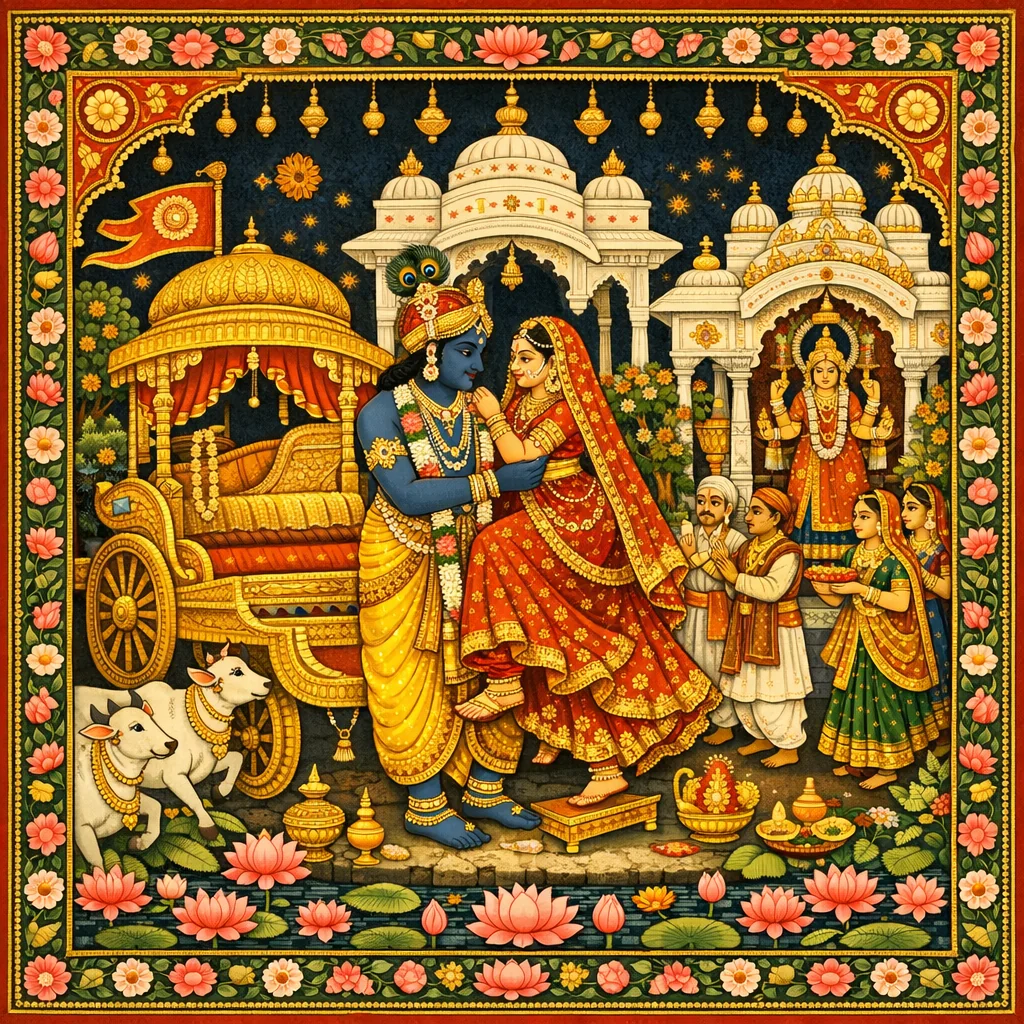
After receiving Rukmiṇī’s confidential appeal via her brāhmaṇa messenger, Kṛṣṇa discloses His reciprocal absorption in her and resolves to prevent the politically arranged marriage to Śiśupāla, opposed by Rukmī’s envy. Knowing the auspicious timing, He departs immediately with the brāhmaṇa, reaching Vidarbha overnight. In Kuṇḍina, Bhīṣmaka prepares elaborate wedding rites, while Damaghoṣa and allied kings—Jarāsandha, Śālva, Dantavakra and others—assemble with armies, anticipating conflict should Kṛṣṇa ‘steal’ the bride. Balarāma, hearing of the danger, follows with Yadu forces. Meanwhile Rukmiṇī, anxious at the messenger’s delay, fears divine disfavor, then receives auspicious omens and learns Kṛṣṇa has arrived. The city rejoices, and Rukmiṇī proceeds to Ambikā’s temple, praying for Kṛṣṇa as husband. Returning in procession, she is beheld by the kings; at the decisive moment Kṛṣṇa seizes her and places her on His chariot, withdrawing like a lion from jackals—setting up the imminent battle and pursuit in the next chapter.
Shlokas
Verse 1
श्रीशुक उवाच वैदर्भ्या: स तु सन्देशं निशम्य यदुनन्दन: । प्रगृह्य पाणिना पाणिं प्रहसन्निदमब्रवीत् ॥ १ ॥
Śukadeva Gosvāmī said: Thus hearing the confidential message of Princess Vaidarbhī, Lord Yadunandana took the brāhmaṇa’s hand and, smiling, spoke to him as follows.
Verse 2
श्रीभगवानुवाच तथाहमपि तच्चित्तो निद्रां च न लभे निशि । वेदाहं रुक्मिणा द्वेषान्ममोद्वाहो निवारित: ॥ २ ॥
The Supreme Lord said: Just as Rukmiṇī’s mind is fixed on Me, My mind is fixed on her. I can’t even sleep at night. I know that Rukmī, out of envy, has forbidden our marriage.
Verse 3
तामानयिष्य उन्मथ्य राजन्यापसदान् मृधे । मत्परामनवद्याङ्गीमेधसोऽग्निशिखामिव ॥ ३ ॥
She has dedicated herself exclusively to Me, and her beauty is flawless. I will bring her here after thrashing those worthless kings in battle, just as one brings a blazing flame out of firewood.
Verse 4
श्रीशुक उवाच उद्वाहर्क्षं च विज्ञाय रुक्मिण्या मधुसूदन: । रथ: संयुज्यतामाशु दारुकेत्याह सारथिम् ॥ ४ ॥
Śukadeva Gosvāmī said: Lord Madhusūdana also understood the exact lunar time for Rukmiṇī’s wedding. Thus He told His driver, “Dāruka, ready My chariot immediately.”
Verse 5
स चाश्वै: शैब्यसुग्रीवमेघपुष्पबलाहकै: । युक्तं रथमुपानीय तस्थौ प्राञ्जलिरग्रत: ॥ ५ ॥
Dāruka brought the Lord’s chariot, yoked with the horses named Śaibya, Sugrīva, Meghapuṣpa and Balāhaka. He then stood before Lord Kṛṣṇa with joined palms.
Verse 6
आरुह्य स्यन्दनं शौरिर्द्विजमारोप्य तूर्णगै: । आनर्तादेकरात्रेण विदर्भानगमद्धयै: ॥ ६ ॥
Lord Śauri mounted His chariot and had the brāhmaṇa do likewise. Then the Lord’s swift horses took them from the Ānarta district to Vidarbha in a single night.
Verse 7
राजा स कुण्डिनपति: पुत्रस्नेहवशानुग: । शिशुपालाय स्वां कन्यां दास्यन् कर्माण्यकारयत् ॥ ७ ॥
King Bhīṣmaka, the master of Kuṇḍina, having succumbed to the sway of affection for his son, was about to give his daughter to Śiśupāla. The King saw to all the required preparations.
Verse 8
पुरं सम्मृष्टसंसिक्तमार्गरथ्याचतुष्पथम् । चित्रध्वजपताकाभिस्तोरणै: समलङ्कृतम् ॥ ८ ॥ स्रग्गन्धमाल्याभरणैर्विरजोऽम्बरभूषितै: । जुष्टं स्त्रीपुरुषै: श्रीमद्गृहैरगुरुधूपितै: ॥ ९ ॥
The king had the main avenues, commercial roads and intersections thoroughly cleaned and then sprinkled with water, and he also had the city decorated with triumphant archways and multicolored banners on poles. The men and women of the city, arrayed in spotless raiment and anointed with fragrant sandalwood paste, wore precious necklaces, flower garlands and jeweled ornaments, and their opulent homes were filled with the aroma of aguru.
Verse 9
पुरं सम्मृष्टसंसिक्तमार्गरथ्याचतुष्पथम् । चित्रध्वजपताकाभिस्तोरणै: समलङ्कृतम् ॥ ८ ॥ स्रग्गन्धमाल्याभरणैर्विरजोऽम्बरभूषितै: । जुष्टं स्त्रीपुरुषै: श्रीमद्गृहैरगुरुधूपितै: ॥ ९ ॥
The king had the main avenues, commercial roads and intersections thoroughly cleaned and then sprinkled with water, and he also had the city decorated with triumphant archways and multicolored banners on poles. The men and women of the city, arrayed in spotless raiment and anointed with fragrant sandalwood paste, wore precious necklaces, flower garlands and jeweled ornaments, and their opulent homes were filled with the aroma of aguru.
Verse 10
पितृन् देवान् समभ्यर्च्य विप्रांश्च विधिवन्नृप । भोजयित्वा यथान्यायं वाचयामास मङ्गलम् ॥ १० ॥
O King, in accordance with prescribed rituals, Mahārāja Bhīṣmaka worshiped the forefathers, demigods and brāhmaṇas, feeding them all properly. Then He had the traditional mantras chanted for the well-being of the bride.
Verse 11
सुस्नातां सुदतीं कन्यां कृतकौतुकमङ्गलाम् । आहतांशुकयुग्मेन भूषितां भूषणोत्तमै: ॥ ११ ॥
The bride cleaned her teeth and bathed, after which she put on the auspicious wedding necklace. Then she was dressed in brand-new upper and lower garments and adorned with most excellent jeweled ornaments.
Verse 12
चक्रु: सामर्ग्यजुर्मन्त्रैर्वध्वा रक्षां द्विजोत्तमा: । पुरोहितोऽथर्वविद्वै जुहाव ग्रहशान्तये ॥ १२ ॥
The best of brāhmaṇas chanted mantras of the Ṛg, Sāma and Yajur Vedas for the bride’s protection, and the priest learned in the Atharva Veda offered oblations to pacify the controlling planets.
Verse 13
हिरण्यरूप्यवासांसि तिलांश्च गुडमिश्रितान् । प्रादाद् धेनूश्च विप्रेभ्यो राजा विधिविदां वर: ॥ १३ ॥
Outstanding in his knowledge of regulative principles, the King rewarded the brāhmaṇas with gold, silver, clothing, cows and sesame seeds mixed with raw sugar.
Verse 14
एवं चेदिपती राजा दमघोष: सुताय वै । कारयामास मन्त्रज्ञै: सर्वमभ्युदयोचितम् ॥ १४ ॥
Rājā Damaghoṣa, lord of Cedi, had also engaged brāhmaṇas expert in chanting mantras to perform all rituals necessary to assure his son’s prosperity.
Verse 15
मदच्युद्भिर्गजानीकै: स्यन्दनैर्हेममालिभि: । पत्त्यश्वसङ्कुलै: सैन्यै: परीत: कुण्डिनं ययौ ॥ १५ ॥
King Damaghoṣa traveled to Kuṇḍina accompanied by armies of elephants exuding mada, chariots hung with golden chains, and numerous cavalry and infantry soldiers.
Verse 16
तं वै विदर्भाधिपति: समभ्येत्याभिपूज्य च । निवेशयामास मुदा कल्पितान्यनिवेशने ॥ १६ ॥
Bhīṣmaka, the lord of Vidarbha, came out of the city and met King Damaghoṣa, offering him tokens of respect. Bhīṣmaka then settled Damaghoṣa in a residence especially constructed for the occasion.
Verse 17
तत्र शाल्वो जरासन्धो दन्तवक्रो विदूरथ: । आजग्मुश्चैद्यपक्षीया: पौण्ड्रकाद्या: सहस्रश: ॥ १७ ॥
Śiśupāla’s supporters — Śālva, Jarāsandha, Dantavakra and Vidūratha — all came, along with Pauṇḍraka and thousands of other kings.
Verse 18
कृष्णरामद्विषो यत्ता: कन्यां चैद्याय साधितुम् । यद्यागत्य हरेत् कृष्णो रामाद्यैर्यदुभिर्वृत: ॥ १८ ॥ योत्स्याम: संहतास्तेन इति निश्चितमानसा: । आजग्मुर्भूभुज: सर्वे समग्रबलवाहना: ॥ १९ ॥
To secure the bride for Śiśupāla, the kings who envied Kṛṣṇa and Balarāma came to the following decision among themselves: “If Kṛṣṇa comes here with Balarāma and the other Yadus to steal the bride, we shall band together and fight Him.” Thus those envious kings went to the wedding with their entire armies and a full complement of military conveyances.
Verse 19
कृष्णरामद्विषो यत्ता: कन्यां चैद्याय साधितुम् । यद्यागत्य हरेत् कृष्णो रामाद्यैर्यदुभिर्वृत: ॥ १८ ॥ योत्स्याम: संहतास्तेन इति निश्चितमानसा: । आजग्मुर्भूभुज: सर्वे समग्रबलवाहना: ॥ १९ ॥
To secure the bride for Śiśupāla, the kings who envied Kṛṣṇa and Balarāma came to the following decision among themselves: “If Kṛṣṇa comes here with Balarāma and the other Yadus to steal the bride, we shall band together and fight Him.” Thus those envious kings went to the wedding with their entire armies and a full complement of military conveyances.
Verse 20
श्रुत्वैतद् भगवान् रामो विपक्षीयनृपोद्यमम् । कृष्णं चैकं गतं हर्तुं कन्यां कलहशङ्कित: ॥ २० ॥ बलेन महता सार्धं भ्रातृस्नेहपरिप्लुत: । त्वरित: कुण्डिनं प्रागाद् गजाश्वरथपत्तिभि: ॥ २१ ॥
When Lord Balarāma heard about these preparations of the inimical kings and how Lord Kṛṣṇa had set off alone to steal the bride, He feared that a fight would ensue. Immersed in affection for His brother, He hurried to Kuṇḍina with a mighty army consisting of infantry and of soldiers riding on elephants, horses and chariots.
Verse 21
श्रुत्वैतद् भगवान् रामो विपक्षीयनृपोद्यमम् । कृष्णं चैकं गतं हर्तुं कन्यां कलहशङ्कित: ॥ २० ॥ बलेन महता सार्धं भ्रातृस्नेहपरिप्लुत: । त्वरित: कुण्डिनं प्रागाद् गजाश्वरथपत्तिभि: ॥ २१ ॥
When Lord Balarāma heard about these preparations of the inimical kings and how Lord Kṛṣṇa had set off alone to steal the bride, He feared that a fight would ensue. Immersed in affection for His brother, He hurried to Kuṇḍina with a mighty army consisting of infantry and of soldiers riding on elephants, horses and chariots.
Verse 22
भीष्मकन्या वरारोहा काङ्क्षन्त्यागमनं हरे: । प्रत्यापत्तिमपश्यन्ती द्विजस्याचिन्तयत्तदा ॥ २२ ॥
The lovely daughter of Bhīṣmaka anxiously awaited the arrival of Kṛṣṇa, but when she did not see the brāhmaṇa return she thought as follows.
Verse 23
अहो त्रियामान्तरित उद्वाहो मेऽल्पराधस: । नागच्छत्यरविन्दाक्षो नाहं वेद्म्यत्र कारणम् । सोऽपि नावर्ततेऽद्यापि मत्सन्देशहरो द्विज: ॥ २३ ॥
[Princess Rukmiṇī thought:] Alas, my wedding is to take place when the night ends! How unlucky I am! Lotus-eyed Kṛṣṇa does not come. I don’t know why. And even the brāhmaṇa messenger has not yet returned.
Verse 24
अपि मय्यनवद्यात्मा दृष्ट्वा किञ्चिज्जुगुप्सितम् । मत्पाणिग्रहणे नूनं नायाति हि कृतोद्यम: ॥ २४ ॥
Perhaps the faultless Lord, even while preparing to come here, saw something contemptible in me and therefore has not come to take my hand.
Verse 25
दुर्भगाया न मे धाता नानुकूलो महेश्वर: । देवी वा विमुखी गौरी रुद्राणी गिरिजा सती ॥ २५ ॥
I am extremely unfortunate, for the creator is not favorably disposed toward me, nor is the great Lord Śiva. Or perhaps Śiva’s wife, Devī, who is known as Gaurī, Rudrāṇī, Girijā and Satī, has turned against me.
Verse 26
एवं चिन्तयती बाला गोविन्दहृतमानसा । न्यमीलयत कालज्ञा नेत्रे चाश्रुकलाकुले ॥ २६ ॥
As she thought in this way, the young maiden, whose mind had been stolen by Kṛṣṇa, closed her tear-filled eyes, remembering that there was still time.
Verse 27
एवं वध्वा: प्रतीक्षन्त्या गोविन्दागमनं नृप । वाम ऊरुर्भुजो नेत्रमस्फुरन् प्रियभाषिण: ॥ २७ ॥
O King, as the bride thus awaited the arrival of Govinda, she felt a twitch in her left thigh, arm and eye. This was a sign that something desirable would happen.
Verse 28
अथ कृष्णविनिर्दिष्ट: स एव द्विजसत्तम: । अन्त:पुरचरीं देवीं राजपुत्रीं ददर्श ह ॥ २८ ॥
Just then the purest of learned brāhmaṇas, following Kṛṣṇa’s order, came to see the divine Princess Rukmiṇī within the inner chambers of the palace.
Verse 29
सा तं प्रहृष्टवदनमव्यग्रात्मगतिं सती । आलक्ष्य लक्षणाभिज्ञा समपृच्छच्छुचिस्मिता ॥ २९ ॥
Noting the brāhmaṇa’s joyful face and serene movements, saintly Rukmiṇī, who could expertly interpret such symptoms, inquired from him with a pure smile.
Verse 30
तस्या आवेदयत् प्राप्तं शशंस यदुनन्दनम् । उक्तं च सत्यवचनमात्मोपनयनं प्रति ॥ ३० ॥
The brāhmaṇa announced to her the arrival of Lord Yadunandana and relayed the Lord’s promise to marry her.
Verse 31
तमागतं समाज्ञाय वैदर्भी हृष्टमानसा । न पश्यन्ती ब्राह्मणाय प्रियमन्यन्ननाम सा ॥ ३१ ॥
Princess Vaidarbhī was overjoyed to learn of Kṛṣṇa’s arrival. Not finding anything at hand suitable to offer the brāhmaṇa, she simply bowed down to him.
Verse 32
प्राप्तौ श्रुत्वा स्वदुहितुरुद्वाहप्रेक्षणोत्सुकौ । अभ्ययात्तूर्यघोषेण रामकृष्णौ समर्हणै: ॥ ३२ ॥
The King, upon hearing that Kṛṣṇa and Balarāma had come and were eager to witness his daughter’s wedding, went forth with abundant offerings to greet Them as music resounded.
Verse 33
मधुपर्कमुपानीय वासांसि विरजांसि स: । उपायनान्यभीष्टानि विधिवत् समपूजयत् ॥ ३३ ॥
Presenting Them with madhu-parka, new clothing and other desirable gifts, he worshiped Them according to standard rituals.
Verse 34
तयोर्निवेशनं श्रीमदुपाकल्प्य महामति: । ससैन्ययो: सानुगयोरातिथ्यं विदधे यथा ॥ ३४ ॥
Generous King Bhīṣmaka arranged opulent accommodations for the two Lords, and also for Their army and entourage. In this way he afforded Them proper hospitality.
Verse 35
एवं राज्ञां समेतानां यथावीर्यं यथावय: । यथाबलं यथावित्तं सर्वै: कामै: समर्हयत् ॥ ३५ ॥
Thus it was that Bhīṣmaka gave all desirable things to the kings who had assembled for the occasion, honoring them as befitted their political power, age, physical prowess and wealth.
Verse 36
कृष्णमागतमाकर्ण्य विदर्भपुरवासिन: । आगत्य नेत्राञ्जलिभि: पपुस्तन्मुखपङ्कजम् ॥ ३६ ॥
When the residents of Vidarbha-pura heard that Lord Kṛṣṇa had come, they all went to see Him. With the cupped palms of their eyes they drank the honey of His lotus face.
Verse 37
अस्यैव भार्या भवितुं रुक्मिण्यर्हति नापरा । असावप्यनवद्यात्मा भैष्म्या: समुचित: पति: ॥ ३७ ॥
[The people of the city said:] Rukmiṇī, and no one else, deserves to become His wife, and He also, possessing such flawless beauty, is the only suitable husband for Princess Bhaiṣmī.
Verse 38
किञ्चित्सुचरितं यन्नस्तेन तुष्टस्त्रिलोककृत् । अनुगृह्णातु गृह्णातु वैदर्भ्या: पाणिमच्युत: ॥ ३८ ॥
May Acyuta, the creator of the three worlds, be satisfied with whatever pious work we may have done and show His mercy by taking the hand of Vaidarbhī.
Verse 39
एवं प्रेमकलाबद्धा वदन्ति स्म पुरौकस: । कन्या चान्त:पुरात् प्रागाद् भटैर्गुप्ताम्बिकालयम् ॥ ३९ ॥
Bound by their swelling love, the city’s residents spoke in this way. Then the bride, protected by guards, left the inner palace to visit the temple of Ambikā.
Verse 40
पद्भ्यां विनिर्ययौ द्रष्टुं भवान्या: पादपल्लवम् । सा चानुध्यायती सम्यङ्मुकुन्दचरणाम्बुजम् ॥ ४० ॥ यतवाङ्मातृभि: सार्धं सखीभि: परिवारिता । गुप्ता राजभटै: शूरै: सन्नद्धैरुद्यतायुधै: । मृदङ्गशङ्खपणवास्तूर्यभेर्यश्च जघ्निरे ॥ ४१ ॥
Rukmiṇī silently went out on foot to see the lotus feet of the deity Bhavānī. Accompanied by her mothers and girlfriends and protected by the King’s valiant soldiers, who held their upraised weapons at the ready, she simply absorbed her mind in the lotus feet of Kṛṣṇa. And all the while mṛdaṅgas, conchshells, paṇavas, horns and other instruments resounded.
Verse 41
पद्भ्यां विनिर्ययौ द्रष्टुं भवान्या: पादपल्लवम् । सा चानुध्यायती सम्यङ्मुकुन्दचरणाम्बुजम् ॥ ४० ॥ यतवाङ्मातृभि: सार्धं सखीभि: परिवारिता । गुप्ता राजभटै: शूरै: सन्नद्धैरुद्यतायुधै: । मृदङ्गशङ्खपणवास्तूर्यभेर्यश्च जघ्निरे ॥ ४१ ॥
Rukmiṇī silently went out on foot to see the lotus feet of the deity Bhavānī. Accompanied by her mothers and girlfriends and protected by the King’s valiant soldiers, who held their upraised weapons at the ready, she simply absorbed her mind in the lotus feet of Kṛṣṇa. And all the while mṛdaṅgas, conchshells, paṇavas, horns and other instruments resounded.
Verse 42
नानोपहारबलिभिर्वारमुख्या: सहस्रश: । स्रग्गन्धवस्त्राभरणैर्द्विजपत्न्य: स्वलङ्कृता: ॥ ४२ ॥ गायन्त्यश्च स्तुवन्तश्च गायका वाद्यवादका: । परिवार्य वधूं जग्मु: सूतमागधवन्दिन: ॥ ४३ ॥
Behind the bride followed thousands of prominent courtesans bearing various offerings and presents, along with well-adorned brāhmaṇas’ wives singing and reciting prayers and bearing gifts of garlands, scents, clothing and jewelry. There were also professional singers, musicians, bards, chroniclers and heralds.
Verse 43
नानोपहारबलिभिर्वारमुख्या: सहस्रश: । स्रग्गन्धवस्त्राभरणैर्द्विजपत्न्य: स्वलङ्कृता: ॥ ४२ ॥ गायन्त्यश्च स्तुवन्तश्च गायका वाद्यवादका: । परिवार्य वधूं जग्मु: सूतमागधवन्दिन: ॥ ४३ ॥
Behind the bride followed thousands of prominent courtesans bearing various offerings and presents, along with well-adorned brāhmaṇas’ wives singing and reciting prayers and bearing gifts of garlands, scents, clothing and jewelry. There were also professional singers, musicians, bards, chroniclers and heralds.
Verse 44
आसाद्य देवीसदनं धौतपादकराम्बुजा । उपस्पृश्य शुचि: शान्ता प्रविवेशाम्बिकान्तिकम् ॥ ४४ ॥
Upon reaching the goddess’s temple, Rukmiṇī first washed her lotus feet and hands and then sipped water for purification. Thus sanctified and peaceful, she came into the presence of mother Ambikā.
Verse 45
तां वै प्रवयसो बालां विधिज्ञा विप्रयोषित: । भवानीं वन्दयांचक्रुर्भवपत्नीं भवान्विताम् ॥ ४५ ॥
The older wives of brāhmaṇas, expert in the knowledge of rituals, led young Rukmiṇī in offering respects to Bhavānī, who appeared with her consort, Lord Bhava.
Verse 46
नमस्ये त्वाम्बिकेऽभीक्ष्णं स्वसन्तानयुतां शिवाम् । भूयात् पतिर्मे भगवान् कृष्णस्तदनुमोदताम् ॥ ४६ ॥
[Princess Rukmiṇī prayed:] O mother Ambikā, wife of Lord Siva, I repeatedly offer my obeisances unto you, together with your children. May Lord Kṛṣṇa become my husband. Please grant this!
Verse 47
अद्भिर्गन्धाक्षतैर्धूपैर्वास:स्रङ्माल्यभूषणै: । नानोपहारबलिभि: प्रदीपावलिभि: पृथक् ॥ ४७ ॥ विप्रस्त्रिय: पतिमतीस्तथा तै: समपूजयत् । लवणापूपताम्बूलकण्ठसूत्रफलेक्षुभि: ॥ ४८ ॥
Rukmiṇī worshiped the goddess with water, scents, whole grains, incense, clothing, garlands, necklaces, jewelry and other prescribed offerings and gifts, and also with arrays of lamps. The married brāhmaṇa women each performed worship simultaneously with the same items, also offering savories and cakes, prepared betel nut, sacred threads, fruit and sugarcane juice.
Verse 48
अद्भिर्गन्धाक्षतैर्धूपैर्वास:स्रङ्माल्यभूषणै: । नानोपहारबलिभि: प्रदीपावलिभि: पृथक् ॥ ४७ ॥ विप्रस्त्रिय: पतिमतीस्तथा तै: समपूजयत् । लवणापूपताम्बूलकण्ठसूत्रफलेक्षुभि: ॥ ४८ ॥
Rukmiṇī worshiped the goddess with water, scents, whole grains, incense, clothing, garlands, necklaces, jewelry and other prescribed offerings and gifts, and also with arrays of lamps. The married brāhmaṇa women each performed worship simultaneously with the same items, also offering savories and cakes, prepared betel nut, sacred threads, fruit and sugarcane juice.
Verse 49
तस्यै स्त्रियस्ता: प्रददु: शेषां युयुजुराशिष: । ताभ्यो देव्यै नमश्चक्रे शेषां च जगृहे वधू: ॥ ४९ ॥
The ladies gave the bride the remnants of the offerings and then blessed her. She in turn bowed down to them and the deity and accepted the remnants as prasādam.
Verse 50
मुनिव्रतमथ त्यक्त्वा निश्चक्रामाम्बिकागृहात् । प्रगृह्य पाणिना भृत्यां रत्नमुद्रोपशोभिना ॥ ५० ॥
The princess then gave up her vow of silence and left the Ambikā temple, holding on to a maidservant with her hand, which was adorned with a jeweled ring.
Verse 51
तां देवमायामिव धीरमोहिनीं सुमध्यमां कुण्डलमण्डिताननाम् । श्यामां नितम्बार्पितरत्नमेखलां व्यञ्जत्स्तनीं कुन्तलशङ्कितेक्षणाम् । शुचिस्मितां बिम्बफलाधरद्युति- शोणायमानद्विजकुन्दकुड्मलाम् ॥ ५१ ॥ पदा चलन्तीं कलहंसगामिनीं सिञ्जत्कलानूपुरधामशोभिना । विलोक्य वीरा मुमुहु: समागता यशस्विनस्तत्कृतहृच्छयार्दिता: ॥ ५२ ॥ यां वीक्ष्य ते नृपतयस्तदुदारहास- व्रीदावलोकहृतचेतस उज्झितास्त्रा: । पेतु: क्षितौ गजरथाश्वगता विमूढा यात्राच्छलेन हरयेऽर्पयतीं स्वशोभाम् ॥ ५३ ॥ सैवं शनैश्चलयती चलपद्मकोशौ प्राप्तिं तदा भगवत: प्रसमीक्षमाणा । उत्सार्य वामकरजैरलकानपाङ्गै: प्राप्तान् ह्रियैक्षत नृपान् ददृशेऽच्युतं च ॥ ५४ ॥ तां राजकन्यां रथमारुरुक्षतीं जहार कृष्णो द्विषतां समीक्षताम् ॥ ५५ ॥
Rukmiṇī appeared as enchanting as the Lord’s illusory potency, who enchants even the sober and grave. Thus the kings gazed upon her virgin beauty, her shapely waist, and her lovely face adorned with earrings. Her hips were graced with a jewel-studded belt, her breasts were just budding, and her eyes seemed apprehensive of her encroaching locks of hair. She smiled sweetly, her jasmine-bud teeth reflecting the glow of her bimba-red lips. As she walked with the motions of a royal swan, the effulgence of her tinkling ankle bells beautified her feet. Seeing her, the assembled heroes were totally bewildered. Lust tore at their hearts. Indeed, when the kings saw her broad smile and shy glance, they became stupefied, dropped their weapons and fell unconscious to the ground from their elephants, chariots and horses. On the pretext of the procession, Rukmiṇī displayed her beauty for Kṛṣṇa alone. Slowly she advanced the two moving lotus-whorls of her feet, awaiting the arrival of the Supreme Lord. With the fingernails of her left hand she pushed some strands of hair away from her face and shyly looked from the corners of her eyes at the kings standing before her. At that moment she saw Kṛṣṇa. Then, while His enemies looked on, the Lord seized the princess, who was eager to mount His chariot.
Verse 52
तां देवमायामिव धीरमोहिनीं सुमध्यमां कुण्डलमण्डिताननाम् । श्यामां नितम्बार्पितरत्नमेखलां व्यञ्जत्स्तनीं कुन्तलशङ्कितेक्षणाम् । शुचिस्मितां बिम्बफलाधरद्युति- शोणायमानद्विजकुन्दकुड्मलाम् ॥ ५१ ॥ पदा चलन्तीं कलहंसगामिनीं सिञ्जत्कलानूपुरधामशोभिना । विलोक्य वीरा मुमुहु: समागता यशस्विनस्तत्कृतहृच्छयार्दिता: ॥ ५२ ॥ यां वीक्ष्य ते नृपतयस्तदुदारहास- व्रीदावलोकहृतचेतस उज्झितास्त्रा: । पेतु: क्षितौ गजरथाश्वगता विमूढा यात्राच्छलेन हरयेऽर्पयतीं स्वशोभाम् ॥ ५३ ॥ सैवं शनैश्चलयती चलपद्मकोशौ प्राप्तिं तदा भगवत: प्रसमीक्षमाणा । उत्सार्य वामकरजैरलकानपाङ्गै: प्राप्तान् ह्रियैक्षत नृपान् ददृशेऽच्युतं च ॥ ५४ ॥ तां राजकन्यां रथमारुरुक्षतीं जहार कृष्णो द्विषतां समीक्षताम् ॥ ५५ ॥
Rukmiṇī appeared as enchanting as the Lord’s illusory potency, who enchants even the sober and grave. Thus the kings gazed upon her virgin beauty, her shapely waist, and her lovely face adorned with earrings. Her hips were graced with a jewel-studded belt, her breasts were just budding, and her eyes seemed apprehensive of her encroaching locks of hair. She smiled sweetly, her jasmine-bud teeth reflecting the glow of her bimba-red lips. As she walked with the motions of a royal swan, the effulgence of her tinkling ankle bells beautified her feet. Seeing her, the assembled heroes were totally bewildered. Lust tore at their hearts. Indeed, when the kings saw her broad smile and shy glance, they became stupefied, dropped their weapons and fell unconscious to the ground from their elephants, chariots and horses. On the pretext of the procession, Rukmiṇī displayed her beauty for Kṛṣṇa alone. Slowly she advanced the two moving lotus-whorls of her feet, awaiting the arrival of the Supreme Lord. With the fingernails of her left hand she pushed some strands of hair away from her face and shyly looked from the corners of her eyes at the kings standing before her. At that moment she saw Kṛṣṇa. Then, while His enemies looked on, the Lord seized the princess, who was eager to mount His chariot.
Verse 53
तां देवमायामिव धीरमोहिनीं सुमध्यमां कुण्डलमण्डिताननाम् । श्यामां नितम्बार्पितरत्नमेखलां व्यञ्जत्स्तनीं कुन्तलशङ्कितेक्षणाम् । शुचिस्मितां बिम्बफलाधरद्युति- शोणायमानद्विजकुन्दकुड्मलाम् ॥ ५१ ॥ पदा चलन्तीं कलहंसगामिनीं सिञ्जत्कलानूपुरधामशोभिना । विलोक्य वीरा मुमुहु: समागता यशस्विनस्तत्कृतहृच्छयार्दिता: ॥ ५२ ॥ यां वीक्ष्य ते नृपतयस्तदुदारहास- व्रीदावलोकहृतचेतस उज्झितास्त्रा: । पेतु: क्षितौ गजरथाश्वगता विमूढा यात्राच्छलेन हरयेऽर्पयतीं स्वशोभाम् ॥ ५३ ॥ सैवं शनैश्चलयती चलपद्मकोशौ प्राप्तिं तदा भगवत: प्रसमीक्षमाणा । उत्सार्य वामकरजैरलकानपाङ्गै: प्राप्तान् ह्रियैक्षत नृपान् ददृशेऽच्युतं च ॥ ५४ ॥ तां राजकन्यां रथमारुरुक्षतीं जहार कृष्णो द्विषतां समीक्षताम् ॥ ५५ ॥
Rukmiṇī appeared as enchanting as the Lord’s illusory potency, who enchants even the sober and grave. Thus the kings gazed upon her virgin beauty, her shapely waist, and her lovely face adorned with earrings. Her hips were graced with a jewel-studded belt, her breasts were just budding, and her eyes seemed apprehensive of her encroaching locks of hair. She smiled sweetly, her jasmine-bud teeth reflecting the glow of her bimba-red lips. As she walked with the motions of a royal swan, the effulgence of her tinkling ankle bells beautified her feet. Seeing her, the assembled heroes were totally bewildered. Lust tore at their hearts. Indeed, when the kings saw her broad smile and shy glance, they became stupefied, dropped their weapons and fell unconscious to the ground from their elephants, chariots and horses. On the pretext of the procession, Rukmiṇī displayed her beauty for Kṛṣṇa alone. Slowly she advanced the two moving lotus-whorls of her feet, awaiting the arrival of the Supreme Lord. With the fingernails of her left hand she pushed some strands of hair away from her face and shyly looked from the corners of her eyes at the kings standing before her. At that moment she saw Kṛṣṇa. Then, while His enemies looked on, the Lord seized the princess, who was eager to mount His chariot.
Verse 54
तां देवमायामिव धीरमोहिनीं सुमध्यमां कुण्डलमण्डिताननाम् । श्यामां नितम्बार्पितरत्नमेखलां व्यञ्जत्स्तनीं कुन्तलशङ्कितेक्षणाम् । शुचिस्मितां बिम्बफलाधरद्युति- शोणायमानद्विजकुन्दकुड्मलाम् ॥ ५१ ॥ पदा चलन्तीं कलहंसगामिनीं सिञ्जत्कलानूपुरधामशोभिना । विलोक्य वीरा मुमुहु: समागता यशस्विनस्तत्कृतहृच्छयार्दिता: ॥ ५२ ॥ यां वीक्ष्य ते नृपतयस्तदुदारहास- व्रीदावलोकहृतचेतस उज्झितास्त्रा: । पेतु: क्षितौ गजरथाश्वगता विमूढा यात्राच्छलेन हरयेऽर्पयतीं स्वशोभाम् ॥ ५३ ॥ सैवं शनैश्चलयती चलपद्मकोशौ प्राप्तिं तदा भगवत: प्रसमीक्षमाणा । उत्सार्य वामकरजैरलकानपाङ्गै: प्राप्तान् ह्रियैक्षत नृपान् ददृशेऽच्युतं च ॥ ५४ ॥ तां राजकन्यां रथमारुरुक्षतीं जहार कृष्णो द्विषतां समीक्षताम् ॥ ५५ ॥
Rukmiṇī appeared as enchanting as the Lord’s illusory potency, who enchants even the sober and grave. Thus the kings gazed upon her virgin beauty, her shapely waist, and her lovely face adorned with earrings. Her hips were graced with a jewel-studded belt, her breasts were just budding, and her eyes seemed apprehensive of her encroaching locks of hair. She smiled sweetly, her jasmine-bud teeth reflecting the glow of her bimba-red lips. As she walked with the motions of a royal swan, the effulgence of her tinkling ankle bells beautified her feet. Seeing her, the assembled heroes were totally bewildered. Lust tore at their hearts. Indeed, when the kings saw her broad smile and shy glance, they became stupefied, dropped their weapons and fell unconscious to the ground from their elephants, chariots and horses. On the pretext of the procession, Rukmiṇī displayed her beauty for Kṛṣṇa alone. Slowly she advanced the two moving lotus-whorls of her feet, awaiting the arrival of the Supreme Lord. With the fingernails of her left hand she pushed some strands of hair away from her face and shyly looked from the corners of her eyes at the kings standing before her. At that moment she saw Kṛṣṇa. Then, while His enemies looked on, the Lord seized the princess, who was eager to mount His chariot.
Verse 55
तां देवमायामिव धीरमोहिनीं सुमध्यमां कुण्डलमण्डिताननाम् । श्यामां नितम्बार्पितरत्नमेखलां व्यञ्जत्स्तनीं कुन्तलशङ्कितेक्षणाम् । शुचिस्मितां बिम्बफलाधरद्युति- शोणायमानद्विजकुन्दकुड्मलाम् ॥ ५१ ॥ पदा चलन्तीं कलहंसगामिनीं सिञ्जत्कलानूपुरधामशोभिना । विलोक्य वीरा मुमुहु: समागता यशस्विनस्तत्कृतहृच्छयार्दिता: ॥ ५२ ॥ यां वीक्ष्य ते नृपतयस्तदुदारहास- व्रीदावलोकहृतचेतस उज्झितास्त्रा: । पेतु: क्षितौ गजरथाश्वगता विमूढा यात्राच्छलेन हरयेऽर्पयतीं स्वशोभाम् ॥ ५३ ॥ सैवं शनैश्चलयती चलपद्मकोशौ प्राप्तिं तदा भगवत: प्रसमीक्षमाणा । उत्सार्य वामकरजैरलकानपाङ्गै: प्राप्तान् ह्रियैक्षत नृपान् ददृशेऽच्युतं च ॥ ५४ ॥ तां राजकन्यां रथमारुरुक्षतीं जहार कृष्णो द्विषतां समीक्षताम् ॥ ५५ ॥
Rukmiṇī appeared as enchanting as the Lord’s illusory potency, who enchants even the sober and grave. Thus the kings gazed upon her virgin beauty, her shapely waist, and her lovely face adorned with earrings. Her hips were graced with a jewel-studded belt, her breasts were just budding, and her eyes seemed apprehensive of her encroaching locks of hair. She smiled sweetly, her jasmine-bud teeth reflecting the glow of her bimba-red lips. As she walked with the motions of a royal swan, the effulgence of her tinkling ankle bells beautified her feet. Seeing her, the assembled heroes were totally bewildered. Lust tore at their hearts. Indeed, when the kings saw her broad smile and shy glance, they became stupefied, dropped their weapons and fell unconscious to the ground from their elephants, chariots and horses. On the pretext of the procession, Rukmiṇī displayed her beauty for Kṛṣṇa alone. Slowly she advanced the two moving lotus-whorls of her feet, awaiting the arrival of the Supreme Lord. With the fingernails of her left hand she pushed some strands of hair away from her face and shyly looked from the corners of her eyes at the kings standing before her. At that moment she saw Kṛṣṇa. Then, while His enemies looked on, the Lord seized the princess, who was eager to mount His chariot.
Verse 56
रथं समारोप्य सुपर्णलक्षणं राजन्यचक्रं परिभूय माधव: । ततो ययौ रामपुरोगम: शनै: शृगालमध्यादिव भागहृद्धरि: ॥ ५६ ॥
Lifting the princess onto His chariot, whose flag bore the emblem of Garuḍa, Lord Mādhava drove back the circle of kings. With Balarāma in the lead, He slowly exited, like a lion removing his prey from the midst of jackals.
Verse 57
तं मानिन: स्वाभिभवं यश:क्षयं परे जरासन्धमुखा न सेहिरे । अहो धिगस्मान् यश आत्तधन्वनां गोपैर्हृतं केशरिणां मृगैरिव ॥ ५७ ॥
The kings inimical to the Lord, headed by Jarāsandha, could not tolerate this humiliating defeat. They exclaimed, “Oh, damn us! Though we are mighty archers, mere cowherds have stolen our honor, just as puny animals might steal the honor of lions!”
Frequently Asked Questions
Within the Purāṇic-kṣatriya framework, this resembles the rākṣasa form of marriage (forcible taking in the presence of rival kings), which is treated as culturally intelligible for warrior society. The Bhāgavata emphasizes not coercion of the bride but protection of her freely chosen surrender: Rukmiṇī explicitly selects Kṛṣṇa, sends a messenger, and prays for Him. Kṛṣṇa’s act counters adharma rooted in envy and political manipulation, while honoring her consent and exclusive devotion.
Rukmiṇī approaches Ambikā as a venerable devī within Vedic dharma, seeking auspicious facilitation, yet her petition is explicitly centered on Kṛṣṇa as the supreme goal. In Bhāgavata theology, subordinate deities can be respected as empowered within the Lord’s governance, while the devotee’s ultimate refuge (āśraya) remains Bhagavān; thus the prayer functions as culturally orthodox worship aligned to single-pointed bhakti.
Śiśupāla is the intended groom; his supporters include Jarāsandha, Śālva, Dantavakra, Vidūratha, Pauṇḍraka and other kings. Their stated motivation is to prevent Kṛṣṇa from taking the bride, but the narrative frames the deeper cause as envy (asūyā) of Kṛṣṇa and Balarāma, converting a wedding alliance into a coalition of adharma.