
Bhagavad Gita — Moksha Sannyasa Yoga, Shloka 57
Moksha Sannyasa Yoga
चेतसा सर्वकर्माणि मयि संन्यस्य मत्परः । बुद्धियोगमुपाश्रित्य मच्चित्तः सततं भव ॥ १८.५७ ॥
cetasā sarva-karmāṇi mayi saṁnyasya mat-paraḥ | buddhi-yogam upāśritya mac-cittaḥ satataṁ bhava || 18.57 ||

Mentally surrendering all actions to Me, regarding Me as the Supreme Goal, taking refuge in the yoga of discernment—be ever with your mind fixed on Me.
मन से सब कर्म मुझमें अर्पण करके और मुझे ही परम लक्ष्य मानकर बुद्धियोग का आश्रय लेकर सदा मुझमें चित्तवाला हो।
Mentally consigning all actions to Me, taking Me as the highest aim, resorting to the yoga of understanding (buddhi-yoga), keep your mind on Me constantly.
‘Saṁnyasya’ here is explicitly mental/intentional offering rather than external abandonment, clarifying the Gītā’s distinctive ‘renunciation-in-action.’ ‘Buddhi-yoga’ can be read as disciplined discernment, integrative contemplation, or the practical method of karma-yoga grounded in insight.
FAQs
The instruction resembles attentional training: keep a stable overarching intention while acting, which reduces fragmentation and supports meaning-centered motivation.
Actions are re-situated within a theistic metaphysics: the agent offers acts to the divine, loosening karmic bondage through transformed agency and understanding.
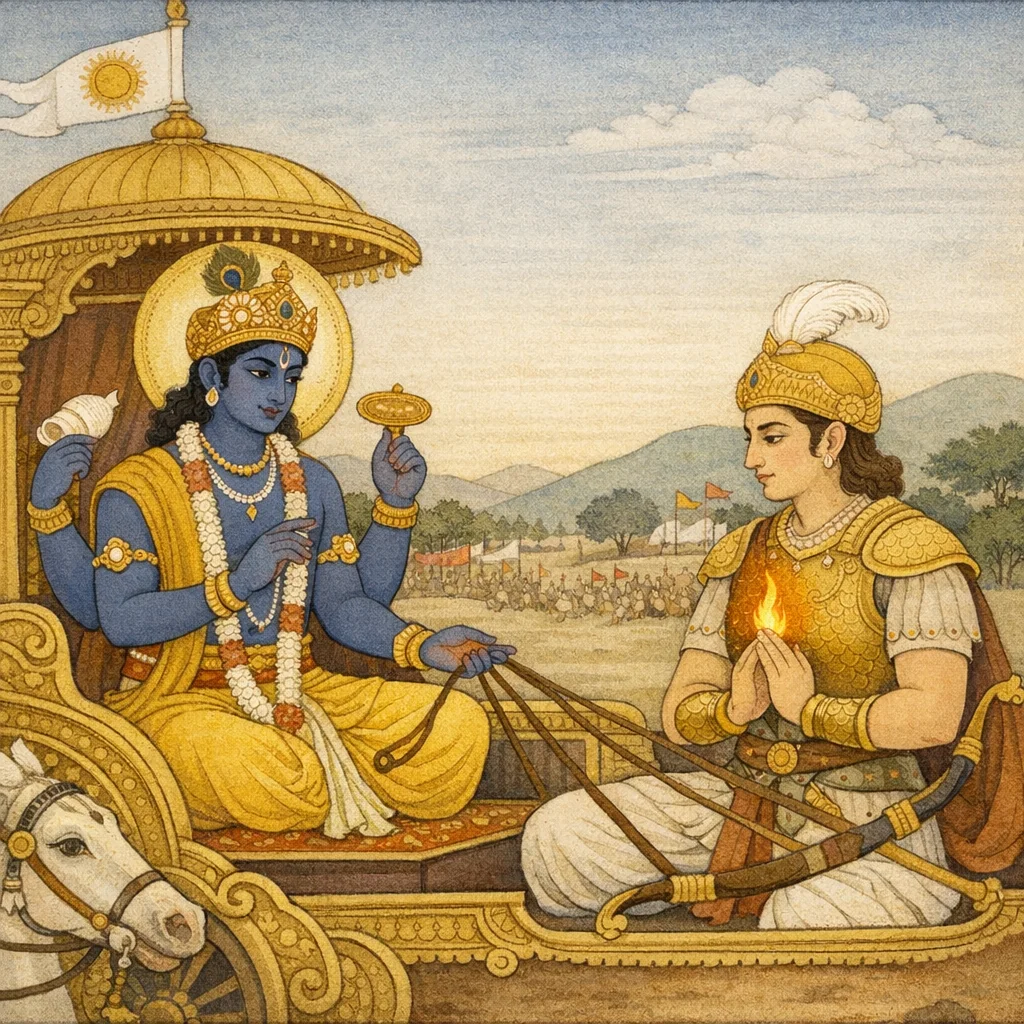
Near the conclusion of the Gītā, Kṛṣṇa condenses practice into a simple directive: dedicate action, prioritize the ultimate, and maintain continuous recollection.
Before tasks, set a brief intention of service; during work, periodically return attention to that intention; after completion, release the outcome without rumination.