Adhyaya 123
Dāna–Tapaḥ Praśaṃsā and Gṛhastha-Upadeśa (Maitreya)
Upa-parva: Dāna–Tapaḥ–Gṛhastha-Dharma Upadeśa (Maitreya-saṃvāda context)
The chapter opens with Bhīṣma reporting a teacher’s approving reply to Maitreya, commending his discernment and noting that society predominantly praises guṇa (virtue). The speaker observes that beauty, lineage, youth, prestige, and honor do not overpower Maitreya due to divine favor, then announces a teaching ‘greater than giving’ to be heard. The discourse situates various āgama- and śāstra-practices as proceeding with the Veda placed foremost. It praises dāna while also extolling tapaḥ as purificatory, Veda-sanctifying, and a means to heaven; tapas is said to enable great attainments, remove wrongdoing, and overcome what is difficult, inaccessible, or formidable. Even grave transgressions are described as crossable through tapas, emphasizing purification logic. Learned persons and ascetics are marked as worthy of reverence. The chapter also asserts that givers attain prosperity here and well-being after death; food-giving is highlighted as yielding access to this world and Brahmaloka. Social reciprocity is described: the honored honor others, while the non-giver is pushed away. The instruction turns to household dharma: Maitreya is advised toward disciplined marital life, presented as a foremost ideal for householders; where spouses are mutually satisfied, welfare prevails in the family. The unit concludes with a purification maxim—sin is removed by dāna and tapas—followed by courteous leave-taking and blessings, with Maitreya offering respectful circumambulation and salutations.
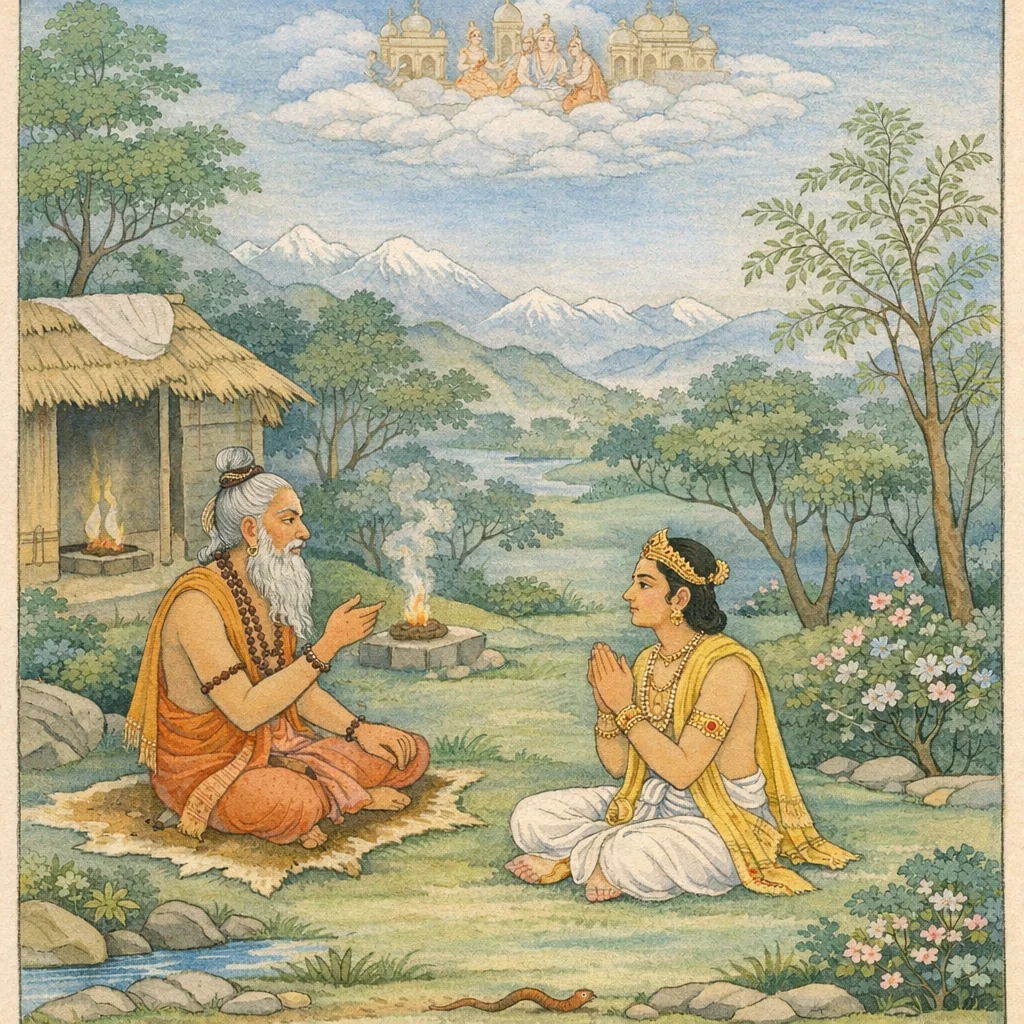
Chapter Arc: Bhīṣma, still instructing Yudhiṣṭhira on dāna and dharma, opens a startling exemplum: a being once born as a mere kīṭa (worm/insect) rises—through tapas and right conduct—to the rare attainment of brāhmaṇahood and even the eternal Brahman. → The former kīṭa, now a royal youth, undertakes fierce austerities. Seeing the severity and the dharma-artha discernment behind it, Kṛṣṇa-Dvaipāyana Vyāsa approaches. The tension turns on a paradox: how can one bound to kṣātra-duty and a past of low birth cross into the highest spiritual station without violating svadharma? → Vyāsa delivers the decisive instruction: ‘Kṣātra, O Devavrata, is the protection of beings’—fulfil that duty with self-mastery, then relinquish the kṣatriya body/identity and attain vipratva. He further frames the moral law: beings rise to auspicious wombs by good deeds and fall to sinful wombs by evil; therefore fear dharma’s loss and practice dharma as the highest. → Obeying the sage, the former kīṭa lives by righteous kingship—protecting subjects, restraining senses, discerning auspicious and inauspicious—until, by Vyāsa’s grace and his own purified conduct, he gains the ‘durlabha’ brāhmaṇa state. The narrator closes with the kīṭa’s confession of inner transformation: prosperity rooted in dharma has come, and sin has been destroyed.
Shlokas
Verse 1
ऑपन--माजल बछ। अकाल एकोनविशर्त्याधिकशततमो< ध्याय: कीड़ेका ब्राह्मणयोनिमें जन्म लेकर ब्रह्मलोकमें जाकर सनातनब्रह्माको प्राप्त करना भीष्म उवाच क्षत्रधर्ममनुप्राप्त: स्मरन्नेव च वीर्यवान् । त्यक्त्वा स कीटतां राज॑ंश्वचार विपुलं तप:
毗湿摩说道:“大王啊!那众生既已舍弃虫身,如今忆念前生,便得刹帝利之法。其人勇力充盛,遂修广大苦行。”
Verse 2
तस्य धर्मार्थविदुषो दृष्टवा तद् विपुलं तपः । आजगाम द्विजश्रेष्ठ: कृष्णद्वैपषायनस्तदा
见那王子——通达法(dharma)与利(artha)之要义者——所修广大而猛烈的苦行,婆罗门中最胜者黑天·岛生(克利须那·德瓦派亚那)毗耶娑,于是时前来相见。
Verse 3
व्यास उवाच क्षात्रं देवव्रतं कीट भूतानां परिपालनम् । क्षात्रं देवव्रतं ध्यायंस्ततो विप्रत्वमेष्यसि
毗耶娑说道:“前生为虫者啊!护持众生乃诸天之誓戒,亦即刹帝利之法。若能常念此义而奉行之,来世当得婆罗门之位。”
Verse 4
पाहि सर्वा: प्रजा: सम्पक् शुभाशुभविदात्मवान् | शुभे: संविभजन् कामैरशुभानां च पावनै:
毗耶娑说道:“当正护一切臣民。须自持其心,明辨吉凶善恶。以正道分施应得之享用与资财,并以净化之法除去民间不祥。如此制御心与诸根,恒勤于自分之法;然后舍离刹帝利之身分,便当证得婆罗门之境。”
Verse 5
आत्मवान् भव सुप्रीत: स्वधर्माचरणे रत: । क्षात्रीं तनुं समुत्सृज्य ततो विप्रत्वमेष्यसि
毗耶娑说道:“当自持其身,内怀深安与喜悦,专勤于自分之法。及至舍离刹帝利之身,便当得婆罗门之位。”
Verse 6
भीष्म उवाच सो<प्यरण्यमनुप्राप्य पुनरेव युधिष्ठिर । महर्षेर्वचनं श्रुत्वा प्रजा धर्मेण पाल्य च
毗湿摩说道:“噢,坚战,诸王之最!那昔日为虫的生灵,再次抵达林野,聆听大圣贤的教诲,遂依达摩护持并治理百姓。其后又复归林中,不久便往生后世;而凭借护民之达摩的威力,他转生于婆罗门家族。”
Verse 7
अचिरेणैव कालेन कीट: पार्थिवसत्तम | प्रजापालनधर्मेण प्रेत्य विप्रत्वमागत:
毗湿摩说道:“诸王之最啊!不久之后,那昔日为虫者,因奉行护民治民之达摩而死,继而得生于婆罗门的族系——此即正治之达摩的威力。”
Verse 8
ततस्तं ब्राह्मणं दृष्टवा पुनरेव महायशा: । आजगाम महाप्राज्ञ: कृष्णद्वैपायनस्तदा,उसे ब्राह्मण हुआ जान महायशस्वी महाज्ञानी श्रीकृष्णद्वैपायन व्यास पुनः उसके पास आये
随后,见那人已成婆罗门,声名卓著、智慧深广的黑岛仙人——奎师那·德瓦派亚那(毗耶娑)又一次来到他面前。
Verse 9
व्यास उवाच भो भो ब्रद्यर्षभ श्रीमन् मा व्यथिष्ठा: कथंचन । शुभकृच्छुभयोनीषु पापकृत् पापयोनिषु
毗耶娑说道:“喂,喂,婆罗门中的雄杰,吉祥尊者!切莫有丝毫忧惧。行善者生于善趣;作恶者堕于恶趣。”
Verse 10
उपपसद्यति धर्मज्ञ यथापापफलोपगम् । तस्मान्मृत्युभयात् कीट मा व्यथिष्ठा: कथंचन
噢,通达达摩者,罪业之果终将按其所作,在应当之时降临于人。故而,噢,虫啊,莫因惧死而有丝毫忧惧。
Verse 11
कीट उवाच सुखात् सुखतरं प्राप्तो भगवंस्त्वत्कृते हुहम्
那虫说道:“噢,尊者!因你之故,我已得到了超越寻常之乐的更大安乐。”
Verse 12
भीष्म उवाच भगवद्धचनातू् कीटो ब्राद्ाण्यं प्राप्प दुर्लभम्
毗湿摩说道:“大王啊,依尊者毗耶娑之所述,那曾经不过是虫豸的生灵,竟得到了难得的婆罗门之位。随后他以数百祭柱遍标大地,举行宏大的祭祀。继而在诸知梵者中为最胜,得与梵天同界之住处——抵达梵天界(Brahmaloka),证悟永恒的梵(Brahman)。”
Verse 13
अकरोत् पृथिवीं राजन् यज्ञयूपशताड्किताम् | ततः सालोक्यमगमद् ब्रह्माणो ब्रद्मृवित्तम:
毗湿摩说道:“大王啊,他以数百祭柱遍标大地;继而在诸知梵者中为最胜,得至与梵天同界之住处。”
Verse 14
अवाप च पदं कीट: पार्थ ब्रह्म सनातनम् | स्वकर्मफलनिर्व॑त्तं व्यासस्य वचनात् तदा,पार्थ! व्यासजीके कथनानुसार उसने स्वधर्मका पालन किया था। उसीका यह फल हुआ कि उस कीटने सनातन ब्रह्मपद प्राप्त कर लिया
毗湿摩说道:“帕尔塔啊,那虫竟得到了永恒的梵之境位。此果乃其自身业行之报——因为当时它遵从毗耶娑之言,守持其所当行之法。”
Verse 15
ते5पि यस्मात् प्रभावेण हता: क्षत्रियपुंगवा: । सम्प्राप्तास्ते गतिं पुण्यां तस्मान्मा शोच पुत्रक
毗湿摩说道:“那些因他勇力而被诛的诸位最胜刹帝利,也已获得清净的归趣。因此,孩子啊,不要悲伤。凡在战场上舍身、以刹帝利之职分而死者,传统皆认其死后所趋为崇高之道;同样,这战场上显其威力而陨落的杰出武士,也都到达了有功德的境界——故不当为他们哀恸。”
Verse 106
धर्मलोपभयं ते स्यात् तस्माद् धर्म चरोत्तमम् | धर्मज्ञ! मनुष्य जैसा पाप करता है
毗耶娑说道:“愿你所惧者,唯有正法(dharma)之失;因此,当奉行至上之法。噢,通晓正法者,人必依其所作之罪而受其果报。是故,噢,昔为虫者,莫因惧死而有丝毫忧扰。你真正应当畏惧的,是正法的衰微——所以当恒常以最善、最崇高的行持而生活。”
Verse 113
धर्ममूलां श्रियं प्राप्य पाप्मा नष्ट इहाद्य मे । भूतपूर्व कीटने कहा--भगवन्! आपके ही प्रयत्नसे मैं अधिकाधिक सुखकी अवस्थाको प्राप्त होता गया हूँ। अब इस जन्ममें धर्ममूलक सम्पत्ति पाकर मेरा सारा पाप नष्ट हो गया
那虫说道:“世尊!我已得以正法为根的福泽与兴盛,我的罪业今日就在此处灭尽。全凭您的努力,我不断抵达更高的安乐境地;如今在此生之中,既得正当之财与福分,我往昔的一切恶业都已被洗除。”
Verse 119
इति श्रीमहाभारते अनुशासनपर्वणि दानधर्मपर्वणि कीटोपाख्याने एकोनविंशत्यधिकशततमो<ध्याय:
至此,在《圣摩诃婆罗多》中,于《教诫篇》(Anuśāsana Parva)之内——尤在论“布施之法”(dāna-dharma)之段——名为“虫之故事”的篇章中,第一百一十九章告终。(此为章末题记,用以标示章节闭合,并将教诲安置于布施与正行的伦理框架之中。)
Frequently Asked Questions
It presents dāna as socially and spiritually meritorious (with special emphasis on food-giving) while portraying tapaḥ as a potent purifier capable of overcoming difficult obstacles and diminishing wrongdoing.
It recommends disciplined household life marked by generosity and marital concord, stating that a family prospers where husband and wife are mutually satisfied and conduct is orderly.
Yes in functional form: it asserts concrete outcomes—prosperity in this life, well-being after death, access to higher worlds through anna-dāna, and purification of sin through dāna and tapaḥ—serving as consequence-oriented validation of the teaching.