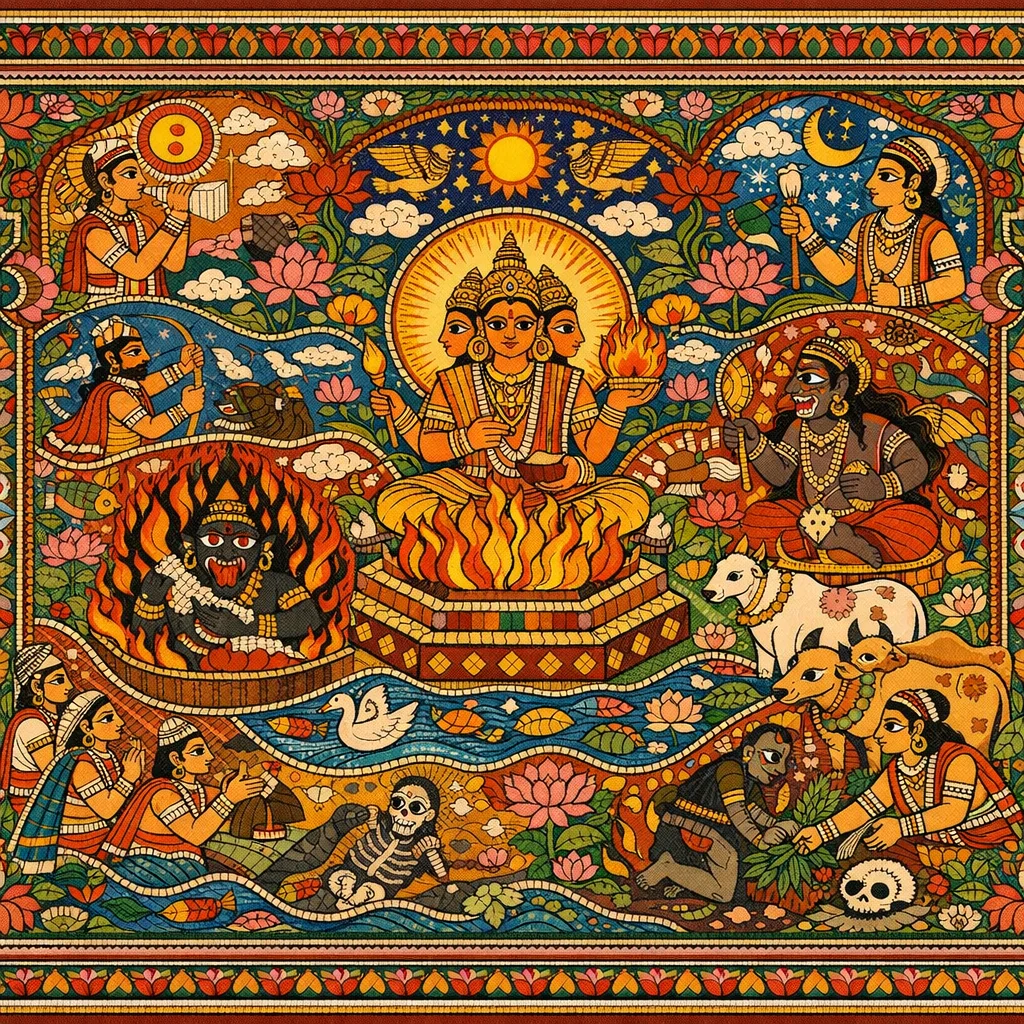
Adhyaya 35
Pitrmedha (funeral) mantras.
Mantras
Mantra 1
य इ॒मा विश्वा॑ वि॒श्वक॑र्मा॒ यो न॑: पि॒ता ऽन्न॑प॒तेऽन्न॑स्य नो देहि
Thou who art the All-maker of all these (worlds), who art our Father—O Lord of food, give us of food.
Mantra 2
अपे॒तो य॑न्तु प॒णयोऽसु॑म्ना देवपी॒यव॑: । अ॒स्य लो॒कः सु॒ताव॑तः । द्युभि॒रहो॑भिर॒क्तुभि॒र्व्य॒क्तं य॒मो द॑दात्वव॒सान॑मस्मै
Departed hence, let the Paṇis go—ungracious, drinkers of the Gods’ (portion). This world belongs to him who hath pressed the Soma. By days, by day-and-nights, by nights, duly apportioned—let Yama assign unto him his resting-place, his appointed end.
Mantra 3
स॒वि॒ता ते॒ शरी॑रेभ्यः पृथि॒व्याँल्लो॒कमि॑च्छतु । तस्मै॑ युज्यन्तामु॒स्रिया॑:
May Savitar, from thy bodies, desire for thee a place in the earth; unto him let the ruddy (productive) ones be yoked.
Mantra 4
वा॒युः पु॑नातु स॑वि॒ता पु॑नात्व॒ग्नेर्भ्राज॑सा॒ सूर्य॑स्य॒ वर्च॑सा । वि मु॑च्यन्तामु॒स्रिया॑:
May Vāyu purify; may Savitar purify—by Agni’s splendour, by the Sun’s lustre. Let the ruddy (productive) ones be loosed.
Mantra 5
स॒वि॒ता ते॒ शरी॑राणि मा॒तुरु॒पस्थ॒ आ व॑पतु । तस्मै॑ पृथिवि॒ शं भ॑व
May Savitar fashion thy bodies in the mother’s lap; for him, O Earth, be thou auspicious.
Mantra 6
प्र॒जाप॑तौ त्वा दे॒वता॑या॒मुपो॑दके लो॒के नि द॑धाम्यसौ । अप॑ न॒: शोशु॑चद॒घम्
In Prajāpati, in the divine sphere, in the region by the waters, there I set thee down: away from us be the burning evil!
Mantra 7
परं॑ मृत्यो॒ अनु॒ परे॑हि॒ पन्थां॒ यस्ते॑ अ॒न्य इत॑रो देव॒याना॑त् । चक्षु॑ष्मते शृण्व॒ते ते॑ ब्रवीमि॒ मा न॑: प्र॒जाᳪ री॑रिषो॒ मोत वी॒रान्
Go thou, O Death, along that further path, which is thine, other than the path of the gods. To thee, that seest and hearest, I speak: harm not our offspring, nor our heroes.
Mantra 8
शं वात॒: शᳪ हि ते॒ घृणि॒: शं ते॑ भव॒न्त्विष्ट॑काः । शं ते॑ भवन्त्व॒ग्नय॒: पार्थि॑वासो॒ मा त्वा॒ऽभि शू॑शुचन्
Auspicious be the Wind; auspicious, for thee, be the glow: auspicious for thee be the bricks. Auspicious for thee be the earthly fires; may they not scorch thee.
Mantra 9
कल्प॑न्तां ते॒ दिश॒स्तुभ्य॒माप॑: शि॒वत॑मा॒स्तुभ्यं॑ भवन्तु॒ सिन्ध॑वः । अ॒न्तरि॑क्षᳪ शि॒वं तुभ्यं॒ कल्प॑न्तां ते॒ दिश॒: सर्वा॑:
Let the quarters be duly ordered for thee; for thee let the waters be most auspicious; for thee let the rivers be benign. Benign for thee be the mid-air; for thee let all the quarters be in due order.
Mantra 10
अश्म॑न्वती रीयते॒ सᳪ र॑भध्व॒मुत्ति॑ष्ठत॒ प्र त॑रता॒ सखा॑यः । अत्रा॑ जही॒मोऽशि॑वा॒ ये अस॑ञ्छि॒वान्व॒यमुत्त॑रेमा॒भि वाजा॑न्
Stone-beset it rusheth: grasp ye firmly together; arise, and cross ye onward, O companions. Here let us leave behind the inauspicious that were; may we pass over unto auspiciousness, and win the prizes.
Mantra 11
अपा॒घमप॒ किल्वि॑ष॒मप॑ कृ॒त्यामपो॒ रप॑: । अपा॑मार्ग॒ त्वम॒स्मदप॑ दु॒:ष्वप्न्य॑ᳪ सुव
Away the evil, away the sin, away the witchcraft, away the taint! O Apāmārga, do thou from us drive away the evil dream.
Mantra 12
सु॒मि॒त्रि॒या न॒ आप॒ ओष॑धयः सन्तु दुर्मित्रि॒यास्तस्मै॑ सन्तु॒ योऽस्मान्द्वेष्टि॒ यं च॑ व॒यं द्वि॒ष्मः
May the Waters and the Plants be kindly friends to us; but ill-friends be they to him who hateth us, and whom we hate.
Mantra 13
अ॒न॒ड्वाह॑म॒न्वार॑भामहे॒ सौर॑भेयᳪ स्व॒स्तये॑ । स न॒ इन्द्र॑ इव दे॒वेभ्यो॒ वह्नि॑: स॒न्तार॑णो भव
We lay hold upon the draught-ox, the Saurabheya, for our welfare. Be he to us, like Indra for the Gods, a bearer, a bringer-over in safety.
Mantra 14
उद्व॒यं तम॑स॒स्परि॒ स्व: पश्य॑न्त॒ उत्त॑रम् । दे॒वं दे॑व॒त्रा सूर्य॒मग॑न्म॒ ज्योति॑रुत्त॒मम्
Up have we risen from the darkness; we behold the higher heaven. God-ward have we gone unto the Sun, the God, unto the highest Light.
Mantra 15
इ॒मं जी॒वेभ्य॑ः परि॒धिं द॑धामि॒ मैषां॒ नु गा॒दप॑रो॒ अर्थ॑मे॒तम् । श॒तं जी॑वन्तु श॒रद॑ः पुरू॒चीर॒न्तर्मृ॒त्युं द॑धतां॒ पर्व॑तेन
This boundary I establish for the living: let none other pass beyond this appointed limit. May they live a hundred autumns, many in number; and may they set the death that breaks in upon life within, as with a mountain-barrier.
Mantra 16
अग्न॒ आयू॑ᳪषि पवस्व॒ आ सु॒वोर्ज॒मिषं॑ च नः । आ॒रे बा॑धस्व दु॒च्छुना॑म्
O Agni, purify our vital powers; bring hither for us the heavenly light, and strength, and nourishment. Drive thou far away all ill-omen and malignity.
Mantra 17
आयु॑ष्मानग्ने ह॒विषा॑ वृधा॒नो घृ॒तप्र॑तीको घृ॒तयो॑निरेधि । घृ॒तं पी॒त्वा मधु॒ चारु॒ गव्यं॑ पि॒तेव॑ पु॒त्रम॒भि र॑क्षतादि॒मान्त्स्वाहा॑
Life-giving Agni, waxing strong through oblation, with ghee for thy splendour, with ghee for thy source—blaze forth! Having drunk the ghee, the honey, the pleasant milk of kine, protect these (our folk) as a father his son, thou who hast the foremost portion: Svāhā!
Mantra 18
परी॒मे गाम॑नेषत॒ पर्य॒ग्निम॑हृषत । दे॒वेष्व॑क्रत॒ श्रव॒ः क इ॒माँ२ आ द॑धर्षति
Around these they led the cow; around the fire they exulted. Among the gods they wrought them glory: who now shall dare to assail these?
Mantra 19
क्र॒व्याद॑म॒ग्निं प्र हि॑णोमि दू॒रं य॑म॒राज्यं॑ गच्छतु रिप्रवा॒हः । इहै॒वायमित॑रो जा॒तवे॑दा दे॒वेभ्यो॑ ह॒व्यं व॑हतु प्रजा॒नन्
The flesh-devouring Agni I drive far away: let the bearer of defilement go unto the realm of Yama. Here let this other one, Jātavedas, remain, and, knowing (his office), bear the oblation unto the gods.
Mantra 20
वह॑ व॒पां जा॑तवेदः पि॒तृभ्यो॒ यत्रै॑ना॒न्वेत्थ॒ निहि॑तान् परा॒के । मेद॑सः कु॒ल्या उप॒ तान्त्स्र॑वन्तु स॒त्या ए॑षामा॒शिष॒: सं न॑मन्ता॒ᳪ स्वाहा॑
Bear thou the caul, O Jātavedas, unto the Fathers, where thou knowest these to be laid away in the far region. Let channels of fat flow unto them; let their blessings, being true, incline hither unto us. Svāhā.
Mantra 21
स्यो॒ना पृ॑थिवि नो भवानृक्ष॒रा नि॒वेश॑नी । यच्छा॑ न॒: शर्म॑ स॒प्रथा॑: । अप॑ न॒: शोशु॑चद॒घम्
Be thou kindly unto us, O Earth, unwasting, a place of settlement; vouchsafe unto us shelter, wide-spread. Drive thou away from us the burning evil.
Mantra 22
अ॒स्मात्त्वमधि॑ जा॒तो॒ऽसि॒ त्वद॒यं जा॑यतां॒ पुन॑: । अ॒सौ स्व॒र्गाय॑ लो॒काय॒ स्वाहा॑
From this thou art born; from thee let this be born again. For yonder heavenly world—Svāhā.
Frequently Asked Questions
Its mantras re-align space (quarters, waters, rivers), establish protective limits, remove faults and ominous taints, and disperse dangers so the sacrificer can safely return from the heightened ritual state.
It distinguishes an impure, consuming fire (Kravyād) from the pure oblation-bearing Agni (Jātavedas), ensuring that only the purified fire remains connected to the sacrifice and the household’s welfare.
Āpaḥ and Oṣadhayaḥ are invoked as friendly, healing supports that confer nourishment and auspiciousness; in expiation, plant-power (Apāmārga) specifically removes impurity, fault, and hostile influences.