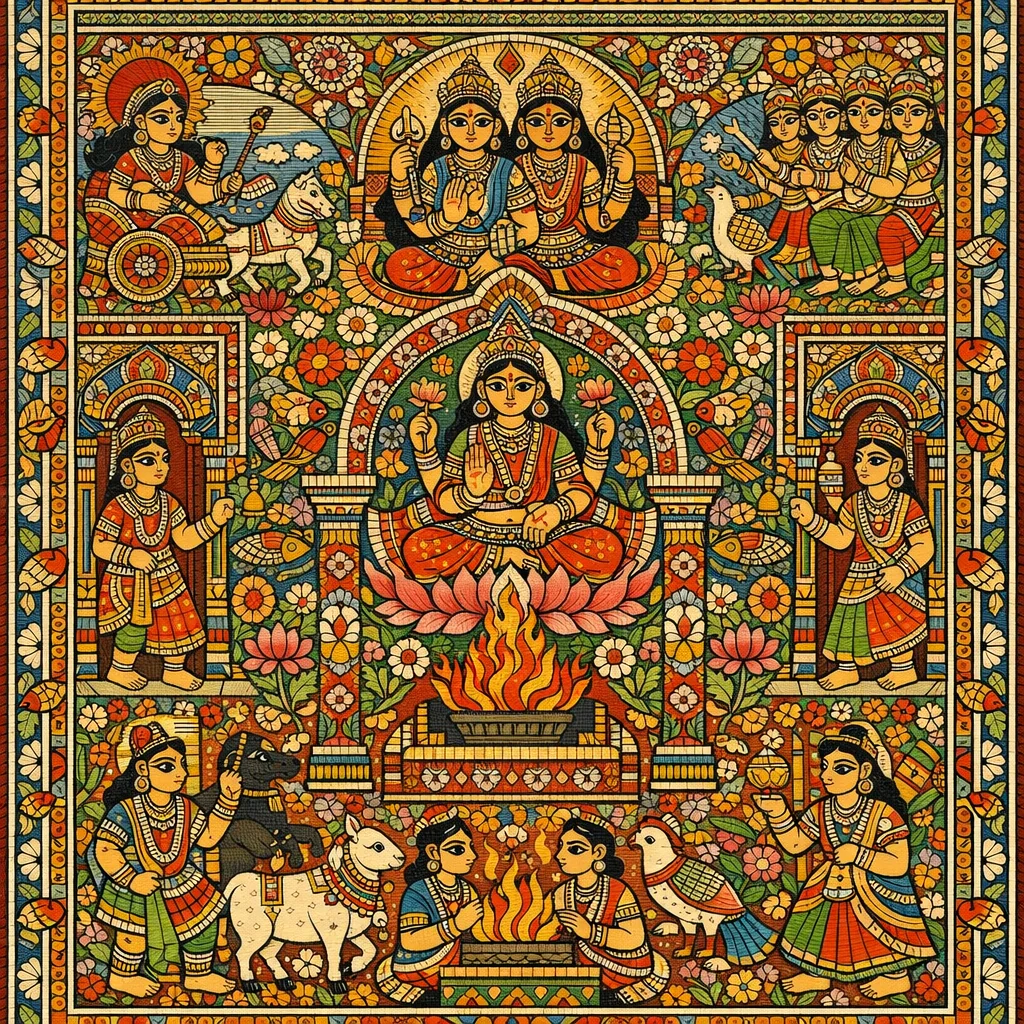
Adhyaya 21
Rajasuya continuation.
Mantras
Mantra 1
इ॒मं मे॑ वरुण श्रु॒धी हव॑म॒द्या च॑ मृडय । त्वाम॑स्व॒स्युरा च॑के ॥
Hear this my call, O Varuṇa, and be gracious unto me this day; for, desiring safety, I have turned me unto thee.
Mantra 2
तत्त्वा॑ यामि॒ ब्रह्म॑णा॒ वन्द॑मान॒स्तदा शा॑स्ते॒ यज॑मानो ह॒विर्भि॑ः । अहे॑डमानो वरुणे॒ह बो॒ध्युरु॑शᳪस॒ मा न॒ आयु॒: प्र मो॑षीः ॥
Therefore unto thee I come, with sacred speech doing reverence; therefore the sacrificer with oblations makes his request. Unangered, O Varuṇa, be here attentive, O widely praised; take not away our life.
Mantra 3
त्वं नो॑ अग्ने॒ वरु॑णस्य वि॒द्वान् दे॒वस्य॒ हेडो व॑ यासिसीष्ठाः । यजि॑ष्ठो॒ वह्नि॑तम॒: शोशु॑चानो॒ विश्वा॒ द्वेषा॑ᳪसि॒ प्र मु॑मुग्ध्य॒स्मत् ॥
Thou, O Agni, knowing Varuṇa’s ordinance, mayest avert the wrath of the god. Most meet for sacrifice, best bearer, brightly blazing, do thou release from us all hatreds and hostile powers.
Mantra 4
स त्वं नो॑ अग्नेऽव॒मो भ॑वो॒ती नेदि॑ष्ठो अ॒स्या उ॒षसो॒ व्यु॒ष्टौ । अव॑ यक्ष्व नो॒ वरु॑ण॒ᳪ ररा॑णो वी॒हि मृ॑डी॒क सु॒हवो॑ न एधि
Be thou, O Agni, our lowliest—our nearest—helper; most nigh at this Dawn’s outshining. Offer for us, rejoicing, unto Varuṇa; bring hither gracious mercy; being easy to invoke, wax strong for us.
Mantra 5
म॒हीमू॒ षु मा॒तर॑ᳪ सुव्र॒ताना॑मृ॒तस्य॒ पत्नी॒मव॑से हुवेम । तु॒वि॒क्ष॒त्राम॒जर॑न्तीमुरू॒चीᳪ सु॒शर्मा॑ण॒मदि॑तिᳪ सु॒प्रणी॑तिम्
Let us, for succour, call the great Mother of the well-ordained, the Spouse of Ṛta—Aditi of mighty rule, unaging, far-gleaming; of good shelter and of good guidance.
Mantra 6
सु॒त्रामा॑णं पृथि॒वीं द्याम॑ने॒हस॑ᳪ सु॒शर्मा॑ण॒मदि॑ति सु॒प्रणी॑तिम् । दैवीं॒ नाव॑ᳪ स्वरि॒त्रामना॑गस॒मस्र॑वन्ती॒मा रु॑हेमा स्व॒स्तये॑
Earth and Heaven—well-protecting, untroubling—Aditi of good shelter and good guidance: upon the divine Boat, well-steered, sinless, not leaking, may we mount for welfare.
Mantra 7
सु॒नाव॒मा रु॑हेय॒मस्र॑वन्ती॒मना॑गसम् । श॒तारि॑त्राᳪ स्व॒स्तये॑
Upon a goodly Boat—unleaking, sinless—may I mount; the hundred-oared, for welfare.
Mantra 8
आ नो॑ मित्रावरुणा घृतै॒र्गव्यू॑तिमुक्षतम् । मध्वा॒ रजा॑ᳪसि सुक्रतू
Come ye to us, O Mitra and Varuṇa; with ghee bedew for us the cow-path; with sweetness moisten ye the regions, O ye of goodly might in action.
Mantra 9
प्र बा॒हवा॑ सिसृतं जी॒वसे॑ न॒ आ नो॒ गव्यू॑तिमुक्षतं घृ॒तेन॑ । आ मा॒ जने॑ श्रवयतं युवाना श्रु॒तं मे॑ मित्रावरुणा॒ हवे॒मा
Put ye forth your arms for our life; bedew for us the cow-track with clarified butter. Make me heard among the folk, ye youthful twain: heard be my call, O Mitra and Varuṇa, these invocations!
Mantra 10
शं नो॑ भवन्तु वा॒जिनो॒ हवे॑षु दे॒वता॑ता मि॒तद्र॑वः स्व॒र्काः । ज॒म्भय॒न्तोऽहिं॒ वृक॒ᳪ रक्षा॑ᳪसि॒ सने॑म्य॒स्मद्यु॑यव॒न्नमी॑वाः
May the prize-winning powers be for our weal at the invocations—godlike, of measured course, and heaven-bright; crushing the serpent, the wolf, the demons, may they win, and from us drive away diseases.
Mantra 11
वाजे॑-वाजेऽवत वाजिनो नो॒ धने॑षु विप्रा अमृता ऋतज्ञाः । अ॒स्य मध्व॑: पिबत मा॒दय॑ध्वं तृ॒प्ता या॑त प॒थिभि॑र्देव॒यानै॑:
In every winning of the prize, aid us, O ye mighty ones; in our gains, O inspired Immortals, knowers of Order. Drink of this sweetness; be ye exhilarated; and, satisfied, go by the god-going paths.
Mantra 12
समि॑द्धो अ॒ग्निः स॒मिधा॒ सुस॑मिद्धो॒ वरे॑ण्यः । गा॒य॒त्री छन्द॑ इन्द्रि॒यं त्र्यविर्गौ॒र्वयो॑ दधुः
Kindled is Agni with fuel, well-kindled, choice-worthy. Gāyatrī as meter—Indra’s vigour; the threefold ewe, the cow, and vital power—these they established.
Mantra 13
तनू॒नपा॒च्छुचि॑व्रतस्तनू॒पाश्च॒ सर॑स्वती । उ॒ष्णिहा॒ छन्द॑ इन्द्रि॒यं दि॑त्य॒वाड्गौर्वयो॑ दधुः
Tanūnapāt of pure ordinance, and the Body-guardians, and Sarasvatī: Uṣṇih as meter—Indra’s vigour; the shining impulse, the cow, and vital power—these they established.
Mantra 14
इडा॑भिर॒ग्निरीड्य॒: सोमो॑ दे॒वो अम॑र्त्यः । अ॒नु॒ष्टुप्छन्द॑ इन्द्रि॒यं पञ्चा॑विर्गौ॒र्वयो॑ दधुः
With the iḍā-portions Agni is to be lauded; Soma is the god, the immortal. The Anuṣṭubh as metre—Indra’s vigour: the fivefold Cow, as vital power, they established.
Mantra 15
सु॒ब॒र्हिर॒ग्निः पू॑ष॒ण्वान्त्स्ती॒र्णब॑र्हि॒रम॑र्त्यः । बृ॒ह॒ती छन्द॑ इन्द्रि॒यं त्रि॑व॒त्सो गौर्वयो॑ दधुः
Agni, with good barhis, attended by Pūṣan, with the barhis duly strewn, is the immortal. The Bṛhatī as metre—Indra’s vigour: the threefold Cow, as vital power, they established.
Mantra 16
दुरो॑ दे॒वीर्दिशो॑ म॒हीर्ब्र॒ह्मा दे॒वो बृह॒स्पति॑: । प॒ङ्क्तिश्छन्द॑ इ॒हेन्द्रि॒यं तु॑र्य॒वाड्गौ॒र्वयो॑ दधुः
The doors are the goddesses, the mighty quarters; the Brahman-priest is the god Bṛhaspati. The Paṅkti as metre—here Indra’s vigour: the fourfold Cow, as vital power, they established.
Mantra 17
उ॒षे य॒ह्वी सु॒पेश॑सा॒ विश्वे॑ दे॒वा अम॑र्त्याः । त्रि॒ष्टुप्छन्द॑ इ॒हेन्द्रि॒यं प॑ष्ठ॒वाड्गौ॒र्वयो॑ दधुः
At dawn, the swift one, fair in adornment—(come) all ye gods, the immortals. The Triṣṭubh as metre—here Indra’s vigour: the broad-backed Cow, as vital power, they established.
Mantra 18
दैव्या॒ होता॑रा भि॒षजेन्द्रे॑ण स॒युजा॑ यु॒जा । जग॑ती॒ छन्द॑ इन्द्रि॒यम॑न॒ड्वान्गौ॒र्वयो॑ दधुः
The divine two Hotṛs, as healers, yoked in union with Indra, in the yoking. The Jagatī as metre—Indra’s vigour: the Ox as the Cow, as vital power, they established.
Mantra 19
ति॒स्र इडा॒ सर॑स्वती॒ भार॑ती म॒रुतो॒ विश॑: । वि॒राट् छन्द॑ इ॒हेन्द्रि॒यं धे॒नुर्गौर्न वयो॑ दधुः
Three are Iḍā, Sarasvatī, and Bhāratī, and the Maruts, the clans. Virāj is the metre: here they have established vigour,—as a milch-cow, as a cow, (they have set) vital sap.
Mantra 20
त्वष्टा॑ तु॒रीपो॒ अद्भु॑त इन्द्रा॒ग्नी पु॑ष्टि॒वर्ध॑ना । द्विप॑दा॒ छन्द॑ इन्द्रि॒यमु॒क्षा गौ॒र्न वयो॑ दधुः
Tvaṣṭṛ, the impetuous, the wondrous; Indra and Agni, increasers of nourishment. Dvipadā is the metre: they have established vigour,—as a bull, as a cow, (they have set) vital sap.
Mantra 21
श॒मि॒ता नो॒ वन॒स्पति॑: सवि॒ता प्र॑सु॒वन् भग॑म् । क॒कुप्छन्द॑ इ॒हेन्द्रि॒यं व॒शा वे॒हद्वयो॑ दधुः
May the appeasing Lord of the Forest, Savitar impelling, set forth our good fortune. Kakubh is the metre: here they have established vigour,—(as) the barren cow, the heifer, (they have set) vital sap.
Mantra 22
स्वाहा॑ य॒ज्ञं वरु॑णः सुक्ष॒त्रो भे॑ष॒जं क॑रत् । अति॑च्छन्दा इन्द्रि॒यं बृ॒हदृ॑ष॒भो गौर्वयो॑ दधुः
Svāhā! May Varuṇa of good dominion make the sacrifice a remedy. Aticchandas is the metre: they have established vigour,—the great bull, the cow, (they have set) vital sap.
Mantra 23
व॒स॒न्तेन॑ ऋ॒तुना॑ दे॒वा वस॑ववस्त्रि॒वृता॑ स्तु॒ताः । र॒थ॒न्त॒रेण॒ तेज॑सा ह॒विरिन्द्रे॒ वयो॑ दधुः
With the spring season the gods, the Vasus, praised by the Trivṛt, (praised) with Rathantara’s brilliance, have established the oblation in Indra,—(they have set) vital sap.
Mantra 24
ग्री॒ष्मेण॑ ऋ॒तुना॑ दे॒वा रु॒द्राः प॑ञ्चद॒शे स्तु॒ताः । बृ॒ह॒ता यश॑सा॒ बल॑ᳪ ह॒विरिन्द्रे॒ वयो॑ दधुः
With Summer for their season the gods, the Rudras, were lauded in the Fifteenfold Stoma; with the Bṛhat (chant), with glory, with strength, they set the oblation—vital vigour—within Indra.
Mantra 25
व॒र्षाभि॑रृ॒तुना॑ऽऽदि॒त्या स्तोमे॑ सप्तद॒शे स्तु॒ताः । वै॒रू॒पेण॑ वि॒शौज॑सा ह॒विरिन्द्रे॒ वयो॑ दधुः
With the Rains for their season the gods, the Ādityas, were lauded in the Seventeenfold Stoma; with the Vairūpa (chant), with universal vigour, they set the oblation—vital vigour—within Indra.
Mantra 26
शा॒र॒देन॑ ऋ॒तुना॑ दे॒वा ए॑कवि॒ᳪश ऋ॒भव॑ स्तु॒ताः । वै॒रा॒जेन॑ श्रि॒या श्रिय॑ᳪ ह॒विरिन्द्रे॒ वयो॑ दधुः
With Autumn for their season the gods, the Ṛbhus, were lauded in the Twenty-onefold Stoma; with the Vairāja (chant), with splendour for splendour, they set the oblation—vital vigour—within Indra.
Mantra 27
हे॒म॒न्तेन॑ ऋ॒तुना॑ दे॒वास्त्रि॑ण॒वे म॒रुत॑ स्तु॒ताः । बले॑न॒ शक्व॑री॒: सहो॑ ह॒विरिन्द्रे॒ वयो॑ दधुः
With Winter for their season the gods, the Maruts, were lauded in the Thirtyfold Stoma; with strength, with the Śakvarīs, with might, they set the oblation—vital vigour—within Indra.
Mantra 28
शै॒शि॒रेण॑ ऋ॒तुना॑ दे॒वास्त्र॑यस्त्रि॒ᳪशेऽमृता॑ स्तु॒ताः । स॒त्येन॑ रे॒वती॑: क्ष॒त्रᳪ ह॒विरिन्द्रे॒ वयो॑ दधुः
With the Dewy season for their season the gods, the Immortals, were lauded in the Thirty-threefold Stoma; with truth, with the Revatīs, with dominion, they set the oblation—vital vigour—within Indra.
Mantra 29
होता॑ यक्षत्स॒मिधा॒ऽग्निमि॒डस्प॒देऽश्विनेन्द्र॒ᳪ सर॑स्वतीम॒जो धू॒म्रो न गो॒धूमै॒: कुव॑लैर्भेष॒जं मधु॒ शष्पै॒र्न तेज॑ इन्द्रि॒यं पय॒: सोम॑: परि॒स्रुता॑ घृ॒तं मधु॒ व्यन्त्वाज्य॑स्य॒ होत॑र्यज
Let the Hotṛ offer, with kindling-sticks, unto Agni at the station of Iḍā; (let him offer) unto the Aśvins-and-Indra, and unto Sarasvatī. As a dusky he-goat (is) a remedy, as wheat and kuvala-fruits (are) a remedy, as honey and tender shoots (are) a remedy,—so may the vital splendour, the milk, the well-strained Soma, the ghee, the honey, be wafted forth for the ghee-offering: O Hotṛ, sacrifice!
Mantra 30
होता॑ यक्ष॒त्तनू॒नपा॒त्सर॑स्वती॒मवि॑र्मे॒षो न भे॑ष॒जं प॒था मधु॑मता॒ भर॑न्न॒श्विनेन्द्रा॑य वी॒र्यं बद॑रैरुप॒वाका॑भिर्भेष॒जं तोक्म॑भि॒: पय॒: सोम॑: परि॒स्रुता॑ घृ॒तं मधु॒ व्यन्त्वाज्य॑स्य॒ होत॒र्यज॑
Let the Hotṛ offer unto Tanūnapāt and unto Sarasvatī. As ewe and ram are a remedy, bringing (it) by the honeyed path,—(so) for the Aśvins-and-Indra (be) heroic power; with badara-fruits, with upavākā-utterances, a remedy; with seeds a remedy. May the milk, the well-strained Soma, the ghee, the honey be wafted forth for the ghee-offering: O Hotṛ, sacrifice!
Mantra 31
होता॑ यक्ष॒न्नरा॒शᳪसं॒ न न॒ग्नहुं॒ पति॒ᳪ सुर॑या भेष॒जं मे॒षः सर॑स्वती भि॒षग्रथो॒ न च॒न्द्रयश्विनो॑र्व॒पा इन्द्र॑स्य वी॒र्यं बद॑रैरुप॒वाका॑भिर्भेष॒जं तोक्म॑भि॒: पय॒: सोम॑: परि॒स्रुता॑ घृ॒तं मधु॒ व्यन्त्वाज्य॑स्य॒ होत॒र्यज॑
Let the Hotṛ offer unto Narāśaṃsa; (as) a lord (is) a remedy for the naked and needy, (so) with surā (be) a remedy; the ram (be) a remedy; Sarasvatī (be) a physician; as a chariot (is) a remedy by its shining (speed), (so) the Aśvins’ omentum (be) a remedy; (be) Indra’s heroic power. With badara-fruits, with upavākā-utterances, a remedy; with seeds a remedy. May the milk, the well-strained Soma, the ghee, the honey be wafted forth for the ghee-offering: O Hotṛ, sacrifice!
Mantra 32
होता॑ यक्षदि॒डेडि॒त आ॒जुह्वा॑न॒: सर॑स्वती॒मिन्द्रं॒ बले॑न व॒र्धय॑न्नृष॒भेण॒ गवे॑न्द्रि॒यम॒श्विनेन्द्रा॑य भेष॒जं यवै॑ र्क॒र्कन्धु॑भि॒र्मधु॑ लाजै॒र्न मास॑रं॒ पय॒: सोम॑: परि॒स्रुता॑ घृ॒तं मधु॒ व्यन्त्वाज्य॑स्य॒ होत॒र्यज॑
Let the Hotṛ offer, Iḍā-invoked, making oblation; (let him offer) unto Sarasvatī, strengthening Indra with might, (and) with the bull (strengthening) the cow’s vital power. For the Aśvins-and-Indra (be) a remedy: with barley, with karkandhu-fruits, with honey, with parched grains—(a remedy), not with sour mash. May the milk, the well-strained Soma, the ghee, the honey be wafted forth for the ghee-offering: O Hotṛ, sacrifice!
Mantra 34
होता॑ यक्षद्ब॒र्हिरूर्ण॑म्म्रदा भि॒षङ्नास॑त्या भि॒षजा॒ऽश्विनाऽश्वा॒ शिशु॑मती भि॒षग्धे॒नुः सर॑स्वती भि॒षग्दु॒ह इन्द्रा॑य भेष॒जं पय॒: सोम॑: परि॒स्रुता॑ घृ॒तं मधु॒ व्यन्त्वाज्य॑स्य॒ होत॑र्यज
Let the Hotṛ offer: the Barhis, soft as wool, (is) a healer; the Nāsatyas (are) healers; the Aśvins (are) healers; their horses, rich in young, (are) healers; the milch-cow (is) a healer; Sarasvatī (is) a healer; milking (is) a remedy for Indra. May the milk, the well-strained Soma, the ghee, the honey be wafted forth for the ghee-offering: O Hotṛ, sacrifice!
Mantra 35
होता॑ यक्षत्सु॒पेश॑सो॒षे नक्तं॒ दिवा॒ऽश्विना॒ सम॑ञ्जाते॒ सर॑स्वत्या॒ त्विषि॒मिन्द्रे॒ न भे॑ष॒जᳪ श्ये॒नो न रज॑सा हृ॒दा श्रि॒या न मास॑रं॒ पय॒: सोम॑: परि॒स्रुता॑ घृ॒तं मधु॒ व्यन्त्वाज्य॑स्य॒ होत॒र्यज॑
Let the Hotṛ offer worship: the fair-formed Aśvins, at dawn, by night and by day, duly anointed; and with Sarasvatī (let him bring) splendour unto Indra, as a healing remedy—swift as a falcon through the airy space, with the heart; with prosperity, as it were, a sweet draught. Let the milk, the Soma well strained, the ghee and honey, flow forth for the ghee-offering: O Hotṛ, sacrifice!
Mantra 36
होता॑ यक्ष॒द्दैव्या॒ होता॑रा भि॒षजा॒ऽश्विनेन्द्रं॒ न जागृ॑वि॒ दिवा॒ नक्तं॒ न भे॑ष॒जै: शूष॒ᳪ सर॑स्वती भि॒षक् सीसे॑न दुह इन्द्रि॒यं पय॒: सोम॑: परि॒स्रुता॑ घृ॒तं मधु॒ व्यन्त्वाज्य॑स्य॒ होत॒र्यज॑
Let the Hotṛ offer worship: the two divine Hotṛs, the Aśvins as physicians; (let them be) for Indra as the wakeful one, by day and by night, with remedies. Sarasvatī, the healer, with lead, milks out vigour—strength as milk. Let the milk, the Soma well strained, the ghee and honey, flow forth for the ghee-offering: O Hotṛ, sacrifice!
Mantra 37
होता॑ यक्षत्ति॒स्रो दे॒वीर्न भे॑ष॒जं त्रय॑स्त्रि॒धात॑वो॒ऽपसो॑ रू॒पमिन्द्रे॑ हिर॒ण्यय॑म॒श्विनेडा॒ न भार॑ती वा॒चा सर॑स्वती॒ मह॒ इन्द्रा॑य दुह इन्द्रि॒यं पय॒: सोम॑: परि॒स्रुता॑ घृ॒तं मधु॒ व्यन्त्वाज्य॑स्य॒ होत॒र्यज॑
Let the Hotṛ offer worship: the three goddesses as a remedy; the threefold constituents, the form of sacred work, golden for Indra; the Aśvins; Iḍā as it were, Bhāratī with speech, Sarasvatī—(these) milk out greatness for Indra, strength as milk. Let the milk, the Soma well strained, the ghee and honey, flow forth for the ghee-offering: O Hotṛ, sacrifice!
Mantra 38
होता॑ यक्षत् सु॒रेर॑समृष॒भं नर्या॑पसं॒ त्वष्टा॑र॒मिन्द्र॑म॒श्विना॑ भि॒षजं॒ न सर॑स्वती॒मोजो॒ न जू॒तिरि॑न्द्रि॒यं वृको॒ न र॑भ॒सो भि॒षग् यश॒: सुर॑या भेष॒जᳪ श्रि॒या न मास॑रं॒ पय॒: सोम॑: परि॒स्रुता॑ घृ॒तं मधु॒ व्यन्त्वाज्य॑स्य॒ होत॒र्यज॑
Let the Hotṛ offer worship: the well-sapped, the bull, the manly worker—Tvaṣṭṛ, Indra, the Aśvins as physicians, and Sarasvatī; vigour as it were, and onset; strength, like a wolf’s impetuousness; the healer’s fame; a remedy with surā; prosperity as a sweet draught. Let the milk, the Soma well strained, the ghee and honey, flow forth for the ghee-offering: O Hotṛ, sacrifice!
Mantra 39
होता॑ यक्ष॒द्वन॒स्पति॑ᳪ शमि॒तार॑ᳪ श॒तक्र॑तुं भी॒मं न म॒न्युᳪ राजा॑नं व्या॒घ्रं नम॑सा॒ऽश्विना॒ भाम॒ᳪ सर॑स्वती भि॒षगिन्द्रा॑य दुह इन्द्रि॒यं पय॒: सोम॑: परि॒स्रुता॑ घृ॒तं मधु॒ व्यन्त्वाज्य॑स्य॒ होत॒र्यज॑
Let the Hotṛ offer worship: Vanaspati, the appeaser; the hundred-powered (Indra), terrible as wrath, the king, a tiger; with reverence (invoke) the Aśvins; (and) splendour; Sarasvatī the healer milks out strength for Indra. Let the milk, the Soma well strained, the ghee and honey, flow forth for the ghee-offering: O Hotṛ, sacrifice!
Mantra 40
होता॑ यक्षद॒ग्निᳪ स्वाहाऽऽज्य॑स्य स्तो॒काना॒ᳪ स्वाहा॒ मेद॑सां॒ पृथ॒क् स्वाहा॒ छाग॑म॒श्विभ्या॒ᳪ स्वाहा॑ मे॒षᳪ सर॑स्वत्यै॒ स्वाह॑ ऋष॒भमिन्द्रा॑य सि॒ᳪहाय॒ सह॑स इन्द्रि॒यᳪ स्वाहा॒ऽग्निं न भे॑ष॒जᳪ स्वाहा॒ सोम॑मिन्द्रि॒यᳪ स्वाहेन्द्र॑ᳪ सु॒त्रामा॑ण सवि॒तारं॒ वरु॑णं भि॒षजां॒ पति॒ᳪ स्वाहा॒ वन॒स्पतिं॑ प्रि॒यं पाथो॒ न भे॑ष॒जᳪ स्वाहा॑ दे॒वा आ॑ज्य॒पा जु॑षा॒णो अ॒ग्निर्भे॑ष॒जं पय॒: सोम॑: परि॒स्रुता॑ घृ॒तं मधु॒ व्यन्त्वाज्य॑स्य॒ होत॒र्यज॑
Let the Hotṛ offer to Agni, Svāhā!—to the drops of ghee, Svāhā!—to the fats, severally, Svāhā!—the he-goat to the Aśvins, Svāhā!—the ram to Sarasvatī, Svāhā!—the bull to Indra, the lion of might, (for) vigour, Svāhā!—Agni as a remedy, Svāhā!—Soma as vigour, Svāhā!—Indra the good protector, Savitṛ, Varuṇa, the lord of physicians, Svāhā!—the dear Lord of Plants, as a healing draught, Svāhā! May the ghee-drinking gods, rejoicing, (accept): Agni as remedy, milk, Soma well-strained, ghee, honey—may they spread forth. O Hotṛ, offer of the ghee!
Mantra 41
होता॑ यक्षद॒श्विनौ॒ छाग॑स्य व॒पाया॒ मेद॑सो जु॒षेता॑ᳪ ह॒विर्होत॒र्यज॑ । होता॑ यक्ष॒त्सर॑स्वतीं मे॒षस्य॑ व॒पाया॒ मेद॑सो जु॒षता॑ᳪ ह॒विर्होत॒र्यज॑ । होता॑ यक्ष॒दिन्द्र॑मृष॒भस्य॑ व॒पाया॒ मेद॑सो जु॒षता॑ᳪ ह॒विर्होत॒र्यज॑
Let the Hotṛ offer: may the Aśvins graciously accept the oblation—(namely) the omentum and fat of the he-goat; O Hotṛ, offer! Let the Hotṛ offer: may Sarasvatī graciously accept the oblation—the omentum and fat of the ram; O Hotṛ, offer! Let the Hotṛ offer: may Indra graciously accept the oblation—the omentum and fat of the bull; O Hotṛ, offer!
Mantra 42
होता॑ यक्षद॒श्विनौ॒ सर॑स्वती॒मिन्द्र॑ᳪ सु॒त्रामा॑णमि॒मे सोमा॑: सु॒रामा॑ण॒श्छागै॒र्न मे॒षैरृ॑षभैः सु॒ताः शष्पै॒र्न तोक्म॑भिर्ला॒जैर्मह॑स्वन्तो॒ मदा॒ मास॑रेण॒ परि॑ष्कृताः शु॒क्राः पय॑स्वन्तो॒ऽमृता॒: प्रस्थि॑ता वो मधु॒श्चुत॒स्तान॒श्विना॒ सर॑स्व॒तीन्द्र॑: सु॒त्रामा॑ वृत्र॒हा जु॒षन्ता॑ᳪ सो॒म्यं मधु॒ पिब॑न्तु॒ व्यन्तु॒ होत॒र्यज॑
Let the Hotṛ offer to the Aśvins, to Sarasvatī, to Indra the good protector. These Soma-draughts, gladdening, pressed with (the aid of) the he-goats, with the rams, with the bulls; pressed with shoots, with grains, with parched barley—mighty, exhilarating, purified with the masara-mixture, bright, rich in milk, immortal, set forth for you, honey-dropping: may those (draughts) the Aśvins, Sarasvatī, and Indra the good protector, the Vṛtra-slayer, graciously accept; may they drink the Soma-honey; may they spread forth. O Hotṛ, offer!
Mantra 43
होता॑ यक्षद॒श्विनौ॒ छाग॑स्य ह॒विष॒ आत्ता॑म॒द्य म॑ध्य॒तो मेद॒ उद्भृ॑तं पु॒रा द्वेषो॑भ्यः पु॒रा पौ॑रुषेय्या गृ॒भो घस्तां॑ नू॒नं घा॒से अ॑ज्राणां॒ यव॑सप्रथमानाᳪ सु॒मत्क्ष॑राणाᳪ शतरु॒द्रिया॑णामग्निष्वा॒त्तानां॒ पीवो॑पवसानां पार्श्व॒तः श्रो॑णि॒तः शि॑ताम॒त उ॑त्साद॒तोऽङ्गा॑दङ्गा॒दव॑त्तानां॒ कर॑त ए॒वाश्विना॑ जु॒षेता॑ᳪ ह॒विर्होत॒र्यज॑
Let the Hotṛ offer to the Aśvins: let them this day take of the oblation of the he-goat—the fat drawn forth from the middle—(as a safeguard) aforetime against hatreds, aforetime against human seizure. Let it now be for grazing of the uninjured, first in pasture, dripping with good (sap), belonging to the hundred-Rudriyas, fire-consumed, rich and well-nourishing; from the side, from the hip, from the sharp edge, from the swelling, from limb to limb—of those cut portions: may the two Aśvins graciously accept (it). O Hotṛ, offer!
Mantra 44
होता॑ यक्ष॒त् सर॑स्वतीं मे॒षस्य॑ ह॒विष॒ आव॑यद॒द्य म॑ध्य॒तो मेद॒ उद्भृ॑तं पु॒रा द्वेषो॑भ्यः पु॒रा पौ॑रुषेय्या गृ॒भो घस॑न्नू॒नं घा॒से अ॑ज्राणां॒ यव॑सप्रथमानाᳪ सु॒मत्क्ष॑राणाᳪ शतरु॒द्रिया॑णामग्निष्वा॒त्तानां॒ पीवो॑पवसनानां पार्श्व॒तः श्रो॑णि॒तः शि॑ताम॒त उ॑त्साद॒तोऽङ्गा॑दङ्गा॒दव॑त्तानां॒ कर॑दे॒वᳪ सर॑स्वती जु॒षता॑ᳪ ह॒विर्होत॒र्यज॑
Let the Hotṛ offer to Sarasvatī: may she encompass (and accept) the oblation of the ram—this day the fat drawn forth from the middle—(as a safeguard) aforetime against hatreds, aforetime against human seizure; now for grazing of the uninjured, first in pasture, dripping with good (sap), belonging to the hundred-Rudriyas, fire-consumed, rich and well-nourishing; from the side, from the hip, from the sharp edge, from the swelling, from limb to limb—of those cut portions: may Sarasvatī accept the divine (share). O Hotṛ, offer!
Mantra 45
होता॑ यक्ष॒दिन्द्र॑मृष॒भस्य॑ ह॒विष॒ आव॑यद॒द्य म॑ध्य॒तो मेद॒ उद्भृ॑तं पु॒रा द्वेषो॑भ्यः पु॒रा पौ॑रुषेय्या गृ॒भो घस॑न्नू॒नं घा॒से अ॑ज्राणां॒ यव॑सप्रथमानाᳪ सु॒मत्क्ष॑राणाᳪ शतरु॒द्रिया॑णामग्निष्वा॒त्तानां॒ पीवो॑पवसानानां पार्श्व॒तः श्रो॑णि॒तः शि॑ताम॒त उ॑त्साद॒तोऽङ्गा॑दङ्गा॒दव॑त्तानां॒ कर॑दे॒वमिन्द्रो॑ जु॒षता॑ᳪ ह॒विर्होत॒र्यज॑
Let the Hotṛ offer unto Indra, the Bull, with the oblation. To-day hath he brought forward from the midst the fat that is drawn out—afore from hatreds, afore from what is of men. Seizing, devouring now the fodder of the unwearied, the first of grasses, the sweetly-dropping, the hundred-Rudra-warded, the Agni-tasted, the rich and well-fed—(taken) from the flank, from the blood, from the sharpened marrow, from the swelling, from limb to limb—may Indra, making the gods his own, take pleasure in the oblation: O Hotṛ, offer!
Mantra 46
होता॑ यक्ष॒द्वन॒स्पति॑म॒भि हि पि॒ष्टत॑मया॒ रभि॑ष्ठया रश॒नयाधि॑त । यत्रा॒श्विनो॒श्छाग॑स्य ह॒विष॑: प्रि॒या धामा॑नि॒ यत्र॒ सर॑स्वत्या मे॒षस्य॑ ह॒विष॑: प्रि॒या धामा॑नि॒ यत्रेन्द्र॑स्य ऋष॒भस्य॑ ह॒विष॑: प्रि॒या धामा॑नि॒ यत्रा॒ग्नेः प्रि॒या धामा॑नि॒ यत्र॒ सोम॑स्य प्रि॒या धामा॑नि॒ यत्रेन्द्र॑स्य सु॒त्राम्ण॑: प्रि॒या धामा॑नि॒ यत्र॑ सवि॒तुः प्रि॒या धामा॑नि॒ यत्र॒ वरु॑णस्य प्रि॒या धामा॑नि॒ यत्र॒ वन॒स्पते॑: प्रि॒या पाथा॑ᳪसि॒ यत्र॑ दे॒वाना॑माज्य॒पानां॑ प्रि॒या धामा॑नि॒ यत्रा॒ग्नेर्होतु॑: प्रि॒या धामा॑नि॒ तत्रै॒तान्प्र॒स्तुत्ये॑वोप॒स्तुत्ये॑वो॒पाव॑स्रक्ष॒द्रभी॑यस इव कृ॒त्वी कर॑दे॒वं दे॒वो वन॒स्पति॑र्जु॒षता॑ᳪ ह॒विर्होत॒र्यज॑
Let the Hotṛ offer unto Vanaspati, for he is bound on with the most firmly-pressed, the most tenacious thong. Where are the dear abodes of the Aśvins for the goat’s oblation; where the dear abodes of Sarasvatī for the ram’s oblation; where the dear abodes of Indra for the bull’s oblation; where are Agni’s dear abodes; where Soma’s dear abodes; where Indra Sutrāman’s dear abodes; where Savitṛ’s dear abodes; where Varuṇa’s dear abodes; where are Vanaspati’s dear paths; where the dear abodes of the ghee-drinking gods; where the dear abodes of Agni as Hotṛ—there, having as it were praised and as it were hymned, he hath let these down, making them more secure: may the god Vanaspati, making the gods his own, take pleasure in the oblation: O Hotṛ, offer!
Mantra 47
होता॑ यक्षद॒ग्निᳪ स्वि॑ष्ट॒कृत॒मया॑ड॒ग्निर॒श्विनो॒श्छाग॑स्य ह॒विष॑: प्रि॒या धामा॒न्यया॒ट् सर॑स्वत्या मे॒षस्य॑ ह॒विष॑: प्रि॒या धामा॒न्यया॒डिन्द्र॑स्य ऋष॒भस्य॑ ह॒विष॑: प्रि॒या धामा॒न्यया॑ड॒ग्नेः प्रि॒या धामा॒न्यया॒ट् सोम॑स्य प्रि॒या धामा॒न्यया॒डिन्द्र॑स्य सु॒त्राम्ण॑: प्रि॒या धामा॒न्यया॑ट् सवि॒तुः प्रि॒या धामा॒न्यया॒ड् वरु॑णस्य प्रि॒या धामा॒न्यया॒ड् वन॒स्पते॑: प्रि॒या पाथा॒ᳪस्यया॑ड् दे॒वाना॑माज्य॒पानां॑ प्रि॒या धामा॑नि॒ यक्ष॑द॒ग्नेर्होतु॑: प्रि॒या धामा॑नि॒ यक्ष॒त् स्वं म॑हि॒मान॒माय॑जता॒मेज्या॒ इष॑: कृ॒णोतु॒ सो अ॑ध्व॒रा जा॒तवे॑दा जु॒षता॑ᳪ ह॒विर्होत॒र्यज॑
Let the Hotṛ offer unto Agni, the accomplisher of good offering. Agni hath attained the dear abodes of the Aśvins for the goat’s oblation; he hath attained the dear abodes of Sarasvatī for the ram’s oblation; he hath attained the dear abodes of Indra for the bull’s oblation; he hath attained Agni’s dear abodes; he hath attained Soma’s dear abodes; he hath attained Indra Sutrāman’s dear abodes; he hath attained Savitṛ’s dear abodes; he hath attained Varuṇa’s dear abodes; he hath attained Vanaspati’s dear paths; (and) the dear abodes of the ghee-drinking gods. Let him offer to the dear abodes of Agni as Hotṛ; let him offer to his own greatness. May the worshipful ones win nourishment: may Jātavedas, that sacrifice, take pleasure in the oblation: O Hotṛ, offer!
Mantra 48
दे॒वं ब॒र्हिः सर॑स्वती सुदे॒वमिन्द्रे॑ अ॒श्विना॑ । तेजो॒ न चक्षु॑र॒क्ष्यो॒र्ब॒र्हिषा॑ दधुरिन्द्रि॒यं व॑सु॒वने॑ वसु॒धेय॑स्य व्यन्तु॒ यज॑
The divine Barhis—Sarasvatī (and) the Aśvins—(make it) well-divine for Indra. As brightness is the eye’s sight, so by the Barhis they have set Indra-power: in the winning of wealth, for the establishing of treasure, let them spread forth: offer!
Mantra 49
दे॒वीर्द्वारो॑ अ॒श्विना॑ भि॒षजेन्द्रे॒ सर॑स्वती । प्रा॒णं न वी॒र्यं॒ न॒सि द्वारो॑ दधुरिन्द्रि॒यं व॑सु॒वने॑ वसु॒धेय॑स्य व्यन्तु॒ यज॑
The divine Doors—the Aśvins as physicians, (and) Sarasvatī—for Indra. As breath and as vigour art thou: the Doors have set Indra-power; in the winning of wealth, for the establishing of treasure, let them open wide: offer!
Mantra 50
दे॒वी उ॒षासा॑व॒श्विना॑ सु॒त्रामेन्द्रे॒ सर॑स्वती । बलं॒ न वाच॑मा॒स्य॒ उ॒षाभ्यां॑ दधुरिन्द्रि॒यं व॑सु॒वने॑ वसु॒धेय॑स्य व्यन्तु॒ यज॑
The Goddess, the two Dawns, the Aśvins, and Sarasvatī, (with) Indra the well-protecting—like strength in the mouth (is) speech—by the two Dawns they have bestowed Indra’s vigour: in the winning of wealth, for the laying up of treasure, may they spread (it) forth; do thou sacrifice!
Mantra 51
दे॒वी जोष्ट्री॒ सर॑स्वत्य॒श्विनेन्द्र॑मवर्धयन् । श्रोत्रं॒ न कर्ण॑यो॒र्यशो॒ जोष्ट्री॑भ्यां दधुरिन्द्रि॒यं व॑सु॒वने॑ वसु॒धेय॑स्य व्यन्तु॒ यज॑
The Goddess Joṣṭrī, Sarasvatī, and the Aśvins increased Indra: as hearing (abides) in the two ears, (so) glory—by the two Joṣṭrīs they have bestowed Indra’s vigour; in the winning of wealth, for the laying up of treasure, may they spread (it) forth; do thou sacrifice!
Mantra 52
दे॒वी ऊ॒र्जाहु॑ती॒ दुघे॑ सु॒दुघेन्द्रे॒ सर॑स्वत्य॒श्विना॑ भि॒षजा॑ऽवतः । शु॒क्रं न ज्योति॒ स्तन॑यो॒राहु॑ती धत्त इन्द्रि॒यं व॑सु॒वने॑ वसु॒धेय॑स्य व्यन्तु॒ यज॑
The Goddess—Nourishment, Oblation—milking, well-milking, with Indra; Sarasvatī; the Aśvins as physicians, helpers: like bright light in the two breasts, the oblation sets Indra’s vigour; in the winning of wealth, for the laying up of treasure, may they spread (it) forth; do thou sacrifice!
Mantra 53
दे॒वा दे॒वानां॑ भि॒षजा॒ होता॑रा॒विन्द्र॑म॒श्विना॑ । व॒ष॒ट्का॒रै॒: सर॑स्वती॒ त्विषिं॒ न हृद॑ये म॒तिᳪ होतृ॑भ्यां दधुरिन्द्रि॒यं व॑सु॒वने॑ वसु॒धेय॑स्य व्यन्तु॒ यज॑
Gods of the gods, physicians, the two Hotṛs—the Aśvins (for) Indra; with vaṣaṭ-calls Sarasvatī: as splendour in the heart (is) thought, by the two Hotṛs they have bestowed Indra’s vigour; in the winning of wealth, for the laying up of treasure, may they spread (it) forth; do thou sacrifice!
Mantra 54
दे॒वीस्ति॒स्रस्ति॒स्रो दे॒वीर॒श्विनेडा॒ सर॑स्वती । शूषं॒ न मध्ये॒ नाभ्या॒मिन्द्रा॑य दधुरिन्द्रि॒यं व॑सु॒वने॑ वसु॒धेय॑स्य व्यन्तु॒ यज॑
Three goddesses, three goddesses—the Aśvins, Iḍā, Sarasvatī: like impulse in the middle, in the two navels, for Indra they have bestowed Indra’s vigour; in the winning of wealth, for the laying up of treasure, may they spread (it) forth; do thou sacrifice!
Mantra 55
दे॒व इन्द्रो॒ नरा॒शᳪस॑स्त्रिवरू॒थः सर॑स्वत्य॒श्विभ्या॑मीयते॒ रथ॑: । रेतो॒ न रू॒पम॒मृतं॑ ज॒नित्र॒मिन्द्रा॑य॒ त्वष्टा॒ दध॑दिन्द्रि॒याणि॑ वसु॒वने॑ वसु॒धेय॑स्य व्यन्तु॒ यज॑
The god Indra, ‘praised of men,’ of triple shelter—his chariot is set in motion with Sarasvatī and the Aśvins. As seed, as form, as the immortal source of generation, may Tvaṣṭṛ, for Indra, bestow the powers of might: in the winning of wealth, for the laying-up of treasure, may they spread abroad—Sacrifice thou!
Mantra 56
दे॒वो दे॒वैर्वन॒स्पति॒र्हिर॑ण्यपर्णो अ॒श्विभ्या॒ᳪ सर॑स्वत्या सुपिप्प॒ल इन्द्रा॑य पच्यते॒ मधु॑ । ओजो॒ न जू॒तिरृ॑ष॒भो न भामं॒ वन॒स्पति॑र्नो॒ दध॑दिन्द्रि॒याणि॑ वसु॒वने॑ वसु॒धेय॑स्य व्यन्तु॒ यज॑
The god Vanaspati, with the gods—golden-leaved, well-fruited—together with the Aśvins and with Sarasvatī, is cooked as sweetness for Indra. As strength, as onset, as a bull’s might, as splendour, may Vanaspati bestow on us the powers of vigour: in the winning of wealth, for the laying-up of treasure, may they spread abroad—Sacrifice thou!
Mantra 57
दे॒वं ब॒र्हिर्वारि॑तीनामध्व॒रे स्ती॒र्णम॒श्विभ्या॒मूर्ण॑म्रदा॒: सर॑स्वत्या स्यो॒नमि॑न्द्र ते॒ सद॑: । ई॒शायै॑ म॒न्युᳪ राजा॑नं ब॒र्हिषा॑ दधुरिन्द्रि॒यं व॑सु॒वने॑ वसु॒धेय॑स्य व्यन्तु॒ यज॑
The divine Barhis, of the warders, is strewn in the sacrifice—pleasant, O Indra, is thy seat—with the wool-soft Aśvins and with Sarasvatī. For lordship they have set, by the Barhis, the royal ardour as vigour: in the winning of wealth, for the laying-up of treasure, may it spread abroad—Sacrifice thou!
Mantra 58
दे॒वो अ॒ग्निः स्वि॑ष्ट॒कृद्दे॒वान्य॑क्षद्यथाय॒थᳪ होता॑रा॒विन्द्र॑म॒श्विना॑ वा॒चा वाच॒ᳪ सर॑स्वतीम॒ग्निᳪ सोम॑ᳪ स्विष्ट॒कृत् स्वि॑ष्ट॒ इन्द्र॑: सु॒त्रामा॑ सवि॒ता वरु॑णो भि॒षगि॒ष्टो दे॒वो वन॒स्पति॒: स्वि॒ष्टा दे॒वा आ॑ज्य॒पाः स्वि॑ष्टो अ॒ग्निर॒ग्निना॒ होता॑ हो॒त्रे स्वि॑ष्ट॒कृद्यशो॒ न दध॑दिन्द्रि॒यमूर्ज॒मप॑चितिᳪ स्व॒धां व॑सु॒वने॑ वसु॒धेय॑स्य व्यन्तु॒ यज॑
The god Agni, the maker of good offering, hath duly sacrificed to the gods, each in his proper order: the two Hotṛs; Indra; the Aśvins; Speech with Speech; Sarasvatī; Agni; Soma. The maker of good offering—well-offered are Indra the good protector, Savitṛ, Varuṇa, the Physician; well-offered is the god Vanaspati; well-offered are the gods, the ghee-drinkers; well-offered is Agni with Agni as Hotṛ for the Hotṛship. As fame, may he bestow vigour, nourishment, expiation, and inherent power: in the winning of wealth, for the laying-up of treasure, may they spread abroad—Sacrifice thou!
Mantra 59
अ॒ग्निम॒द्य होता॑रमवृणीता॒यं यज॑मान॒: पच॒न् पक्ती॒: पच॑न् पुरो॒डाशा॑न् ब॒ध्नन्न॒श्विभ्यां॒ छाग॒ᳪ सर॑स्वत्यै मे॒षमिन्द्रा॑य ऋष॒भᳪ सु॒न्वन्न॒श्विभ्या॒ᳪ सर॑स्वत्या॒ इन्द्रा॑य सु॒त्राम्णे॑ सुरासो॒मान्
Agni as Hotṛ hath this day been chosen by the sacrificer—cooking the cooked portions, cooking the puroḍāśa-cakes; binding a he-goat for the Aśvins, a ram for Sarasvatī, a bull for Indra; pressing for the Aśvins, for Sarasvatī, for Indra the good protector, the surā and soma.
Mantra 60
सू॒प॒स्था अ॒द्य दे॒वो वन॒स्पति॑रभवद॒श्विभ्यां॒ छागे॑न॒ सर॑स्वत्यै मे॒षेणेन्द्रा॑य ऋष॒भेणाक्षँ॒स्तान् मे॑द॒स्तः प्रति॑ पच॒तागृ॑भीष॒तावी॑वृधन्त पुरो॒डाशै॒रपु॑र॒श्विना॒ सर॑स्व॒तीन्द्र॑: सु॒त्रामा॑ सुरासो॒मान्
Of good foundation, to-day the divine Lord of the Forest hath come to be;—for the Aśvins with a he-goat, for Sarasvatī with a ram, for Indra with a bull. Those (portions), from the fat, do ye cook; take ye them up; with cakes they have increased (the offering):—Aśvins, Sarasvatī, and Indra, the good protector, (accept) the surā and the soma.
Mantra 61
त्वाम॒द्य ऋ॑ष आर्षेय ऋषीणां नपादवृणीता॒यं यज॑मानो ब॒हुभ्य॒ आ सङ्ग॑तेभ्य ए॒ष मे॑ दे॒वेषु॒ वसु॒ वार्याय॑क्ष्यत॒ इति॒ ता या दे॒वा दे॑व॒ दाना॒न्यदु॒स्तान्य॑स्मा॒ आ च॒ शास्वा च॑ गुरस्वेषि॒तश्च॑ होत॒रसि॑ भद्र॒वाच्या॑य॒ प्रेषि॑तो॒ मानु॑षः सूक्तवा॒काय॑ सू॒क्ता ब्रू॑हि
Thee to-day, O seer, O heir of the seers’ race, hath this sacrificer chosen from among the many assembled: ‘This (priest) shall win for me among the gods the precious, choice good.’ Those gifts, O god, which the gods have bestowed,—those unto him do thou enjoin, and do thou confirm; for thou art the Hotṛ, commissioned for auspicious speech: O human (priest), for the well-spoken utterance, speak thou well-spoken words.
Frequently Asked Questions
Because Varuṇa embodies ṛta and moral-ritual accountability; the chapter opens by seeking attentive, non-angry protection and release from fault so the later animal and expiatory acts proceed without obstruction.
It sacralizes and seals the yajña-space: the enclosure is guarded, correctly oriented, and protected from ‘leakage’ or intrusion, making the rite a stable microcosm of cosmic order.
They establish a bandhu between time (ṛtu) and chant-structure (stoma), empowering the oblation through that correspondence and culminating in its placement into Indra as vayas (vital vigour).