Dashati 20
Indra empowered by Soma-exhilaration (mada/matsara) to grant victory and wealth
Indra
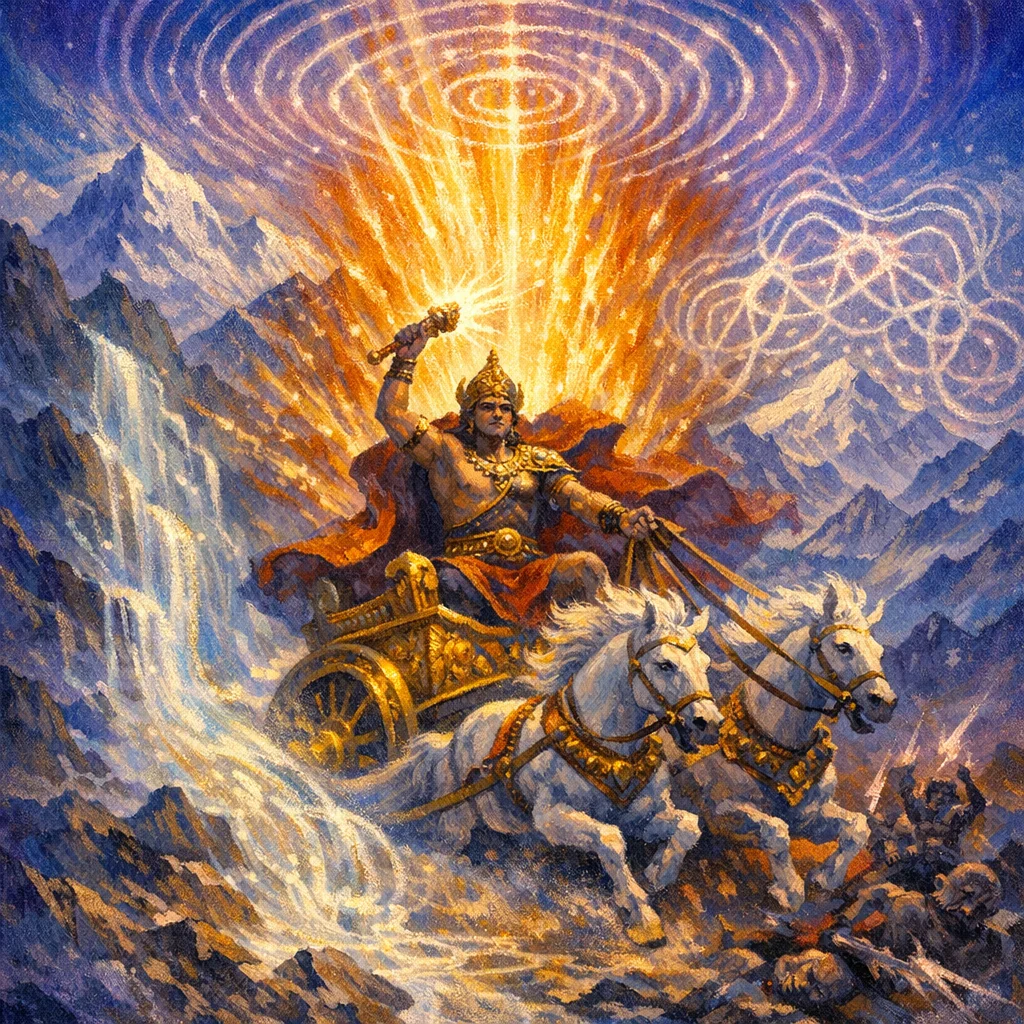
Exultant martial and triumphant—built on the imagery of surging Soma-power and battle-victory
Ṛṣi attribution and chandas are not supplied here; they require Rigvedic concordance for the underlying RV originals used by this Sāmavedic selection.
อินทราผู้ได้รับพลังจากความเริงฤทธิ์แห่งโสม (มท/มัตสร) ถูกอัญเชิญให้มาสู่พิธีผ่านโสม เพื่อประทานกำลัง ชัยชนะ และทรัพย์สมบัติมหาศาลแก่ผู้บูชา โสมในฐานะพลังศักดิ์สิทธิ์ของพิธีให้ผล ทำให้ฤทธิ์เดชแห่งการชนะศึกและการคุ้มครองบังเกิด อินทราขับเคลื่อนราชรถ ปราบศัตรู ทำลายอำนาจของผู้ไม่ถือวัตรและฝ่ายทัสยุ และนำความอุดมลาภถึงขั้น “ชนะเป็นพัน ๆ” มาสู่ยชามานะ
Mantras
Mantra 1
मत्स्यपायि ते महः पात्रस्येव हरिवो मत्सरो मदः वृषा ते वृष्ण इन्दुर्वाजी सहस्रसातमः
โอ้ฮริวัต (Harivat) ความปีติเมามายอันยิ่งใหญ่ของท่าน ราวกับหลั่งออกจากถ้วยพิธี (pātra) เป็นความเริงรื่นอันพุ่งพล่าน; หยดโสมะอินทุ (indu) เป็นดุจโคผู้ (vṛṣā) เพื่อพระอินทรผู้เป็นโค (vṛṣṇā) เป็นผู้ประทานพลัง (vājī) และเป็นผู้มีชัยยิ่งในการได้มาซึ่งพันประการ (sahasrasātamaḥ).
Mantra 2
आ नस्ते गन्तु मत्सरो वृषा मदो वरेण्यः सहावां इन्द्र सानसिः पृतनषाडमर्त्यः
ขอแรงกระตุ้นแห่งความเมามาย (matsara) ของท่านจงมาถึงเรา; ความปีติอันแข็งแรงและควรเลือกสรร (mado vareṇyaḥ). โอ้อินทรา ผู้ทรงพลังยิ่ง (sahāvān) ผู้ประทานการได้มา (sānasiḥ) ผู้ปราบศึกสงคราม (pṛtanaṣāḍ) ผู้เป็นอมตะ (amartyaḥ).
Mantra 3
त्वं हि शूरः सनिता चोदयो मनुषो रथम् सहावान्दस्युमव्रतमोषः पात्रं न शोचिषा
เพราะท่านแท้จริงคือวีรบุรุษ (śūraḥ) ผู้ชนะได้ (sanitā); ท่านเร่งเร้ารถศึกของมนุษย์ให้แล่นไป. ผู้ทรงพลัง (sahāvān) ผู้ปล้นดาสยุ (dasyu) ผู้ริบเอาจากผู้ไร้ปฏิญาณ (avratá); ท่านส่องประกายด้วยรัศมี (śociṣā) ดุจภาชนะ (pātra) ที่วาววับ.
Frequently Asked Questions
It celebrates Soma’s ritual exhilaration (mada/matsara) as the power that makes Indra victorious—bringing battle-success, protection, and abundant gains to the sacrificer.
The ‘pātra’ points to the Soma-cup used in the rite; the imagery stresses that Indra’s strength and the sacrificer’s benefits arise from a concrete sacrificial act, not from emotion alone.
They represent opponents of Vedic order—those without observance (a-vrata) and hostile forces (Dasyu). The hymn frames Indra’s victory as both martial and moral-ritual protection for the yajamāna.