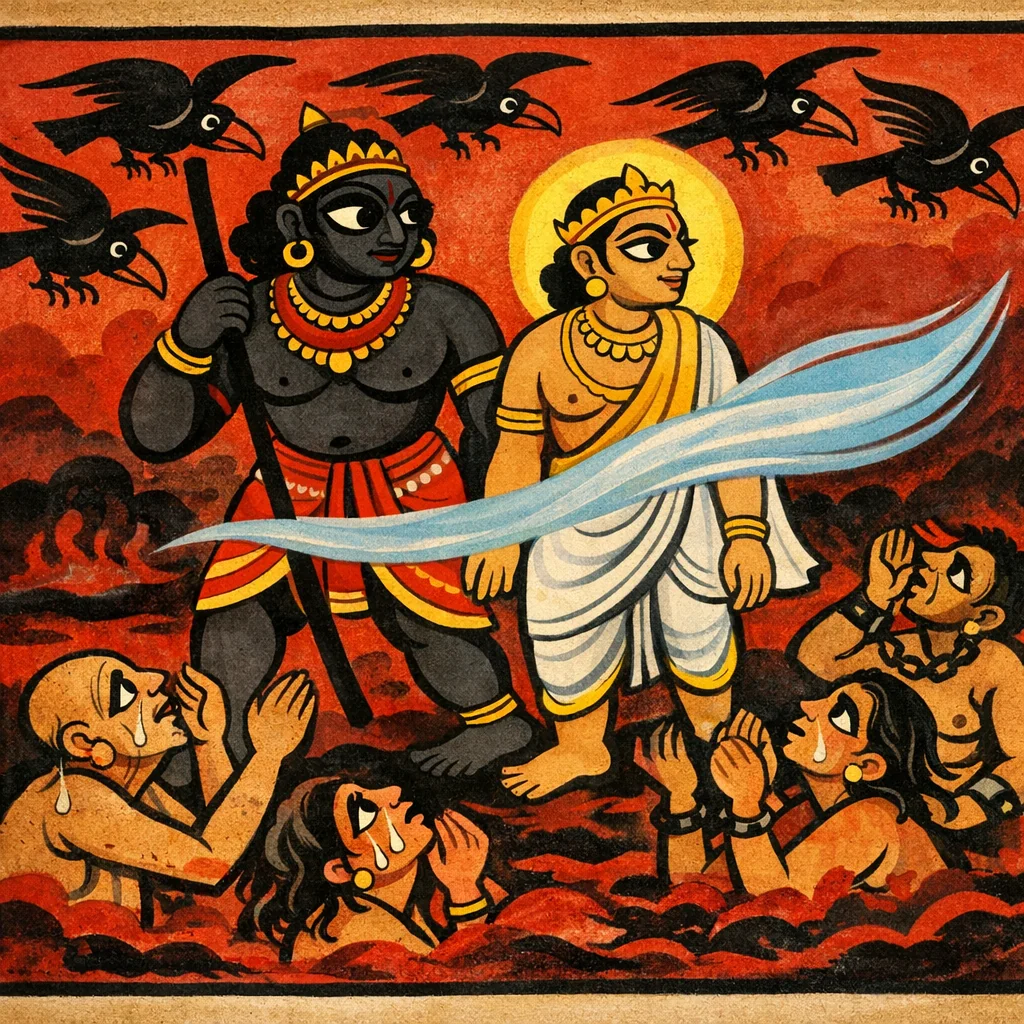
Adhyaya 13: The Son’s Account of Hell and the Question of Unseen Sin
पुत्रसंवादे नरकयातनावर्णनम् (Putrasaṃvāde Narakayātanāvarṇanam)
Raivata and Chakshusha
ဤအဓ್ಯಾಯတွင် သားက နရက၏အခြေအနေများနှင့် အပြစ်ကြောင့် ခံရသောဒဏ်ခတ်မှုများကို ဖော်ပြသည်။ မမြင်ရသော အပြစ်များ၊ လျှို့ဝှက်ပြုသော မကောင်းမှုများ၏ ကမ္မဖလကို မေးမြန်းကာ သတိပေးသည်။
Divine Beings
Celestial Realms
Key Content Points
Focus Keywords
Shlokas in Adhyaya 13
Verse 1
इति श्रीमार्कण्डेयपुराणे पिताः पुत्रसंवादे महारौरवादिनरकाख्यानं नाम द्वादशोऽध्यायः । त्रयोदशोऽध्यायः । पुत्र उवाच । अहं वैश्यकुले जातो जनमन्यास्मात्तु सप्तमे । समतीते गवां रोधं निपाने कृतवान् पुरा ॥
(Colophon:) Thus in the Śrī Mārkaṇḍeya Purāṇa, in the dialogue of father and son, ends the twelfth chapter called ‘Account of hells beginning with Mahāraurava.’ Now begins the thirteenth chapter. The son said: ‘I was born in a Vaiśya family; and in my seventh birth from this one, long ago, I obstructed cattle at a watering place.’
Verse 2
विपाकात्कर्मणस्तस्य नरकं भृशदारुणम् । सम्प्राप्तोऽग्निशिखाघोरमयोमुखखगाकुलम् ॥
As the ripened result of that deed, I reached a most dreadful hell—terrible with tongues of flame, crowded with iron-beaked birds.
Verse 3
यन्त्रपीडनगात्रासृक्-प्रवाहोद्भूतकर्दमम् । विशस्यमानदुष्कर्मि-तन्निपातरवाकुलम् ॥
(It was) a place where bodies are tortured by devices, where streams of blood create mire; filled with the cries of evil-doers being slaughtered and cast down.
Verse 4
पात्यमानस्य मे तत्र साग्रं वर्षशतं गतम् । महातापार्तितप्तस्य तृष्णादाहान्वितस्य च ॥
While I was being hurled down there, a little over a hundred years passed—scorched by great heat and afflicted with burning thirst.
Verse 5
तत्राह्लादकरः सद्यः पवनः सुखशीतलः । करम्भबालुकाकुम्भमध्यस्थो मे समागतः ॥
အဲဒီနေရာမှာ ချက်ချင်းပဲ သာယာလှပပြီး အေးမြသက်သာသော လေညင်းတစ်စင်းက၊ မုန့်ရည်ပုံစံအနှစ်နှင့် သဲဖြည့်ထားသော အိုးများအလယ်၌ ငါရပ်နေစဉ် ငါ့ထံသို့ လာရောက်တိုက်ခတ်လာ하였다။
Verse 6
तत्सम्पर्कादशेषाणां नाभवद्यात्मना नृणाम् । मम चापि यथा स्वर्गे स्वर्गिणां निर्वृतिः परा ॥
သူနှင့် ထိတွေ့ခြင်းကြောင့် အဲဒီလူအားလုံး၏ ဒုက္ခဝေဒနာများ ရပ်တန့်သွားပြီး၊ ငါ့အတွက်လည်း ကောင်းကင်ဘုံ၌ နေထိုင်သူတို့က ကောင်းကင်ဘုံ၌ ရှိစဉ် ခံစားသကဲ့သို့ အမြင့်မြတ်ဆုံး စိတ်ကျေနပ်မှု ပေါ်ပေါက်လာ하였다။
Verse 7
किमेतदिति चाह्लादविस्तारस्तिमितेक्षणैः । दृष्टमस्माभिरासन्नं नररत्नमनुत्तमम् ॥
“ဒါက ဘာလဲ” ဟု—ပျော်ရွှင်မှု ပျံ့နှံ့လာစဉ် အံ့ဩသဖြင့် မျက်လုံးများကို တည်ကြည်စိုက်ကြည့်ကာ—အနီးအနားတွင် လူတို့အနက် မနှိုင်းယှဉ်နိုင်သော ရတနာတစ်ပါးကို ကျွန်ုပ်တို့ မြင်တွေ့하였다။
Verse 8
याम्यश्च पुरुषो घोरो दण्डहस्तोऽशनिप्रभः । पुरतो दर्शयन् मार्गमिति एहिति वागथ ॥
ထို့နောက် ယမ၏ ကြောက်မက်ဖွယ် အမှုထမ်းတစ်ဦးသည် တုတ်ကို ကိုင်လျက် မိုးကြိုးကဲ့သို့ တောက်ပလင်းလက်ကာ ရှေ့မှ သွား၍ လမ်းကို ပြသပြီး “လာ၊ လာ” ဟု ဆို하였다။
Verse 9
पुरुषः स तदा दृष्ट्वा यातनाशतसंकुलम् । नरकं प्राह तं याम्यं किङ्करं कृपयान्वितः ॥
ထို့နောက် ထိုသူသည် ဒုက္ခညှဉ်းပန်းမှု ရာချီဖြင့် ပြည့်နှက်နေသော နရကကို မြင်၍ ကရုဏာဖြင့် ယမ၏ ယာမ်ယ အမှုထမ်း (ယမ၏ အစေခံ) ထံသို့ ပြောကြား하였다။
Verse 10
पुरुष उवाच भो याम्यपुरुषाचक्ष्व किं मया दुष्कृतं कृतम् । येनॆदं यातनाभीमं प्राप्तोऽस्मि नरकं परम् ॥
ထိုသူက ပြော၏— «အို ယမမင်း၏ အမှုထမ်းရေ၊ ငါ့ကို ပြောပါ။ ငါသည် မည်သည့် မကောင်းမှုကို ပြုခဲ့သဖြင့် ဤဒဏ်ခတ်နာကျင်မှုများပြည့်သော ကြောက်မက်ဖွယ် နရကသို့ ရောက်လာရသနည်း»
Verse 11
विपश्चिदिति विख्यातो जनकानामहं कुले । जातो विदेहविषये सम्यङ्मनुजपालकः ॥
ငါသည် ဗိပဿစ် (Vipaścit) ဟု နာမည်ကျော်ကြားသူ၊ ဗိဒေဟ (Videha) နယ်မြေ၌ ဇနက (Janaka) မျိုးရိုးမှ မွေးဖွားလာသူ၊ ပြည်သူကို သင့်တော်စွာ ကာကွယ်စောင့်ရှောက်သော အုပ်ချုပ်သူ ဖြစ်၏။
Verse 12
यज्ञैर्मयेिष्टं बहुभिर्धर्मतः पालिता मही । नोत्सृष्टश्चैव संग्रामो नातिथिर्विमुखो गतः ॥
ယဇ္ဉများစွာဖြင့် ငါသည် သတ်မှတ်ထားသည့် နည်းလမ်းအတိုင်း ပူဇော်ခဲ့၏။ ဓမ္မအတိုင်း မြေကြီးကို ကာကွယ်စောင့်ရှောက်ခဲ့၏။ စစ်ပွဲကို မစွန့်လွှတ်ခဲ့၊ ဧည့်သည်တစ်ဦးမျှ လက်လွတ်ပြန်မသွားစေခဲ့။
Verse 13
पितृदेवर्षिभृत्याश्च न चापचरिता मया । कृता स्पृहा च न मया परस्त्रीविभवादिषु ॥
ငါသည် ဘိုးဘွားပုရောဟိတ်များ၊ ဒေဝတားများ၊ ရှိများ (ṛṣi) နှင့် ငါ့အောက်ခံများ/အမှုထမ်းများကို မတရားမပြုခဲ့။ ထို့ပြင် အခြားသူ၏ ဇနီး၊ ဥစ္စာဓန စသည့်အရာများအပေါ် လိုချင်တပ်မက်မှုကိုလည်း မထားခဲ့။
Verse 14
पर्वकालेषु पितरस्तिथिकालेषु देवताः । पुरुषं स्वयमायान्ति निपानमिव धेनवः ॥
ပွဲတော်နှင့် ကုသိုလ်ကိစ္စ အခါများတွင် ဘိုးဘွားများသည် လူတစ်ဦးထံသို့ ကိုယ်တိုင်လာကြ၏။ သန့်ရှင်းသော လဆန်းလပြည့်နေ့များတွင်လည်း ဒေဝတားတို့သည် ကိုယ်တိုင်လာကြ၏—ရေသောက်ရာသို့ နွားများလာသကဲ့သို့။
Verse 15
यतस्ते विमुखा यान्ति निःश्वस्य गृहेधिनः । तस्मादिष्टश्च पूर्तश्च धामौ द्वावपि नश्यतः ॥
ထို (သေပြီးနောက်) အသက်ရှုသံကြောင့် အိမ်ထောင်ရှင်ပိတೃများ (ဘိုးဘွား) သည် လှည့်ကွာသွားကြသည်။ ထို့ကြောင့် iṣṭa (ယဇ္ဉာနှင့် သာသနာရေးကမ္မ) နှင့် pūrta (ရေတွင်း၊ ကန် စသည့် အများပြည်သူအကျိုးပြု ကုသိုလ်) ဟူသော နေရာနှစ်ပါး၏ အကျိုးသည် ပျက်စီးသွားသည်။
Verse 16
पितृनिःश्वासविध्वस्तं सप्तजन्मार्जितं शुभम् । त्रिजन्मप्रभवं दैवो निःश्वासो हन्त्यसंशयम् ॥
«ပိတೃတို့၏ အသက်ရှုသံ» သည် ခုနှစ်ဘဝတိုင် စုဆောင်းထားသော မင်္ဂလာကုသိုလ်ကို ဖျက်ဆီးသည်။ ထိုနည်းတူ «ဒေဝ၏ အသက်ရှုသံ» သည် သုံးဘဝမှ ဖြစ်လာသော ကုသိုလ်ကိုလည်း မသံသယဘဲ ဖျက်ဆီးသည်။
Verse 17
तस्माद्दैवे च पित्र्ये च नित्यमेवोद्यताोऽभवम् । सोऽहं कथमिमं प्राप्तो नरङ्कं भृशदारुणम् ॥
ထို့ကြောင့် ငါသည် ဒေဝကမ္မနှင့် ပိတೃကမ္မ နှစ်မျိုးလုံး၌ အမြဲတမ်း ကြိုးစားသတိထားခဲ့သည်။ သို့ဖြစ်လျှင် ငါသည် အလွန်ကြောက်မက်ဖွယ်ကောင်းသော ဤနရကသို့ မည်သို့ ရောက်လာရသနည်း။
Frequently Asked Questions
It investigates how a seemingly minor or overlooked act (and more broadly, neglected obligations) can mature into severe karmic consequence, raising the problem of ‘hidden fault’ that can undermine visible righteousness.
This Adhyāya is not structured as a Manvantara chronicle; it functions instead as a moral-eschatological exemplum within a dialogue frame, emphasizing karma, pitṛ/daiva duty, and the mechanics of naraka rather than Manu lineages or cosmic durations.
It does not belong to the Devī Māhātmya section (Adhyāyas 81–93). Its thematic contribution is ethical and ritual—pitṛ and daiva obligations, hospitality, and the fragility of merit—rather than Śākta theology or Devī-centric narrative.