Dashati 20
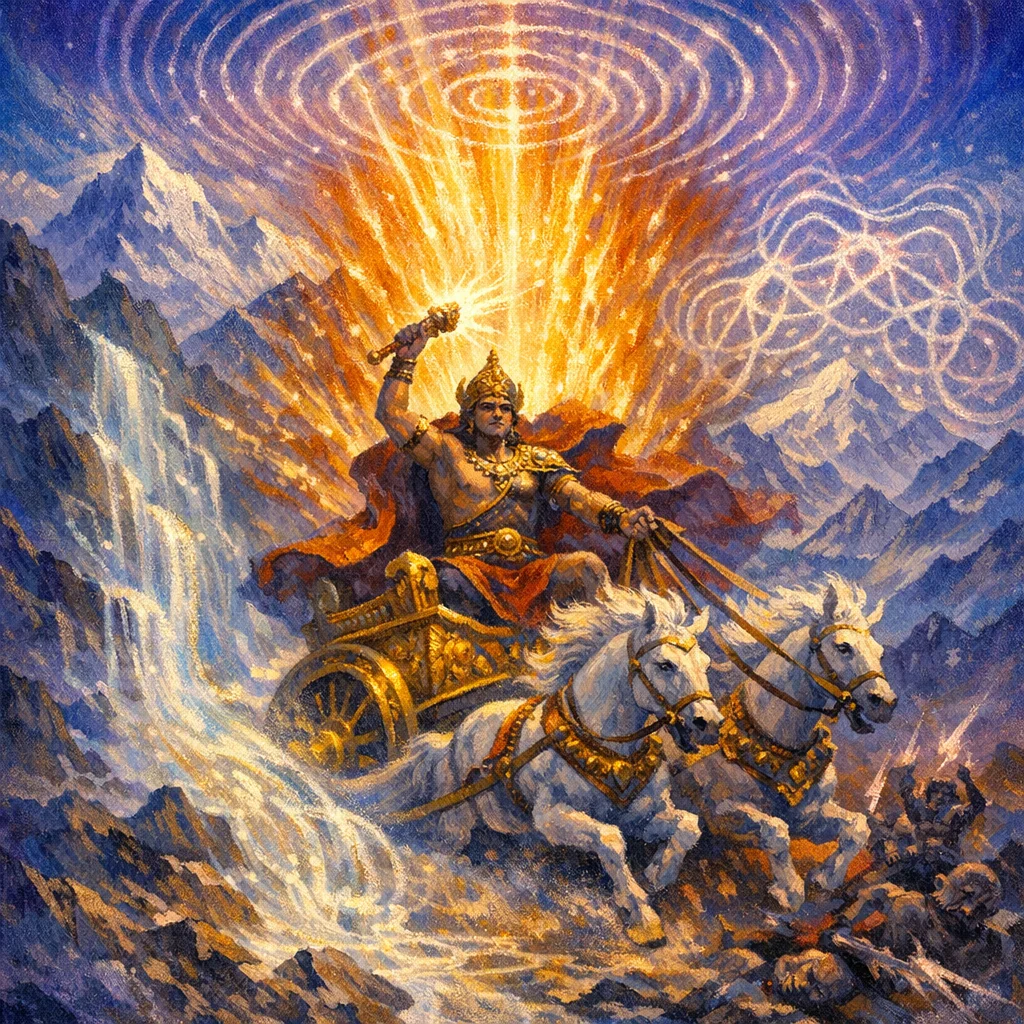
Indra empowered by Soma-exhilaration (mada/matsara) to grant victory and wealth
Indra
Exultant martial and triumphant—built on the imagery of surging Soma-power and battle-victory
Ṛṣi attribution and chandas are not supplied here; they require Rigvedic concordance for the underlying RV originals used by this Sāmavedic selection.
സോമരസത്തിന്റെ ഉന്മാദ-ശക്തി (മദ/മത്സര) കൊണ്ട് ബലപ്പെട്ട ഇന്ദ്രനെ യാഗത്തിലേക്ക് ആകർഷിച്ച്, ആ സോമപ്രഭാവം യജമാനന്റെ മേഖലയിലേക്ക് വരണമെന്ന പ്രാർത്ഥന. ഇന്ദ്രൻ പൃതനാശാട്—യുദ്ധവിജയം നൽകുന്നവൻ—ശത്രുസേനയെ തകർത്തു, രഥം വീര്യത്തോടെ ഓടിച്ച്, അവ്രത (വ്രതം പാലിക്കാത്ത) ദസ്യു-വിരോധത്തെ അടക്കി, സഹസ്രസാതിയായി ആയിരങ്ങളായി സമ്പത്ത് നൽകട്ടെ. ഇവിടെ സോമം ലഹരിയല്ല; ഇന്ദ്രനെ സന്നിധാനിപ്പിച്ച് യാഗാർപ്പണം വിജയവും ലാഭവും ധാർമ്മികക്രമവും ആക്കുന്ന അഭിഷിക്ത ശക്തിയാണ്.
Mantras
Mantra 1
मत्स्यपायि ते महः पात्रस्येव हरिवो मत्सरो मदः वृषा ते वृष्ण इन्दुर्वाजी सहस्रसातमः
ഹരിവത് (ഹരിവോ), പാത്രത്തിൽ നിന്നുയരുന്നതുപോലെ നിന്റെ മഹത്തായ ഉല്ലാസം—അതുതന്നെ തീവ്രമായ മത്സരം, മദം. വൃഷഭസമമായ സോമബിന്ദു, വൃഷഭനായ ഇന്ദ്രനുവേണ്ടി, ബലം നല്കുന്നവൻ; ആയിരങ്ങളുടെ ജയത്തിൽ അത്യന്തം വിജയി.
Mantra 2
आ नस्ते गन्तु मत्सरो वृषा मदो वरेण्यः सहावां इन्द्र सानसिः पृतनषाडमर्त्यः
ഞങ്ങളിലേക്കു നിന്റെ ഉല്ലാസപ്രേരക വേഗം വരട്ടെ; അത് വൃഷഭസമമായ, ശ്രേഷ്ഠമായ മദം. ഹേ ഇന്ദ്ര, സഹാവാൻ, സാനസി (ലാഭദാതാവ്), പൃതനാഷാഡ് (യുദ്ധജയി), അമർത്ത്യ (അമരൻ) — ഞങ്ങളിലേക്കു വരിക.
Mantra 3
त्वं हि शूरः सनिता चोदयो मनुषो रथम् सहावान्दस्युमव्रतमोषः पात्रं न शोचिषा
ഹേ ഇന്ദ്ര, നീ തന്നെയാണ് ശൂരൻ, സനിതാ (വിജയി); നീ മനുഷ്യന്റെ രഥത്തെ പ്രേരിപ്പിക്കുന്നു. സഹാവാൻ, ദസ്യുവിനെ കൊള്ളയടിക്കുന്നവൻ, അവ്രതനെ ഹരിക്കുന്നവൻ; പാത്രംപോലെ ശോചിഷാ (പ്രഭ)കൊണ്ട് നീ ദീപ്തനാകുന്നു.
Frequently Asked Questions
It celebrates Soma’s ritual exhilaration (mada/matsara) as the power that makes Indra victorious—bringing battle-success, protection, and abundant gains to the sacrificer.
The ‘pātra’ points to the Soma-cup used in the rite; the imagery stresses that Indra’s strength and the sacrificer’s benefits arise from a concrete sacrificial act, not from emotion alone.
They represent opponents of Vedic order—those without observance (a-vrata) and hostile forces (Dasyu). The hymn frames Indra’s victory as both martial and moral-ritual protection for the yajamāna.