Dashati 9
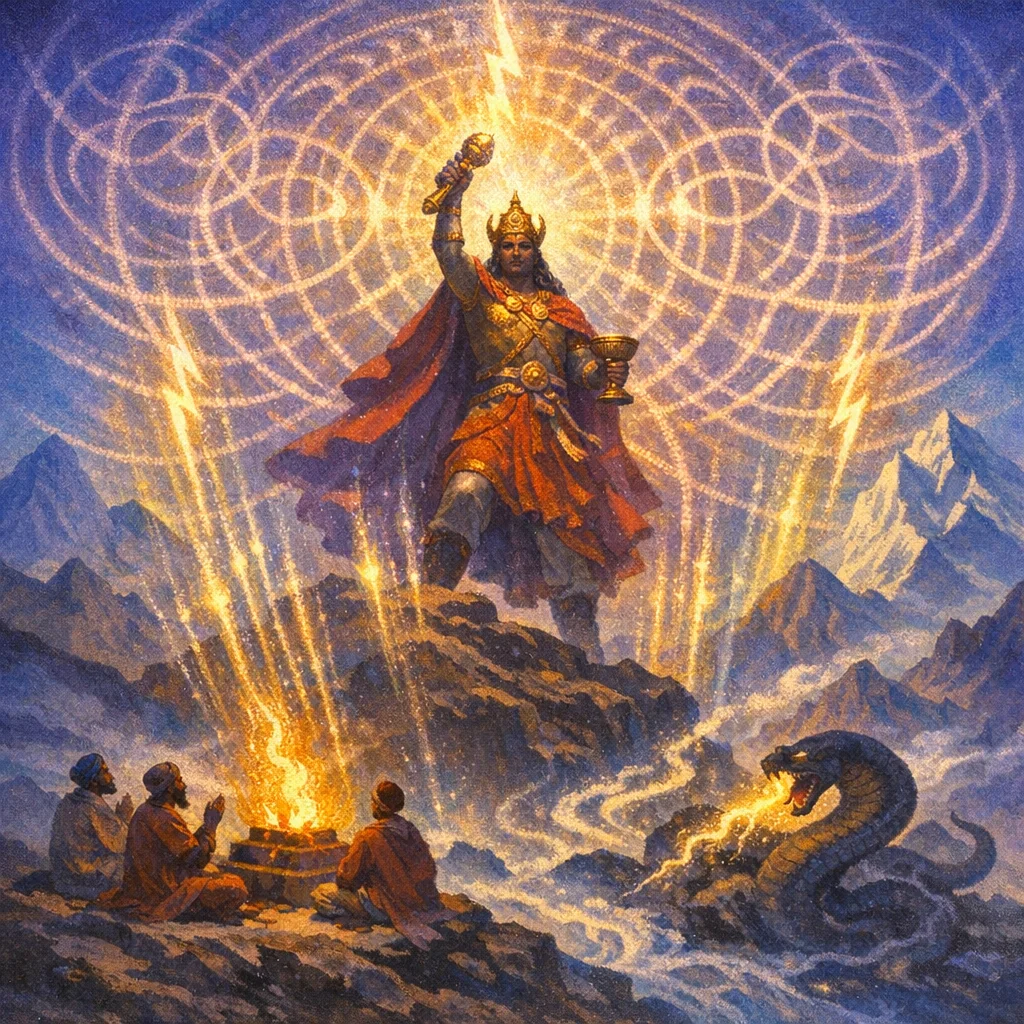
Aindra invocation: Indra’s manifest presence at the rite and his vṛtra-slaying power securing success for the sacrificers
Indra
Invitational and energizing with a heroic (vīrya) tone suited to Indra
R̥ṣi attribution is not provided here; identification normally requires Rigveda concordance for the source hymns used in this Aindra daśati.
ഐന്ദ്ര ആഹ്വാനം: ശ്രുതിയിൽ കേട്ട മന്ത്രവിധിയെ വിശ്വസ്തമായി അനുഷ്ഠിക്കുന്ന യജമാനർ സത്രത്തിൽ ഇന്ദ്രനെ സദസ്സിലേക്കു/സഭയിലേക്കു വിളിക്കുന്നു. വൃത്രഹനായ ഇന്ദ്രൻ യാഗത്തിൽ പ്രത്യക്ഷനായി അർപ്പണത്തെയും ഗായകരെയും മഹത്തായ സഹായങ്ങളാൽ (ഊതികൾ) ശക്തിപ്പെടുത്തി, സുവീര്യം (ഉത്തമ വീര്യം, ബലം, വിജയം) നൽകുകയും തടസ്സങ്ങൾ നീക്കുകയും ചെയ്യുന്നു. ഇന്ദ്രകേന്ദ്രിതമായ ഈ ആരാധനയിൽ വിശ്വേദേവന്മാർക്കും സമുച്ചയ വന്ദനം അർപ്പിച്ച് ദൈവാരാധനയിൽ അവഗണന വരാതിരിക്കണമെന്ന പ്രാർത്ഥനയും ഉൾക്കൊള്ളുന്നു.
Mantras
Mantra 1
ईङ्खयन्तीरपस्युव इन्द्रं जातमुपासते वन्वानासः सुवीर्यम्
ക്രിയാശീലരും യജ്ഞകാമികളുമായ ഉപാസകർ, സേവാക്രിയയിൽ ചലിക്കുന്നവരായി, ഇപ്പോൾ പ്രഗടനായ ഇന്ദ്രനെ ഉപാസിക്കുന്നു; അവർ ശ്രേഷ്ഠ വീര്യം (സുവീര്യം) ആകാംക്ഷയോടെ അന്വേഷിക്കുന്നു.
Mantra 2
न कि देवा इनीमसि न क्या योपयामसि मन्त्रश्रुत्यं चरामसि
ഹേ ദേവന്മാരേ, നിങ്ങളെ ആരാധിക്കുന്നതിൽ ഞങ്ങൾ ഒരിക്കലും അശ്രദ്ധ കാണിക്കുന്നില്ല; നിങ്ങളിലേക്കു സമീപിക്കുന്നതിൽ ഒരിക്കലും വീഴ്ച വരുത്തുന്നില്ല; മന്ത്രശ്രുതി പ്രകാരം ഞങ്ങൾ വിധിയെ യഥാവിധി ആചരിക്കുന്നു.
Mantra 3
दोषो आगाद्बृहद्गाय द्युमद्गामन्नाथर्वण स्तुहि देवं सवितारम्
സന്ധ്യ എത്തി; ദ്യുമദ്ഗമനായ (സവിതൃ)നുവേണ്ടി മഹാഗാനം പാടുക; ഹേ അഥർവൻ, ദേവനായ സവിതൃയെ സ്തുതിക്കു.
Mantra 4
एषो उषा अपूर्व्या व्युच्छति प्रिया दिवः स्तुषे वामश्विना बृहत्
ഇതാ ഉഷസ്—അപൂർവ, എപ്പോഴും പുതിയത്—പ്രകാശിച്ച് ഉദിക്കുന്നു, ദ്യൗവിന്റെ പ്രിയയായി. ഹേ അശ്വിനൗ, ബൃഹത് (ഉന്നത) സ്തുതിയാൽ ഞാൻ നിങ്ങളിരുവരെയും ഗാനംപോലെ സ്തുതിക്കുന്നു.
Mantra 5
इन्द्रो दधीचो अस्थभिर्वृत्राण्यप्रतिष्कुतः जघान नवतीर्नव
ഇന്ദ്രൻ—അപ്രതിഷ്കുത (അപരാജിതൻ)—ദധീചിയുടെ അസ്ഥികളാൽ വൃത്രന്മാരെ സംഹരിച്ചു; തൊണ്ണൂറ്റൊമ്പതും—എല്ലാവരെയും.
Mantra 6
इन्द्रेहि मत्स्यन्धसो विश्वेभिः सोमपर्वभिः महां अभिष्टिरोजसा
ഹേ ഇന്ദ്ര, വരിക; എല്ലാ സോമ-പർവങ്ങളിലും സോമരസത്തിൽ ഉന്മത്തനാകുക. നിന്റെ ബലത്താൽ മഹത്തായതാണ് നിന്റെ അഭിഷ്ടി (സഹായം/രക്ഷ).
Mantra 7
आ तू न इन्द्र वृत्रहन्नस्माकमर्धमा गहि महान्महीभिरूतिभिः
ഹേ ഇന്ദ്രാ, വൃത്രഹൻ! ഇപ്പോൾ ഞങ്ങളിലേക്കു വരിക; നമ്മുടെ സഭയിലേക്കു, മഹത്തായ മഹാ സഹായങ്ങളോടുകൂടി വരിക.
Mantra 8
ओजस्तदस्य तित्विष उभे यत्समवर्तयत् इन्द्रश्चर्मेव रोदसी
അവന്റെ ഉഗ്രശക്തിയുടെ ബലം അത്തരം തന്നെയാണ്; അതിനാൽ ഇന്ദ്രൻ ചർമംപോലെ ഇരുലോകങ്ങളെയും—ദ്യൗവും പൃഥ്വിയും—ആവരണം ചെയ്തു.
Mantra 9
अयमु ते समतसि कपोत इव गर्भधिम् वचस्तच्चिन्न ओहसे
ഇത് നിനക്കു തീർച്ചയായും യോജിച്ചതാണ്; ഗർഭത്തിൽ കുഞ്ഞിനെ ധരിക്കുന്ന പ്രാവുപോലെ ഈ വാക്ക്—നീ അതിനെയും തള്ളിക്കളയുന്നില്ല.
Mantra 10
वात आ वातु बेषजं शम्भु मयोभु नो हृदे प्र न अयूंषि तारिषत्
വാതാ, ഞങ്ങളിലേക്കു വീശുക; ഔഷധമായ ചികിത്സ—ശംഭു, മയോഭു—ഞങ്ങളുടെ ഹൃദയത്തിലേക്കു കൊണ്ടുവരിക. അവൻ ഞങ്ങളുടെ പ്രാണശക്തികളെ സുരക്ഷിതമായി കടത്തട്ടെ.
Frequently Asked Questions
It centers on calling Indra to the ritual assembly and relying on his Vṛtra-slaying power to remove obstacles and grant strength (suvīrya) to the worshippers.
It teaches that correct, tradition-grounded performance is essential: the deity is approached through the properly heard and transmitted formula, and the sacrifice gains authority through that fidelity.
In this context it is understood as the sacrificer’s ‘party/assembly’ (the ritual session in the sadas) or the ‘share’ of worship—asking Indra to come to the worshippers’ appointed place and portion.