Adhyaya 14
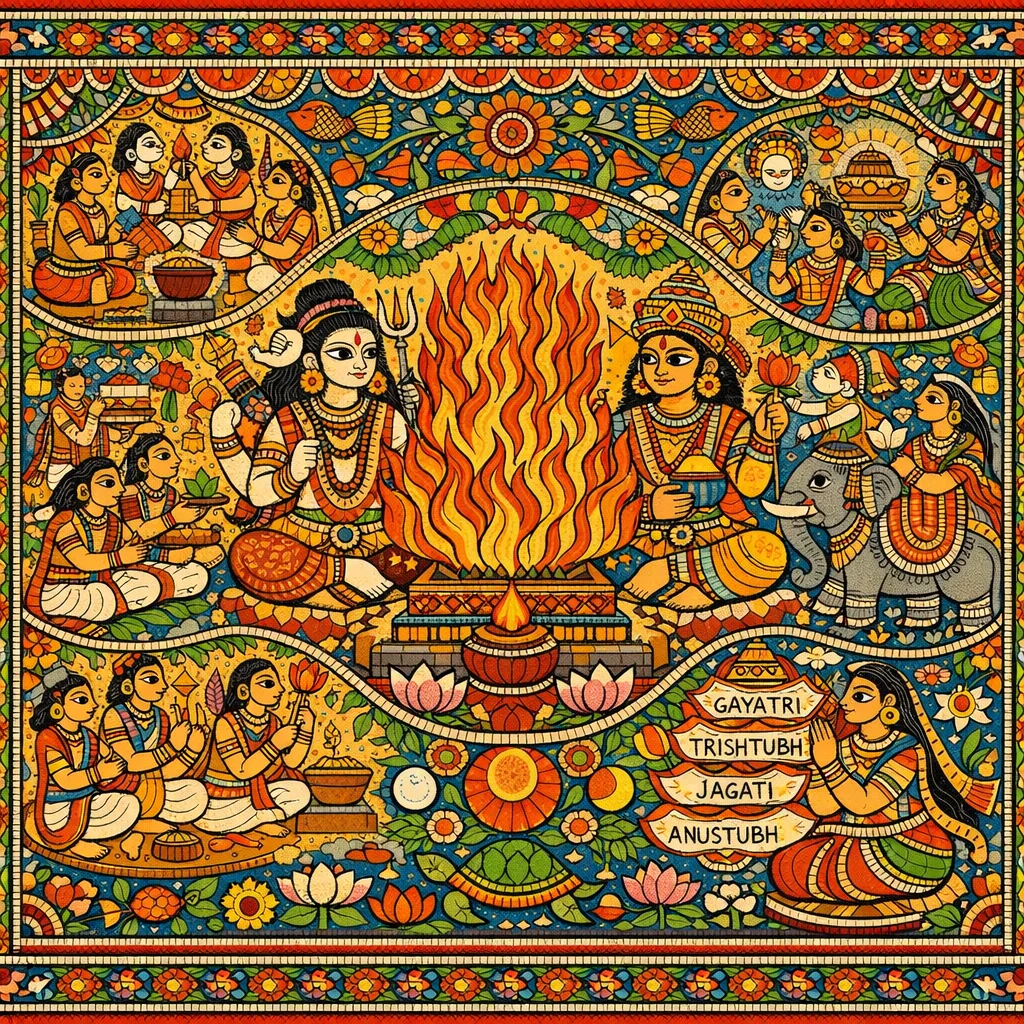
Fourth and fifth layers of the fire altar.
Mantras
Mantra 1
ध्रु॒वक्षि॑तिर्ध्रु॒वयो॑निर्ध्रु॒वाऽसि॑ ध्रु॒वं योनि॒मा सी॑द साधु॒या । उख्य॑स्य के॒तुं प्र॑थ॒मं जु॑षा॒णाऽश्विना॑ऽध्व॒र्यू सा॑दयतामि॒ह त्वा॑
Of firm standing, of firm foundation, thou art firm: sit thou down upon the firm womb, in due and seemly wise. Enjoying the first signal of the Ukhya, O Aśvins, ye Adhvaryus, set ye her down here.
Mantra 2
कुला॒यिनी॑ घृ॒तव॑ती॒ पुरु॑न्धिः स्यो॒ने सी॑द॒ सद॑ने पृथि॒व्याः । अ॒भि त्वा॑ रु॒द्रा वस॑वो गृणन्त्वि॒मा ब्रह्म॑ पीपिहि॒ सौभ॑गायाश्विना॑ऽध्व॒र्यू सा॑दयतामि॒ह त्वा॑
Nest-bearing, rich in ghee, bounteous, sit thou in the kindly seat, in the abode of Earth. Let the Rudras and the Vasus acclaim thee: fill thou these sacred utterances for good fortune. O Aśvins, ye Adhvaryus, set ye her down here.
Mantra 3
स्वैर्दक्षै॒र्दक्ष॑पिते॒ह सी॑द दे॒वाना॑ᳪ सु॒म्ने बृ॑ह॒ते रणा॑य । पि॒तेवै॑धि सू॒नव॒ आ सु॒शेवा॑ स्वावे॒शा त॒न्वा सं वि॑शस्वा॒श्विना॑ऽध्व॒र्यू सा॑दयतामि॒ह त्वा॑
With thine own powers, O Sire of sacred skill, sit thou down here, for the great joy, in the gracious favour of the Gods. Wax thou, as a father, kindly unto the sons; entering thine own proper station, with thy body settle thou in union. The two Aśvins, the Adhvaryus, shall here cause thee to be seated.
Mantra 4
पृ॒थि॒व्याः पुरी॑षम॒स्यप्सो॒ नाम॒ तां त्वा॒ विश्वे॑ अ॒भि गृ॑णन्तु दे॒वाः । स्तोम॑पृष्ठा घृ॒तव॑ती॒ह सी॑द प्र॒जाव॑द॒स्मे द्रवि॒णाऽऽय॑जस्वा॒श्विना॑ऽध्व॒र्यू सा॑दयतामि॒ह त्वा॑
Thou art the Earth’s clay-filling; thy name is ‘Waters’: may all the Gods acclaim thee. O thou whose back is hymn and who art rich in ghee, sit thou down here; win for us wealth with offspring. The two Aśvins, the Adhvaryus, shall here cause thee to be seated.
Mantra 5
अदि॑त्यास्त्वा पृ॒ष्ठे सा॑दयाम्य॒न्तरि॑क्षस्य ध॒र्त्रीं वि॒ष्टम्भ॑नीं दि॒शामधि॑पत्नीं॒ भुव॑नानाम् |ऊ॒र्मिर्द्र॒प्सो अ॒पाम॑सि वि॒श्वक॑र्मा त॒ ऋषि॑र॒श्विना॑ऽध्व॒र्यू सा॑दयतामि॒ह त्वा॑
On Aditi’s back I cause thee to be seated—the sustainer of the mid-air, the stay, the prop; the sovereign mistress of the quarters, of the worlds. Thou art the wave, the drop of the Waters; Viśvakarman is thy seer. The two Aśvins, the Adhvaryus, shall here cause thee to be seated.
Mantra 6
शु॒क्रश्च॒ शुचि॑श्च ग्रैष्मा॑वृ॒तू अ॒ग्नेर॑न्तः श्ले॒षो॒ऽसि॒ कल्पे॑तां॒ द्यावा॑पृथि॒वी कल्प॑न्ता॒माप॒ ओष॑धय॒: कल्प॑न्ताम॒ग्नय॒: पृथ॒ङ्नम॒ ज्यैष्ठ्या॑य॒ सव्र॑ताः| ये अ॒ग्नय॒: सम॑नसोऽन्त॒रा द्यावा॑पृथि॒वी इ॒मे | ग्रै॒ष्मा॑वृ॒तू अ॑भि॒कल्प॑माना॒ इन्द्र॑मिव दे॒वा अ॑भि॒संवि॑शन्तु॒ तया॑ दे॒वत॑याऽङ्गिर॒स्वद् ध्रुवे सी॑दतम्
Bright and pure are the two summer seasons: thou art Agni’s inward bond. Let Heaven and Earth be duly fitted; let the Waters be fitted; let the Plants be fitted; let the Fires be fitted—severally, obeisance!—for sovereignty, being of one ordinance. Those Fires that are of one mind between Heaven and Earth—these—when the two summer seasons are being duly fitted, let the Gods enter upon them as upon Indra. With that deity, in Angiras-wise fashion, sit ye down upon the fixed station.
Mantra 7
स॒जूरृ॒तुभि॑: स॒जूर्वि॒धाभि॑: स॒जूर्दे॒वैः स॒जूर्दे॒वैर्व॑योना॒धैर॒ग्नये॑ त्वा वैश्वान॒राया॒श्विना॑ऽध्व॒र्यू सा॑दयतामि॒ह त्वा॑ स॒जूरृ॒तुभि॑: स॒जूर्वि॒धाभि॑: स॒जूर्वसु॑भिः स॒जूर्दे॒वैर्व॑योनाधैर॒ग्नये॑ त्वा वैश्वान॒राया॒श्विना॑ऽध्व॒र्यू सा॑दयतामि॒ह त्वा॑ स॒जूरृ॒तुभि॑: स॒जूर्वि॒धाभि॑: स॒जू रु॒द्रैः स॒जूर्दे॒वैर्व॑योना॒धैर॒ग्नये॑ त्वा वैश्वान॒राया॒श्विना॑ऽध्व॒र्यू सा॑दयतामि॒ह त्वा॑ स॒जूरृ॒तुभि॑: स॒जूर्वि॒धाभि॑: स॒जूरा॑दि॒त्यैः स॒जूर्दे॒वैर्व॑योनाधैर॒ग्नये॑ त्वा वैश्वान॒राया॒श्विना॑ऽध्व॒र्यू सा॑दयतामि॒ह त्वा॑ स॒जूरृ॒तुभि॑: स॒जूर्वि॒धाभि॑: स॒जूर्विश्वै॑र्दे॒वैः स॒जूर्दे॒वैर्व॑योनाधैर॒ग्नये॑ त्वा वैश्वान॒राया॒श्विना॑ऽध्व॒र्यू सा॑दयतामि॒ह त्वा॑
In concord with the seasons, in concord with the ordinances; in concord with the Gods, in concord with the Gods that establish the generative seat—unto Agni Vaiśvānara I seat thee. The two Aśvins, the Adhvaryus, shall here cause thee to be seated. (Again: in concord with the Vasus… with the Rudras… with the Ādityas… with all the Gods.)
Mantra 8
प्रा॒णं मे॑ पाह्यपा॒नं मे॑ पाहि व्या॒नं मे॑ पाहि॒ चक्षु॑र्म उ॒र्व्या वि भा॑हि॒ श्रोत्रं॑ मे श्लोकय । अ॒पः पि॒न्वौष॑धीर्जिन्व द्वि॒पाद॑व चतु॑ष्पात् पाहि दि॒वो वृष्टि॒मेर॑य
Guard thou my in-breath; guard thou my out-breath; guard thou my pervading breath. Make my eye shine forth over the wide earth; make my ear to sound clearly. Quicken the waters; quicken the plants; guard the two-footed and the four-footed; from heaven impel the rain.
Mantra 9
मू॒र्धा वय॑: प्र॒जाप॑ति॒श्छन्द॑: क्ष॒त्रं वयो॒ मय॑न्दं॒ छन्दो॑ विष्ट॒म्भो वयोऽधि॑पति॒श्छन्दो॑ वि॒श्वक॑र्मा॒ वय॑: परमे॒ष्ठी छन्दो॑ ब॒स्तो वयो॑ विव॒लं छन्दो॒ वृष्णि॒र्वयो॑ विशा॒लं छन्द॒: पुरु॑षो॒ वय॑स्त॒न्द्रं छन्दो॑ व्या॒घ्रो वयोऽना॑धृष्टं॒ छन्द॑: सि॒ᳪहो वय॑श्छ॒दिश्छन्द॑: पष्ठ॒वाड्वयो॑ बृह॒ती छन्द॑ उ॒क्षा वय॑: क॒कुप् छन्द॑ ऋष॒भो वय॑: स॒तोबृ॑हती॒ छन्द॑:
The Head is vigour: Prajāpati is the metre. Royal power is vigour: Mayanda is the metre. The Support is vigour: the Over-lord is the metre. Viśvakarman is vigour: Parameṣṭhin is the metre. The He-goat is vigour: Vivalam is the metre. The Bull is vigour: the Wide is the metre. Man is vigour: Sloth is the metre. The Tiger is vigour: the Unassailable is the metre. The Lion is vigour: the Covering is the metre. The Back-bearer is vigour: Bṛhatī is the metre. The Ox is vigour: Kakubh is the metre. The Bull is vigour: Satobṛhatī is the metre.
Mantra 11
अ॒न॒ड्वान्वय॑: प॒ङ्क्तिश्छन्दो॑ धे॒नुर्वयो॒ जग॑ती॒ छन्द॒त्र्यवि॒र्वय॑स्त्रि॒ष्टुप् छन्दो॑ दित्य॒वाड्वयो॑ वि॒राट् छन्द॒: पञ्चा॑वि॒र्वयो॑ गाय॒त्री छन्द॑ स्त्रिव॒त्सो वय॑ उ॒ष्णिक् छन्द॑ऽ स्तु॑र्य॒वाड्वयो॑ऽनु॒ष्टुप् छन्दो॑ लो॒कं ता इन्द्र॑म् ।। १ ०।। इन्द्रा॑ग्नी॒ अव्य॑थमाना॒मिष्ट॑कां दृᳪहतं यु॒वम् । पृ॒ष्ठेन॒ द्यावा॑पृथि॒वी अ॒न्तरि॑क्षं च॒ वि बा॑धसे
The draught-ox is vigour: Paṅkti is the metre. The cow is vigour: Jagatī is the metre. The threefold ewe is vigour: Triṣṭubh is the metre. The bearer is vigour: Virāj is the metre. The fivefold ewe is vigour: Gāyatrī is the metre. The three-calved is vigour: Uṣṇik is the metre. The bearer is vigour: Anuṣṭubh is the metre. Indra and Agni, uninjured, do ye make firm the brick; with your back ye thrust apart heaven and earth and the mid-air.
Mantra 12
वि॒श्वक॑र्मा त्वा सादयत्व॒न्तरि॑क्षस्य पृ॒ष्ठे व्यच॑स्वतीं॒ प्रथ॑स्वतीम॒न्तरि॑क्षं यच्छा॒न्तरि॑क्षं दृᳪहा॒न्तरि॑क्षं॒ मा हि॑ᳪसीः । विश्व॑स्मै प्रा॒णाया॑पा॒नाय॑ व्या॒नायो॑दा॒नाय॑ प्रति॒ष्ठायै॑ च॒रित्रा॑य । वा॒युष्ट्वा॒ऽभि पा॑तु म॒ह्या स्व॒स्त्या छ॒र्दिषा॒ शन्त॑मेन॒ तया॑ दे॒वत॑याऽङ्गिर॒स्वद् ध्रु॒वा सी॑द
May Viśvakarman set thee down upon the back of the mid-air, wide-spreading, far-expanding. Hold thou the mid-air; make firm the mid-air; injure not the mid-air. For the All— for in-breath, out-breath, pervading breath, and up-breath; for firm standing and for due course. May Vāyu guard thee on every side with mighty welfare, with the most gracious shelter: with that deity, O Angiras-like one, sit thou down, being firm.
Mantra 13
राज्ञ्य॑सि॒ प्राची॒ दिग्वि॒राड॑सि॒ दक्षि॑णा॒ दिक् स॒म्राड॑सि प्र॒तीची॒ दिक् स्व॒राड॒स्युदी॑ची॒ दिगधि॑पत्न्यसि बृह॒ती दिक्
Thou art the Queen: the eastern quarter. Thou art the Wide-Sovereign: the southern quarter. Thou art the Universal-Sovereign: the western quarter. Thou art the Self-Sovereign: the northern quarter. Thou art the Over-lady: the great quarter.
Mantra 14
वि॒श्वक॑र्मा त्वा सादयत्व॒न्तरि॑क्षस्य पृ॒ष्ठे ज्योति॑ष्मतीम् । विश्व॑स्मै प्रा॒णाया॑पा॒नाय॑ व्या॒नाय॒ विश्वं॒ ज्योति॑र्यच्छ । वा॒युष्टेऽधि॑पति॒स्तया॑ दे॒वत॑याऽङ्गिर॒स्वद् ध्रु॒वा सी॑द
May Viśvakarman cause thee to be seated, luminous, upon the back of the mid-air. Unto all (beings)—for the in-breath, the out-breath, and the pervading breath—do thou bestow all light. Vāyu is thy lord: with that deity, after the manner of the Aṅgirases, sit thou firm, O Dhruvā.
Mantra 15
नभ॑श्च नभ॒स्य॒श्च॒ वार्षि॑कावृ॒तू अ॒ग्नेर॑न्तः श्ले॒षो॒ऽसि॒ कल्पे॑तां॒ द्यावा॑पृथि॒वी कल्प॑न्ता॒माप॒ ओष॑धय॒: कल्प॑न्ताम॒ग्नय॒: पृथ॒ङ्नम॒ ज्यैष्ठ्या॑य॒ सव्र॑ताः। ये अ॒ग्नय॒: सम॑नसोऽन्त॒रा द्यावा॑पृथि॒वी इ॒मे | वार्षि॑कावृ॒तू अ॑भि॒कल्प॑माना॒ इन्द्र॑मिव दे॒वा अ॑भि॒संवि॑शन्तु॒ तया॑ दे॒वत॑याऽङ्गिर॒स्वद् ध्रु॒वे सी॑दतम्
The Sky and the Sky’s (power), the two rainy seasons—thou art Agni’s inward bond. Let Heaven and Earth be duly adjusted; let the Waters be adjusted; let the Plants be adjusted; let the Fires be adjusted—severally homage, for pre-eminence, being of one observance. Those Fires which, of one mind, are between this Heaven and Earth—those two rainy seasons, being duly fitted—let them, like the Gods closing in upon Indra, close in (in concord). With that deity, after the manner of the Aṅgirases, sit ye fast upon the Dhruvā.
Mantra 16
इ॒षश्चो॒र्जश्च॑ शार॒दावृ॒तू अ॒ग्नेर॑न्तः श्ले॒षो॒ऽसि॒ कल्पे॑तां॒ द्यावा॑पृथि॒वी कल्प॑न्ता॒माप॒ ओष॑धय॒: कल्प॑न्ताम॒ग्नय॒: पृथ॒ङ्नम॒ ज्यैष्ठ्याय॒ सव्र॑ताः । ये अ॒ग्नय॒: सम॑नसोऽन्त॒रा द्यावा॑पृथि॒वी इ॒मे शा॒र॒दावृ॒तू अ॑भि॒कल्प॑माना॒ इन्द्र॑मिव दे॒वा अ॑भि॒संवि॑शन्तु॒ तया॑ दे॒वत॑याऽङ्गिर॒स्वद् ध्रु॒वे सी॑दतम्
Refreshment and Strength, the two autumnal seasons—thou art Agni’s inward bond. Let Heaven and Earth be duly adjusted; let the Waters be adjusted; let the Plants be adjusted; let the Fires be adjusted—severally homage, for pre-eminence, being of one observance. Those Fires which, of one mind, are between this Heaven and Earth—those two autumnal seasons, being duly fitted—let them, like the Gods closing in upon Indra, close in (in concord). With that deity, after the manner of the Aṅgirases, sit ye fast upon the Dhruvā.
Mantra 17
आयु॑र्मे पाहि प्रा॒णं मे॑ पाह्यपा॒नं मे॑ पाहि व्या॒नं मे॑ पाहि॒ चक्षु॑र्मे पाहि॒ श्रोत्रं॑ मे पाहि॒ वाचं॑ मे पिन्व॒ मनो॑ मे जिन्वात्मानं॑ मे पाहि॒ ज्योति॑र्मे यच्छ
Protect my life; protect my in-breath; protect my out-breath; protect my pervading breath. Protect mine eye; protect mine ear. Make my speech to thrive; quicken my mind. Protect my self; bestow upon me light.
Mantra 18
मा छन्द॑: प्र॒मा छन्द॑: प्र॑ति॒मा छन्दो॑ अस्रीवय॒श्छन्द॑: प॒ङ्क्तिश्छन्द॑ उ॒ष्णिक् छन्दो॑ बृह॒ती छन्दो॑ ऽनु॒ष्टुप् छन्दो॑ वि॒राट् छन्दो॑ गा॑य॒त्री छन्द॑ स्त्रि॒ष्टुप् छन्दो॒ जग॑ती॒ छन्द॑:
Metre is the measure; metre is the right measure; metre is the counter-measure; metre is the Asrīvayas; metre is the Paṅkti; metre is the Uṣṇik; metre is the Bṛhatī; metre is the Anuṣṭubh; metre is the Virāj; metre is the Gāyatrī; metre is the Triṣṭubh; metre is the Jagatī.
Mantra 19
पृ॒थि॒वी छन्दो॒ ऽन्तरि॑क्षं॒ छन्दो॒ द्यौ॒श्छन्द॒: समा॒श्छन्दो॒ नक्ष॑त्राणि॒ छन्दो॒ वाक् छन्दो॒ मन॒श्छन्द॑: कृ॒षिश्छन्दो॒ हिर॑ण्यं॒ छन्दो॒ गौश्छन्दो॒ ऽजाश्छन्दो ऽश्व॒श्छन्द॑:
The Earth is the metre; the Mid-air is the metre; Heaven is the metre; the Seasons are the metre; the Stars are the metre; Speech is the metre; Mind is the metre; Husbandry is the metre; Gold is the metre; the Cow is the metre; the Goats are the metre; the Horse is the metre.
Mantra 20
अ॒ग्निर्दे॒वता॒ वातो॑ दे॒वता॒ सूर्यो॑ दे॒वता॑ च॒न्द्रमा॑ दे॒वता॒ वस॑वो दे॒वता॑ रु॒द्रा दे॒वता॑ ऽऽदि॒त्या दे॒वता॑ म॒रुतो॑ दे॒वता॒ विश्वे॑ दे॒वा देवता॒ बृह॒स्पति॑र्दे॒वतेन्द्रो॑ दे॒वता॒ वरु॑णो दे॒वता॑
Agni is the deity; Wind is the deity; the Sun is the deity; the Moon is the deity; the Vasus are the deity; the Rudras are the deity; the Ādityas are the deity; the Maruts are the deity; all the Gods are the deity; Bṛhaspati is the deity; Indra is the deity; Varuṇa is the deity.
Mantra 21
मू॒र्धाऽसि॒ राड् ध्रु॒वाऽसि॑ ध॒रुणा॑ ध॒र्त्र्य॒सि॒ धर॑णी । आयु॑षे त्वा॒ वर्च॑से त्वा कृ॒ष्यै त्वा॒ क्षेमा॑य त्वा
Thou art the head, the sovereign; thou art firm, a support; thou art the bearer, the sustaining base. For life I take thee; for lustre I take thee; for husbandry I take thee; for welfare I take thee.
Mantra 22
यन्त्री॒ राड् य॒न्त्र्य॒सि॒ यम॑नी ध्रु॒वाऽसि॒ धरि॑त्री । इ॒षे त्वो॒र्जे त्वा॑ र॒य्यै त्वा॒ पोषा॑य त्वा लो॒कं ता इन्द्र॑म्
Thou art the controller, the sovereign; thou art the restrainer, fixed and supporting. For impulse I take thee; for strength I take thee; for wealth I take thee; for thriving I take thee; (I take) the world—Indra (to secure it).
Mantra 23
आ॒शुस्त्रि॒वृद्भा॒न्तः प॑ञ्चद॒शो व्यो॑मा सप्तद॒शो ध॒रुण॑ एकवि॒ᳪशः प्रतू॑र्तिरष्टाद॒शस्तपो॑ नवद॒शो॒ ऽभीव॒र्त्त: स॑वि॒ᳪशो वर्चो॑ द्वावि॒ᳪशः स॒म्भर॑णस्त्रयोवि॒ᳪशो योनि॑श्चतुर्वि॒ᳪशो गर्भा॑: पञ्चवि॒ᳪश ओज॑स्त्रिण॒वः क्रतु॑रेकत्रि॒ᳪशः प्र॑ति॒ष्ठा त्र॑यस्त्रि॒ᳪशो ब्र॒ध्नस्य॑ वि॒ष्टपं॑ चतुस्त्रि॒ᳪशो नाक॑: षट्त्रि॒ᳪशो वि॑व॒र्तो॒ऽष्टाचत्वारि॒ᳪशो ध॒र्त्रं च॑तुष्टो॒मः
Swift is the Trivṛt; shining is the Pañcadaśa; the firmament is the Saptadaśa; the support is the Ekaviṃśa; onward impulse is the Aṣṭādaśa; ardour is the Navadaśa; the overcoming is the Saviṃśa; lustre is the Dvāviṃśa; the gathering is the Trayoviṃśa; the womb is the Caturviṃśa; the embryos are the Pañcaviṃśa; vigour is the Triṇava; resolve is the Ekatriṃśa; the foundation is the Trayastr̥ṃśa; the station of the Bright One is the Catustr̥ṃśa; heaven is the Ṣaṭtr̥ṃśa; revolution is the Aṣṭācātvāriṃśa; the sustaining frame is the Catuṣṭoma.
Mantra 24
अ॒ग्नेर्भा॒गो॒ऽसि दी॒क्षाया॒ आधि॑पत्यं॒ ब्रह्म॑ स्पृ॒तं त्रि॒वृत्स्तोम॒ इन्द्र॑स्य भा॒गो॒ऽसि॒ विष्णो॒राधि॑पत्यं क्ष॒त्रᳪ स्पृ॒तं प॑ञ्चद॒शः स्तोमो॑ नृ॒चक्ष॑सां भा॒गो॒ऽसि धा॒तुराधि॑पत्यं ज॒नित्र॑ᳪ स्पृ॒तᳪ स॑प्तद॒श स्तोमो मि॒त्रस्य॑ भा॒गो॒ऽसि॒ वरु॑ण॒स्याधि॑पत्यं दि॒वो वृष्टि॒र्वात॑ स्पृ॒त ए॑कवि॒ᳪश स्तोम॑:
Thou art Agni’s portion: the lordship of Consecration—Brahman—duly made good, the Trivṛt Stoma. Thou art Indra’s portion: the lordship of Viṣṇu—Kṣatra—duly made good, the Pañcadaśa Stoma. Thou art the portion of the seers of men: the lordship of Dhātṛ—the begetter—duly made good, the Saptadaśa Stoma. Thou art Mitra’s portion: the lordship of Varuṇa—heaven’s rain and wind—duly made good, the Ekaviṃśa Stoma.
Mantra 25
वसू॑नां भा॒गो॒ऽसि रु॒द्राणा॒माधि॑पत्यं॒ चतु॑ष्पात् स्पृ॒तं च॑तुर्वि॒ᳪश स्तोम॑ आदि॒त्यानां॑ भा॒गो॒ऽसि म॒रुता॒माधि॑पत्यं॒ गर्भा॑ स्पृ॒ताः प॑ञ्चवि॒ᳪश॒ स्तोमो ऽदि॑त्यै भा॒गो॒ऽसि पू॒ष्ण आधि॑पत्य॒मोज॑ स्पृ॒तं त्रि॑ण॒व स्तोमो॑ दे॒वस्य॑ सवि॒तुर्भा॒गो॒ऽसि बृह॒स्पते॒राधि॑पत्यᳪ स॒मीची॒र्दिश॑ स्पृ॒ताश्च॑तुष्टो॒म स्तोम॑:
Thou art the portion of the Vasus: the lordship of the Rudras—four-footed—duly made good, the Caturviṃśa Stoma. Thou art the portion of the Ādityas: the lordship of the Maruts—embryos—duly made good, the Pañcaviṃśa Stoma. Thou art Aditi’s portion: the lordship of Pūṣan—vigour—duly made good, the Triṇava Stoma. Thou art the portion of god Savitṛ: the lordship of Bṛhaspati—the right directions—duly made good, the Catuṣṭoma Stoma.
Mantra 26
यवा॑नां भा॒गोऽस्यय॑वाना॒माधि॑पत्यं प्र॒जा स्पृ॒ताश्च॑तुश्चत्वारि॒ᳪश स्तोम॑ ऋ॑भू॒णां भा॒गो॒ऽसि विश्वे॑षां दे॒वाना॒माधि॑पत्यं भू॒तᳪ स्पृ॒तं त्र॑यस्त्रि॒ᳪश स्तोम॑:
Thou art the portion of barley: the lordship over what is other than barley—creatures—duly made good, the Catuścatvāriṃśa Stoma. Thou art the portion of the Ṛbhus: the lordship of all the gods—being—duly made good, the Trayastriṃśa Stoma.
Mantra 27
सह॑श्च सह॒स्य॒श्च हैम॑न्तिकावृ॒तू अ॒ग्नेर॑न्तः श्ले॒षो॒ऽसि॒ कल्पे॑तां॒ द्यावा॑पृथि॒वी कल्प॑न्ता॒माप॒ ओष॑धय॒: कल्प॑न्ताम॒ग्नय॒: पृथ॒ङ्नम॒ ज्यैष्ठ्या॑य॒ सव्र॑ताः। ये अ॒ग्नय॒: सम॑नसोऽन्त॒रा द्यावा॑पृथि॒वी इ॒मे| है॑मन्तिकावृ॒तू अ॑भि॒कल्प॑माना॒ इन्द्र॑मिव दे॒वा अ॑भि॒संवि॑शन्तु॒ तया॑ दे॒वत॑याऽङ्गिर॒स्वद् ध्रु॒वे सी॑दतम्
Strength and the Strong—those two winter seasons—thou art Agni’s inward bond. Let Heaven and Earth be duly ordered; let the Waters and the Plants be duly ordered; let the Fires be duly ordered—severally, homage!—for supremacy, of one observance. Those fires, of one mind, that are between Heaven and Earth—let them, as the gods gather round Indra, converge, being duly ordered by those two winter seasons; and with that divinity, Angiras-like, sit ye down in the firm place.
Mantra 28
एक॑यास्तुवत प्र॒जा अ॑धीयन्त प्र॒जाप॑ति॒रधि॑पतिरासीत् ति॒सृभि॑रस्तुवत॒ ब्रह्मा॑सृज्यत॒ ब्रह्म॑ण॒स्पति॒रधि॑पतिरासीत् प॒ञ्चभि॑रस्तुवत भू॒तान्य॑सृज्यन्त भू॒तानां॒ पति॒रधि॑पतिरासीत् स॒प्तभि॑रस्तुवत सप्त ऋ॒षयो॑ऽसृज्यन्त धा॒ताऽधि॑पतिरासीत्
With one he praised: creatures were brought into being; Prajāpati was the overlord. With three he praised: Brahman was created; Brahmaṇaspati was the overlord. With five he praised: beings were created; the Lord of beings was the overlord. With seven he praised: the seven Ṛṣis were created; Dhātṛ was the overlord.
Mantra 29
न॒वभि॑रस्तुवत पि॒तरो॑ऽसृज्य॒न्तादि॑ति॒रधि॑पत्न्यासीदेकाद॒शभि॑रस्तुवत ऋ॒तवो॑ऽसृज्यन्तार्त॒वा अधि॑पतय आसँस्त्रयोद॒शभि॑रस्तुवत॒ मासा॑ असृज्यन्त संवत्स॒रोऽधि॑पतिरासीत् पञ्चद॒शभि॑रस्तुवत क्ष॒त्रम॑सृज्य॒तेन्द्रो॑ऽधि॑पतिरासीत् सप्तद॒शभि॑रस्तुवत ग्रा॒म्याः प॒शवो॑ऽसृज्यन्त॒ बृह॒स्पति॒रधि॑पतिरासीत्
With nine he lauded: the Fathers were created; Aditi was their presiding consort. With eleven he lauded: the Seasons were created; the Seasonal ones were their lords. With thirteen he lauded: the Months were created; the Year was their lord. With fifteen he lauded: Royal power was created; Indra was its lord. With seventeen he lauded: the domestic beasts were created; Bṛhaspati was their lord.
Mantra 30
न॒वद॒शभि॑रस्तुवत शूद्रा॒र्याव॑सृज्येतामहोरा॒त्रे अधि॑पत्नी आस्ता॒मेक॑विᳪशत्यास्तुव॒तैक॑शपाः प॒शवो॑ऽसृज्यन्त॒ वरु॒णोऽधि॑पतिरासी॒त् त्रयो॑विᳪशत्यास्तुवत क्षु॒द्रा: प॒शवो॑ऽसृज्यन्त पू॒षाऽधि॑पतिरासी॒त् पञ्च॑विᳪशत्यास्तुवतार॒ण्याः प॒शवो॑ऽसृज्यन्त वा॒युरधि॑पतिरासीत् स॒प्तवि॑ᳪशत्याऽस्तुवत॒ द्यावा॑पृथि॒वी व्यै॑तां॒ वस॑वो रु॒द्रा आ॑दि॒त्या अ॑नु॒व्या॒यँ॒स्त ए॒वाधि॑पतय आसन्
With nineteen he lauded: the Śūdra and the Ārya were created; Day and Night were their presiding consorts. With twenty-one he lauded: the single-hoofed beasts were created; Varuṇa was their lord. With twenty-three he lauded: the small beasts were created; Pūṣan was their lord. With twenty-five he lauded: the wild beasts were created; Vāyu was their lord. With twenty-seven he lauded: Heaven and Earth were spread apart; the Vasus, the Rudras, and the Ādityas followed after—these indeed were the lords thereof.
Mantra 31
नव॑विᳪशत्याऽस्तुवत॒ वन॒स्पत॑योऽसृज्यन्त॒ सोमोऽधि॑पतिरासी॒देक॑त्रिᳪशताऽस्तुवत प्र॒जा अ॑सृज्यन्त॒ यवा॒श्चाय॑वा॒श्चाधि॑पतय आसँ॒त्रय॑स्त्रिᳪशताऽस्तुवत भू॒तान्य॑शाम्यन् प्र॒जाप॑तिः परमे॒ष्ठ्यधि॑पतिरासील्लो॒कं ता इन्द्र॑म्
With twenty-nine he lauded: the lords of the forest were created; Soma was their lord. With thirty-one he lauded: the creatures were created; the grains and the non-grains were their lords. With thirty-three he lauded: the beings became appeased; Prajāpati, the Highest, was their lord—(thus he established) the world, (and) those (powers) in Indra.
Frequently Asked Questions
It closes the Agnicayana by stabilizing the altar and explicitly interpreting metre (chandas) and praise-number (stoma) as the sacrificial-cosmic framework, and it includes the influential Śatarudrīya addressed to Rudra.
Dhruvā is the fixed, earth-like stabilizing base/seat of the rite, while yantra is the principle or “instrument” of restraint and control that holds the sacrifice steady; both are consecrated as supports that make the completed altar sustainable.
Chandas and stoma-number are treated as measures of ṛta: they are not merely poetic or musical forms but the very pattern by which worlds, faculties, and lordships are ordered—so aligning the rite with these measures secures harmony and completion.