Adhyaya 59
नलस्य दमयन्त्युत्सर्गः (Nala’s Abandonment of Damayantī in the Lodging Hall)
Upa-parva: Nalopākhyāna (Tale of Nala and Damayantī)
This chapter presents a psychologically dense crisis sequence. Nala argues that Damayantī’s rightful kingdom is secure with her father, yet he refuses to return while in a degraded condition, fearing he would intensify her sorrow rather than her joy (1–2). Bṛhadaśva narrates Nala’s repeated consolations of Damayantī as both are exhausted, clothed in a single garment, and shelter in a sabhā-like hall where they lie on the ground (3–7). As Damayantī sleeps, Nala remains wakeful, overwhelmed by grief and ruminating on the loss of kingdom, abandonment by allies, and the devastation of forest life (8–9). He debates outcomes—whether action or inaction is worse, whether death is preferable, and whether leaving her might paradoxically allow her eventual safety among her kin (10–13). He then resolves that separation is ‘better’ for her, fixates on their shared single garment, and devises a covert act of cutting it so she will not awaken (14–16). Finding an unsheathed sword, he cuts the cloth, takes half, and flees, leaving Damayantī asleep (17). He repeatedly returns, weeps upon seeing her lying unprotected, and oscillates between affection and the compulsive pull of Kali’s influence, until he finally runs into the empty forest after prolonged lamentation (18–25). The chapter’s thematic core is the collision between protective intent, impaired agency, and the ethics of abandonment under coercive inner compulsion.
Chapter Arc: निषध-राज्य में कलि का धैर्यपूर्ण घात—वह प्रतिदिन नल में ‘अन्तर’ (छिद्र/त्रुटि) खोजता हुआ वर्षों तक अवसर की प्रतीक्षा करता है। → बारहवें वर्ष, संध्या-विधि के प्रसंग में नल से एक सूक्ष्म आचार-च्युतिः—पाद-शौच न करके आचमन—और उसी क्षण कलि का नल में प्रवेश; भीतर से विवेक का क्षरण शुरू होता है। → कलि के उकसावे पर पुष्कर का आगमन और बार-बार ‘वृषेण’ (द्यूत) का निमंत्रण; नल, कलि-आविष्ट होकर, प्रजा और दमयन्ती के रोकने पर भी मौन/अविवेकी बनकर द्यूत की ओर खिंचता है। → दमयन्ती द्वारा सारथि के माध्यम से राजभक्त प्रजा और मन्त्रियों के निवेदन का बार-बार स्मरण; पर नल का उत्तरहीन रहना—राजकीय मर्यादा का टूटना और संकट का स्थायी हो जाना। → नल के मौन के बीच पुष्कर का द्यूत-आह्वान हवा में लटका है—क्या राजा स्वयं को रोक पाएगा, या कलि के वश द्यूत-क्रीड़ा आरम्भ होकर राज्य-भाग्य पलट देगा?
Shlokas
Verse 1
हि >> लय >> () है 7 एकोनषशष्टितमो< ध्याय: नलमें कलियुगका प्रवेश एवं नल और पुष्करकी द्यूतक्रीडा, प्रजा और दमयन्तीके निवारण करनेपर भी राजाका द्यूतसे निवृत्त नहीं होना ब॒हृदश्चव उवाच एवं स समयं कृत्वा द्वापरेण कलि: सह । आजगाम ततत्तत्र यत्र राजा स नैषध:,बृहदश्च मुनि कहते हैं--राजन्! इस प्रकार द्वापरके साथ संकेत करके कलियुग उस स्थानपर आया, जहाँ निषधराज नल रहते थे
Bṛhadaśva said: “Having thus made an agreement with Dvāpara, Kali came to that very place where the Naiṣadha king (Nala) was dwelling.” Ethically, the verse signals how moral decline does not seize a person at random: it advances when conditions are arranged—through alliances, timing, and a vulnerable point in the ruler’s conduct.
Verse 2
स नित्यमन्तरप्रेप्सुर्निषधेष्ववसच्चिरम् । अथास्य द्वादशे वर्षे ददर्श कलिरन्तरम्,वह प्रतिदिन राजा नलका छिद्र देखता हुआ निषधदेशमें दीर्घकालतक टिका रहा। बारह वर्षोके बाद एक दिन कलिको एक छिटद्र दिखायी दिया
Bṛhadaśva said: Ever watchful for a flaw, he stayed for a long time in the land of the Niṣadhas. Then, in the twelfth year, he finally saw an opening for Kali—an ethical reminder that steadfast vigilance and endurance can outlast even persistent forces of disorder, and that adharma often seeks entry through small lapses.
Verse 3
कृत्वा मूत्रमुपस्पृश्य संध्यामन्वास्त नैषध: । अकृत्वा पादयो: शौचं तत्रैनं कलिराविशत्,राजा नल उस दिन लघुशंका करके आये और हाथ-मुँह धोकर आचमन करनेके पश्चात् संध्योपासना करने बैठ गये; पैरोंको नहीं धोया। यह छिद्र देखकर कलियुग उनके भीतर प्रविष्ट हो गया
After relieving himself, the king of Niṣadha performed the prescribed purification (ācamana) and sat down to observe the twilight worship (sandhyā). But he did not wash his feet. Seizing upon this lapse in purity and discipline, Kali found an opening and entered into King Nala.
Verse 4
स समाविश्य च नल॑ समीपं पुष्करस्य च । गत्वा पुष्करमाहेदमेहि दीव्य नलेन वै,नलमें आविष्ट होकर कलियुगने दूसरा रूप धारण करके पुष्करके पास जाकर कहा --“'चलो, राजा नलके साथ जूआ खेलो
Assuming possession of Nala and then approaching Puṣkara, Kali went to Puṣkara and said, “Come—play dice with King Nala.” In the narrative’s ethical frame, this marks the deliberate incitement of a vulnerable moment: a corrupting force enters a person’s mind and then provokes another into gambling, setting in motion a chain of adharma driven by greed and delusion.
Verse 5
अक्षदय्यूते नल॑ जेता भवान् हि सहितो मया । निषधान् प्रतिपद्यस्व जित्वा राज्यं नल॑ नृपम्,मेरे साथ रहकर तुम जूएमें अवश्य राजा नलको जीत लोगे। इस प्रकार महाराज नलको उनके राज्यसहित जीतकर निषधदेशको अपने अधिकारमें कर लो'
Bṛhadaśva said: “In the dice-game you will surely defeat King Nala, for I shall be with you. Having conquered Nala along with his kingdom, take possession of Niṣadha and bring it under your control.” The verse frames gambling not as sport but as a calculated instrument of dispossession, revealing the ethical corrosion that follows when power is pursued through deceit and addiction rather than dharma.
Verse 6
एवमुक्तस्तु कलिना पुष्करो नलमभ्ययात् | कलिकश्वैव वृषो भूत्वा गवां पुष्करमभ्ययात्,कलिके ऐसा कहनेपर पुष्कर राजा नलके पास गया। कलि भी साँड़ बनकर पुष्करके साथ हो लिया
Thus addressed by Kali, Puṣkara went to King Nala. Kali too accompanied him—taking the form of a bull among cattle—so that Puṣkara might approach Nala under his influence. The episode signals how adharma often advances by attaching itself to seemingly ordinary occasions and companions, preparing the ground for a fall through temptation and deceit.
Verse 7
आसाद्य तु नलं वीर पुष्कर: परवीरहा । दीव्यावेत्यब्रवीद् भ्राता वृषेणेति मुहुर्मुहु:,शत्रुवीरोंका संहार करनेवाले पुष्करने वीरवर नलके पास जाकर उनसे बार-बार कहा --हम दोनों धर्मपूर्वक जूआ खेलें।” पुष्कर राजा नलका भाई लगता था
Reaching the heroic King Nala, Puṣkara—slayer of rival champions—approached and repeatedly addressed him, saying, “Brother, Vṛṣeṇa! Come, let us play at dice in accordance with dharma.” Thus Puṣkara presses Nala toward a ‘lawful’ game, foreshadowing how the language of propriety can be used to draw a righteous man into a perilous contest.
Verse 8
न चक्षमे ततो राजा समाह्वानं महामना: । वैदर्भ्या: प्रेक्षमाणाया: पणकालममन्यत,महामना राजा नल द्यूतके लिये पुष्करके आह्वानको न सह सके। विदर्भराजकुमारी दमयन्तीके देखते-देखते उसी क्षण जूआ खेलनेका उपयुक्त अवसर समझ लिया
Then the great-minded king could not endure the challenge. With the princess of Vidarbha watching, he took that very moment to be the fitting time for a wager—accepting the call to gamble despite the moral peril it carried.
Verse 9
हिरण्यस्य सुवर्णस्य यानयुग्यस्य वाससाम् | आविष्ट: कलिना दझ्यूते जीयते सम नलस्तदा,तब कलियुगसे आविष्ट होकर राजा नल हिरण्य, सुवर्ण, रथ आदि वाहन और बहुमूल्य वस्त्र दाँवपर लगाते तथा हार जाते थे। सुहृदोंमें कोई भी ऐसा नहीं था, जो द्यूतक्रीडाके मदसे उन्मत्त शत्रुदमन नलको उस समय जूआ खेलनेसे रोक सके
Bṛhadaśva said: Possessed by Kali, Nala at that time kept staking gold, refined treasure, teams fit for chariots, and costly garments in gambling—and he would lose. No well-wishing friend could then restrain Nala, the subduer of foes, who had become intoxicated by the passion of dice. The episode underscores how a corrosive influence and addiction can eclipse judgment, squander rightful wealth, and silence the counsel of those who seek one’s good.
Verse 10
तमक्षमदसम्मत्तं सुहृदां न तु कश्चन । निवारणे5भवच्छक्तो दीव्यमानमरिंदमम्,तब कलियुगसे आविष्ट होकर राजा नल हिरण्य, सुवर्ण, रथ आदि वाहन और बहुमूल्य वस्त्र दाँवपर लगाते तथा हार जाते थे। सुहृदोंमें कोई भी ऐसा नहीं था, जो द्यूतक्रीडाके मदसे उन्मत्त शत्रुदमन नलको उस समय जूआ खेलनेसे रोक सके
Bṛhadaśva said: No friend was able to restrain him—Nal, the foe-subduer—when, unable to control himself and intoxicated by the passion for gambling, he was absorbed in play. Under the sway of Kali, he kept staking and losing his wealth—gold, horses, chariots, and costly garments—while those who wished him well found themselves powerless to stop him.
Verse 11
ततः पौरजना: सर्वे मन्त्रेभि: सह भारत । राजानं द्रष्टमागच्छन् निवारयितुमातुरम्,भारत! तदनन्तर समस्त पुरवासी मनुष्य मन्त्रियोंके साथ राजासे मिलने तथा उन आतुर नरेशको द्यूतक्रीडासे रोकनेके लिये वहाँ आये
Then all the townspeople, together with the ministers, came there, O Bhārata, to see the king and to restrain that eager, impetuous ruler from engaging in the dice-game. The scene underscores a civic and ethical impulse: responsible elders and citizens attempt to check a king’s self-destructive passion and avert the moral and political ruin that follows from addiction to gambling.
Verse 12
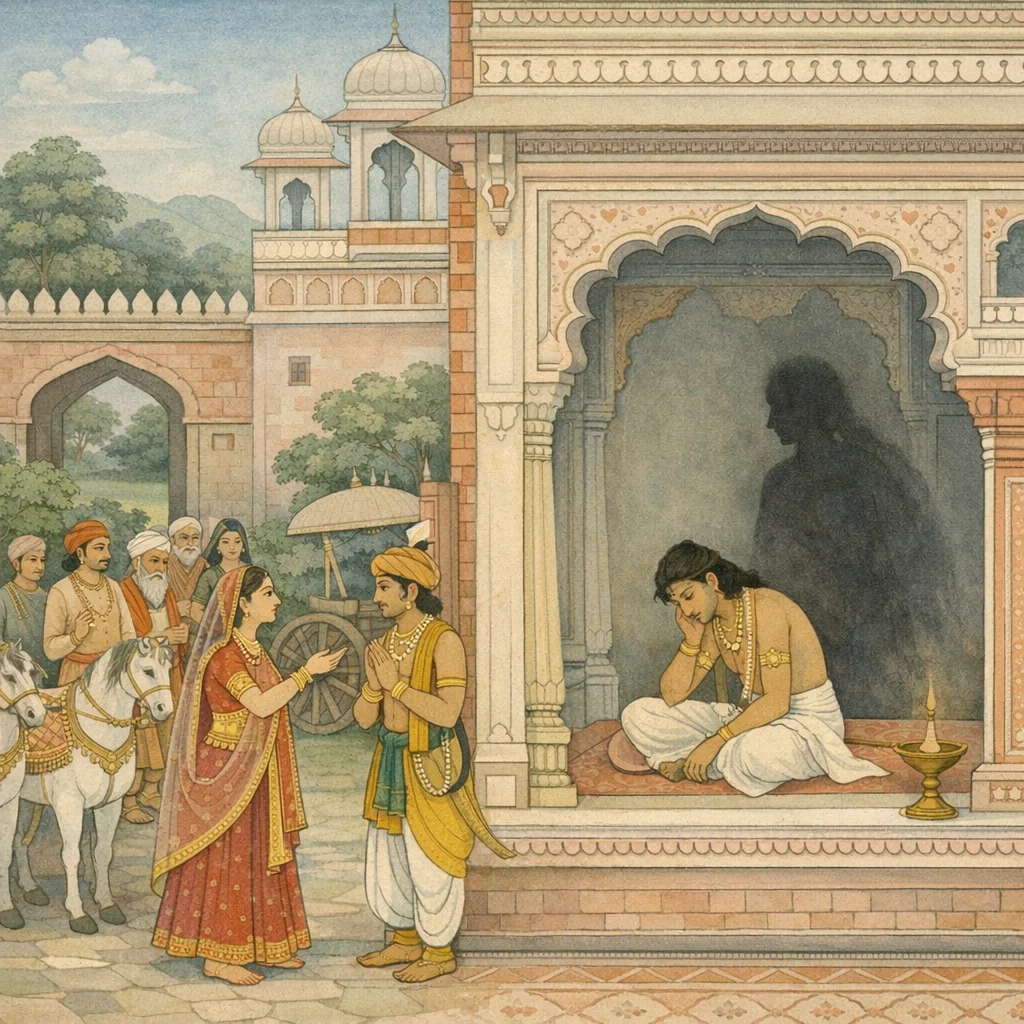
ततः सूत उपागम्य दमयन्त्यै न््यवेदयत् । एष पौरजनो देवि द्वारि तिष्ठति कार्यवान्,इसी समय सारथिने महलमें जाकर महारानी दमयन्तीसे निवेदन किया--*देवि! ये पुरवासीलोग कार्यवश राजद्वारपर खड़े हैं
Then the charioteer approached Damayantī and reported: “O queen, the townspeople are standing at the palace gate, having some business to be attended to.” The moment underscores responsible governance: the ruler is expected to hear the concerns of the citizens and respond to legitimate public needs.
Verse 13
निवेद्यतां नैषधाय सर्वा: प्रकृतयः स्थिता: । अमृष्यमाणा व्यसन राज्ञो धर्मार्थदर्शिन:,“आप निषधराजसे निवेदन कर दें। धर्म-अर्थका तत्त्व जाननेवाले महाराजके भावी संकटको सहन न कर सकनेके कारण मन्त्रियोंसहित सारी प्रजा द्वारपर खड़ी है”
Bṛhadaśva said: “Let it be reported to the king of Niṣadha that all the subjects and officials are standing assembled. Unable to endure the impending calamity that threatens their king—who is discerning in dharma and artha—they wait (with the ministers) at the door.”
Verse 14
ततः सा बाष्पकलया वाचा दु:खेन कर्शिता । उवाच नैषधं भेमी शोकोपहतचेतना,यह सुनकर दु:खसे दुर्बल हुई दमयन्तीने शोकसे अचेत-सी होकर आँसू बहाते हुए गदगदवाणीमें निषध-नरेशसे कहा--
Then Bhīmī (Damayantī), her voice broken by tears and her body weakened by grief, her mind struck down by sorrow, spoke to the king of Niṣadha (Nala). The scene underscores how intense suffering can overwhelm composure, yet also becomes the moment in which truth and fidelity seek expression.
Verse 15
राजन् पौरजनो द्वारि त्वां दिदृक्षुरवस्थित: । मन्त्रिभि: सहित: सर्वे राजभक्तिपुरस्कृत:
O King, the townspeople are standing at the gate, eager to see you. All of them are gathered together with the ministers, led foremost by loyalty and devotion to the king.
Verse 16
त॑ द्रष्टमर्हसीत्येवं पुन: पुनरभाषत । त॑ं तथा रुचिरापाड़ीं विलपन्तीं तथाविधाम्
Thus he spoke again and again: “You ought to see him.” And she—fair-limbed and radiant—continued to lament in that same manner. The passage underscores the human weight of grief and the insistence that one must face what duty and truth require, even when the heart recoils.
Verse 17
आविष्ट: कलिना राजा नाभ्यभाषत किंचन । ततस्ते मन्त्रिण: सर्वे ते चैव पुरवासिन:
Overpowered by Kali, the king did not utter a single word. Then all his ministers—and the townspeople as well—(stood by, awaiting what would follow). The verse underscores how the onset of adharma can seize a ruler’s mind, silencing discernment and leaving the polity anxious and directionless.
Verse 18
नायमस्तीति दु:खार्ता व्रीडिता जग्मुरालयान् । तथा तदभवद् दूत॑ पुष्करस्य नलस्य च । युधिष्ठिर बहून् मासान् पुण्यश्लोकस्त्वजीयत
‘Thinking, “He is not here,” they were stricken with sorrow and, ashamed, returned to their dwellings. And so it turned out, O messenger, for both Puṣkara and Nala: for many months, O Yudhiṣṭhira, the famed (Nala) remained unconquered.’
Verse 59
“महाराज! पुरवासी प्रजा राजभक्तिपूर्वक आपसे मिलनेके लिये समस्त मन्त्रियोंके साथ द्वारपर खड़ी है। आप उन्हें दर्शन दें।” दमयन्तीने इन वाक्योंको बार-बार दुहराया। मनोहर नयनप्रान्तवाली विदर्भ-कुमारी इस प्रकार विलाप करती रह गयी, परंतु कलियुगसे आविष्ट हुए राजाने उससे कोई बाततक न की। तब वे सब मन्त्री और पुरवासी दुःखसे आतुर और लज्जित हो यह कहते हुए अपने-अपने घर चले गये कि “यह राजा नल अब राज्यपर अधिक समयतक रहनेवाला नहीं है।” युधिष्ठिर! पुष्कर और नलकी वह द्यूतक्रीडा कई महीनोंतक चलती रही। पुण्यश्लोक महाराज नल उसमें हारते ही जा रहे थे || १५-- १८ |। इति श्रीमहाभारते वनपर्वणि नलोपाख्यानपर्वणि नलद्यूते एकोनषष्टितमो5 ध्याय: ।। ५९ || इस प्रकार श्रीमह्ाभारत वनपवके अन्तर्गत नलोपाख्यानपर्वमें नलझ्ूतविषयक उनसठवाँ अध्याय पूरा हुआ
Bṛhadaśva said: “O great king! The citizens of the city, devoted to you, are standing at the gate together with all the ministers to meet you. Grant them an audience.” Damayantī repeated these words again and again. The princess of Vidarbha, with lovely eyes, continued to lament in this way; yet the king—overpowered by Kali—did not even respond to her. Then all the ministers and townspeople, distressed and ashamed, returned to their homes saying, “This king Nala will not remain long upon the throne.” O Yudhiṣṭhira, the gambling match between Puṣkara and Nala went on for many months. The illustrious King Nala kept losing in it again and again.
Frequently Asked Questions
Nala frames a conflict between spousal duty (remaining with Damayantī in shared hardship) and a protective rationale (believing separation may increase her chances of safety and eventual reunion with her kin), while his agency is depicted as destabilized by Kali’s influence.
The chapter illustrates how grief and compromised discernment can masquerade as ethical reasoning; it invites scrutiny of intention versus outcome, and highlights the necessity of stable judgment (buddhi) when making decisions that affect vulnerable dependents.
No explicit phalaśruti appears in this passage; its meta-function is implicit—serving as an exemplum within the Nalopākhyāna to contextualize suffering and ethical complexity during exile in the broader Mahābhārata framework.