Adhyaya 50
नलदमयन्त्युपाख्यानम्—नलप्रशंसा हंसदूतवृत्तान्तः (Nala–Damayantī Upākhyāna: Praise of Nala and the Swan-Messenger Episode)
Upa-parva: Nalopākhyāna (Tale of Nala and Damayantī)
Bṛhadaśva delineates Nala’s profile: a powerful Niṣadha king, exemplary in virtues, appearance, and horsemanship, elevated among rulers like Indra and radiant like the sun. He is described as brahmaṇya, learned, truthful, and devoted to dice, commanding a great host. In parallel, King Bhīma of Vidarbha, desiring offspring, honors the brahmarṣi Damana, who grants boons resulting in Damayantī and three sons. Damayantī’s extraordinary beauty and fame are emphasized, as is Nala’s unmatched form. Hearing each other’s qualities repeatedly, mutual desire arises without direct sight. Nala, unable to contain the emotion, withdraws to a grove where he captures a golden-feathered haṃsa. The bird speaks, requesting release and offering to act as envoy: it will praise Nala to Damayantī so she will not choose another. Released, the swans fly to Vidarbha; one addresses Damayantī, extolling Nala as peerless, and recommends their union as a meeting of the most excellent. Damayantī instructs the swan to convey the same message to Nala; the bird returns and reports all to him, completing the messenger circuit that formalizes intention and consent.
Chapter Arc: जनमेजय, धृतराष्ट्र के शोक और उसके निर्णय की निरर्थकता पर प्रश्न उठाते हुए पूछता है—जिसने पाण्डवों को वन भेजा, वह दुर्योधन जैसे अल्पचेतस पुत्र को कैसे उपेक्षित करता रहा? → प्रश्न का तीखापन बढ़ता है: दुर्योधन ने पाण्डुपुत्रों जैसे महारथियों को क्रुद्ध किया, फिर भी राजा ने उसे त्याग क्यों न दिया? इसी के साथ जिज्ञासा व्यावहारिक धरातल पर उतरती है—वन में पाण्डवों का आहार क्या था, जंगली फल-मूल या खेती का अन्न? → वैशम्पायन का उत्तर: पाण्डव शुद्ध बाणों से वन्य मृगों का शिकार करते, पहले ब्राह्मणों को अग्रभाग निवेदित करते, फिर स्वयं भोजन करते—वनजीवन भी यज्ञ-शिष्टाचार और मर्यादा से बँधा था। → युधिष्ठिर का पालन-पोषणकारी नेतृत्व उभरता है—वह भाइयों को पुत्रवत् स्नेह से पोषित करता; दिशाओं में विभाजित होकर (युधिष्ठिर पूर्व, भीम, यम, आदि) धनुर्धरों सहित नित्य शिकार/आहार-संग्रह करते; काम्यक वन में अर्जुन-वियोग के बीच भी अध्ययन, जप और अभ्यास में वर्षों बीतते हैं। → अर्जुन के बिना बीतते वर्षों और इन्द्रलोकाभिगमन-प्रसंग की छाया के साथ संकेत मिलता है कि आगे तप, दिव्य-प्राप्ति और नियति का बड़ा मोड़ आने वाला है।
Shlokas
Verse 1
८) पज्चाशत्तमोडध्याय: वनमें पाण्डवोंका आहार जनमेजय उवाच यदिदं शोचितं राज्ञा धृतराष्ट्रेण वै मुने । प्रत्राज्य पाण्डवान् वीरान् सर्वमेतन्निरर्थकम्,जनमेजय बोले--मुने! वीर पाण्डवोंको वनमें निर्वासित करके राजा धुृतराष्ट्रने जो इतना शोक किया, यह सब व्यर्थ था
Verse 2
कथं च राजा पुत्र तमुपेक्षेताल्पचेतसम् । दुर्योधनं पाण्डुपुत्रान् कोपयानं महारथान्,उस मन्दबुद्धि राजकुमार दुर्योधनको ही किसी तरह त्याग देना उनके लिये सर्वथा उचित था जो महारथी पाण्डवोंको अपने दुर्व्यवहारसे कुपित करता जा रहा था
Janamejaya asked: “How could the king possibly ignore that son of his—small-minded Duryodhana—who, by his misconduct, kept provoking the mighty Pāṇḍava princes, great chariot-warriors? Would it not have been right for the king to restrain or even set aside such a foolish prince for the sake of justice and the realm?”
Verse 3
किमासीत् पाण्डुपुत्राणां वने भोजनमुच्यताम् । वानेयमथवा कृष्टमेतदाख्यातु नो भवान्,विप्रवर! बताइये, पाण्डवलोग वनमें क्या भोजन करते थे? जंगली फल-मूल या खेतीसे पैदा हुआ ग्रामीण अन्न? इसका आप स्पष्ट वर्णन कीजिये
Janamejaya asked: “Tell us what food the sons of Pāṇḍu had while living in the forest. Was it wild fare—fruits and roots—or grain produced by cultivation? O best of brāhmaṇas, please explain this clearly.”
Verse 4
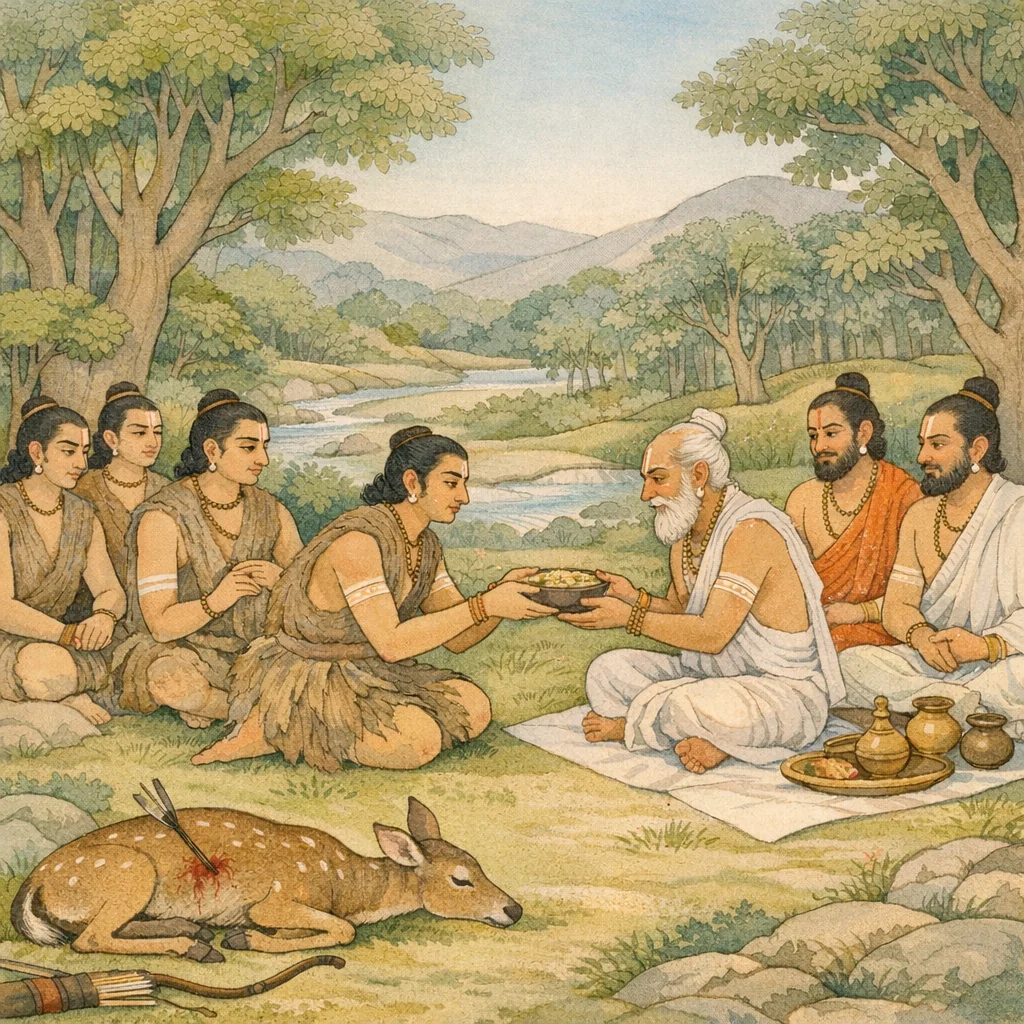
वैशम्पायन उवाच वानेयांश्व म्गांश्चैव शुद्धैर्बाणैर्निपातितान् | ब्राह्मणानां निवेद्याग्रमभुञ्जन् पुरुषर्षभा:,वैशम्पायनजीने कहा--राजन्! पुरुषश्रेष्ठ पाण्डव जंगली फल-मूल और खेतीसे पैदा हुए अन्नादि भी पहले ब्राह्मणोंको निवेदन करके फिर स्वयं खाते थे एवं सब लोगोंकी रक्षाके लिये केवल बाणोंके द्वारा ही हिंसक पशुओंको मारा करते थे
Vaiśampāyana said: O King, those bull-like men (the Pāṇḍavas) would eat only after first offering the best portion to the Brāhmaṇas—whether it was forest produce or grain obtained by cultivation. And for the protection of all, they would bring down dangerous beasts solely with clean, well-aimed arrows, acting with restraint and a sense of duty rather than with cruelty.
Verse 5
तांस्तु शूरान् महेष्वासांस्तदा निवसतो वने । अन्वयुरत्रल्यिणा राजन् साग्नयोडनग्नयस्तथा,राजन! उन दिनों वनमें निवास करनेवाले महाधनुर्धर शूरवीर पाण्डवोंके साथ बहुत-से साग्निक (अग्निहोत्री) और निरग्निक (अग्निहोत्ररहित) ब्राह्मण भी रहते थे
Vaiśampāyana said: O King, while those heroic, great-archer Pāṇḍavas were living in the forest, many Brahmins also accompanied them there—some maintaining the sacred fires (performing Agnihotra) and others without the ritual fires—sharing their exile and sustaining the moral order through their presence.
Verse 6
ब्राह्मणानां सहस्नाणि स्नातकानां महात्मनाम् | दश मोक्षविदां तत्र यान् बिभर्ति युधिष्ठिर:,राजा युधिष्ठिर जिनका पालन करते थे, वे महात्मा, स्नातक, मोक्षवेत्ता ब्राह्मण दस हजारकी संख्यामें थे
Vaiśampāyana said: There were thousands of Brahmins—great-souled men who had completed their sacred studies and disciplines. Among them, Yudhiṣṭhira maintained ten thousand who were knowers of liberation, sustaining such learned ascetics as an expression of righteous kingship and reverence for spiritual wisdom.
Verse 7
रुरून् कृष्णमृगांश्वैव मेध्यांश्वान्यान् वनेचरान् । बाणैरुन्मथ्य विविधैर््राह्रणेभ्यो न्न्यवेदयत्,वे रुरुमृग, कृष्णममृग तथा अन्य जो मेध्य (पवित्र): हिंसक वनजन्तु थे, उन सबको विविध बाणोंद्वारा मारकर उनके चर्म ब्राह्मणोंको आसनादि बनानेके लिये अर्पित कर देते थे
Vaiśaṃpāyana said: He struck down, with various arrows, ruru-deer, black antelopes, and other forest-dwelling animals considered fit for sacred use, and then presented them to the Brahmins—so that their hides might be used for ritual seats and related purposes. The act is framed not as wanton violence but as regulated hunting directed toward supporting Vedic-ritual needs and Brahminical observance.
Verse 8
हःः “5 (>>) #ल-+ #ट > सूर्य, जल, पृथ्वी, अग्नि, वायु, आकाश, दीक्षित ब्राह्मण तथा चन्द्रमा--ये शिवजीकी आठ मूर्तियाँ हैं। (विष्णुपुराण १,नततत्र वश्रिद् दुर्वर्णो व्याधितो वापि दृश्यते । कृशो वा दुर्बलो वापि दीनो भीतो$5पि वा पुन: वहाँ उन ब्राह्मणोंमेंसे कोई भी ऐसा नहीं दिखायी देता था, जिसके शरीरका रंग दूषित हो अथवा जो किसी रोगसे ग्रस्त हो। उनमेंसे कोई कृशकाय, दुर्बल, दीन अथवा भयभीत भी नहीं जान पड़ता था
Dhṛtarāṣṭra said: “The Sun, Water, Earth, Fire, Wind, Space, the consecrated Brāhmaṇa, and the Moon—these are spoken of as the eight manifestations of Śiva. And among those Brāhmaṇas there was not a single person seen with a blemished complexion or afflicted by disease; none appeared emaciated, weak, wretched, or fearful.”
Verse 9
पुत्रानिव प्रियान् भ्रातृजज्ञातीनिव सहोदरान् । पुपोष कौरवश्रेष्ठो धर्मराजो युधिष्ठिर:,कुरुकुलतिलक धर्मराज युधिष्ठिर अपने भाइयोंका प्रिय पुत्रोंकी भाँति तथा ज्ञातिजनोंका सहोदर भाइयोंके समान पालन-पोषण करते थे
Vaiśampāyana said: The righteous king Yudhiṣṭhira, the finest among the Kurus, cared for and sustained his beloved brothers as though they were his own sons, and treated his kinsmen like true full brothers—nourishing them with protection, provision, and impartial affection in accordance with dharma.
Verse 10
पतींक्ष द्रौपदी सर्वान् द्विजातींश्व॒ यशस्विनी । मातृवद् भोजयित्वाग्रे शिष्टमाहारयत् तदा,इसी प्रकार यशस्विनी द्रौपदी भी पतियों तथा समस्त द्विजातियोंको माताके समान पहले भोजन कराकर पीछे बचा-खुचा आप खाती थी
Vaiśampāyana said: The illustrious Draupadī would first feed all her husbands and the twice-born guests, treating them with a mother’s care; only afterward, at that time, would she partake of what remained. The verse highlights her disciplined household dharma—placing the needs of dependents and honored guests before her own, embodying restraint, service, and reverence for the brāhmaṇas.
Verse 11
प्राचीं राजा दक्षिणां भीमसेनो यमौ प्रतीचीमथ वाप्युदीचीम् । धनुर्धराणां सहितो मृगाणां क्षयं चक्कु्नित्यमेवोपगम्य,राजा युधिष्ठिर पूर्व दिशामें, भीमसेन दक्षिण दिशामें तथा नकुल-सहदेव पश्चिम एवं उत्तर दिशामें और कभी सब मिलकर नित्य वनमें निकल जाते और धनुषधारी (डाकुओं) तथा हिंसक पशुओंका संहार किया करते थे
Vaiśampāyana said: The king (Yudhiṣṭhira) went toward the east; Bhīmasena toward the south; and the twin brothers (Nakula and Sahadeva) toward the west and the north. At times they also went together daily into the forest, where, as bowmen, they would regularly destroy bands of armed marauders and dangerous beasts—maintaining safety and order during their exile.
Verse 12
तथा तेषां वसतां काम्यके वै विहीनानामर्जुनेनोत्सुकानाम् । पज्चैव वर्षाणि तथा व्यतीयु- रधीयतां जपतां जुद्धतां च,इस प्रकार काम्यकवनमें अर्जुनसे वियुक्त एवं उनके लिये उत्कण्ठित होकर निवास करनेवाले पाण्डवोंके पाँच वर्ष व्यतीत हो गये। इतने समयतक उनका स्वाध्याय, जप और होम सदा पूर्ववत् चलता रहा
Vaiśaṃpāyana said: While the Pāṇḍavas lived in the Kāmyaka forest—separated from Arjuna and longing for him—five years passed by. Throughout that time, their disciplined routine continued as before: study of sacred texts, recitation of mantras, and the offering of oblations into the fire.
Verse 50
इति श्रीमहाभारते वनपर्वणि इन्द्रलोकाभिगमनपर्वणि पार्थाहारक थने पज्चाशत्तमोडध्याय:
Thus, in the Śrī Mahābhārata, within the Vana Parva—specifically in the section concerning the journey to Indra’s world—ends the fiftieth chapter, in the episode relating to Pārtha’s sustenance. The colophon signals a transition point in the narration, marking the completion of a unit of teaching and story that frames Arjuna’s disciplined conduct and the larger moral arc of endurance and righteous striving during exile.
Frequently Asked Questions
The tension is between desire (kāma) and restraint (saṃyama): Nala’s attraction arises through reputation alone, and the narrative models a regulated, socially legible path—messenger speech and consent—rather than impulsive action.
Communication is framed as an ethical instrument: accurate praise, respectful mediation, and explicit authorization (Damayantī’s instruction to report back) establish intention transparently, reducing ambiguity in consequential decisions.
No explicit phalaśruti appears in this excerpt; the chapter functions as narrative-ethical groundwork, preparing later developments by establishing character, consent, and the causal chain of choices.