Adhyaya 277
Āraṇyaka-parva Adhyāya 277 — Sāvitrī-Upākhyāna: Aśvapati’s Vows and Sāvitrī’s Birth; Search for a Suitable Husband Begins
Upa-parva: Sāvitrī-Upākhyāna (Narrative of Sāvitrī) — within Āraṇyaka-parva
Yudhiṣṭhira addresses Ṛṣi Mārkaṇḍeya: he does not lament himself, his brothers, or the loss of kingdom as much as he laments Draupadī (Drupadātmajā), whose interventions saved them after the dice ordeal and who was later forcibly taken from the forest by Jayadratha. He asks whether any woman of comparable pativratā excellence is known. Mārkaṇḍeya introduces the precedent of Sāvitrī and recounts the Madra king Aśvapati: righteous, self-controlled, and beloved of subjects, yet distressed by childlessness. For progeny he undertakes severe niyamas—measured diet, brahmacarya, repeated offerings to Sāvitrī—over eighteen years, after which the goddess appears, praises his discipline, and grants a boon. Aśvapati requests many sons; Sāvitrī, citing a prior dispensation linked to Brahmā, declares that a single radiant daughter will be born. The king returns to rule dharmically; in time his chief queen conceives and gives birth to a lotus-eyed girl named Sāvitrī. As she matures, her extraordinary tejas discourages suitors. Seeing no proposals, Aśvapati instructs her to seek a husband herself and report back; he adds a normative warning from dharmaśāstra about blame attached to failure in providing protection through proper marital arrangement. With elders and ministers assigned as attendants, Sāvitrī departs in a golden chariot to visit ascetic groves and tīrthas, honoring elders and giving gifts to learned brāhmaṇas as she travels in search of a worthy match.
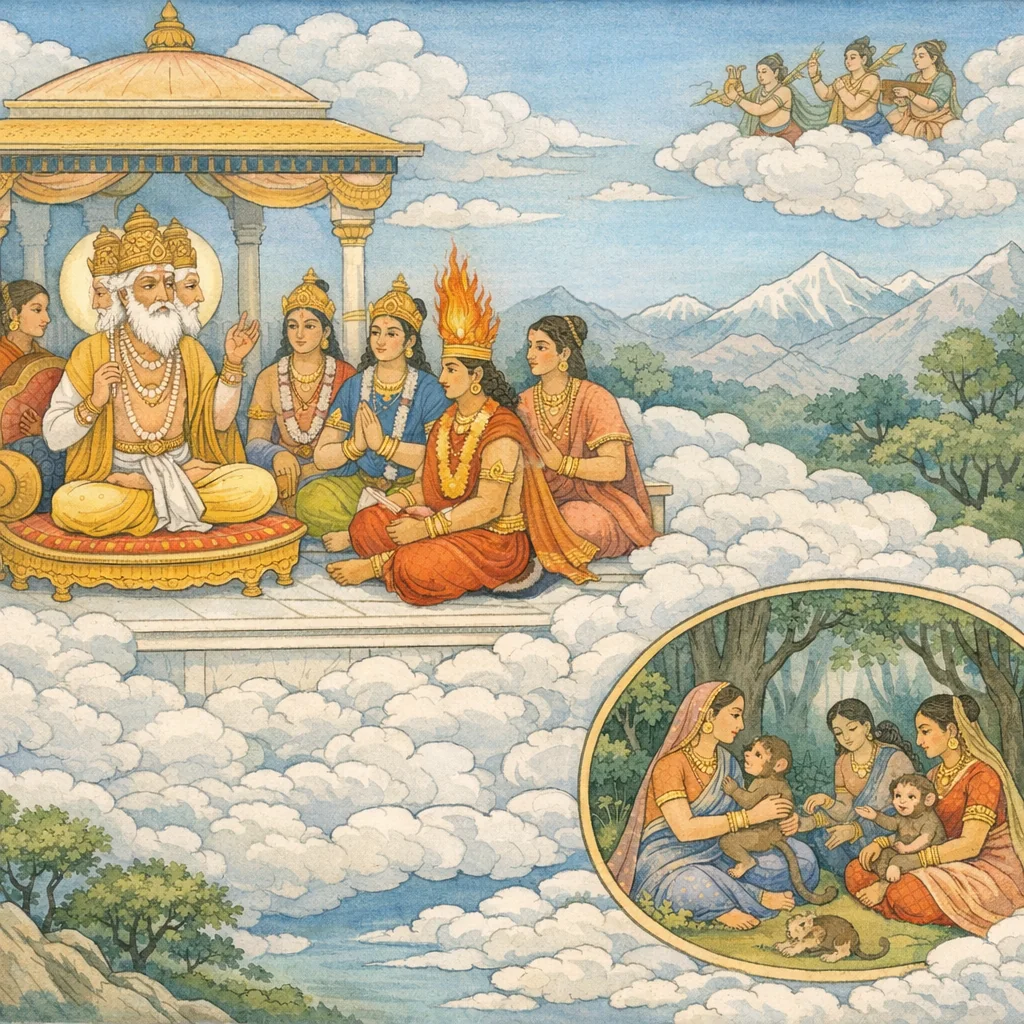
Chapter Arc: मार्कण्डेय के वचन से दृश्य स्वर्गलोक में उठता है—देवगण ब्रह्मा के पास जाकर रावण के अत्याचार और वरदानजन्य अवध्यता की दुहाई देते हैं; अग्नि स्वयं निवेदन करता है कि अब रक्षा का कोई और उपाय नहीं दिखता। → ब्रह्मा स्मरण कराते हैं कि वरदान की गाँठ सीधे नहीं खुलती; रावण की शक्ति को तोड़ने के लिए पृथ्वी पर एक नियत योजना चाहिए—ऐसा उपाय जो वरदान की शर्तों के भीतर रहकर ही उसका अंत कर सके। → पितामह देवताओं को आज्ञा देते हैं—इन्द्र आदि समस्त सुरगण पृथ्वी पर वानर और ऋक्ष-स्त्रियों में अपने अंश से पुत्र उत्पन्न करें; वे वज्र-संहनन, अतुल बल, युद्धविशारद और वायु-वेग से भी तीव्र होंगे—रावण-वध हेतु राम के सहायक-सेना का बीज यहीं पड़ता है। → देवगण ब्रह्मा की आज्ञा का पालन करते हैं; दिव्य अंशों से वनौकसों की अद्भुत पीढ़ी जन्म लेती है—युद्ध-योजना का आधार तैयार हो जाता है। → ब्रह्मा आगे ‘मन्थरा’ को भी कार्य-साधन हेतु जगाते/प्रेरित करते हैं; वह मनोजवा होकर वैर-संधि को प्रज्वलित करने निकल पड़ती है—अब घटनाएँ पृथ्वी पर मानवीय कथा-धारा में उतरने को हैं।
Shlokas
Verse 1
हि >> आय न () हि २ 7 षट्सप्तत्याधिकद्विशततमो< ध्याय: देवताओंका ब्रह्माजीके पास जाकर रावणके अत्याचारसे बचानेके लिये प्रार्थना करना तथा ब्रह्माजीकी आज्ञासे देवताओंका रीछ और वानरयोनिमें संतान उत्पन्न करना एवं दुन्दुभी गन्धर्वीका मन्थरा बनकर आना मार्कण्डेय उवाच ततो ब्रह्मर्षय: सर्वे सिद्धा देवर्षयस्तथा । हव्यवाहं पुरस्कृत्य ब्रह्माणं शरणं गता:,मार्कण्डेयजी कहते हैं--राजन! तत्पश्चात् रावणसे कष्ट पाये हुए ब्रह्मर्षि, देवर्षि तथा सिद्धगण अग्निदेवको आगे करके ब्रह्माजीकी शरणमें गये
Mārkaṇḍeya said: Then all the Brahmarṣis, together with the Siddhas and the Devarṣis, placing Agni (the carrier of oblations) at their head, went to Brahmā for refuge. In the face of oppression, the righteous seek protection through lawful appeal and collective recourse to the highest authority, rather than through reckless retaliation.
Verse 2
अग्निरुवाच योडसौ विश्रवस: पुत्रो दशग्रीवो महाबल: । अवध्यो वरदानेन कृतो भगवता पुरा,अग्निदेव बोले--भगवन्! आपने पहले जो वरदान देकर विश्रवाके पुत्र महाबली रावणको अवध्य कर दिया है, वह महाबलवान् राक्षस अब संसारकी समस्त प्रजाको अनेक प्रकारसे सता रहा है; अतः आप ही उसके भयसे हमारी रक्षा कीजिये। आपके सिवा हमारा दूसरा कोई रक्षक नहीं है
Agni said: “That mighty one—Daśagrīva (Rāvaṇa), the son of Viśravas—was formerly made invulnerable by the Blessed Lord through the granting of a boon. Now that powerful rākṣasa torments all the beings of the world in many ways; therefore, you alone must protect us from his fear. Apart from you, we have no other refuge.”
Verse 3
स बाधते प्रजा: सर्वा विप्रकारैर्महाबल: । ततो नस्त्रातु भगवन् नान्यस्त्राता हि विद्यते,अग्निदेव बोले--भगवन्! आपने पहले जो वरदान देकर विश्रवाके पुत्र महाबली रावणको अवध्य कर दिया है, वह महाबलवान् राक्षस अब संसारकी समस्त प्रजाको अनेक प्रकारसे सता रहा है; अतः आप ही उसके भयसे हमारी रक्षा कीजिये। आपके सिवा हमारा दूसरा कोई रक्षक नहीं है
That mighty one is afflicting all beings in every manner. Therefore, O Blessed Lord, protect us; for apart from you, no other protector is to be found. (In context, the gods appeal to the Lord: the boon once granted has made Rāvaṇa effectively unassailable, and he now torments the world; only the divine source of refuge can restore safety and order.)
Verse 4
ब्रह्मोवाच न स देवासुरै: शक््यो युद्धे जेतुं विभावसो । विहितं तत्र यत् कार्यमभितस्तस्य निग्रह:,ब्रह्माजीने कहा--अग्ने! देवता या असुर उसे युद्धमें नहीं जीत सकते। उसके विनाशके लिये जो आवश्यक कार्य था, वह कर दिया गया। अब सब प्रकारसे उस दुष्टका दमन हो जायगा
Verse 5
तदर्थमवतीर्णो सौ मन्नियोगाच्चतुर्भुज: । विष्णु: प्रहरतां श्रेष्ठ: स तत् कर्म करिष्यति,उस राक्षसके निग्रहके लिये मैंने चतुर्भुज भगवान् विष्णुसे अनुरोध किया था। मेरी प्रार्थनासे वे भगवान् भूतलपर अवतार ले चुके हैं। वे योद्धाओंमें श्रेष्ठ हैं; अत: वे ही रावणके दमनका कार्य करेंगे
Markandeya said: “For that very purpose, at my request, the four-armed Lord Viṣṇu has descended to the earth. He is the foremost among those who strike down the wicked; therefore he himself will accomplish the task—bringing about the suppression of Rāvaṇa.”
Verse 6
मार्कण्डेय उवाच पितामहस्ततस्तेषां संनिधौ शक्रमब्रवीत् | सर्वेर्देवगणै: सार्थ सम्भव त्वं महीतले,मार्कण्डेयजी कहते हैं--राजन्! तदनन्तर ब्रह्माजीने उन देवताओंके समीप ही इन्द्रसे कहा--“तुम समस्त देवताओंके साथ भूतलपर जन्म ग्रहण करो
Mārkaṇḍeya said: Then the Grandsire (Brahmā), in the very presence of those gods, addressed Indra: “Together with all the hosts of deities, take birth upon the earth.” The command frames a divine descent as a purposeful intervention in the world, implying that even celestial powers must accept embodied duty when the balance of righteousness requires it.
Verse 7
विष्णो: सहायानृक्षीषु वानरीषु च सर्वश: । जनयथ्वं सुतान् वीरान् कामरूपबलान्वितान्,“वहाँ रीछों और वानरोंकी स्त्रियोंसे ऐसे वीर पुत्रको उत्पन्न करो, जो इच्छानुसार रूप धारण करनेमें समर्थ, बलवान् तथा भूतलपर अवतीर्ण हुए भगवान् विष्णुके योग्य सहायक हों!
Verse 8
ततो भागानुभागेन देवगन्धर्वपन्नगा: । अवतर्तु महीं सर्वे मनन््त्रयामासुरञज्जसा,तदनन्तर देवता, गन्धर्व और नाग अपने-अपने अंश एवं अंशांशसे इस पृथ्वीपर अवतीर्ण होनेके लिये परस्पर परामर्श करने लगे
Then the gods, the Gandharvas, and the Nāgas, each according to his allotted portion and sub-portion, swiftly took counsel together about descending to the earth. The verse frames incarnation not as random birth but as a deliberate, coordinated assumption of roles for restoring balance and upholding dharma.
Verse 9
तेषां समक्ष गन्धर्वी दुन्दुभीं नाम नामतः । शशास वरदो देवो गच्छ कार्यार्थसिद्धये,फिर वरदायक देवता ब्रह्माजीने उन सबके सामने ही दुन्दुभी नामवाली गन्धर्वीको आज्ञा दी कि "तुम भी देवताओंका कार्य सिद्ध करनेके लिये भूतलपर जाओ
Before them all, the Gandharvī named Dundubhī was addressed by the boon‑granting deity and commanded: “Go to the earth and accomplish the purpose of the gods’ task.” The episode underscores that even celestial beings are bound to act in service of a higher cosmic duty when directed by rightful authority.
Verse 10
पितामहवच: श्रुत्वा गन्धर्वी दुन्दुभी ततः । मन्थरा मानुषे लोके कुब्जा समभवत् तदा,पितामहकी बात सुनकर गन्धर्वी दुन्दुभी मनुष्यलोकमें आकर मन्थरा नामसे प्रसिद्ध कुबड़ी दासी हुई
Mārkaṇḍeya said: Hearing the words of the Grandfather (Brahmā), the Gandharva-woman Dundubhī then came to the human world and at that time became a hunchbacked maidservant, known by the name Mantharā. The verse underscores how a divine decree can redirect a being’s station and identity, presenting transformation and consequence as part of a larger moral order.
Verse 11
शक्रप्रभृतयश्चैव सर्वे ते सुरसत्तमा: । वानरक्_्षवरस्त्रीषु जनयामासुरात्मजान्,इन्द्र आदि समस्त श्रेष्ठ देवता भी वानरों तथा रीछोंकी उत्तम स्त्रियोंसे संतान उत्पन्न करने लगे। वे सब वानर और रीछ यश तथा बलमें अपने पिता देवताओंके समान ही हुए। वे पर्वतोंक शिखर तोड़ डालनेकी शक्ति रखते थे एवं शाल (साखू) और ताल (ताड़)-के वृक्ष तथा पत्थरोंकी चट्टानें ही उनके आयुध थे
Mārkaṇḍeya said: “Indra and the other foremost gods, all those best among the celestials, begot their own sons upon the finest females among the monkeys and bears. Thus were born monkey- and bear-heroes who matched their divine fathers in fame and strength—capable of shattering mountain-peaks, and taking sāla and tāla trees and great rocks as their weapons.”
Verse 12
तेडन्ववर्तन् पितृन् सर्वे यशसा च बलेन च | भेत्तारो गिरिशुज्भाणां शालतालशिलायुधा:,इन्द्र आदि समस्त श्रेष्ठ देवता भी वानरों तथा रीछोंकी उत्तम स्त्रियोंसे संतान उत्पन्न करने लगे। वे सब वानर और रीछ यश तथा बलमें अपने पिता देवताओंके समान ही हुए। वे पर्वतोंक शिखर तोड़ डालनेकी शक्ति रखते थे एवं शाल (साखू) और ताल (ताड़)-के वृक्ष तथा पत्थरोंकी चट्टानें ही उनके आयुध थे
Mārkaṇḍeya said: All of them came to resemble their divine fathers in both fame and strength. They were capable of shattering mountain-peaks, and their weapons were sal and palmyra trees and massive rocks—thus were born the mighty progeny among the Vānaras and Ṛkṣas, endowed with power for the righteous task that lay ahead.
Verse 13
वज्ञसंहनना: सर्वे सर्वे चौधबलास्तथा । कामवीर्यबलाश्रैव सर्वे युद्धविशारदा:,उनका शरीर वज्रके समान दुर्भद्य और सुदृढ़ था। वे सभी राशि-राशि बलके आश्रय थे। उनका बल और पराक्रम इच्छाके अनुसार प्रकट होता था। वे सब-के-सब युद्ध करनेकी कलामें दक्ष थे
Mārkaṇḍeya said: “All of them were of adamantine build—hard to break and firmly knit. Each was a reservoir of immense strength. Their valor and power manifested at will, and every one of them was skilled in the arts of warfare.”
Verse 14
नागायुतसमप्राणा वायुवेगसमा जवे । यत्रेच्छकनिवासाक्षु केचिदत्र वनौकस:,उनके शरीरमें दस हजार हाथियोंके समान बल था। तेज चलनेमें वे वायुके वेगको लजा देते थे। उनका कोई घर-बार नहीं था; जहाँ इच्छा होती वहीं रह जाते थे। उनमेंसे कुछ लोग केवल वनोंमें ही रहते थे
Mārkaṇḍeya said: “They possessed the life-force and strength of ten thousand elephants, and in swiftness they rivalled the speed of the wind. They had no fixed home; wherever they wished, there they stayed. Among them, some lived only in the forests.”
Verse 15
एवं विधाय तत् सर्व भगवॉल्लोकभावन: । मन्थरां बोधयामास यदू यत् कार्य यथा यथा,इस प्रकार सारी व्यवस्था करके लोक स्रष्टा भगवान् ब्रह्माने मन्थरा बनी हुई दुन्दुभीको जो-जो काम जैसे-जैसे करना था, वह सब समझा दिया
Having thus arranged everything in full, the Blessed Lord—Brahmā, the sustainer and promoter of the worlds—then instructed Dundubhī, who had assumed the form of Mantharā, explaining in detail what actions were to be done and in what manner, step by step.
Verse 16
सा तद्वच: समाज्ञाय तथा चक्रे मनोजवा । इतश्रैतश्न गच्छन्ती वैरसन्धुक्षणे रता,वह मनके समान वेगसे चलनेवाली थी। उसने ब्रह्माजीकी बातको अच्छी तरह समझकर उसके अनुसार ही कार्य किया। वह इधर-उधर घूम-फिरकर वैरकी आग प्रज्वलित करनेमें लग गयी
Markandeya said: Having clearly understood those words, she acted accordingly. Swift as thought, she moved to and fro, intent on fanning the embers of enmity—stirring hostility wherever she went.
Verse 276
इति श्रीमहाभारते वनपर्वणि रामोपाख्यानपर्वणि वानराघ्युत्पत्तौ षट्सप्तत्यधिकद्विशततमो<ध्याय:
Thus, in the Śrī Mahābhārata, within the Vana Parva, in the section known as the Rāmopākhyāna, in the episode concerning the origin (utpatti) of the Vānara hosts, ends the two-hundred-and-seventy-sixth chapter. This is a concluding colophon marking the close of a narrative unit, situating the teaching within the larger ethical frame of exile, endurance, and righteous conduct.
Frequently Asked Questions
Yudhiṣṭhira frames a comparative ethical dilemma: how to interpret and respond to collective suffering when a key figure (Draupadī) bears disproportionate harm despite acting as a protector—prompting a search for precedent to clarify dharma.
The chapter emphasizes disciplined intentionality: sustained restraint, truthful purpose, and ritual consistency are presented as legitimate means to pursue life-goals, while outcomes may be constrained by higher-order dispensations beyond personal preference.
No explicit phalaśruti is stated here; the meta-function is structural—this adhyāya serves as the narrative gateway establishing Sāvitrī as a dharma-precedent (upākhyāna) for interpreting Draupadī’s situation within the larger exile discourse.