Adhyaya 259
रावणोत्पत्तिः—तपसा वरलाभश्च (Rāvaṇa’s Origins and the Acquisition of Boons)
Upa-parva: Mārkaṇḍeya-upākhyāna (Rāvaṇa–Kubera–Viśravas Genealogy Episode)
Mārkaṇḍeya describes Viśravas (born from Pulastya’s anger, “half-bodied” in motif) and Kubera’s effort to appease him by providing three rākṣasī attendants—Puṣpotkaṭā, Rākā, and Mālinī. From them are born Kumbhakarṇa and Daśagrīva (Rāvaṇa), Vibhīṣaṇa, and the pair Khara–Śūrpaṇakhā. The siblings observe Kubera’s prosperity and undertake severe tapas to please Brahmā. Brahmā grants boons: Rāvaṇa requests non-defeat by many classes of beings, receiving an explicit exception for humans; Kumbhakarṇa receives great sleep; Vibhīṣaṇa requests unwavering aversion to adharma and spontaneous access to Brahmāstra knowledge, receiving a boon framed as “immortality” due to his dharmic disposition. Empowered, Rāvaṇa defeats Kubera, displaces him from Laṅkā, seizes the Puṣpaka-vimāna, and incurs Kubera’s curse that the vehicle will bear only Rāvaṇa’s slayer. Vibhīṣaṇa, remembering the dharma of the virtuous, follows Kubera and is appointed commander over yakṣa–rākṣasa forces. The chapter closes by etymologizing “Rāvaṇa” as one who causes the worlds to cry out, emphasizing the social impact of unrestrained power.
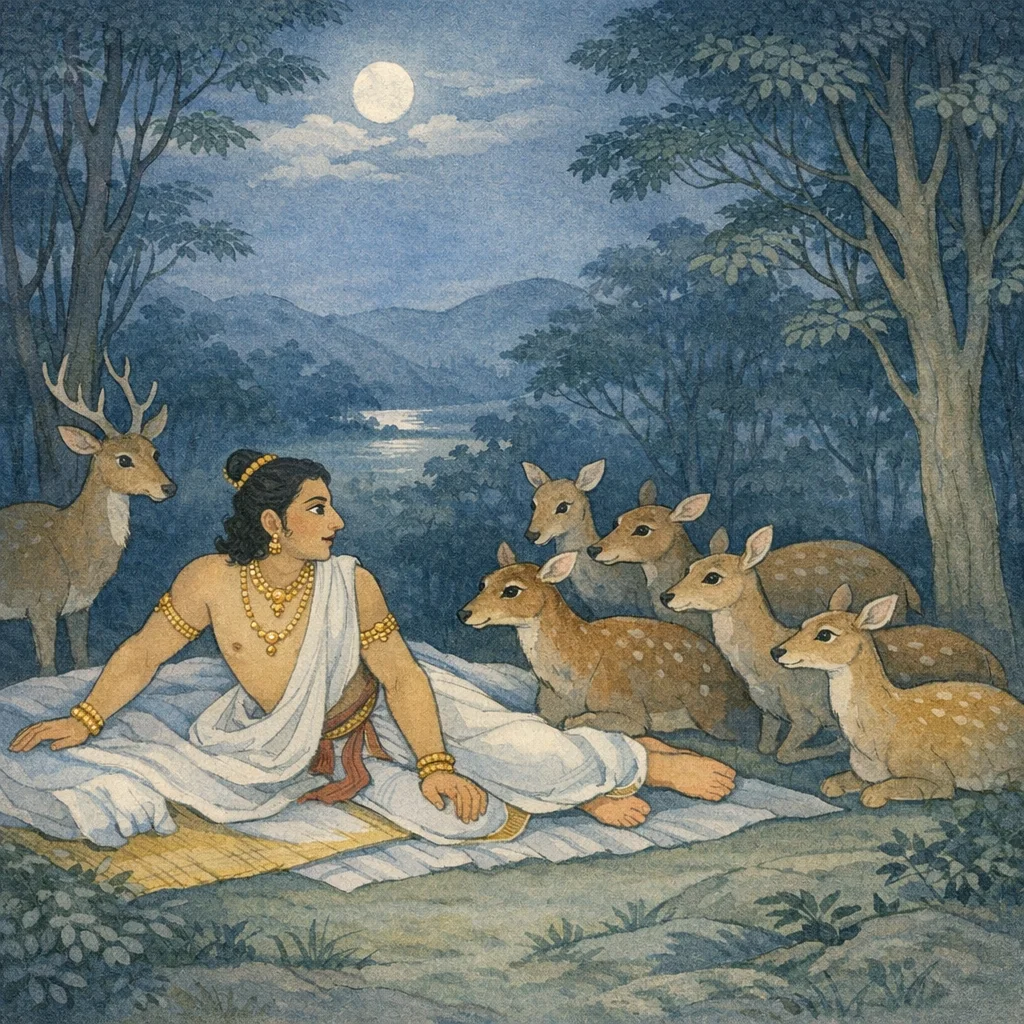
Chapter Arc: द्वैतवन की रात्रि में युधिष्ठिर शयन करते हैं—और स्वप्न के अन्त में अश्रुपूरित कण्ठ वाले मृग-समूह मानो मनुष्यों की भाँति उनके सामने उपस्थित हो उठते हैं। → काँपते हुए, हाथ जोड़कर वे वनचर प्राणी राजा से निवेदन करते हैं कि पाण्डवों के शौर्य और अस्त्र-प्रयोग से वन में उनके कुल नष्टप्राय हो गए हैं; जो थोड़े-से बचे हैं वे केवल ‘बीज’ मात्र हैं और यदि शरण न मिली तो वंश ही मिट जाएगा। → युधिष्ठिर के सामने धर्म का तीखा प्रश्न खड़ा होता है—क्षत्रिय-धर्म के अभ्यास और जीवन-निर्वाह हेतु शिकार बनाम शरणागत जीवों की रक्षा; स्वप्न में ही मृगों की करुण पुकार उनके हृदय को निर्णायक रूप से विचलित कर देती है। → धर्मकोविद पाण्डव, साथ रह रहे ब्राह्मणों और सेवकों (इन्द्रसेन आदि) सहित उस वन-प्रदेश से शीघ्र प्रस्थान का निश्चय करते हैं, ताकि वन्यजीवों के कुलों को अवकाश मिले और हिंसा का भार घटे। → प्रस्थान के बाद अगला ठिकाना—काम्यकवन और तृणबिन्दु सरोवर का संकेत—आगे की वन-यात्रा और वहाँ होने वाले प्रसंगों की भूमिका रचता है।
Shlokas
Verse 1
(दाक्षिणात्य अधिक पाठका ३ श्लोक मिलाकर कुल २८ ६ “लोक हैं) हि सो न हुक हि 7 (मृगस्वप्नोद्भवपर्व) अष्टपञ्चाशदधिकद्वधिशततमो< ध्याय: पाण्डवोंका काम्यकवनमें गमन जनमेजय उवाच दुर्योधन मोक्षयित्वा पाण्डुपुत्रा महाबला: । किमकार्षु्वने तस्मिंस्तन्ममाख्यातुमरहसि,जनमेजयने पूछा--दुर्योधनको गन्धर्वोके बन्धनसे छुड़ाकर महाबली पाण्डवोंने उस वनमें कौन-सा कार्य किया? यह मुझे बतानेकी कृपा करें
Janamejaya said: “After the mighty sons of Pāṇḍu had freed Duryodhana, what did they do in that forest? Please tell me.”
Verse 2
वैशम्पायन उवाच ततः शयानं कौन्तेयं रात्रौ द्वैतवने मृगाः । स्वप्नान्ते दर्शयामासुर्बाष्पकण्ठा युधिष्ठिरम्,वैशम्पायनजीने कहा--तदनन्तर एक रातमें जब कुन्तीनन्दन युधिष्छिर सो रहे थे, स्वप्नमें द्वैतववनके सिंह-बाघ आदि हिंख्र पशुओंने उन्हें दर्शन दिया। उन सबके कण्ठ आँसुओंसे रुँधे हुए थे
Vaiśampāyana said: Then, one night in the Dvaitavana forest, as the son of Kuntī (Yudhiṣṭhira) lay asleep, the wild creatures of the woods appeared to him at the end of a dream. Their throats were choked with tears as they revealed themselves to Yudhiṣṭhira—an ominous, compassionate visitation that frames the forest itself as a moral witness to the Pāṇḍavas’ exile and the suffering it entails.
Verse 3
तानब्रवीत् स राजेन्द्रो वेपमानान् कृताज्जलीन् । ब्रूत यद् वक्तुकामा: स्थ के भवन्तः किमिष्यते,वे थर-थर काँपते हुए हाथ जोड़कर खड़े थे। महाराज युधिष्छिरने उनसे पूछा --“आपलोग कौन हैं? क्या कहना चाहते हैं? आपकी क्या इच्छा है? बताइये”
Seeing them trembling and standing with folded hands, the king—foremost among rulers—addressed them: “Speak. What is it you wish to say? Who are you? What do you seek?”
Verse 4
एवमुक्ता: पाण्डवेन कौन्तेयेन यशस्विना । प्रत्यब्रुवन् मृगास्तत्र हतशेषा युधिष्ठिरम्,यशस्वी पाण्डव कुन्तीनन्दन युधिष्ठिरके इस प्रकार पूछनेपर मरनेसे बचे हुए हिंसक पशुओंने उनसे कहा--
Vaiśaṃpāyana said: Thus addressed by the illustrious son of Kuntī among the Pāṇḍavas, the beasts there—those that had survived the slaughter—replied to Yudhiṣṭhira. The scene frames a moral moment: even in the aftermath of violence, the king’s questioning invites a response that will bear on right conduct and restraint.
Verse 5
वयं मृगा द्वैतवने हतशिष्टास्तु भारत । नोत्सीदेम महाराज क्रियतां वासपर्यय:,“भारत! हम द्वैतवनके पशु हैं। आपलोगोंके मारनेसे हमारी इतनी ही संख्या शेष रह गयी है। महाराज! हमारा सर्वथा संहार न हो जाय, इसके लिये आप अपना निवासस्थान बदल दीजिये
Vaiśampāyana said: “O Bhārata, we are the deer of the Dvaitavana forest, left only as a remnant after being slain. O great king, so that we may not be utterly destroyed, please change your place of residence.”
Verse 6
भवतो भ्रातर: शूरा: सर्व एवास्त्रकोविदा: । कुलान्यल्पावशिष्टानि कृतवन्तो वनौकसाम्,“आपके सभी भाई शूरवीर एवं अस्त्रविद्याके पण्डित हैं। इन्होंने हम वनवासी हिंसक पशुओंके कुलोंको थोड़ी ही संख्यामें जीवित छोड़ा है
Vaiśampāyana said: “All your brothers are valiant heroes, and each is skilled in the science of weapons. They have left only a small remnant of the clans of the forest-dwellers.” In context, the line underscores how martial prowess, when exercised without restraint, can verge on excess—raising an implicit ethical tension between necessary protection and destructive overreach toward beings of the wilderness.
Verse 7
बीजभूता वयं केचिदवशिष्टा महामते । विवर्धेमहि राजेन्द्र प्रसादात् ते युधिष्ठिर,“महामते! हम सिंह, बाघ आदि पशु थोड़ी-सी संख्यामें अपने वंशके बीजमात्र शेष रह गये हैं। महाराज युधिष्ठिर! आपकी कृपासे हमारे वंशकी वृद्धि हो, यही हम निवेदन करते हैं'
Vaiśampāyana said: “O wise one, we few have been left behind as mere seed of our lineage. O king, O Yudhiṣṭhira, by your gracious favor may our race flourish again—this is our humble petition.”
Verse 8
तान् वेपमानान् वित्रस्तान् बीजमात्रावशेषितान् | मृगान् दृष्टवा सुदुःखार्तो धर्मराजो युधिषिर:,वे सिंह-बाघ आदि पशु त्रस्त होकर थर-थर काँप रहे थे और बीजमात्र ही शेष रह गये थे। उनकी यह दयनीय दशा देखकर धर्मराज युधिष्छिर अत्यन्त दुःखसे व्याकुल हो गये
Seeing those deer—trembling in fear, utterly panicked, and reduced to a mere remnant—King Yudhiṣṭhira, steadfast in dharma, was overwhelmed with deep sorrow. Their pitiable condition stirred his conscience and compassion, revealing how a ruler’s ethical sensitivity is tested by the suffering of the vulnerable.
Verse 9
तांस्तथेत्यब्रवीद् राजा सर्वभूतहिते रत: । यथा भवन्तो ब्रुवते करिष्यामि च तत् तथा,समस्त प्राणियोंके हितमें तत्पर रहनेवाले राजा युधिष्ठिरने उनसे कहा--“बहुत अच्छा, तुमलोग जैसा कहते हो, वैसा ही करूँगा”
Vaiśampāyana said: The king, devoted to the welfare of all beings, replied to them, “So be it. Just as you say, so indeed shall I do.”
Verse 10
इत्येवं प्रतिबुद्धः स रात््यन्ते राजसत्तम: । अब्रवीत् सहितान् भ्रातृन् दयापन्नो मृगान् प्रति,इस प्रकार रात बीतनेपर जब सबेरे उनकी नींद खुली, तब वे नृपतिशिरोमणि हिंसक पशुओंके प्रति दयाभावसे द्रवित हो अपने सब भाइयोंसे बोले--“बन्धुओ! रातको सपनेमें मरनेसे बचे हुए इस वनके पशुओंने मुझसे कहा है--'राजन्! आपका भला हो। हम अपनी वंशपरम्पराके एक-एक तलन््तुमात्र शेष रह गये हैं। अब हमलोगोंपर दया कीजिये'
Thus, when he awoke at the end of the night, that best of kings—his heart softened by compassion toward the creatures of the forest—addressed his brothers who were gathered with him. He conveyed that the animals of this woodland, having narrowly escaped death in a dream, had appealed to him: “O King, may good befall you. Of our lineage only a single thread remains. Now, have mercy upon us.”
Verse 11
उक्तो रात्रौ मृगैरस्मि स्वप्रान्ते हतशेषितै: । तन्तुभूता: सम भद्रें ते दया न: क्रियतामिति,इस प्रकार रात बीतनेपर जब सबेरे उनकी नींद खुली, तब वे नृपतिशिरोमणि हिंसक पशुओंके प्रति दयाभावसे द्रवित हो अपने सब भाइयोंसे बोले--“बन्धुओ! रातको सपनेमें मरनेसे बचे हुए इस वनके पशुओंने मुझसे कहा है--'राजन्! आपका भला हो। हम अपनी वंशपरम्पराके एक-एक तलन््तुमात्र शेष रह गये हैं। अब हमलोगोंपर दया कीजिये'
Vaiśampāyana said: “In the night, at the end of a dream, I was addressed by the deer—those left as mere survivors after slaughter. They said, ‘O noble one, may you prosper. We have been reduced to only thread-like remnants of our lineage. Show us compassion.’” In the morning, when sleep left them, the king—his heart softened by pity toward the wild creatures—spoke to his brothers, conveying this plea for mercy.
Verse 12
ते सत्यमाहु: कर्तव्या दयास्माभिवनौकसाम् | साष्टमासं हि नो वर्ष यदेतदुपयुड्क्ष्महे,“मेरी समझमें वे पशु ठीक कहते हैं। हमलोगोंको वनवासी हिंस्नर जीवोंपर भी दया करनी चाहिये। अबतक हमलोगोंको इस द्वैतवनमें रहते हुए एक वर्ष आठ महीने बीत चुके हैं
Vaiśampāyana said: “Those creatures speak the truth. We forest-dwellers ought to show compassion—even toward the violent beings of the wilderness. For by now, as we have been living in this Dvaitavana, a year and eight months have passed.”
Verse 13
पुनर्बहुम्गं रम्यं काम्यकं काननोत्तमम् | मरुभूमे: शिर:स्थानं तृणबिन्दुसर: प्रति
Vaiśaṃpāyana said: Again they proceeded to the delightful Kāmyaka—foremost among forests—toward the lake of Tṛṇabindu, a headland-like high point on the edge of the desert. The narration underscores the Pandavas’ continued movement through austere landscapes, where choosing a righteous refuge and sustaining discipline amid hardship becomes part of their dharmic endurance in exile.
Verse 14
ततस्ते पाण्डवा: शीघ्र प्रययुर्धर्मकोविदा:,राजन्! तदनन्तर उन धर्मज्ञ पाण्डवोंने वहाँ रहनेवाले ब्राह्मणोंके साथ शीघ्र ही उस वनसे प्रस्थान कर दिया। इन्द्रसेन आदि सेवक भी उस समय उन्हींके साथ चल दिये
Then the Pāṇḍavas—skilled in discerning dharma—set out swiftly, O King. After that, those dharma-knowing Pāṇḍavas departed from the forest together with the Brahmins dwelling there; and Indrasena and the other attendants also went along with them at that time.
Verse 15
ब्राह्मणै:ः सहिता राजन् ये च तत्र सहोषिता: । इन्द्रसेनादिशिश्वैव प्रेष्यैरनुगतास्तदा,राजन्! तदनन्तर उन धर्मज्ञ पाण्डवोंने वहाँ रहनेवाले ब्राह्मणोंके साथ शीघ्र ही उस वनसे प्रस्थान कर दिया। इन्द्रसेन आदि सेवक भी उस समय उन्हींके साथ चल दिये
Vaiśampāyana said: O King, accompanied by the brāhmaṇas who had been living there with them, and followed as well by attendants—Indrasena and the other servants—the dharma-knowing Pāṇḍavas then quickly departed from that forest. The passage underscores their respectful association with the brāhmaṇas and the orderly, duty-bound conduct of their household even in exile.
Verse 16
ते यात्वानुसृतैर्मार्ग: स्वन्ने: शुचिजलान्वितै: । ददृशु: काम्यकं पुण्यमाश्रमं तापसायुतम्,वे सब लोग उत्तम अन्न और पवित्र जलकी सुविधासे सम्पन्न तथा सदा चालू रहनेवाले मार्गोंसे यात्रा करते हुए पुण्य एवं बहुतेरे तपस्वी जनोंसे युक्त काम्यक वनके आश्रममें पहुँचकर वहाँकी शोभा देखने लगे
Vaiśampāyana said: Traveling along well-trodden routes that were continually supplied with good food and pure water, they reached the holy Kāmyaka forest hermitage, inhabited by many ascetics, and began to behold its beauty.
Verse 17
विविशुस्ते सम कौरव्या वृता विप्रर्षभैस्तदा । तद् वन॑ भरतमश्रेष्ठा: स्वर्ग सुकृतिनो यथा,जैसे पुण्यात्मा पुरुष स्वर्गमें जाते हैं, उसी प्रकार उन भरतश्रेष्ठ पाण्डवोंने श्रेष्ठ ब्राह्मणोंके साथ काम्यक वनमें प्रवेश किया
Vaiśampāyana said: Then those foremost of the Bharatas—the Pāṇḍavas—entered that forest, accompanied and surrounded by the best of Brahmins, just as the meritorious enter heaven. The comparison underscores their disciplined, dharma-aligned exile: though outwardly a hardship, their conduct and company render it spiritually elevated, like a righteous passage rather than a mere flight into wilderness.
Verse 133
तत्रेमां वसतिं शिष्टां विहरन्तो रमेमहि । “अतः अब हम पुनः असंख्य मृगोंसे युक्त, रमणीय तथा उत्तम काम्यकवनमें तृणबिन्दु नामक सरोवरके पास चलें। काम्यकवन मरुभूमिके शीर्षक स्थानमें पड़ता है। वहीं विहार करते हुए हम वनवासके शेष दिन सुखपूर्वक बितायेंगे”
Vaiśampāyana said: “Let us delight here, dwelling in this well-ordered and fitting abode, and spending our time in peaceful recreation. From here, let us go again to the lovely Kāmyaka forest—rich with countless deer—near the lake called Tṛṇabindu. Kāmyaka lies at the edge of the desert region; living and roaming there, we shall pass the remaining days of our forest-exile in comfort.”
Verse 257
इस प्रकार श्रीमह्याभारत वनपर्वके अन्तर्गत घोषयात्रापर्वमें युधिष्टिरकी चिन्तासे सम्बन्ध रखनेवाला दो सौ सत्तावनवाँ अध्याय पूरा हुआ
Thus ends the 257th chapter of the Vana Parva of the sacred Mahabharata, within the Ghoṣa-yātrā sub-narrative, a section connected with Yudhiṣṭhira’s anxious reflections. The closing formula marks the completion of this unit, emphasizing the moral weight of the king’s inner concern as a thread of the episode.
Verse 258
इति श्रीमहाभारते वनपर्वणि मृगस्वप्रोद््भवपर्वणि काम्यकप्रवेशे अष्टपञ्चाशदधिकद्वधिशततमो<5 ध्याय:,इस प्रकार श्रीमह्ा भारत वनपवके अन्तर्गत यृगस्वप्रोद्भवरपर्वमें काम्यकवनप्रवेशविषयक दो सौ अद्डावनवाँ अध्याय पूरा हुआ
Thus, in the Śrī Mahābhārata, within the Vana Parva—specifically in the section concerning the origin connected with the deer-dream—this concludes the two-hundred-and-fifty-eighth chapter, dealing with the Pāṇḍavas’ entry into the Kāmyaka forest. The colophon marks a transition point in the narrative, emphasizing the movement into exile-forest life where endurance, restraint, and adherence to dharma are tested away from royal power and public institutions.
Frequently Asked Questions
The tension lies in seeking security through exclusionary invulnerability rather than ethical restraint; the narrative frames this as a structural moral hazard amplified by contempt for the remaining exception.
It presents steadfast non-alignment with adharma—even under extreme pressure—as a superior form of protection and legitimacy, contrasted with power acquired without ethical governance.
Yes; it operates as narrative foreshadowing and moral indexing: unlawful appropriation produces a built-in limit, tying the object’s utility to the agent’s eventual accountability.