Adhyaya 23
Saubha-nipātana: Kṛṣṇa’s Counter to Śālva’s Māyā (Book 3, Chapter 23)
Upa-parva: Saubha-Śālva-yuddha Upākhyāna (Narrative of the Saubha aerial city and Śālva)
Vāsudeva narrates the engagement with Śālva’s Saubha, first describing ranged counterattacks with Śārṅga and the disruption caused by the fortress’ disappearance through māyā. Demonic forces generate disorienting sound-phenomena from multiple directions; Kṛṣṇa responds by deploying a sound-countering astra, eliminating the sources of disturbance. A subsequent escalation involves a heavy barrage of rocks and mountain-mass projectiles that temporarily obscures and burdens Kṛṣṇa’s chariot and horses, producing panic among allies and momentary jubilation among opponents. Regaining initiative, Kṛṣṇa employs a stone-splitting weapon (vajra-like) to shatter the imposed mass, restoring visibility and morale. The charioteer Dāruka then urges decisive action, emphasizing that an enemy should not be underestimated and that conciliatory attitudes are misplaced given the assault on Dvārakā. Kṛṣṇa resolves on final measures, invokes the powerful Āgneyāstra, consecrates Sudarśana, and commands it to destroy Saubha; the discus cleaves the city, which falls like Tripura after Śiva’s strike. Kṛṣṇa then strikes Śālva, ends the threat, reassures allies, and departs after formal courtesies; the wider assembly disperses from Kāmyaka with Yudhiṣṭhira coordinating departures.
Chapter Arc: सौभवधोपाख्यान के उपरान्त कथा फिर वर्तमान में लौटती है—श्रीकृष्ण के साथ यादव-वीर सुसज्जित होकर वन की ओर प्रस्थान करते हैं, मानो भूतपति (शिव) के समान तेजस्वी। → नगर-जन और जनपद के लोग धर्मराज युधिष्ठिर के वनगमन से व्याकुल हो उठते हैं; वे धृतराष्ट्र, शकुनि और कर्ण को क्रूरबुद्धि कहकर धिक्कारते हैं और पूछते हैं—जिसने इन्द्रप्रस्थ जैसा नगर बसाया, वह धर्मात्मा राजा हमें छोड़कर कहाँ चला गया? → जनसमुदाय का सामूहिक विलाप और आक्रोश चरम पर पहुँचता है—धर्मनिष्ठ राजा के साथ हुए अन्याय को वे सार्वजनिक रूप से धिक्कारते हैं, और युधिष्ठिर के वनप्रवेश को राज्य-धर्म के पतन का संकेत मानते हैं। → अर्जुन के वचनों से ब्राह्मण तथा सभी वर्णों के लोग कुछ क्षण के लिए धैर्य पाते हैं; वे धर्मभूत श्रेष्ठ युधिष्ठिर की प्रदक्षिणा करते हैं। फिर युधिष्ठिर, भीम, अर्जुन, द्रौपदी और यमजों को आमंत्रित कर, अनुमति देकर सब अपने-अपने स्थानों को लौटते हैं—हर्ष-शून्य होकर। → द्वैतवन में प्रवेश के साथ पाण्डवों का वनवास औपचारिक रूप से आरम्भ होता है—आगे वन के कठोर जीवन और आने वाले संकटों की छाया पड़ती है।
Shlokas
Verse 1
इस प्रकार श्रीमह्याभारत वनपर्वके अन्तर्गत अ्जुनाभिगमनपर्वमें सौभवधोपाख्यानविषयक बाईसवाँ अध्याय पूरा हुआ ॥/ २२ ॥। अऑरड..2 ९23: (0) हि 7 7 त्रयोविशो<् ध्याय: पाण्डवोंका द्वैतवनमें जानेके लिये उद्यत होना और प्रजावर्गकी व्याकुलता वैशम्पायन उवाच तस्मिन् दशाहाधिपतौ प्रयाते युधिष्ठिरो भीमसेनार्जुनौ च । यमौ च कृष्णा च पुरोहितश्न रथान् महाहनि् परमाश्चयुक्तान्,वैशम्पायनजी कहते हैं--जनमेजय! यादवकुलके अधिपति भगवान् श्रीकृष्णके चले जानेपर युधिष्ठिर, भीमसेन, अर्जुन, नकुल, सहदेव, द्रौपदी और पुरोहित धौम्य उत्तम घोड़ोंसे जुते हुए बहुमूल्य रथोंपर बैठे। फिर भूतनाथ भगवान् शंकरके समान सुशोभित होनेवाले वे सभी वीर एक साथ दूसरे वनमें जानेके लिये उद्यत हुए। वेद-वेदांग और मन्त्रके जाननेवाले ब्राह्मणोंको सोनेकी मुद्राएँ, वस्त्र तथा गौएँ प्रदान करके उन्होंने यात्रा प्रारम्भ की
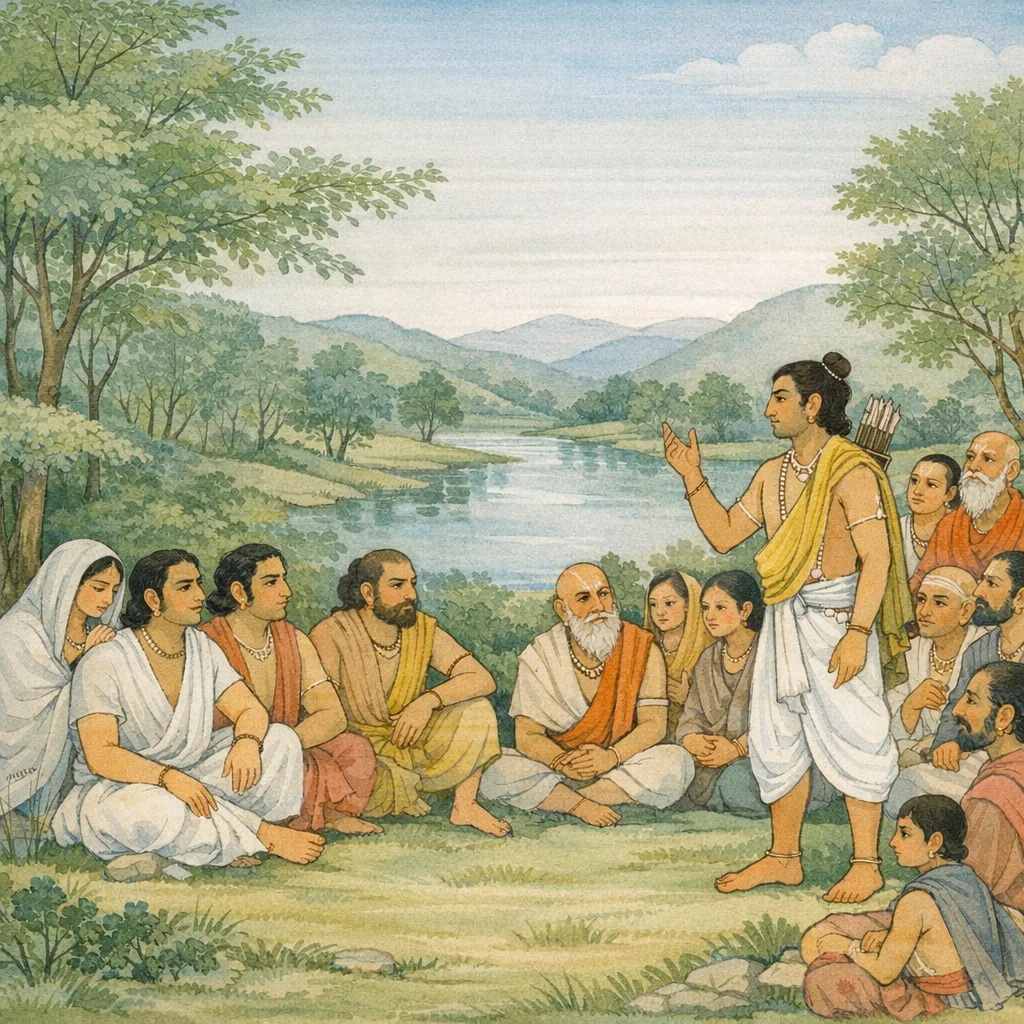
Vaiśampāyana said: When the lord of the Daśārhas (Śrī Kṛṣṇa) had departed, Yudhiṣṭhira, Bhīmasena, and Arjuna—together with the twin brothers (Nakula and Sahadeva), Kṛṣṇā (Draupadī), and their family priest—mounted splendid, costly chariots yoked with excellent horses. Preparing to move on to another forest, they set out in a manner befitting dharma: honoring learned Brāhmaṇas versed in Veda, Vedāṅgas, and mantra with gifts such as gold coins, garments, and cattle, they began their journey.
Verse 2
आस्थाय वीरा: सहिता वनाय प्रतस्थिरे भूतपतिप्रकाशा: । हिरण्यनिष्कान् वसनानि गाश्न प्रदाय शिक्षाक्षरमन्त्रविद्धय:,वैशम्पायनजी कहते हैं--जनमेजय! यादवकुलके अधिपति भगवान् श्रीकृष्णके चले जानेपर युधिष्ठिर, भीमसेन, अर्जुन, नकुल, सहदेव, द्रौपदी और पुरोहित धौम्य उत्तम घोड़ोंसे जुते हुए बहुमूल्य रथोंपर बैठे। फिर भूतनाथ भगवान् शंकरके समान सुशोभित होनेवाले वे सभी वीर एक साथ दूसरे वनमें जानेके लिये उद्यत हुए। वेद-वेदांग और मन्त्रके जाननेवाले ब्राह्मणोंको सोनेकी मुद्राएँ, वस्त्र तथा गौएँ प्रदान करके उन्होंने यात्रा प्रारम्भ की
Vaiśampāyana said: Having made their preparations, the heroes set out together for the forest, radiant like Bhūtapati (Śiva). After giving gold coins, garments, and cows to the brāhmaṇas skilled in phonetics, letters, and mantra-knowledge, they began their journey—marking their departure with acts of reverence, generosity, and dharmic propriety.
Verse 3
प्रेष्या: पुरो विंशतिरात्तशस्त्रा धनूंषि शस्त्राणि शरांश्ष दीप्तान् मौर्वीश्ष यन्त्राणि च सायकांश्व॒ सर्वे समादाय जघन्यमीयु:,भगवान् श्रीकृष्णके साथ बीस सेवक अस्त्र-शस्त्रोंसे सुसज्जित हो धनुष, तेजस्वी बाण, शस्त्र, डोरी, यन्त्र और अनेक प्रकारके सायक लेकर पहले ही पश्चिम दिशामें स्थित द्वारकापुरीकी ओर चले गये थे
Vaiśampāyana said: Twenty attendants went on ahead, fully armed. Carrying bows, weapons, blazing arrows, bowstrings, mechanical devices, and various missiles, they all set out first toward Dvārakā, the city lying to the west, in the company and service of the Blessed Śrī Kṛṣṇa. The scene underscores prudent preparation and disciplined protection while undertaking a significant journey.
Verse 4
ततस्तु वासांसि च राजपुत्र्या धात्र्यश्न दासस््यश्न विभूषणं च | तदिन्द्रसेनस्त्वरित: प्रगृह्म जघन्यमेवोपययौ रथेन,तदनन्तर सारथि इन्द्रसेन राजकुमारी सुभद्राके वस्त्र, आभूषण, धायों तथा दासियोंको लेकर तुरंत ही रथके द्वारा द्वारकापुरीको चल दिया
Then Indrasena swiftly gathered the princess’s garments and ornaments, along with her nurses and maidservants; taking them, he at once set out by chariot, departing without delay toward Dvārakā. The passage underscores prompt, orderly service to a royal charge—protecting her dignity and ensuring proper attendants and possessions accompany her in transit.
Verse 5
तत:ः कुरुश्रेष्ठमुपेत्य पौरा: प्रदक्षिणं चक्कुरदीनसत्त्वा: । त॑ ब्राह्मणाश्वाभ्यवदन् प्रसन्ना मुख्याश्न सर्वे कुरुजाड्डलानाम्,इसके बाद उदार हृदयवाले पुरवासियोंने कुरुश्रेष्ठ युधिष्िरकके पास जा उनकी परिक्रमा की। कुरुजांगलदेशके ब्राह्मणों तथा सभी प्रमुख लोगोंने उनसे प्रसन्नतापूर्वक बातचीत की
Then the townspeople, stout-hearted and unbroken in spirit, approached the best of the Kurus (Yudhiṣṭhira) and circumambulated him in reverence. Pleased at heart, the Brāhmaṇas of Kuru-jāṅgala and all the leading men greeted him and spoke with him respectfully—signaling public recognition of his rightful dignity and the ethical order that honors virtue even in adversity.
Verse 6
स चापि तानभ्यवदत् प्रसन्न: सहैव तैभ्रव्ृभिर्धर्मराज: । तस्थौ च तत्राधिपतिर्महात्मा दृष्टवा जनौघं कुरुजाजुलानाम्,अपने भाइयोंसहित धर्मराज युधिष्ठिरने भी प्रसन्न होकर उन सबसे वार्तालाप किया। कुरुजांग लदेशके उस जनसमुदायको देखकर महात्मा राजा युधिष्ठिर थोड़ी देरके लिये वहाँ ठहर गये
Then Dharmarāja Yudhiṣṭhira too, pleased at heart, spoke courteously with them, together with his brothers. Seeing the great throng of people from Kurujāṅgala, that high-souled ruler paused there for a while, taking in the gathered multitude with calm attention.
Verse 7
पितेव पुत्रेषु स तेषु भावं चक्रे कुरूणामृषभो महात्मा । ते चापि तस्मिन् भरतप्रबर्हे तदा बभूवुः पितरीव पुत्रा: ७ ।। जैसे पिताका अपने पुत्रोंपर वात्सल्यभाव होता है, उसी प्रकार कुरुश्रेष्ठ महात्मा युधिष्ठिरने उन सबके प्रति अपने आन्तरिक स्नेहका परिचय दिया। वे भी उन भरतश्रेष्ठ युधिष्ठिरके प्रति वैसे ही अनुरक्त थे, जैसे पुत्र अपने पितापर
Vaiśampāyana said: Like a father’s tender affection toward his sons, the great-souled Yudhiṣṭhira—the foremost of the Kurus—showed heartfelt care for them. And they, in turn, became devoted to that bull among the Bharatas, loving him as sons love their father.
Verse 8
ततस्तमासाद्य महाजनौघा: कुरुप्रवीरं परिवार्य तस्थु: । हा नाथ हा धर्म इति ब्रुवाणा भीताश्ष सर्वेडश्रुमुखाश्न॒ राजन्,उस महान् जनसमुदाय (प्रजा)-के लोग कुरुकुलके प्रमुख वीर युधिष्ठिरके पास जा उन्हें चारों ओरसे घेरकर खड़े हो गये। राजन! उस समय उन सबके मुखपर आँसुओंकी धारा बह रही थी और वे वियोगके भयसे भीत हो हा नाथ! हा धर्म! इस प्रकार पुकारते हुए कह रहे थे--“कुरुवंशके श्रेष्ठ अधिपति, प्रजाजनोंपर पिताका-सा स्नेह रखनेवाले धर्मराज युधिष्ठिर हम सब पुत्रों, पुरवासियों तथा समस्त देशवासियोंको छोड़कर अब कहाँ चले जा रहे हैं?
Vaiśampāyana said: Then great crowds of people approached the foremost hero of the Kurus and stood surrounding him. Crying, “Alas, our protector! Alas, Dharma!”, all of them—terrified and with tear-filled faces—lamented before him, O king. The scene underscores the people’s dependence on a righteous ruler and their fear of losing dharma’s living support in the person of Yudhiṣṭhira.
Verse 9
वर: कुरूणामधिप: प्रजानां पितेव पुत्रानपहाय चास्मान् | पौरानिमाञ्जानपदांश्व सर्वान् हित्वा प्रयात: क्व नु धर्मराज:,उस महान् जनसमुदाय (प्रजा)-के लोग कुरुकुलके प्रमुख वीर युधिष्ठिरके पास जा उन्हें चारों ओरसे घेरकर खड़े हो गये। राजन! उस समय उन सबके मुखपर आँसुओंकी धारा बह रही थी और वे वियोगके भयसे भीत हो हा नाथ! हा धर्म! इस प्रकार पुकारते हुए कह रहे थे--“कुरुवंशके श्रेष्ठ अधिपति, प्रजाजनोंपर पिताका-सा स्नेह रखनेवाले धर्मराज युधिष्ठिर हम सब पुत्रों, पुरवासियों तथा समस्त देशवासियोंको छोड़कर अब कहाँ चले जा रहे हैं?
Vaiśampāyana said: “Where indeed is Dharmarāja (Yudhiṣṭhira) going, having departed after abandoning us—he, the foremost lord of the Kurus, who cherishes his subjects like a father his sons—leaving behind the citizens of the capital and all the people of the countryside?”
Verse 10
धिग् धार्त॑राष्ट्रं सुनृशंसबुद्धि धिक् सौबलं पापमतिं च कर्णम् । अनर्थमिच्छन्ति नरेन्द्र पापा ये धर्मनित्यस्य सतस्तवैवम्,“'क्रूरबुद्धि धृतराष्ट्रपुत्र दुर्योधनको धिक्कार है। सुबलपुत्र शकुनि तथा पापपूर्ण विचार रखनेवाले कर्णको भी धिक््कार है, जो पापी सदा धर्ममें तत्पर रहनेवाले आपका इस प्रकार अनर्थ करना चाहते हैं
Vaiśampāyana said: “Shame upon the Kaurava (Duryodhana), whose mind is steeped in cruelty; shame upon Śakuni, son of Subala; and shame upon Karṇa, whose intentions are sinful. Those wicked men, O king, desire your ruin—though you are steadfast in dharma and truly virtuous.”
Verse 11
स्वयं निवेश्याप्रतिमं महात्मा पुरं महादेवपुरप्रकाशम् । शतक्रतुप्रस्थममेयकर्मा हित्वा प्रयात: क्व नु धर्मराज:,“जिन महात्माने स्वयं ही पुरुषार्थ करके महादेवजीके नगर कैलासकी-सी सुषमावाले अनुपम इन्द्रप्रस्थ नामक नगरको बसाया था, वे अचिन्त्यकर्मा धर्मराज युधिष्ठिर अपनी उस पुरीको छोड़कर अब कहाँ जा रहे हैं?
Vaiśampāyana said: “That great-souled king—of immeasurable deeds—who by his own effort established the incomparable city of Indraprastha, radiant like the city of Mahādeva (Kailāsa), has now abandoned it. Where, then, is Dharmarāja Yudhiṣṭhira going?”
Verse 12
चकार यामप्रतिमां महात्मा सभां मयो देवसभाप्रकाशाम् | तां देवगुप्तामिव देवमायां हित्वा प्रयात: क्व नु धर्मराज:,“महामना मयदानवने देवताओंकी सभाके समान सुशोभित होनेवाली जिस अनुपम सभाका निर्माण किया था, देवताओंद्वारा रक्षित देवमायाके समान उस सभाका परित्याग करके धर्मराज युधिष्ठिर कहाँ चले जा रहे हैं?'
Vaiśampāyana said: The great-souled one (Maya) constructed a peerless assembly hall, radiant like the hall of the gods. Yet, abandoning that wondrous hall—guarded as though by the gods themselves, like a divine illusion—where indeed has Dharma-rāja Yudhiṣṭhira gone? The verse underscores the poignancy of renouncing splendor and security, hinting at the moral weight of exile and the testing of steadfastness in dharma.
Verse 13
तान् धर्मकामार्थविदुत्तमौजा बीभत्सुरुच्चै: सहितानुवाच । आदास्यते वासमिमं निरुष्य वनेषु राजा द्विषतां यशांसि,धर्म, अर्थ और कामके ज्ञाता उत्तम पराक्रमी अर्जुनने उन सब प्रजाजनोंको सम्बोधित करके उच्च स्वरसे कहा--'राजा युधिष्ठिर इस वनवासकी अवधि पूर्ण करके शत्रुओंका यश छीन लेंगे
Vaiśampāyana said: Then Arjuna—renowned as Bībhatsu, a man of supreme valor and one who understands dharma, artha, and kāma—addressed those people gathered there in a loud voice: “After completing this period of dwelling in the forest, King Yudhiṣṭhira will strip away the glory of his enemies.”
Verse 14
द्विजातिमुख्या: सहिता: पृथक् च भवद्धिरासाद्य तपस्विनश्न । प्रसाद्य धर्मार्थविदश्ष वाच्या यथार्थसिद्धि: परमा भवेन्न:,“आपलोग एक साथ या अलग-अलग श्रेष्ठ ब्राह्मणों, तपस्वियों तथा धर्म-अर्थके ज्ञाता महापुरुषोंको प्रसन्न करके उन सबसे यह प्रार्थना करें, जिससे हमलोगोंके अभीष्ट मनोरथकी उत्तम सिद्धि हो'
Vaiśampāyana said: “Whether together or separately, you should approach the foremost among the twice-born—ascetics and those who truly know dharma and artha. Having pleased them, you should request their counsel and blessing, so that our intended purpose may be fulfilled in the best possible way.”
Verse 15
इत्येवमुक्ते वचने<र्जुनेन ते ब्राह्मणा: सर्ववर्णाश्ष॒ राजन् | मुदाभ्यनन्दन् सहिताश्च चक्रुः प्रदक्षिणं धर्मभूतां वरिष्ठटम्,राजन! अर्जुनके ऐसा कहनेपर ब्राह्मणों तथा अन्य सब वर्णके लोगोंने एक स्वरसे प्रसन्नतापूर्वक उनकी बातका अभिनन्दन किया तथा धर्मात्माओंमें श्रेष्ठ युधिष्ठिरकी परिक्रमा की
Vaiśampāyana said: When Arjuna had spoken thus, O king, the brāhmaṇas and people of all the other social orders rejoiced together and voiced their glad approval. Then, united in reverence, they circumambulated Yudhiṣṭhira, the foremost among the righteous—affirming that dharma is to be honored publicly and that moral authority deserves communal respect.
Verse 16
आमन्त्रय पार्थ च वृकोदरं च धनंजयं याज्ञसेनीं यमौ च । प्रतस्थिरे राष्ट्रमपेतहर्षा युधिष्ठटिरेणानुमता यथास्वम्,तदनन्तर सब लोग कुन्तीपुत्र युधिष्ठिर, भीमसेन, अर्जुन, द्रौपदी तथा नकुल-सहदेवसे विदा ले एवं युधिष्ठिरकी अनुमति प्राप्त करके उदास होकर अपने राष्ट्रको प्रस्थित हुए
Vaiśampāyana said: Having taken leave of Pārtha (Arjuna), Vṛkodara (Bhīma), Dhanañjaya (Arjuna), Yājñasenī (Draupadī), and the twin brothers (Nakula and Sahadeva), and having obtained Yudhiṣṭhira’s permission, they set out for their own kingdom—joyless and subdued in spirit. The scene underscores the ethic of acting with consent and propriety even amid sorrow and political strain.
Verse 23
इति श्रीमहाभारते वनपर्वणि अर्जुनाभिगमनपर्वणि द्वैतवनप्रवेशे त्रयोविंशो 5 ध्याय:,इस प्रकार श्रीमह्याभारत वनपर्वके अन्तर्गत अर्जुनाभिगमनपर्वमें द्वैतवनप्रवेशविषयक तेईसवाँ अध्याय पूरा हुआ
Thus, in the Śrī Mahābhārata, within the Vana Parva, in the section called “Arjuna’s Approach/Meeting,” in the episode concerning the Pāṇḍavas’ entry into the Dvaita forest, the twenty-third chapter concludes. (The appended Hindi line likewise states that the 23rd chapter on entering Dvaita forest is complete.)
Frequently Asked Questions
The dilemma concerns restraint versus decisive force: whether to treat the aggressor with softness or friendship after provocation, versus recognizing that civic protection and deterrence may require firm, timely neutralization.
Ethical steadiness under uncertainty: deception and sensory confusion should not displace discernment; competent counsel and disciplined escalation support responsible action aligned with protection and duty.
No explicit phalaśruti is stated in this passage; its meta-function is precedent-setting—illustrating how discernment, counsel, and calibrated force operate as practical dharma within crisis narratives.