Adhyaya 15
Kṛṣṇasya asāṃnidhya-kāraṇaṃ — Śālva–Soubha-vṛttāntaḥ (Why Kṛṣṇa was absent; the Śālva and Saubha account)
Upa-parva: Kṛṣṇa–Śālva-ākhyāna (Account of Kṛṣṇa’s absence and the Śālva episode)
Yudhiṣṭhira asks Kṛṣṇa to explain his earlier non-presence and where he had gone. Kṛṣṇa reports traveling to confront Śālva’s city/vehicle Saubha. He grounds Śālva’s hostility in the prior killing of Śiśupāla (Damaghoṣa’s son) at Yudhiṣṭhira’s rājasūya, where Śiśupāla reacted with anger to the honoring of Kṛṣṇa. Hearing of Śiśupāla’s death, Śālva—described as intensely enraged—advances on Dvārakā when Kṛṣṇa is away, clashes with Vṛṣṇi defenders (including younger warriors), causes destruction in the city’s environs, and publicly challenges Kṛṣṇa’s whereabouts. Kṛṣṇa recounts resolving to counter this aggression, departing to destroy Saubha, locating Śālva in the maritime region, sounding the Pāñcajanya conch, and calling Śālva to battle. The conflict is described as involving extraordinary forces (dānava-associated elements) and temporary reversals. Kṛṣṇa closes by stating that this operation was the reason he did not come when the Hāstinapura dice episode and its disorder first occurred.
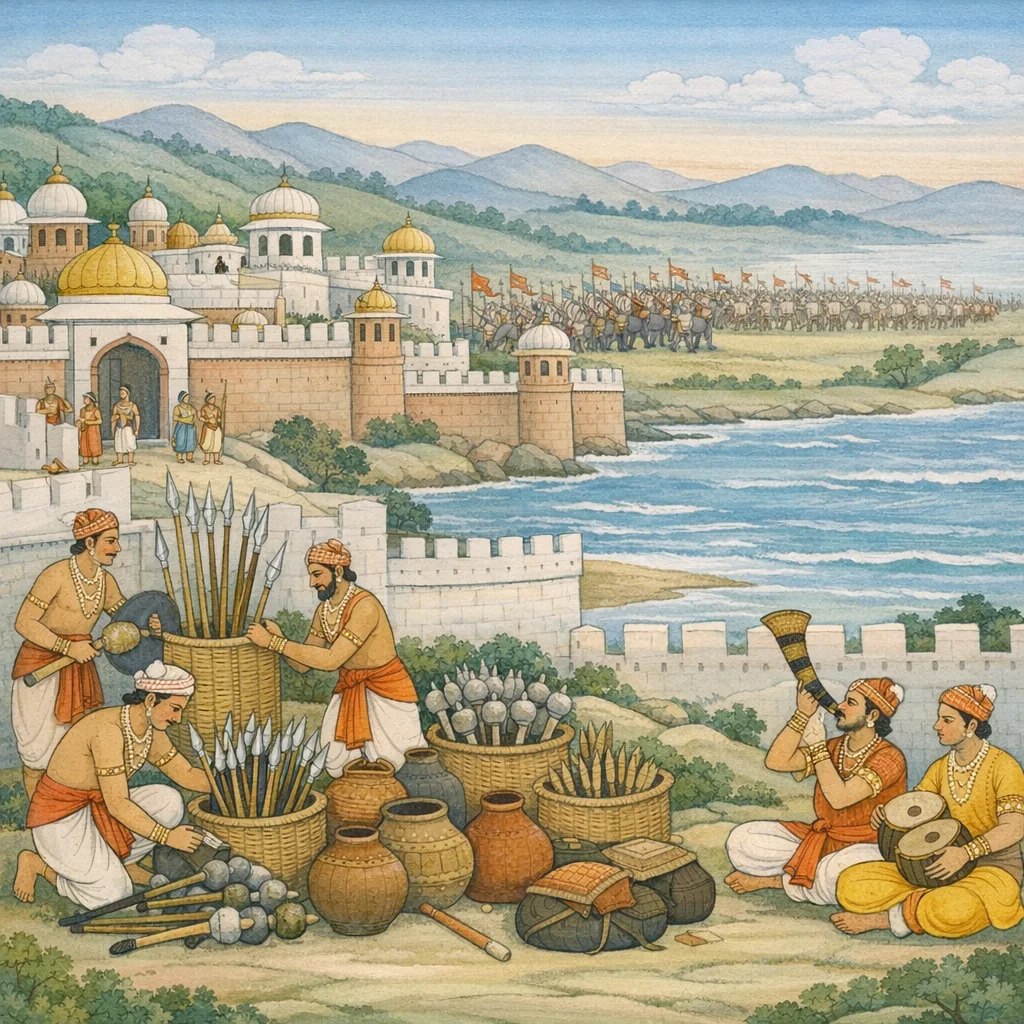
Chapter Arc: युधिष्ठिर वासुदेव-कथा के प्रसंग में पूछते हैं—द्वारका पर संकट कैसे आया और नगर ने अपने को कैसे सँभाला? → वायुदेव (कथावाचक-स्वर) बताते हैं कि शाल्व ने ‘श्रुतश्रवा’ के वध का समाचार पाकर प्रतिशोध में द्वारकापुरी पर चढ़ाई की। दुष्टात्मा शाल्व ने आकाशगामी साधनों/व्यूह के साथ नगर को चारों ओर से घेरने की चेष्टा की, जिससे द्वारका में त्वरित रक्षात्मक तैयारी का दबाव बढ़ता है। → द्वारका का सर्वांगीण दुर्ग-सज्जीकरण—पताकाओं-तोरणों से सुसज्जित प्राचीर, यंत्र-शस्त्रों का संचय, ढोल-भेरी के साथ सैन्य-व्यवस्था, पुलों/संक्रमण-मार्गों का नियंत्रण, परिखा-खाई आदि का सुदृढ़ीकरण—एक संगठित ‘नगर-युद्ध’ की चरम तैयारी के रूप में उभरता है। → नगर-रक्षा शास्त्रोक्त विधि से पूर्ण होती है: सक्षम, कुलीन, युद्ध-परीक्षित पुरुष नियुक्त किए जाते हैं; सैनिकों को पूरा वेतन-भत्ता और आयुध-परिच्छद देकर उनका मनोबल स्थिर किया जाता है; आहुक-राज (द्वारका-प्रशासन) के संरक्षण में द्वारका सुगुप्त और सुविहित हो जाती है। → सज्जित द्वारका शाल्व के आक्रमण की प्रतीक्षा में खड़ी है—अब टकराव का परिणाम और कृष्ण की भूमिका आगे निर्णायक होने वाली है।
Shlokas
Verse 1
हि >> आय न (0) है 2 पञ्चदशो<् ध्याय: सौभनाशकी विस्तृत कथाके प्रसंगमें द्वारकामें युद्धसम्बन्धी रक्षात्मक तैयारियोंका वर्णन युधिछिर उवाच वासुदेव महाबाहो विस्तरेण महामते । सौभस्य वधमाचक्ष्व न हि तृप्पामि कथ्यत:,युधिष्ठिरने कहा--महाबाहो! वसुदेवनन्दन! महामते! तुम सौभ-विमानके नष्ट होनेका समाचार विस्तारपूर्वक कहो। मैं तुम्हारे मुखसे इस प्रसंगको सुनते-सुनते तृप्त नहीं हो रहा हूँ
Yudhiṣṭhira said: “O Vāsudeva, mighty-armed and great-minded! Tell me in full detail how Saubha was destroyed. As you recount it, I do not grow satiated—my desire to hear this account only deepens.”
Verse 2
वायुदेव उवाच हतं श्रुत्वा महाबाहो मया श्रौतश्रवं नृप । उपायाद् भरतश्रेष्ठ शाल्वो द्वारवतीं पुरीम्,भगवान् श्रीकृष्ण बोले--महाबाहो! नरेश्वर! भरतमश्रेष्ठ! श्रुतश्रवा- के पुत्र शिशुपालके मारे जानेका समाचार सुनकर शाल्वने द्वारकापुरीपर चढ़ाई की
Vāyudeva said: “O mighty-armed king, O best of the Bharatas—on hearing that Śrautśrava had been slain by me, Śālva marched against the city of Dvāravatī.”
Verse 3
अरुन्धत्तां सुदुष्टात्मा सर्वतः पाण्डुनन्दन । शाल्वो वैहायसं चापि तत् पुरं व्यूह्ा विछ्ठित:,पाण्डुनन्दन! उस दुष्टात्मा शाल्वने सेनाद्वारा द्वारकापुरीको सब ओरसे घेर लिया था। वह स्वयं आकाशचारी विमान सौभपर व्यूहरचनापूर्वक विराजमान हो रहा था
Vāyu said: “O son of Pāṇḍu, the wicked-minded Śālva hemmed in Arundhatī on every side. He himself, stationed in the aerial Saubha-vimāna and arranged in battle-formation, pressed the assault upon that city.”
Verse 4
तत्रस्थो5थ महीपालो योधयामास तां पुरीम् । अभिसारेण सर्वेण तत्र युद्धमवर्तत,उसीपर रहकर राजा शाल्व द्वारकापुरीके लोगोंसे युद्ध करता था। वहाँ भारी युद्ध छिड़ा हुआ था और उसमें सभी दिशाओंसे अस्त्र-शस्त्रोंके प्रहार हो रहे थे
Stationed there, the king then pressed the attack upon that city. With a full-scale assault, a fierce battle raged there, as weapons and missiles struck from every direction—an image of war’s sweeping violence and the peril that befalls a city when ambition turns into siege.
Verse 5
पुरी समन्ताद् विहिता सपताका सतोरणा । सचक्रा सहुडा चैव सयन्त्रखनका तथा,द्वारकापुरीमें सब ओर पताकाएँ फहरा रही थीं। ऊँचे-ऊँचे गोपुर वहाँ चारों दिशाओंमें सुशोभित थे। जगह-जगह सैनिकोंके समुदाय युद्धके लिये प्रस्तुत थे। सैनिकोंके आत्मरक्षापूर्वक युद्धकी सुविधाके लिये स्थान-स्थानपर बुर्ज बने हुए थे। युद्धोपयोगी यन्त्र वहाँ बैठाये गये थे; तथा सुरंगद्वारा नये-नये मार्ग निकालनेके काममें भी बहुत-से लोग जुटे हुए थे
Vāyu said: “The city had been fortified on every side—its banners flying, its gateways crowned with arches. It was equipped with wheels and protective structures, and it was furnished with war-engines; and likewise there were diggers at work, opening tunnels and new passages.” The description underscores vigilant preparedness: civic order and collective duty are expressed through disciplined defense rather than reckless aggression.
Verse 6
सोपशल्यप्रतोलीका साट्टाद्टालकगोपुरा । सचक्रग्रहणी चैव सोल्कालातावपोथिका,68 # ॥ किआसला 2 सड़कोंपर लोहेके विषाक्त काँटे अदृश्यरूपसे बिछाये गये थे। अट्टालिकाओं और गोपुरोंमें पर्याप्त अन्नका संग्रह किया गया था। शत्रुपक्षके प्रहारोंको रोकनेके लिये जगह- जगह मोर्चेबन्दी की गयी थी। शत्रुओंके चलाये हुए जलते गोले और अलात (प्रज्वलित लौहमय अस्त्र)-को भी विफल करके नीचे गिरा देनेवाली शक्तियाँ सुसज्जित थीं
Vāyu said: “It was fortified with defensive stakes and guarded gateways; it had lofty watchtowers and great gatehouses. It was also equipped with devices to seize and neutralize hostile missiles, and with countermeasures that could extinguish or bring down flaming projectiles and fire-bearing iron weapons—so that the enemy’s assaults would be checked at every point.”
Verse 7
सोष्टिका भरतश्रेष्ठ सभेरीपणवानका । सतोमराड्कुशा राजन् सशतघ्नीकलाड्ूला,अस्त्रोंसे भरे हुए मिट्टी और चमड़ेके असंख्य पात्र रखे गये थे। भरतश्रेष्ठ! ढोल, नगारे और मृदंग आदि जुझाऊ बाजे भी बज रहे थे। राजन्! तोमर, अंकुश, शतघ्नी, लांगल, भुशुण्डी, पत्थरके गोले, अन्यान्य अस्त्र-शस्त्र, फरसे, बहुत-सी सुदृढ़ ढालें और गोला- बारूदसे भरी हुई तोपें यथास्थान तैयार रखी गयी थीं
Vāyu said: “O best of the Bharatas, there were also oṣṭikā-implements, along with martial music—bherīs, paṇavas, and ānakas—resounding. O king, tomaras and aṅkuśas were kept ready, as well as śataghnīs and plough-like weapons (lāṅgalas).” The scene evokes a fortified, fully armed preparation for conflict, where the noise of war-instruments and the careful arrangement of weapons signal an imminent battle and the grave ethical weight of violence undertaken with forethought.
Verse 8
सभुशुण्ड्यश्मगुडका सायुधा सपरश्वधा । लोहचर्मवती चापि साग्नि: सगुडशुज्धिका,अस्त्रोंसे भरे हुए मिट्टी और चमड़ेके असंख्य पात्र रखे गये थे। भरतश्रेष्ठ! ढोल, नगारे और मृदंग आदि जुझाऊ बाजे भी बज रहे थे। राजन्! तोमर, अंकुश, शतघ्नी, लांगल, भुशुण्डी, पत्थरके गोले, अन्यान्य अस्त्र-शस्त्र, फरसे, बहुत-सी सुदृढ़ ढालें और गोला- बारूदसे भरी हुई तोपें यथास्थान तैयार रखी गयी थीं
Vāyu-deva said: “There were bhūśuṇḍī-launchers and stone-shot projectiles, along with weapons and battle-axes. There were also strong shields clad in iron and leather, and fire-bearing devices and engines stocked with pellets and ammunition—kept in readiness in their proper places.”
Verse 9
शास्त्रदृष्टेन विधिना सुयुक्ता भरतर्षभ । रथैरनेकैर्विविधैर्गदसाम्बोद्धवादिभि:,भरतकुलभूषण! शास्त्रोक्त विधिसे द्वारकापुरीको रक्षाके सभी उत्तम उपायोंसे सम्पन्न किया गया था। कुरुश्रेष्ठ! शत्रुओंका सामना करनेमें समर्थ गद, साम्ब और उद्धव आदि अनेक वीर पुरुष नाना प्रकारके बहुसंख्यक रथोंद्वारा पुरीकी रक्षामें दत्तचित थे। जो अत्यन्त विख्यात कुलोंमें उत्पन्न थे तथा युद्धके अवसरोंपर जिनके बल-वीर्यका परिचय मिल चुका था, ऐसे वीर रक्षक मध्यम गुल्म (नगरके मध्यवर्ती दुर्ग)-में स्थित हो पुरीकी पूर्णतः रक्षा कर रहे थे। सबको प्रमादसे बचानेवाले उग्रसेन और उद्धव आदिने शत्रुओंके गुल्मोंको नष्ट करनेकी शक्ति रखनेवाले घुड़सवारोंके हाथमें झंडे देकर समूचे नगरमें यह घोषणा करा दी थी कि किसीको भी मद्यपान नहीं करना चाहिये
Vāyu said: “O bull among the Bharatas, Dvārakā was fortified in full accordance with the prescriptions of the śāstras. Many kinds of chariots were deployed in great numbers, and valiant defenders such as Gada, Sāmba, and Uddhava—proven in strength and heroism—stood fully intent on protecting the city. Thus, by disciplined preparedness and vigilant command, the city’s defense was made complete.”
Verse 10
पुरुषै: कुरुशार्टूल समर्थ: प्रतिवारणे । अतिख्यातकुलै वीरिवदृष्टवीर्यश्व संयुगे,भरतकुलभूषण! शास्त्रोक्त विधिसे द्वारकापुरीको रक्षाके सभी उत्तम उपायोंसे सम्पन्न किया गया था। कुरुश्रेष्ठ! शत्रुओंका सामना करनेमें समर्थ गद, साम्ब और उद्धव आदि अनेक वीर पुरुष नाना प्रकारके बहुसंख्यक रथोंद्वारा पुरीकी रक्षामें दत्तचित थे। जो अत्यन्त विख्यात कुलोंमें उत्पन्न थे तथा युद्धके अवसरोंपर जिनके बल-वीर्यका परिचय मिल चुका था, ऐसे वीर रक्षक मध्यम गुल्म (नगरके मध्यवर्ती दुर्ग)-में स्थित हो पुरीकी पूर्णतः रक्षा कर रहे थे। सबको प्रमादसे बचानेवाले उग्रसेन और उद्धव आदिने शत्रुओंके गुल्मोंको नष्ट करनेकी शक्ति रखनेवाले घुड़सवारोंके हाथमें झंडे देकर समूचे नगरमें यह घोषणा करा दी थी कि किसीको भी मद्यपान नहीं करना चाहिये
Vāyu said: “O tiger among the Kurus, ornament of Bharata’s line! Dvārakā had been secured according to the prescriptions of polity and sacred law, furnished with every excellent means of defense. Many heroes—Gadā, Sāmba, Uddhava and others—fully capable of meeting the enemy, kept their minds fixed on guarding the city with numerous chariots of diverse kinds. Born in renowned families and already proven in strength and valor on the battlefield, these defenders took position in the central fortification and protected the city on all sides. And to keep everyone free from negligence, Ugrasena, Uddhava and the rest had mounted horsemen—able to shatter enemy formations—carry banners through the whole city, proclaiming that no one should drink intoxicating liquor.”
Verse 11
मध्यमेन च गुल्मेन रक्षिभि: सा सुरक्षिता । उत्क्षिप्तगुल्मैश्न तथा हयैश्न सपताकिभि:,भरतकुलभूषण! शास्त्रोक्त विधिसे द्वारकापुरीको रक्षाके सभी उत्तम उपायोंसे सम्पन्न किया गया था। कुरुश्रेष्ठ! शत्रुओंका सामना करनेमें समर्थ गद, साम्ब और उद्धव आदि अनेक वीर पुरुष नाना प्रकारके बहुसंख्यक रथोंद्वारा पुरीकी रक्षामें दत्तचित थे। जो अत्यन्त विख्यात कुलोंमें उत्पन्न थे तथा युद्धके अवसरोंपर जिनके बल-वीर्यका परिचय मिल चुका था, ऐसे वीर रक्षक मध्यम गुल्म (नगरके मध्यवर्ती दुर्ग)-में स्थित हो पुरीकी पूर्णतः रक्षा कर रहे थे। सबको प्रमादसे बचानेवाले उग्रसेन और उद्धव आदिने शत्रुओंके गुल्मोंको नष्ट करनेकी शक्ति रखनेवाले घुड़सवारोंके हाथमें झंडे देकर समूचे नगरमें यह घोषणा करा दी थी कि किसीको भी मद्यपान नहीं करना चाहिये
Vāyu said: “That city was thoroughly guarded by watchmen stationed in the central defensive post (the ‘middle garrison’). It was also protected by cavalry bearing banners, capable of breaking up and scattering the enemy’s formations. Thus, in accordance with the prescribed rules of statecraft, the city’s defense was arranged with every excellent precaution—so that vigilance, discipline, and readiness for battle would prevail, and negligence born of intoxication would find no place.”
Verse 12
आधघोषितं च नगरे न पातव्या सुरेति वै । प्रमादं परिरक्षद्धिरुग्रसेनोद्धवादिभि:,भरतकुलभूषण! शास्त्रोक्त विधिसे द्वारकापुरीको रक्षाके सभी उत्तम उपायोंसे सम्पन्न किया गया था। कुरुश्रेष्ठ! शत्रुओंका सामना करनेमें समर्थ गद, साम्ब और उद्धव आदि अनेक वीर पुरुष नाना प्रकारके बहुसंख्यक रथोंद्वारा पुरीकी रक्षामें दत्तचित थे। जो अत्यन्त विख्यात कुलोंमें उत्पन्न थे तथा युद्धके अवसरोंपर जिनके बल-वीर्यका परिचय मिल चुका था, ऐसे वीर रक्षक मध्यम गुल्म (नगरके मध्यवर्ती दुर्ग)-में स्थित हो पुरीकी पूर्णतः रक्षा कर रहे थे। सबको प्रमादसे बचानेवाले उग्रसेन और उद्धव आदिने शत्रुओंके गुल्मोंको नष्ट करनेकी शक्ति रखनेवाले घुड़सवारोंके हाथमें झंडे देकर समूचे नगरमें यह घोषणा करा दी थी कि किसीको भी मद्यपान नहीं करना चाहिये
Vāyu said: In the city a proclamation was made: ‘Indeed, no one is to drink liquor.’ Ugrasena, Uddhava, and the others—intent on guarding the people against negligence and disorder—had this announced throughout the town, so that vigilance would not be weakened and the community’s safety would remain intact.
Verse 13
प्रमत्तेष्वभिघातं हि कुर्याच्छाल्वो नराधिप: । इति कृत्वाप्रमत्तास्ते सर्वे वृष्ण्यन्धका: स्थिता:,क्योंकि मदिरासे उन्मत्त हुए लोगोंपर राजा शाल्व घातक प्रहार कर सकता है। यह सोचकर वृष्णि और अन्धकवंशके सभी योद्धा पूरी सावधानीके साथ युद्धमें डटे हुए थे
Verse 14
इस प्रकार श्रीमह्याभारत वनपर्वके अन्तर्गत अ्जुनाभियगमनपर्वमें सौभवधोपाख्यानविषयक चौदहवाँ अध्याय पूरा हुआ,आनर्ताक्ष तथा सर्वे नटा नर्तकगायना: । बहिनिर्वासिता: क्षिप्रं रक्षद्धिर्वित्तमंचयम् धनसंग्रहकी रक्षा करनेवाले यादवोंने आनर्तदेशीय नटों, नर्तकों तथा गायकोंको शीघ्र ही नगरसे बाहर कर दिया था
Thus, the Yādavas—acting as guardians of the accumulated wealth—quickly expelled from the city the performers of Ānarta: the actors, dancers, and singers. The narrative underscores a ruler’s duty to secure public resources and maintain order, even when it requires restricting those seen as potential risks to the treasury.
Verse 15
संक्रमा भेदिता: सर्वे नावश्व प्रतिषेधिता: । परिखाश्नलापि कौरव्य कालै: सुनिचिता: कृता:,कुरुनन्दन! द्वारकापुरीमें आनेके लिये जो पुल मार्ममें पड़ते थे वे सब तोड़ दिये गये। नौकाएँ रोक दी गयी थीं और खाइयोंमें काँटे बिछा दिये गये थे इति श्रीमहाभारते वनपर्वणि अर्जुनाभिगमनपर्वणि सौभवधोपाख्याने पजठ्चदशो< ध्याय: इस प्रकार श्रीमह्माभारत वनपवके अन्तर्गत अजुनाभिगमनपर्वमें सौभवधविषयक पंद्रहवाँ अध्याय पूरा हुआ
Vāyu said: “All the causeways and bridges were broken down; the boats too were barred from passage. Even the moats were made secure—O Kauravya—by planting sharp stakes and fortifying them with careful preparation over time.”
Verse 16
उदपाना: कुरुश्रेष्ठ तथैवाप्यम्बरीषका: । समन्तात् क्रोशमात्रं च कारिता विषमा च भू:,कुरुश्रेष्ठ! द्वारकापुरीके चारों ओर एक कोसतकके चारों ओरके कुएँ इस प्रकार जलशून्य कर दिये गये थे मानो भाड़ हों और उतनी दूरकी भूमि भी लौहकण्टक आदिसे व्याप्त कर दी गयी थी
Verse 17
प्रकृत्या विषम दुर्ग प्रकृत्या च सुरक्षितम् । प्रकृत्या चायुधोपेतं विशेषेण तदानघ,निष्पाप नरेश! द्वारका एक तो स्वभावसे ही दुर्गम्य, सुरक्षित और अस्त्र-शस्त्रोंसे सम्पन्न है, तथापि उस समय इसकी विशेष व्यवस्था कर दी गयी थी
Vāyu said: “O sinless king, O blameless one—Dvārikā is by its very nature difficult to approach; by its very nature it is well-protected; and by its very nature it is furnished with weapons. Even so, at that time special defensive arrangements were made.”
Verse 18
सुरक्षितं सुगुप्तं च सर्वायुधसमन्वितम् । तत् पुरं भरतश्रेष्ठ यथेन्द्रभवनं तथा,भरतश्रेष्ठ! द्वारकानगर इन्द्रभवनकी भाँति ही सुरक्षित, सुगुप्त और सम्पूर्ण आयुधोंसे भरा-पूरा है
Vāyu-deva said: “O best of the Bharatas, that city is well-protected and securely guarded, fully furnished with every kind of weapon. It stands like Indra’s own celestial palace—impregnable, orderly, and prepared against any threat.”
Verse 19
नचामुद्रोडभिनिर्याति न चामुद्र: प्रवेश्यते । वृष्ण्यन्धक पुरे राजंस्तदा सौभसमागमे,राजन! सौभनिवासियोंके साथ युद्ध होते समय वृष्णि और अन्धकवंशी वीरोंके उस नगरमें कोई भी राजमुद्रा (पास)-के बिना न तो बाहर निकल सकता था और न बाहरसे नगरके भीतर ही आ सकता था
Vāyu said: “O King, at that time—when the encounter with the people of Saubha was underway—in the city of the Vṛṣṇis and Andhakas, no one could go out without the royal seal-pass, and no one could enter from outside either. Thus, even amid war, order and controlled access were enforced to protect the community and prevent confusion, espionage, and harm.”
Verse 20
अनुरथ्यासु सर्वासु चत्वरेषु च कौरव । बल॑ बभूव राजेन्द्र प्रभूतगजवाजिमत्,कुरुनन्दन राजेन्द्र! वहाँ प्रत्येक सड़क और चौराहेपर बहुत-से हाथीसवार और घुड़सवारोंसे युक्त विशाल सेना उपस्थित रहती थी
Vāyu said: “O Kaurava, O best of kings—at every carriage-road and at the crossroads there stood a vast force, richly supplied with elephants and horses.” The line underscores the visible might and preparedness of royal power, hinting at how worldly strength and display can dominate public spaces and shape the moral atmosphere of a realm.
Verse 21
दत्तवेतनभक्तं च दत्तायुधपरिच्छदम् | कृतोपधानं च तदा बलमासीन्महाभुज,महाबाहो! उस समय सेनाके प्रत्येक सैनिकको पूरा-पूरा वेतन और भत्ता चुका दिया गया था। सबको नये-नये हथियार और पोशाकें दी गयी थीं और उन्हें विशेष पुरस्कार आदि देकर उनका प्रेम और विश्वास प्राप्त कर लिया गया था
Verse 22
न कुप्यवेतनी वक्रिन्न चातिक्रान्तवेतनी । नानुग्रहभृतः कश्रिन्न चादृष्टपराक्रम:,कोई भी सैनिक ऐसा नहीं था जिसे सोने-चाँदीके सिवा ताँबा आदि वेतनके रूपमें दिया जाता हो अथवा जिसे समयपर वेतन न प्राप्त हुआ हो। किसी भी सैनिकको दयावश सेनामें भर्ती नहीं किया गया था तथा कोई भी ऐसा न था जिसका पराक्रम बहुत दिनोंसे देखा न गया हो
Vāyu-deva said: “There was not a single soldier who was paid in a paltry or debased manner, nor anyone whose wages were overdue. No one had been enlisted merely out of pity or favoritism, and none was a man whose valor had not already been proven.”
Verse 23
एवं सुविहिता राजन् द्वारका भूरिदक्षिणा । आहुकेन सुगुप्ता च राज्ञा राजीवलोचन,कमलनयन राजन! जिसमें बहुत-से दक्ष मनुष्य निवास करते थे उस द्वारकानगरीकी रक्षाके लिये इस प्रकारकी व्यवस्था की गयी थी। वह राजा उग्रसेनके द्वारा भलीभाँति सुरक्षित थी
O King, thus was Dvārakā—rich in gifts and resources and inhabited by many capable men—carefully organized for its protection. And, O lotus-eyed ruler, it was well-guarded by King Āhuka (Ugrasena), ensuring the city’s security through proper governance and vigilant oversight.
Frequently Asked Questions
The tension between being present as counsel to allies during political crisis versus fulfilling a protector’s duty to neutralize an immediate threat to one’s own polity (Dvārakā) is presented as a competing-obligations problem.
Leadership is evaluated by priority-setting under constraint: responding to imminent harm and safeguarding dependents can justify temporary absence, provided the action is proportionate and transparently accounted for.
No explicit phalaśruti is present here; the chapter functions primarily as contextual historiography and ethical justification within the broader exile discourse rather than as a merit-promising recitation unit.