Adhyaya 132
Aṣṭāvakra–Kahoda Upākhyāna: Śvetaketu’s Āśrama, Sarasvatī, and the Origin of Aṣṭāvakra
Upa-parva: Tīrtha-yātrā / Lomasha-kathā-prasaṅga (Aṣṭāvakra–Śvetaketu Upākhyāna Context)
Lomasha directs Yudhiṣṭhira to the sacred and fruitful āśrama of the renowned mantra-knower Śvetaketu Auḍḍālaki. The chapter notes Śvetaketu’s direct vision of Sarasvatī in human form, linking the episode to vāk (speech) and brahmavidyā (sacred knowledge). It then situates Śvetaketu alongside Aṣṭāvakra (son of Kahoda) as maternal relatives, and recalls their entry into King Janaka of Videha’s yajña arena, where they confront the famed disputant Bandi. Prompted by Yudhiṣṭhira’s inquiry, Lomasha narrates Kahoda’s formation as Uddālaka’s disciplined student and his marriage to Uddālaka’s daughter Sujātā. While Kahoda studies, the unborn child admonishes his father’s recitation; the offended sage curses the fetus to be ‘crooked in eight ways,’ resulting in Aṣṭāvakra’s distinctive body at birth. Sujātā, distressed by poverty late in pregnancy, urges Kahoda to seek wealth; he goes to Janaka and is defeated in debate, being cast into the waters by Bandi. Uddālaka instructs Sujātā to conceal this from the child. Years later, a domestic incident with Śvetaketu triggers Aṣṭāvakra’s discovery of the truth; he resolves, with Śvetaketu, to attend Janaka’s yajña—where learned disputation and the recovery of familial honor become the narrative’s immediate horizon.
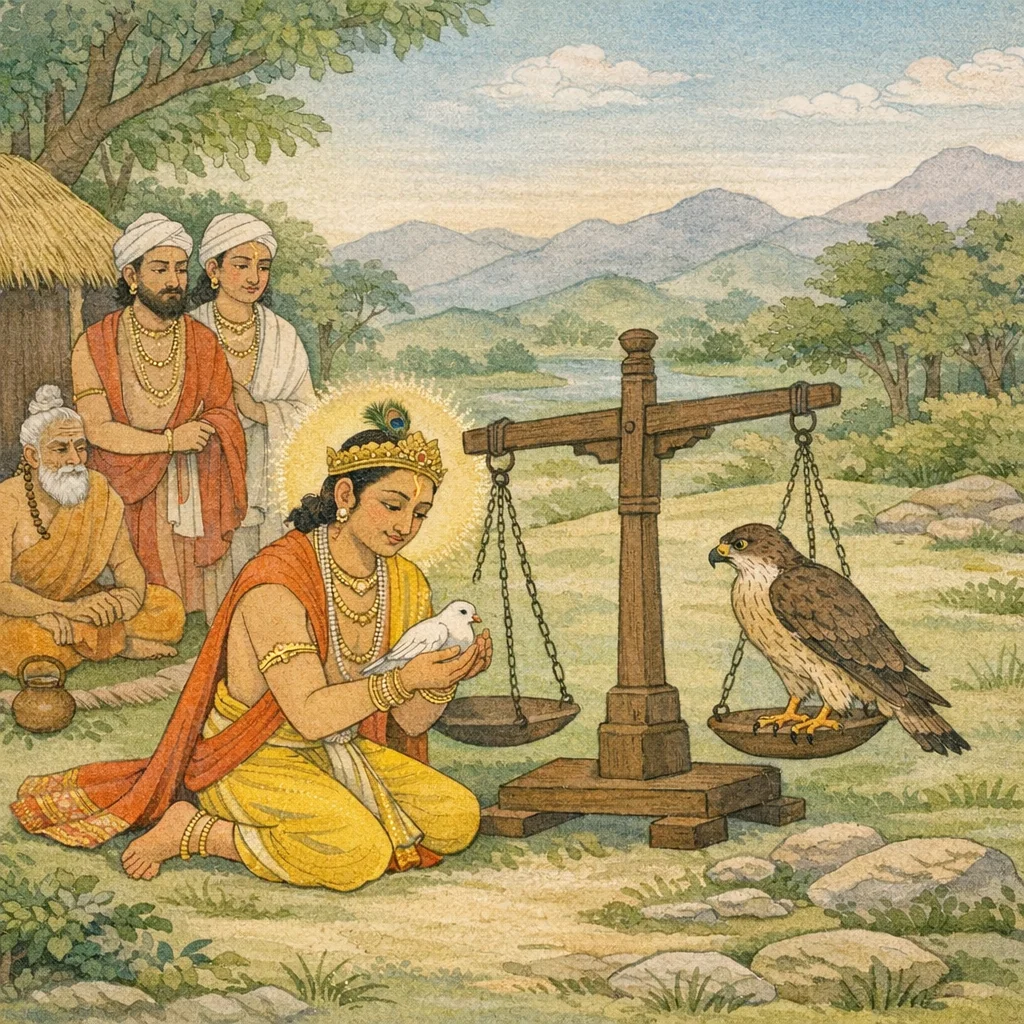
Chapter Arc: तीर्थयात्रा के प्रसंग में लोमश ऋषि धर्म की कसौटी पर खरे उतरे राजा उशीनर की कथा उठाते हैं—एक भयभीत कबूतर शरण माँगता है और उसके पीछे भूखा बाज न्याय की माँग लेकर आ खड़ा होता है। → बाज कहता है कि क्षुधा से पीड़ित उसका ‘विहित भक्षण’ रोका जा रहा है; राजा धर्म-लोभ में आकर यदि उसे रोकेगा तो स्वयं धर्म से च्युत होगा। राजा प्रत्युत्तर देता है कि शरणागत की रक्षा परम धर्म है—कबूतर भयार्त है, अतः उसे लौटाना अधर्म होगा। दोनों धर्मों—अहिंसा/शरणागति और जीविका/प्रकृति-धर्म—का टकराव तीखा होता जाता है। → बाज शर्त रखता है: यदि राजा को कबूतर से स्नेह है तो कबूतर के बराबर तौल कर अपना मांस काटकर दे। राजा अपने शरीर का मांस निकाल-निकाल कर तराजू पर रखता है, पर कबूतर का पलड़ा भारी ही रहता है—अंततः राजा स्वयं को ही तराजू पर रख देने को प्रस्तुत होता है, पूर्ण आत्म-त्याग के शिखर पर पहुँचकर। → तभी बाज और कबूतर अपना दिव्य रूप प्रकट करते हैं—बाज इन्द्र है और कबूतर अग्नि (हव्यवाहन)। वे कहते हैं कि वे धर्म की परीक्षा लेने आए थे; राजा उशीनर की शरणागत-रक्षा और आत्म-त्याग से प्रसन्न होकर उसे दिव्य लोक/सदन का दर्शन कराते हैं और उसकी कीर्ति को अमर बताते हैं।
Shlokas
Verse 1
हि आय न () है > 'प्रभास' की जगह 'हाटक' पाठभेद भी मिलता है। एकत्रिशदाधिकशततमो< ध्याय: राजा उशीनरद्वारा बाजको अपने शरीरका मांस देकर शरणमें आये हुए कबूतरके प्राणोंकी रक्षा करना श्येन उवाच धर्मात्मानं त्वाहुरेकं सर्वे राजन् महीक्षित: । सर्वधर्मविरुद्ध त्वं कस्मात् कर्म चिकीर्षसि,तब बाजने कहा--राजन्! समस्त भूपाल केवल आपको ही धर्मात्मा बताते हैं। फिर आप यह सम्पूर्ण धर्मोंसे विरुद्ध कर्म कैसे करना चाहते हैं। महाराज! मैं भूखसे कष्ट पा रहा हूँ और कबूतर मेरा आहार नियत किया गया है। आप धर्मके लोभसे इसकी रक्षा न करें। वास्तवमें इसे आश्रय देकर आपने धर्मका परित्याग ही किया है
The hawk said: “O King, all the rulers of the earth proclaim you alone to be truly righteous. Why, then, do you wish to perform an act that runs contrary to every principle of dharma? I am tormented by hunger, and this pigeon has been appointed as my food. Do not protect it out of greed for merit. In truth, by granting it refuge you have abandoned dharma itself.”
Verse 2
विहितं भक्षणं राजन् पीड्यमानस्य मे क्षुधा । मा रक्षीर्धर्मलो भेन धर्ममुत्सृष्टवानसि,तब बाजने कहा--राजन्! समस्त भूपाल केवल आपको ही धर्मात्मा बताते हैं। फिर आप यह सम्पूर्ण धर्मोंसे विरुद्ध कर्म कैसे करना चाहते हैं। महाराज! मैं भूखसे कष्ट पा रहा हूँ और कबूतर मेरा आहार नियत किया गया है। आप धर्मके लोभसे इसकी रक्षा न करें। वास्तवमें इसे आश्रय देकर आपने धर्मका परित्याग ही किया है
The hawk said: “O King, hunger torments me, and this pigeon has been appointed as my rightful food. Do not protect it out of a greedy attachment to ‘dharma’. By granting it refuge against what is ordained, you have in fact abandoned dharma itself.”
Verse 3
राजोवाच संत्रस्तरूपस्त्राणार्थी त्वत्तो भीतो महाद्विज । मत्सकाशमनुप्राप्त: प्राणगृध्नुर॒यं द्विज:,राजा बोले--पक्षिराज! यह कबूतर तुमसे डरकर घबराया हुआ है और अपने प्राण बचानेकी इच्छासे मेरे समीप आया है। यह अपनी रक्षा चाहता है। बाज! इस प्रकार अभय चाहनेवाले इस कबूतरको यदि मैं तुमको नहीं सौंप रहा हूँ, यह तो परम धर्म है। इसे तुम कैसे नहीं देख रहे हो?
The King said: “O great twice-born one, this dove has come to me in terror, seeking protection, frightened of you and clinging to life. Having reached my presence for refuge, it asks to be saved. If I do not hand over to you this dove that seeks fearlessness, that is the highest dharma of a protector. How do you not recognize this?”
Verse 4
एवमभ्यागतस्थेह कपोतस्या भयार्थिन: । अप्रदाने परं धर्म कथं श्येन न पश्यसि,राजा बोले--पक्षिराज! यह कबूतर तुमसे डरकर घबराया हुआ है और अपने प्राण बचानेकी इच्छासे मेरे समीप आया है। यह अपनी रक्षा चाहता है। बाज! इस प्रकार अभय चाहनेवाले इस कबूतरको यदि मैं तुमको नहीं सौंप रहा हूँ, यह तो परम धर्म है। इसे तुम कैसे नहीं देख रहे हो?
The king said: “This pigeon, terrified of you, has come here seeking refuge to save its life. In not handing over one who has come for protection, the highest dharma is upheld. O hawk, how do you not see this?”
Verse 5
प्रस्पन्दमान: सम्भ्रान्त: कपोत: श्येन लक्ष्यते । मत्सकाशं जीवितार्थी तस्य त्यागो विगर्हित:,बाज! देखो तो यह बेचारा कबूतर किस प्रकार भयसे व्याकुल हो थर-थर काँप रहा है। इसने अपने प्राणोंकी रक्षाके लिये ही मेरी शरण ली है। ऐसी दशामें इसे त्याग देना बड़ी ही निन्दाकी बात है। जो मनुष्य ब्राह्मणोंकी हत्या करता है, जो जगन्माता गौका वध करता है तथा जो शरणमें आये हुए को त्याग देता है, इन तीनोंको समान पाप लगता है
The hawk said: “Look—this poor pigeon is trembling and utterly terrified. Seeking only to save its life, it has come to me for refuge. In such a condition, to abandon it would be deeply blameworthy.”
Verse 6
यो हि कश्रिद् द्विजान् हन्याद् गां वा लोकस्य मातरम् । शरणागतं च त्यजते तुल्यं तेषां हि पातकम्,बाज! देखो तो यह बेचारा कबूतर किस प्रकार भयसे व्याकुल हो थर-थर काँप रहा है। इसने अपने प्राणोंकी रक्षाके लिये ही मेरी शरण ली है। ऐसी दशामें इसे त्याग देना बड़ी ही निन्दाकी बात है। जो मनुष्य ब्राह्मणोंकी हत्या करता है, जो जगन्माता गौका वध करता है तथा जो शरणमें आये हुए को त्याग देता है, इन तीनोंको समान पाप लगता है
The hawk said: “Whoever kills a Brahmin, or slaughters the cow—the mother of the world—or abandons one who has come seeking refuge: for all these, the sin is the same. Look how this poor pigeon trembles in fear; it has come to me only to save its life. In such a condition, to cast it away would be deeply blameworthy.”
Verse 7
श्येन उवाच आहारात् सर्वभूतानि सम्भवन्ति महीपते | आहारेण विवर्धन्ते तेन जीवन्ति जन्तव:,बाजने कहा--महाराज! सब प्राणी आहारसे ही उत्पन्न होते हैं, आहारसे ही उनकी वृद्धि होती है और आहारसे ही जीवित रहते हैं
The hawk said: “O king, all living beings arise from food; by food they grow, and by that very food creatures sustain their life.”
Verse 8
शक््यते दुस्त्यजे<प्यर्थे चिररात्राय जीवितुम् । न तु भोजनमुत्सृज्य शक्यं वर्तयितुं चिरम्,जिसको त्यागना बहुत कठिन है, उस अर्थके बिना भी मनुष्य बहुत दिनोंतक जीवित रह सकता है, परंतु भोजन छोड़ देनेपर कोई भी अधिक समयतक जीवन धारण नहीं कर सकता
Even without wealth—though it is notoriously hard to renounce—a person can still remain alive for a long time. But if one abandons food, no one can sustain life for long. In this counsel, the speaker underscores a practical hierarchy of needs: attachment to possessions may be resisted, yet the body’s basic nourishment is indispensable, and ethical deliberation must account for that reality.
Verse 9
भक्ष्याद् वियोजितस्याद्य मम प्राणा विशाम्पते । विसृज्य कायमेष्यन्ति पन्थानमकुतोभयम्,प्रजानाथ! आज आपने मुझे भोजनसे वंचित कर दिया है, इसलिये मेरे प्राण इस शरीरको छोड़कर अकुतोभय-पथ ([मृत्यु)-को प्राप्त हो जायँगे। धर्मात्मन्! इस प्रकार मेरी मृत्यु हो जानेपर मेरे स्त्री-पुत्र आदि भी (असहाय होनेके कारण) नष्ट हो जायँगे। इस तरह आप एक कबूतरकी रक्षा करके बहुत-से प्राणियोंकी रक्षा नहीं कर रहे हैं
The hawk said: “O lord of the people, today you have deprived me of my rightful food. Therefore my life-breaths will abandon this body and go to the fear-free path—death. And when I die, my wife, children, and dependents too will perish for lack of support. Thus, by protecting a single pigeon, you are failing to protect many other lives that rely on me.”
Verse 10
प्रमृते मयि धर्मात्मन् पुत्रदारादि नड्क्ष्यति | रक्षमाण: कपोतं त्वं बहून् प्राणान् न रक्षसि,प्रजानाथ! आज आपने मुझे भोजनसे वंचित कर दिया है, इसलिये मेरे प्राण इस शरीरको छोड़कर अकुतोभय-पथ ([मृत्यु)-को प्राप्त हो जायँगे। धर्मात्मन्! इस प्रकार मेरी मृत्यु हो जानेपर मेरे स्त्री-पुत्र आदि भी (असहाय होनेके कारण) नष्ट हो जायँगे। इस तरह आप एक कबूतरकी रक्षा करके बहुत-से प्राणियोंकी रक्षा नहीं कर रहे हैं
The hawk said: “O righteous one, if I die, my wife, children, and dependents will also perish. By protecting this single pigeon, you are failing to protect many lives, O lord of creatures. Since you have deprived me of my food today, my life-breath will leave this body and go to the path of death. Consider, then, the wider consequence of your choice: saving one may bring ruin upon many who rely on me.”
Verse 11
धर्म यो बाधते धर्मो न स धर्म: कुधर्म तत् अविरोधात् तु यो धर्म: स धर्म: सत्यविक्रम
The hawk said: “That which, while being called ‘dharma’, obstructs or violates dharma is not truly dharma; it is misdirected conduct. But the dharma that stands without contradiction—consistent with the deeper order of righteousness—that alone is dharma, O Satyavikrama.”
Verse 12
सत्यपराक्रमी नरेश! जो धर्म दूसरे धर्मका बाधक हो वह धर्म नहीं, कुधर्म है। जो दूसरे किसी धर्मका विरोध न करके प्रतिष्ठित होता है वही वास्तविक धर्म है ।। विरोधिषु महीपाल निश्चित्य गुरुलाघवम् । न बाधा विद्यते यत्र तं धर्म समुपाचरेत्,परस्परविरुद्ध प्रतीत होनेवाले धर्मोमें गौरव-लाघवका विचार करके, जिसमें दूसरोंके लिये बाधा न हो उसी धर्मका आचरण करना चाहिये
O king of true valor, a rule of conduct that obstructs another legitimate duty is not truly dharma; it is misdirected conduct. That alone is genuine dharma which becomes established without opposing other rightful duties. Therefore, when duties appear to conflict, O ruler of the earth, one should weigh what is weightier and what is lighter, and practice that course in which no harm or obstruction is caused to others.
Verse 13
गुरुलाघवमादाय धर्माधर्मविनिश्चये । यतो भूयांस्ततो राजन् कुरुष्व धर्मनिश्चयम्,राजन! धर्म और अधर्मका निर्णय करते समय पुण्य और पापके गौरव-लाघवपर ही दृष्टि रखकर विचार कीजिये तथा जिसमें अधिक पुण्य हो उसीको आचरणमें लाने योग्य धर्म ठहराइये
O King, when you are judging between dharma and adharma, weigh the relative gravity and lightness of merit and sin. Having considered which course carries the greater share of righteousness, decide that to be dharma and make it the rule of your conduct.
Verse 14
राजोवाच बहुकल्याणसंयुक्तं भाषसे विहगोत्तम | सुपर्ण: पक्षिराट् किं त्वं धर्मज्ञश्नास्यसंशयम्,राजाने कहा--पक्षिश्रेष्ठ! तुम्हारी बातें अत्यन्त कल्याणमय गुणोंसे युक्त हैं। तुम साक्षात् पक्षिराज गरुड़ तो नहीं हो? इसमें संदेह नहीं कि तुम धर्मके ज्ञाता हो
Verse 15
तथा हि धर्मसंयुक्तं बहु चित्र च भाषसे । न ते>स्त्यविदितं किंचिदिति त्वां लक्षयाम्पहम्,तुम जो बातें कह रहे हो वे बड़ी ही विचित्र और धर्मसंगत हैं। मुझे लक्षणोंसे ऐसा जान पड़ता है कि ऐसी कोई बात नहीं है जो तुम्हें ज्ञात न हो
“Indeed, what you speak is richly varied and yet firmly aligned with dharma. From the signs I perceive, I conclude this: there is nothing at all that is unknown to you.”
Verse 16
शरणैषिपरित्यागं कथं साध्विति मन्यसे । आहारार्थ समारम्भस्तव चायं॑ विहंगम
The hawk said: “How can you think it is right to abandon one who seeks refuge? And besides, O bird, this effort of yours is for the sake of food.”
Verse 17
तो भी तुम शरणागतके त्यागको कैसे अच्छा मानते हो? यह मेरी समझमें नहीं आता। विहंगम! वास्तवमें तुम्हारा यह उद्योग केवल भोजन प्राप्त करनेके लिये है ।। शव्यश्चाप्यन्यथा कर्तुमाहारो5प्यधिकस्त्वया | गोवृषो वा वराहो वा मृगो वा महिषो5पि वा । त्वदर्थमद्य क्रियतां यच्चान्यदिह काड्क्षसि,परंतु तुम्हारे लिये आहारका प्रबन्ध तो दूसरे प्रकारसे भी किया जा सकता है और वह इस कबूतरकी अपेक्षा अधिक हो सकता है। सूअर, हिरन, भैंसा या कोई उत्तम पशु अथवा अन्य जो कोई भी वस्तु तुम्हें अभीष्ट हो वह तुम्हारे लिये प्रस्तुत की जा सकती है
The hawk said: “Food can be arranged for you in another way—indeed, in greater measure than this pigeon. Let a fine bull, or a boar, or a deer, or even a buffalo be prepared today for your sake; or whatever else you desire here. Your effort, O bird, is truly only to obtain food—so how can you regard the abandonment of one who has sought refuge as acceptable?”
Verse 18
श्येन उवाच न वराहं न चोक्षाणं न मृगान् विविधांस्तथा । भक्षयामि महाराज कि ममान्येन केनचित्
The hawk said: “O great king, I do not eat boars, nor oxen, nor the many kinds of deer. What need have I of any other food?”
Verse 19
बाज बोला--महाराज! मैं न सूअर खाऊँगा, न कोई उत्तम पशु और न भाँति-भाँतिके मृगोंका ही आहार करूँगा। दूसरी किसी वस्तुसे भी मुझे क्या लेना है? ।। यस्तु मे देवविहितो भक्ष:ः क्षत्रियपुड़व । तमुत्सूज महीपाल कपोतमिममेव मे,क्षत्रियशिरोमणे! विधाताने मेरे लिये जो भोजन नियत किया है वह तो यह कबूतर ही है; अत: भूपाल! इसीको मेरे लिये छोड़ दीजिये
The hawk said: “O best of kṣatriyas, the food ordained for me by the gods is this very pigeon. Therefore, O king, release it to me. I have no need of any other fare; what the Creator has assigned as my sustenance is precisely this.”
Verse 20
श्येन: कपोतानत्तीति स्थितिरेषा सनातनी । मा राजन् सारमज्ञात्वा कदलीस्कन्धमाश्रय,यह सनातन कालसे चला आ रहा है कि बाज कबूतरोंको खाता है। राजन! धर्मके सारभूत तत्त्वको न जानकर आप केलेके खम्भे (-जैसे सारहीन धर्म) का आश्रय न लीजिये
The hawk said: “It is an ancient, time-honoured order of things that a hawk eats pigeons. O King, without understanding the true essence of dharma, do not take refuge in something hollow—like a banana-stalk.”
Verse 21
राजोवाच राष्ट्र शिबीनामृद्धं वै ददानि तव खेचर । यं वा कामयसे कामं॑ श्येन सर्व ददानि ते,राजाने कहा--विहंगम! मैं शिविदेशका समृद्धिशाली राज्य तुम्हें सौंप दूँगा, और भी जिस वस्तुकी तुम्हें इच्छा होगी वह सब दे सकता हूँ
The king said: “O sky-ranging bird, I shall indeed grant you my prosperous realm of the Śibis. Or whatever desire you wish to choose, O hawk—everything I will give to you.” In the ethical frame of the episode, the king offers wealth and sovereignty as a substitute for harm, signaling a readiness to sacrifice personal power to uphold his duty of protection and generosity.
Verse 22
विनेम॑ पक्षिणं श्येन शरणार्थिनमागतम् । येनेम॑ वर्जयेथास्त्वं कर्मणा पक्षिसत्तम । तदाचक्ष्व करिष्यामि न हि दास्ये कपोतकम्,किंतु शरण लेनेकी इच्छासे आये हुए इस पक्षीको नहीं त्याग सकता। पक्षिश्रेष्ठ श्येन! जिस कामके करनेसे तुम इसे छोड़ सको, वह मुझे बताओ; मैं वही करूँगा, किंतु इस कबूतरको तो नहीं दूँगा
“O Śyena, I cannot abandon this bird who has come seeking refuge. O best of birds, tell me what act I might perform by which you would desist from taking it; that I will do. But I will not give up this dove.”
Verse 23
श्येन उवाच उशीनर कपोते ते यदि स्नेहो नराधिप । आत्मनो मांसमुत्कृत्य कपोततुलया धृतम्,बाज बोला--महाराज उशीनर! यदि आपका इस कबूतरपर स्नेह है तो इसीके बराबर अपना मांस काटकर तराजूमें रखिये। नृपश्रेष्ठी जब वह तौलमें इस कबूतरके बराबर हो जाय तब वही मुझे दे दीजियेगा, उससे मेरी तृप्ति हो जायगी
The hawk said: “O Uśīnara, lord of men, if you truly have affection for this pigeon, then cut flesh from your own body and place it on the scale equal to the pigeon’s weight. When your flesh balances the pigeon, give that to me; then I shall be satisfied.” In this ethical trial, the predator demands a lawful substitute, pressing the king to prove that compassion and protection of the weak are not mere words but a lived commitment, even at personal cost.
Verse 24
यदा सम॑ कपोतेन तव मांसं नृपोत्तम | तदा देयं तु तन्महां सा मे तुष्टिर्भविष्यति,बाज बोला--महाराज उशीनर! यदि आपका इस कबूतरपर स्नेह है तो इसीके बराबर अपना मांस काटकर तराजूमें रखिये। नृपश्रेष्ठी जब वह तौलमें इस कबूतरके बराबर हो जाय तब वही मुझे दे दीजियेगा, उससे मेरी तृप्ति हो जायगी
The hawk said: “O best of kings, when the flesh you offer equals the pigeon in weight, then you must give that to me. That alone will satisfy me.” In the ethical frame of the episode, the predator insists on a just equivalence—demanding its due without excess—thereby testing the king’s commitment to protect the refugee without violating fairness toward another claimant.
Verse 25
शरीरका मांस काटकर देना है हे कु * £ राजा अनुग्रहमिमं मन्ये श्येन यन्माभियाचसे । तस्मात् तेड्द्य प्रदास्यामि स्वमांसं तुलया धृतम्,राजाने कहा--बाज! तुम जो मेरा मांस माँग रहे हो इसे मैं अपने ऊपर तुम्हारी बहुत बड़ी कृपा मानता हूँ, अतः मैं अभी अपना मांस तराजूपर रखकर तुम्हें दिये देता हूँ
The hawk said: “I take it as a kindness that you, O hawk, ask this of me. Therefore, today I shall give you my own flesh, weighed out upon the balance.” In the ethical frame of the episode, the speaker accepts bodily sacrifice as a deliberate act of dharma—choosing to uphold a pledge of protection and fairness even at personal cost.
Verse 26
लोगमश उवाच उत्कृत्य स स्वयं मांसं राजा परमधर्मवित् | तोलयामास कौन्तेय कपोतेन सम॑ विभो,लोमशजी कहते हैं--कुन्तीनन्दन! तत्पश्चात् परम धर्मज्ञ राजा उशीनरने स्वयं अपना मांस काटकर उस कबूतरके साथ तौलना आरम्भ किया
Lomaśa said: “O son of Kuntī, thereafter that king—supremely versed in dharma—cut off his own flesh with his own hand and began to weigh it out, equal to the dove, O mighty one.” The episode underscores the king’s unwavering commitment to protect the one who sought refuge, even at the cost of his own body, embodying the ethical demand of self-sacrifice in upholding dharma.
Verse 27
पुनश्चोत्कृत्य मांसानि राजा प्रादादुशीनर:,किंतु दूसरे पलड़ेमें रखा हुआ कबूतर उस मांसकी अपेक्षा अधिक भारी निकला, तब महाराज उशीनरने पुनः अपना मांस काटकर चढ़ाया। इस प्रकार बार-बार करनेपर भी जब वह मांस कबूतरके बराबर न हुआ, तब सारा मांस काट लेनेके पश्चात् वे स्वयं ही तराजूपर चढ़ गये
Lomaśa said: King Uśīnara again cut off flesh from his own body and placed it on the scale. Yet the dove set in the other pan proved heavier than that flesh. Therefore the great king repeatedly cut and offered more of his own flesh. When, even after doing so again and again, the flesh still did not equal the dove’s weight, he cut away all he could and finally stepped onto the balance himself—choosing self-sacrifice to uphold his vow of protection and the duty of refuge.
Verse 28
न विद्यते यदा मांसं कपोतेन सम॑ धृतम् । तत उत्कृत्तमांसोडसावारुरोह स्वयं तुलाम्,किंतु दूसरे पलड़ेमें रखा हुआ कबूतर उस मांसकी अपेक्षा अधिक भारी निकला, तब महाराज उशीनरने पुनः अपना मांस काटकर चढ़ाया। इस प्रकार बार-बार करनेपर भी जब वह मांस कबूतरके बराबर न हुआ, तब सारा मांस काट लेनेके पश्चात् वे स्वयं ही तराजूपर चढ़ गये
Lomaśa said: “When the flesh he had cut off did not equal the pigeon’s weight, that king—having repeatedly cut away his own flesh—at last climbed onto the balance himself. Even after many attempts, when the offered flesh still did not match the pigeon, he resolved to give his whole self, choosing complete self-surrender over breaking his vow of protection.”
Verse 29
श्येन उवाच इन्द्रोडहमस्मि धर्मज्ञ कपोतो हव्यवाडयम् । जिज्ञासमानोौ धर्म त्वां यज्ञवाटमुपागतौ
The hawk said: “O knower of dharma, I am Indra, and this pigeon is Agni (the bearer of oblations). We have come to your sacrificial enclosure to test and understand your commitment to dharma.”
Verse 30
बाज बोला--धर्मज्ञ नरेश! मैं इन्द्र हूँ और यह कबूतर साक्षात् अग्निदेव हैं। हम दोनों आपके धर्मकी परीक्षा लेनेके लिये इस यज्ञशालामें आपके निकट आये थे ।। यत् ते मांसानि गात्रेभ्य उत्कृत्तानि विशाम्पते । एषा ते भास्वती कीर्तिलोकानभिभविष्यति,प्रजानाथ! आपने अपने अंगोंसे जो मांस काटकर चढ़ाये हैं, उससे फैली हुई आपकी प्रकाशमान कीर्ति सम्पूर्ण लोगोंसे बढ़कर होगी
The hawk said: “O king, knower of dharma! I am Indra, and this dove is Agni himself. We both came near you in this sacrificial hall to test your righteousness. The flesh you cut from your own limbs and offered—O lord of the people—will become a radiant fame for you, surpassing that of all others.”
Verse 31
यावल्लोके मनुष्यास्त्वां कथयिष्यन्ति पार्थिव । तावत् कीर्तिश्व लोकाश्च स्थास्यन्ति तव शाश्वता:,राजन! संसारके मनुष्य इस जगत्में जबतक आपकी चर्चा करेंगे, तबतक आपकी कीर्ति और सनातन लोक स्थिर रहेंगे
O king, as long as people in this world continue to speak of you, so long will your fame endure—and with it, your everlasting realms will remain secure. The verse ties ethical kingship to remembrance: righteous conduct yields a reputation that outlives the body and sustains one’s posthumous destiny.
Verse 32
इत्येवमुक्त्वा राजानमारुरोह दिवं पुन: । उशीनरोअपि धर्मात्मा धर्मेणावृत्य रोदसी,राजासे ऐसा कहकर इन्द्र फिर देवलोकमें चले गये तथा धर्मात्मा राजा उशीनर भी अपने धर्मसे पृथ्वी और आकाशको व्याप्त कर देदीप्यमान शरीर धारण करके स्वर्गलोकमें चले गये। राजन्! यही उन महात्मा राजा उशीनरका आश्रम है जो पुण्यजनक होनेके साथ ही समस्त पापोंसे छुटकारा दिलानेवाला है। तुम मेरे साथ इस पवित्र आश्रमका दर्शन करो। महाराज! वहाँ पुण्यात्मा महात्मा ब्राह्मणोंको सदा सनातन देवता तथा मुनियोंका दर्शन होता रहता है
Having spoken thus, Indra again ascended to heaven. King Uśīnara too—steadfast in dharma—so filled earth and sky with the radiance of his righteousness that, assuming a resplendent form, he departed to the heavenly world. O King, this is the hermitage of that great-souled Uśīnara: it is meritorious and grants release from all sin. Come with me and behold this holy āśrama. There, the virtuous great brāhmaṇas continually behold the eternal gods and the sages.
Verse 33
विभ्राजमानो वपुषाप्यारुरोह त्रिविष्टपम् । तदेतत् सदन राजन् राज्ञस्तस्य महात्मन:,राजासे ऐसा कहकर इन्द्र फिर देवलोकमें चले गये तथा धर्मात्मा राजा उशीनर भी अपने धर्मसे पृथ्वी और आकाशको व्याप्त कर देदीप्यमान शरीर धारण करके स्वर्गलोकमें चले गये। राजन्! यही उन महात्मा राजा उशीनरका आश्रम है जो पुण्यजनक होनेके साथ ही समस्त पापोंसे छुटकारा दिलानेवाला है। तुम मेरे साथ इस पवित्र आश्रमका दर्शन करो। महाराज! वहाँ पुण्यात्मा महात्मा ब्राह्मणोंको सदा सनातन देवता तथा मुनियोंका दर्शन होता रहता है
Shyena said: “Shining with a radiant body, he ascended to Triviṣṭapa (heaven). O king, this is the abode of that great-souled monarch. Having spoken thus, Indra returned to the world of the gods; and the righteous king Uśīnara too—his glory pervading earth and sky through the power of his dharma—went to heaven in a resplendent form. O king, this hermitage of the great Uśīnara is meritorious and grants release from sins. Come with me and behold this holy āśrama. There, virtuous and great brāhmaṇas continually behold the eternal gods and the seers.”
Verse 34
पश्यस्वैतन्मया सार्ध पुण्यं पापप्रमोचनम् । तत्र वै सततं देवा मुनयश्व॒ सनातना: । दृश्यन्ते ब्राह्मणै राजन् पुण्यवद्भिर्महात्मभि:,राजासे ऐसा कहकर इन्द्र फिर देवलोकमें चले गये तथा धर्मात्मा राजा उशीनर भी अपने धर्मसे पृथ्वी और आकाशको व्याप्त कर देदीप्यमान शरीर धारण करके स्वर्गलोकमें चले गये। राजन्! यही उन महात्मा राजा उशीनरका आश्रम है जो पुण्यजनक होनेके साथ ही समस्त पापोंसे छुटकारा दिलानेवाला है। तुम मेरे साथ इस पवित्र आश्रमका दर्शन करो। महाराज! वहाँ पुण्यात्मा महात्मा ब्राह्मणोंको सदा सनातन देवता तथा मुनियोंका दर्शन होता रहता है
“Come, look at this with me—this holy place that brings merit and releases one from sin. There, O King, the gods and the eternal sages are seen continually, beheld by virtuous, great-souled brāhmaṇas.”
Verse 131
इस प्रकार श्रीमहाभारत वनपवके अन्तर्गत तीर्थयात्रापर्वमें लोमशतीर्थयात्राके प्रसंगमें श्येनकपोतीयोपाख्यानविषयक एक सौ इकतीसवाँ अध्याय पूरा हुआ
Thus ends the one-hundred-and-thirty-first chapter of the Śyenakapotīya episode, occurring within the context of Lomāśa’s pilgrimage narrative in the Tīrthayātrā section of the Vana Parva of the Śrī Mahābhārata. This closing colophon signals the completion of a moral tale framed inside the larger pilgrimage discourse, where exemplary conduct and the testing of dharma are highlighted through narrative illustration.
Verse 13131
इति श्रीमहाभारते वनपर्वणि तीर्थयात्रापर्वणि लोमशतीर्थयात्रायां श्येनकपोतीये एकत्रिंशदधिकशततमो< ध्याय:
Thus, in the Śrī Mahābhārata, within the Vana Parva—specifically the Tīrtha-yātrā section describing Lomāśa’s pilgrimage—ends the one-hundred-and-thirty-first chapter, known as the episode of the hawk and the dove. This closing colophon frames the narrative as an ethical exemplum, highlighting the tensions between duty, compassion, and the claims of different beings within dharma.
Frequently Asked Questions
The dilemma centers on pursuing material support through high-stakes public debate: Kahoda seeks wealth for household security, but the institutional risks of disputation expose him to catastrophic loss, raising questions about means, prudence, and responsibility.
Speech and learning are ethically charged: knowledge requires humility, and words—whether admonition, recitation, or curse—shape destinies; therefore disciplined study and measured speech are presented as safeguards against avoidable harm.
No explicit phalaśruti is stated in the provided passage; the chapter functions as contextual meta-instruction by embedding moral causality within biography, positioning the episode as an interpretive lens for dharma, debate culture, and restorative action.