Adhyaya 13
Dvīpa–Sāgara–Parvata Varṇana and Svarbhānu (Rāhu) Graha-pramāṇa (Dvīpas, Oceans, Mountains, and Astral Measures)
Upa-parva: Bhūmi-parva / Dvīpa-saṃsthāna-varṇana (Cosmographical Account within Bhīṣma-parva)
Saṃjaya reports to Dhṛtarāṣṭra an inherited (yathāśruta) account of northern dvīpas: oceans described as ghṛta-toya (ghee-like), dadhi-maṇḍa (curd/cream), surā-udaka (spirituous), and gharmasāgara, with islands increasing in size by doubling and encircled by mountains. Specific mountains and cultic centers are named: Mānaḥśilā in a middle dvīpa; other peaks associated with divine guardianship and the protection of ratnas. Kuśadvīpa receives detailed enumeration of mountains (e.g., Sudhāmā, Kumuda, Puṣpavān, Kuśeśaya, Harigiri) and seven varṣas (Audbhida, Veṇumaṇḍala, Rathākāra, Pālana, Dhṛtimat, Prabhākara, Kāpila), with an idealized portrayal of inhabitants (longevity, absence of social predation, uniform dharma). Krauñcadvīpa’s mountains and regions are listed in sequence, followed by Pushkara mountain where Prajāpati is said to dwell and receive praise from devas and ṛṣis. The chapter then transitions to astral measurement: Svarbhānu (Rāhu) is described as a circular graha with stated dimensions; the moon and sun are assigned measures, and Rāhu’s periodic covering of them is noted. Saṃjaya closes with meta-commentary on the value of hearing this ‘bhūmiparva’ material, presenting a phalaśruti-style benefit (increase of prosperity, vigor; satisfaction of ancestors), and situates Bhārata-varṣa as the present human domain.
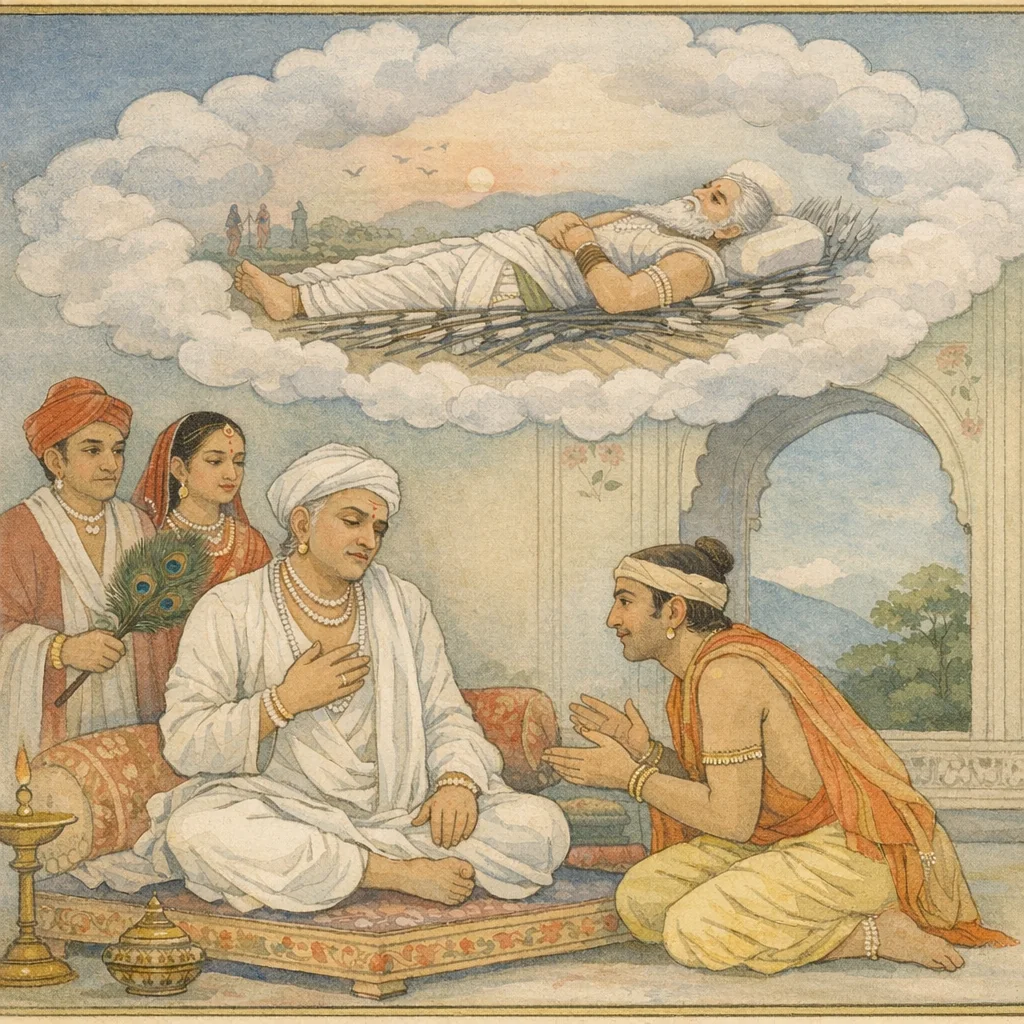
Chapter Arc: संजय युद्धभूमि से लौटकर धृतराष्ट्र के सम्मुख उपस्थित होता है—और राजसभा में पहला वाक्य ही वज्रपात बनकर गिरता है: ‘हतो भीष्मः शान्तनवः’—भरतों के पितामह का पतन। → धृतराष्ट्र के भीतर शोक और अपराध-बोध की लहर उठती है; संजय भीष्म के अतुल पराक्रम का स्मरण कराता है—काशी के स्वयंवर में एकरथ से समस्त राजाओं को जीतना, परशुराम से निर्भय युद्ध करना, और दस रात्रियों तक कौरव-सेना की ढाल बनकर सूर्यास्त-सा अस्त होना। → भीष्म की मृत्यु का निर्णायक बिंदु उद्घाटित होता है—जामदग्न्य राम से न हारे वह वीर आज शिखण्डी के निमित्त से गिरा; ‘नरसिंह’ समान योद्धा बाणों की शय्या पर धराशायी। → संजय भीष्म के पतन को केवल युद्ध-घटना नहीं, धृतराष्ट्र के ‘दुर्मन्त्रित’ (कुटिल/अधर्मी परामर्श) का फल बताता है—और संकेत देता है कि जिस स्तम्भ पर कौरव-बल टिका था, वह टूट चुका है। → भीष्म के गिरते ही युद्ध का संतुलन किस ओर झुकेगा—और कौरव-नीति अब किसके हाथ में जाएगी?
Shlokas
Verse 1
निज जा धन #* (श्रीमद्धगवदगीतापर्व) त्रयोदशो 5 ध्याय: संजयका युद्धभूमिसे लौटकर धृतराष्ट्रको भीष्मकी मृत्युका समाचार सुनाना वैशम्पायन उवाच अथ गावल्गणिदिंद्वान् संयुगादेत्य भारत । प्रत्यक्षदर्शी सर्वस्य भूतभव्यभविष्यवित्,वैशम्पायनजी कहते हैं--भरतनन्दन! तदनन्तर एक दिनकी बात है कि भूत, वर्तमान और भविष्यके ज्ञाता एवं सब घटनाओंको प्रत्यक्ष देखनेवाले गवल्गणपुत्र विद्वान् संजयने युद्धभूमिसे लौटकर सहसा चिन्तामग्न धृतराष्ट्रके पास जा अत्यन्त दुःखी होकर भरतवंशियोंके पितामह भीष्मके युद्धभूमिमें मारे जानेका समाचार बताया
Vaiśampāyana said: Then, O descendant of Bharata, the learned Saṃjaya, son of Gāvalgaṇa—who could directly perceive all that occurred and who knew what had been, what is, and what will be—returned from the battlefield. Coming to the grief-stricken Dhṛtarāṣṭra, he conveyed the crushing news that Bhīṣma, the grandsire of the Bharatas, had been struck down on the field of war. The verse frames the war not merely as a clash of arms but as a moral catastrophe whose consequences must be faced by those bound by attachment, duty, and blindness—literal and ethical.
Verse 2
ध्यायते धृतराष्ट्राय सहसोत्पत्य दु:खित: । आचष्ट निहतं भीष्म भरतानां पितामहम्,वैशम्पायनजी कहते हैं--भरतनन्दन! तदनन्तर एक दिनकी बात है कि भूत, वर्तमान और भविष्यके ज्ञाता एवं सब घटनाओंको प्रत्यक्ष देखनेवाले गवल्गणपुत्र विद्वान् संजयने युद्धभूमिसे लौटकर सहसा चिन्तामग्न धृतराष्ट्रके पास जा अत्यन्त दुःखी होकर भरतवंशियोंके पितामह भीष्मके युद्धभूमिमें मारे जानेका समाचार बताया
Vaiśampāyana said: Sanjaya, rising suddenly in distress, went to Dhṛtarāṣṭra, who was sunk in anxious thought, and reported that Bhīṣma—the grandsire of the Bharatas—had been struck down. The verse underscores how the calamity of war reaches beyond the battlefield, shaking the moral and emotional foundations of the Kuru house.
Verse 3
संजय उवाच संजयो<हं महाराज नमस्ते भरतर्षभ । हतो भीष्म: शान्तनवो भरतानां पितामह:,संजय बोले--महाराज! भरतश्रेष्ठी] आपको नमस्कार है। मैं संजय आपकी सेवामें उपस्थित हूँ। भरतवंशियोंके पितामह और महाराज शान्तनुके पुत्र भीष्मजी आज युद्धमें मारे गये
Sanjaya said: O King, O bull among the Bharatas, salutations to you. I am Sanjaya. Bhishma—the son of Shantanu, the grandsire of the Bharatas—has been slain in battle. The announcement signals a grave moral turning point in the war: the fall of the revered elder, long regarded as a guardian of dynastic order and dharma, intensifies the tragedy of kin-slaying and the ethical cost of victory.
Verse 4
ककुदं सर्वयोधानां धाम सर्वधनुष्मताम् । शरतल्पगत:ः सोड्द्य शेते कुरूपितामह:,जो समस्त योद्धाओंके ध्वजस्वरूप और सम्पूर्ण धनुर्धरोंके आश्रय थे, वे ही कुरुकुलपितामह भीष्म आज बाणशब्यापर सो रहे हैं
Sañjaya said: He who stood as the very crest and standard of all warriors, and the refuge and support of every archer—Kurū’s grandsire Bhīṣma—now lies today upon a bed of arrows. The verse underscores the moral shock of war: even the most venerable protector of a lineage can be brought low, reminding the listener of the fragility of worldly power and the grave cost of conflict.
Verse 5
यस्य वीर्य समाश्रित्य यूत॑ पुत्रस्तवाकरोत् । स शेते निहतो राजन् संख्ये भीष्म: शिखण्डिना,राजन! आपके पुत्र दुर्योधनने जिनके बाहुबलका भरोसा करके जूएका खेल किया था, वे भीष्म शिखण्डीके हाथों मारे जाकर रणभूमिमें शयन करते हैं
Sañjaya said: “O King, relying on whose martial prowess your son dared to stake everything in the gambling match—Bhīṣma now lies on the battlefield, slain in the clash by Śikhaṇḍin.” The verse underscores the moral reversal of war: confidence placed in sheer strength and worldly strategy cannot avert the consequences of adharma, and even the mightiest fall when the tide of destiny and ethical causality turns.
Verse 6
यः सर्वान् पृथिवीपालान् समवेतान् महामृथे । जिगायैकरथेनैव काशिपूर्या महारथ:,जिन महारथी वीर भीष्मने काशिराजकी नगरीमें एकत्र हुए समस्त भूपालोंको अकेला ही रथपर बैठकर महान् युद्धमें पराजित कर दिया था, जिन्होंने रणभूमिमें जमदग्निनन्दन परशुरामजीके साथ निर्भय होकर युद्ध किया था और जिन्हें परशुरामजी भी मार न सके, वे ही भीष्म आज शिखण्डीके हाथसे मारे गये
Sañjaya said: He—the great chariot-warrior—who in the mighty battle at Kāśī’s city defeated, seated alone upon a single chariot, all the assembled kings who ruled the earth: that very Bhīṣma has today been struck down through Śikhaṇḍin’s agency. (The verse evokes the moral shock that one once unconquered by hosts of kings is now felled in the present war.)
Verse 7
जामदग्न्यं रणे राम॑ यो5युध्यदपसम्भ्रम: | न हतो जामदग्न्येन स हतोड्द्य शिखण्डिना,जिन महारथी वीर भीष्मने काशिराजकी नगरीमें एकत्र हुए समस्त भूपालोंको अकेला ही रथपर बैठकर महान् युद्धमें पराजित कर दिया था, जिन्होंने रणभूमिमें जमदग्निनन्दन परशुरामजीके साथ निर्भय होकर युद्ध किया था और जिन्हें परशुरामजी भी मार न सके, वे ही भीष्म आज शिखण्डीके हाथसे मारे गये
Sanjaya said: He who fought Rama Jāmadagnya (Paraśurāma) in battle without the least agitation, and whom Jāmadagnya could not slay—today that very Bhīṣma has been slain by Śikhaṇḍin. The verse underscores the irony of fate in war: even the mightiest, once invincible against a legendary warrior, can fall when the conditions of dharma and circumstance turn against him.
Verse 8
महेन्द्रसदृश: शौर्ये स्थैयें च हिमवानिव । समुद्र इव गाम्भीर्ये सहिष्णुत्वे धरासम:,जो शौर्यमें देवराज इन्द्रके समान, स्थिरतामें हिमालयके समान, गम्भीरतामें समुद्रके समान और सहनशीलतामें पृथ्वीके समान थे
Sañjaya said: He was like Mahendra (Indra) in valor, like Himavān (the Himalaya) in steadfastness, like the ocean in depth of character, and like the earth in forbearance—thus endowed with heroic strength, unwavering resolve, profound gravity, and patient endurance.
Verse 9
शरदंष्टो धनुर्वक्त्र: खड्गजिह्नलो दुरासद: । नरसिंह: पिता ते5द्य पाज्चाल्येन निपातित:,जो मनुष्योंमें सिंह थे, बाण ही जिनकी दाढ़ें थीं, धनुष जिनका फैला हुआ मुख था, तलवार ही जिनकी जिह्ला थी और इसीलिये जिनके पास पहुँचना किसीके लिये भी अत्यन्त कठिन था, वे ही आपके पिता भीष्म आज पांचालराजकुमार शिखण्डीके द्वारा मार गिराये गये
Sañjaya said: Your father Bhīṣma—lion among men, whose arrows were like teeth, whose bow was his gaping mouth, whose sword was his tongue, and who was therefore nearly unapproachable in battle—has today been struck down by the Pāñcāla prince (Śikhaṇḍin). The report underscores the grim moral weight of war: even the most venerable and formidable elder can fall when the conflict turns to stratagem and destiny.
Verse 10
पाण्डवानां महासैन्यं यं दृष्टवोद्यतमाहवे । प्रावेपत भयोद्िग्नं सिंहं दृष्टवेव गोगण:,जैसे गौओंका झुंड सिंहके देखते ही भयसे व्याकुल हो उठता है, उसी प्रकार जिन्हें युद्धमें हथियार उठाये देख पाण्डवोंकी विशाल वाहिनी भयसे उद्विग्न होकर थरथर काँपने लगती थी, वे ही शत्रुसैन्यसंहारक भीष्म दस दिनोंतक आपकी सेनाका संरक्षण करके अत्यन्त दुष्कर पराक्रम प्रकट करते हुए अन्तमें सूर्यकी भाँति अस्ताचलको चले गये
Sañjaya said: Seeing that vast army of the Pāṇḍavas standing ready for battle, it trembled in fear—just as a herd of cattle quivers at the sight of a lion. (In the surrounding narration, this image underscores how Bhīṣma’s presence and prowess could make even a mighty host falter, while also foreshadowing the severe cost of war and the grim duty of warriors bound to their chosen side.)
Verse 11
परिरक्ष्य स सेनां ते दशरात्रमनीकहा । जगामास्तमिवादित्य: कृत्वा कर्म सुदुष्करम्,जैसे गौओंका झुंड सिंहके देखते ही भयसे व्याकुल हो उठता है, उसी प्रकार जिन्हें युद्धमें हथियार उठाये देख पाण्डवोंकी विशाल वाहिनी भयसे उद्विग्न होकर थरथर काँपने लगती थी, वे ही शत्रुसैन्यसंहारक भीष्म दस दिनोंतक आपकी सेनाका संरक्षण करके अत्यन्त दुष्कर पराक्रम प्रकट करते हुए अन्तमें सूर्यकी भाँति अस्ताचलको चले गये
Sañjaya said: Having protected your army for ten nights, Bhīṣma—the slayer of hostile hosts—after accomplishing a most difficult feat of arms, went down like the sun setting at the end of the day. The verse frames his fall not as mere defeat but as the completion of a formidable duty in war, marking the close of his ten-day guardianship of the Kaurava forces.
Verse 12
इस प्रकार श्रीमह्ाभारत भीष्मपर्वके अन्तर्गत थ्रूमिपर्वमें उत्तरद्वीपादिसंस्थानवर्णनविषयक बारहवाँ अध्याय पूरा हुआ,यः स शक्र इवाक्षोभ्यो वर्षन् बाणान् सहस्रशः । जघान युधि योधानामर्बुदं दशभिर्दिनै: जिन्होंने इन्द्रकी भाँति क्षोभरहित होकर हजारों बाणोंकी वर्षा करते हुए दस दिनोंमें शत्रुपक्षके दस करोड़ योद्धाओंका संहार कर डाला, वे ही आज आँधीके उखाड़े हुए वृक्षकी भाँति मारे जाकर युद्धभूमिमें सो रहे हैं। भरतवंशी नरेश! यह सब आपकी कुमन्त्रणाका फल है; नहीं तो भीष्मजी इस दुर्दशाके योग्य नहीं थे
Sanjaya said: He who, like Indra himself, unshaken and unperturbed, rained down thousands of arrows and in ten days destroyed an arbuda—ten crores—of enemy warriors, that very Bhishma now lies slain on the battlefield, like a tree torn up by a storm. O king of the Bharata line, all this is the fruit of your evil counsel; otherwise Bhishma would never have deserved such a wretched end.
Verse 13
स शेते निहतो भूमौ वातभग्न इव द्रुम: । तव दुर्मन्त्रिते राजन् यथा ना: स भारत,जिन्होंने इन्द्रकी भाँति क्षोभरहित होकर हजारों बाणोंकी वर्षा करते हुए दस दिनोंमें शत्रुपक्षके दस करोड़ योद्धाओंका संहार कर डाला, वे ही आज आँधीके उखाड़े हुए वृक्षकी भाँति मारे जाकर युद्धभूमिमें सो रहे हैं। भरतवंशी नरेश! यह सब आपकी कुमन्त्रणाका फल है; नहीं तो भीष्मजी इस दुर्दशाके योग्य नहीं थे इति श्रीमहा भारते भीष्मपर्वणि श्रीमद्भगवद्गीतापर्वणि भीष्ममृत्युश्रवणे त्रयोदशो 5ध्याय:
Sanjaya said: “He lies slain upon the ground, like a tree broken by the wind. O King, O Bharata, this has come to pass through your ill counsel—otherwise such a fate would not have befallen him.”
Frequently Asked Questions
The chapter models ordered knowledge: it treats the world as classifiable and governed, implying that disciplined description (names, sequences, measures) supports ethical reflection by situating human action within a larger regulated reality.
By depicting regions with uniform dharma, absence of predation, and a protecting sovereign principle (Prajāpati/Īśvara), it implicitly links well-being to restraint, rule-consistency, and protective oversight.
Yes. The closing verses state benefits for hearing this discourse—enhancement of prosperity, strength, and esteem; satisfaction of ancestors—positioning the chapter as didactic material with ritualized listening-value.