Adhyaya 126
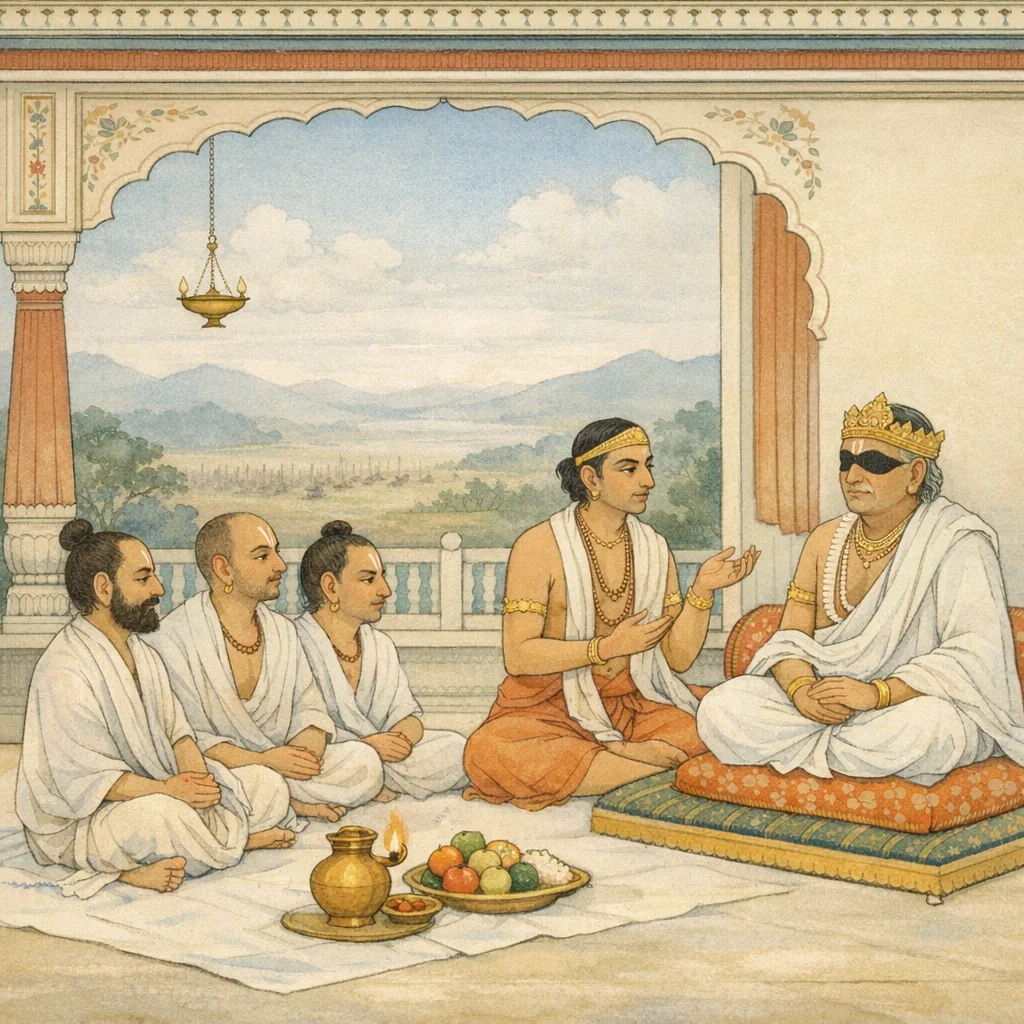
Chapter Arc: संजय-उवाच—राजन्, भीष्मपर्व के कथानक-प्रवाह के पश्चात् आख्यान का स्वर अचानक उपसंहार-ध्वनि में बदलता है: श्रवण, श्रावण और दान के फल का विधान सुनाया जाता है, मानो युद्ध-धूल के ऊपर धर्म का श्वेत ध्वज फहर उठे। → व्यास-वाणी (या संहिताकार की वाणी) यह प्रतिज्ञा-सी रखती है कि जो वेदपारग ब्राह्मणों को श्रद्धा से इस पर्व का श्रवण कराए/सुने, वह पापों को झाड़कर परम पद को प्राप्त होता है; साथ ही ‘सर्वप्रयत्नेन भारतं शृणुयात्’ कहकर साधक-मन पर आग्रह बढ़ता जाता है—क्या केवल रणकथा नहीं, यह मोक्ष-मार्ग का साधन भी है। → फलश्रुति का चरम बिंदु—‘विधूय सर्वपापानि… प्रयान्ति तत् पदं विष्णोः यत् प्राप्य न निवर्तते’—यह घोषणा अध्याय का शिखर है: कथा-श्रवण को विष्णुपद-प्राप्ति, अपुनरावृत्ति और पापक्षय से जोड़ा जाता है। → उपाय भी बताया जाता है—भीष्मपर्व सुनकर ब्राह्मणों को भोजन, उत्तम पानीय, गन्ध-माल्य आदि देकर संतोष करना; इस प्रकार श्रवण (ज्ञान), श्रद्धा (भाव) और दान (कर्म) तीनों का समन्वय कर अध्याय शांत, विधिवत् समाप्ति की ओर उतरता है।
Shlokas
Verse 1
[दाक्षिणात्य अधिक पाठके १ ६ श्लोक मिलाकर कुल ४० ६ “लोक हैं।] #स्न्ैमा रन () अमनन- ।। भीष्मपर्व सम्पूर्णम् ।। अनुष्टुप् छन्द (अन्य बड़े छन्द) बड़े छन्दोंको ३२ अक्षरोंके अनुष्टुप् मानकर गिननेपर उत्तर भारतीय पाठसे लिये गये शलोक--५६१०॥ (२९९॥) ४११ ॥।-- दक्षिण भारतीय पाठसे लिये गये एलोक-- ७१॥ (४ ॥) ६5६ भीष्पपर्वकी सम्पूर्ण एलोक-संख्या कुल योग 5६०२२ |-- 399॥ 5८ 5९१०० श्रवणमहिमा वैशम्पायन उवाच इत्येतद् बहुवृत्तान्तं भीष्मपर्वाखिलं मया । शण्वते ते महाराज प्रोक्तं पापहरं शुभम्,वैशम्पायनजीने कहा--महाराज! बहुत-से वृत्तान्तोंसे भरा हुआ यह सम्पूर्ण भीष्मपर्व मैंने तुमसे कहा है और तुमने श्रोता बनकर सुना है। यह पर्व सम्पूर्ण पापोंका नाश करनेवाला और शुभ है
Vaiśampāyana said: “O great king, I have thus recounted to you the entire Bhīṣma Parva—rich with many episodes—as you listened. This Parva is auspicious and destroys sin.”
Verse 2
य: श्रावयेत् सदा राजन ब्राह्मणान् वेदपारगान् । श्रद्धावन्तश्न ये चापि श्रोष्यन्ति मनुजा भुवि,राजन! जो सदा वेदोंके पारंगत विद्वान ब्राह्मणोंको इस पर्वकी कथा सुनायेगा और जो मनुष्य इस भूतलपर श्रद्धापूर्वक इस पर्वको सुनेंगे, वे सम्पूर्ण पापोंको नष्ट करके अन्तमें यह शरीर छोड़कर भगवान् विष्णुके उस परमपदको प्राप्त कर लेंगे, जहाँ जाकर जीव इस जगतमें नहीं लौटता है
Vaiśampāyana said: “O King, whoever continually causes this sacred narrative to be recited to Brahmins who have mastered the Vedas, and those people on earth who, endowed with faith, listen to it—such hearers and patrons destroy all sins and, at the end, leaving the body, attain the supreme state of Lord Viṣṇu, from which the embodied being does not return to this world.”
Verse 3
विधूय सर्वपापानि विहायान्ते कलेवरम् । प्रयान्ति तत् पद विष्णोर्यत् प्राप्प न निवर्तते,राजन! जो सदा वेदोंके पारंगत विद्वान ब्राह्मणोंको इस पर्वकी कथा सुनायेगा और जो मनुष्य इस भूतलपर श्रद्धापूर्वक इस पर्वको सुनेंगे, वे सम्पूर्ण पापोंको नष्ट करके अन्तमें यह शरीर छोड़कर भगवान् विष्णुके उस परमपदको प्राप्त कर लेंगे, जहाँ जाकर जीव इस जगतमें नहीं लौटता है
Vaiśampāyana said: “Shaking off all sins, and at the end abandoning the body, they depart to that supreme station of Viṣṇu—having reached which, O king, one does not return again. Indeed, whoever regularly recites this Parva’s narrative to learned Brāhmaṇas well-versed in the Vedas, and those who, upon this earth, listen to this Parva with faith, destroy all wrongdoing and finally attain that highest abode of Lord Viṣṇu, from which the soul does not come back to this world.”
Verse 4
तस्मात् सर्वप्रयत्नेन भारतं भरतर्षभ । शृणुयात् सिद्धिमन्विच्छन्निह वामुत्र मानव:,भरतश्रेष्ठ] अत: इस लोक या परलोकमें सिद्धिकी इच्छा रखनेवाला मनुष्य पूर्ण प्रयत्नपूर्वक महाभारतको अवश्य सुने
Therefore, O bull among the Bharatas, a person who seeks true attainment—whether in this world or in the next—should, with complete effort, listen to the Mahābhārata. It is presented as a disciplined hearing that supports right understanding and the pursuit of dharma, yielding benefit both for worldly life and for the beyond.
Verse 5
भोजनं भोजयेद् विप्रान् गन्धमाल्यैरलंकृतान् । भीष्मपर्वणि राजेन्द्र दद्यात् पानीयमुत्तमम्,राजेन्द्र! भीष्मपर्व सुन लेनेपर मनुष्य ब्राह्मणोंको गन्ध और माल्य आदिसे अलंकृत करके उत्तम भोजन कराये तथा पवित्र जलका दान करे
Vaiśampāyana said: “O king, on the occasion of the Bhīṣma Parva, one should honor brāhmaṇas—adorned with fragrance and garlands—by feeding them an excellent meal, and one should also give the gift of pure, superior drinking water.”
Verse 70
नफमश (0) अत +- ॥। 3० श्रीपरमात्मने नम: ।। (महाभारत-सार| मातापितृसहस्राणि पुत्रदारशतानि च । संसारेष्वनुभूतानि यान्ति यास्यन्ति चापरे ।। “मनुष्य इस जगतमें हजारों माता-पिताओं तथा सैकड़ों स्त्री-पुत्रोंके संयोग-वियोगका अनुभव कर चुके हैं, करते हैं और करते रहेंगे।' हर्षस्थानसहस्राणि भयस्थानशतानि च । दिवसे दिवसे मूढमाविशन्ति न पण्डितम् ।। 'अज्ञानी पुरुषको प्रतिदिन हर्षके हजारों और भयके सैकड़ों अवसर प्राप्त होते रहते हैं; किन्तु विद्वान पुरुषके मनपर उनका कोई प्रभाव नहीं पड़ता है।' ऊर्ध्वबाहुर्विरौम्येष न च कश्चिच्छृणोति मे । धर्मादर्थक्ष॒ु कामश्ष स किमर्थ न सेव्यते ।। “मैं दोनों हाथ ऊपर उठाकर पुकार-पुकारकर कह रहा हूँ, पर मेरी बात कोई नहीं सुनता। धर्मसे मोक्ष तो सिद्ध होता ही है; अर्थ और काम भी सिद्ध होते हैं तो भी लोग उसका सेवन क्यों नहीं करते! न जातु कामान्न भयान्न लोभाद् धर्म त्यजेज्जीवितस्यापि हेतो: । नित्यो धर्म: सुखदु:खे त्वनित्ये जीवो नित्यो हेतुरस्य त्वनित्य: ।। “कामनासे, भयसे, लोभसे अथवा प्राण बचानेके लिये भी धर्मका त्याग न करे। धर्म नित्य है और सुख-दुःख अनित्य। इसी प्रकार जीवात्मा नित्य है और उसके बन्धनका हेतु अनित्य।' इमां भारतसावित्रीं प्रातरुत्थाय य: पठेत् । स भारतफल प्राप्य परं ब्रह्माधिगच्छति ।। “यह महाभारतका सारभूत उपदेश “भारत-सावित्री” के नामसे प्रसिद्ध है। जो प्रतिदिन सबेरे उठकर इसका पाठ करता है, वह सम्पूर्ण महाभारतके अध्ययनका फल पाकर परब्रह्म परमात्माको प्राप्त कर लेता है।' -मह्ाभारत, स्वगयिह्रण० ५६०--६४ ७॥/8 7१६५5, ७088/(
Vaishampayana said: In the course of worldly existence, a person has already experienced—and will continue to experience—countless unions and separations: thousands of mothers and fathers, and hundreds of wives and children. Day after day, a fool is assailed by a thousand occasions for joy and a hundred occasions for fear; but they do not shake the mind of the wise. I cry out with both arms raised, yet no one listens to me: from dharma arise not only liberation, but also prosperity and pleasure—so why do people not cultivate it? One should never abandon dharma for the sake of desire, fear, greed, or even to preserve one’s life. Dharma is eternal, while pleasure and pain are impermanent; likewise the self is eternal, and the cause of its bondage is impermanent. This essence-teaching of the Mahabharata, known as the “Bharata-Savitri,” when recited upon rising in the morning, grants the fruit of studying the whole Mahabharata and leads one to the Supreme Brahman.
Verse 122
इस प्रकार श्रीमहाभारत भीष्मपर्वके अन्तर्गत भीष्मवधपर्वमें भीष्म-कर्णसंवादाविषयक एक सौ बाईसवाँ अध्याय पूरा हुआ
Sanjaya said: Thus concludes the one hundred and twenty-second chapter of the Mahabharata’s Bhishma Parva, within the section concerning Bhishma’s fall, dealing with the dialogue between Bhishma and Karna. The narration marks a formal closure of this unit of the war-account, framing the ethical gravity of the conflict through the voices of senior warriors and their counsel.