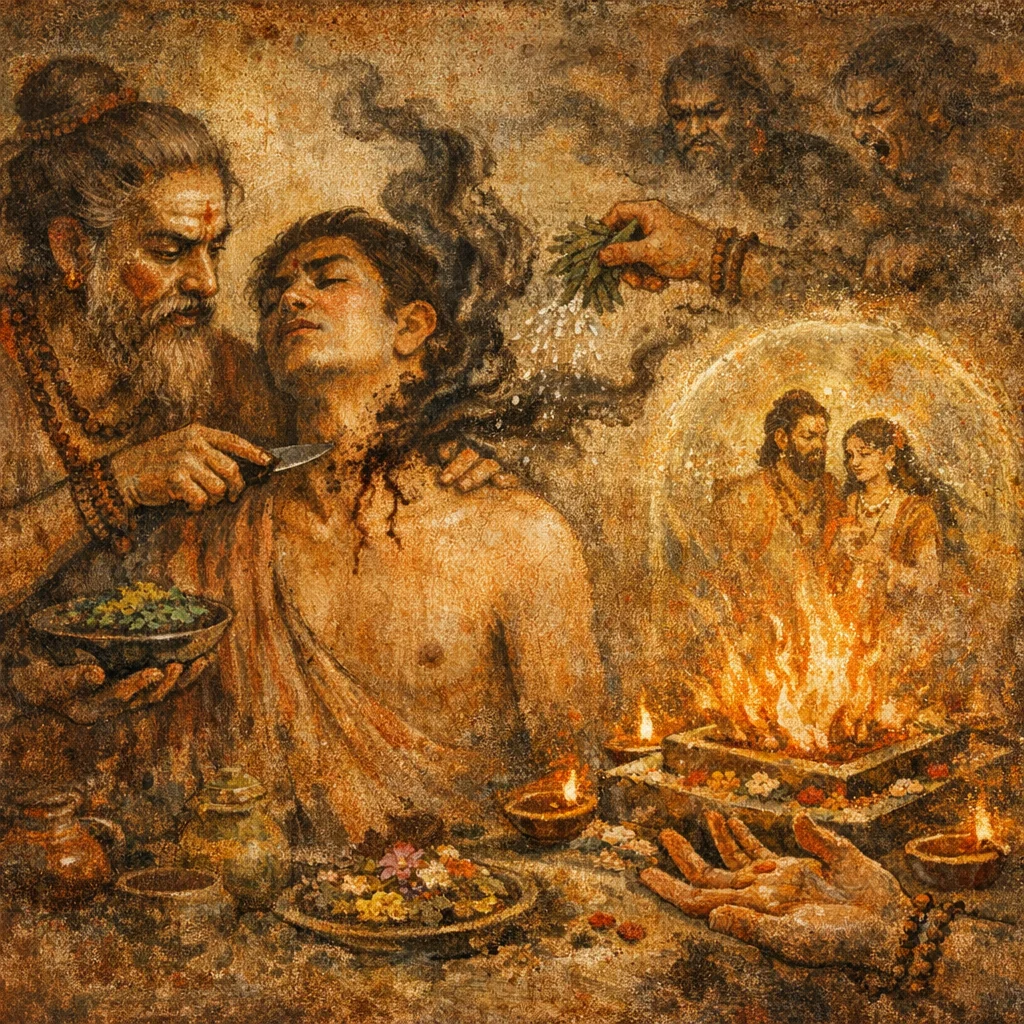
Sukta 74
Rishi: Atharvanic healer tradition (specific r̥ṣi not given in supplied excerpt).
Devata: Medicinal root / Kṛṣṇā (as plant-power) / healing efficacy personified.
Chandas: Anuṣṭubh (probable; two 8-syllable pādas per half-verse in typical AV style).
Mantras
Mantra 1
गण्डमालाचिकित्सा। अपचितां लोहिनीनां कृष्णा मातेति शुश्रुम । मुनेर्देवस्य मूलेन सर्वा विध्यामि ता अहम्
Of the red swellings, men say, ‘Black is the mother’: so have we heard. With the root of the divine Sage I cleave them all asunder, even those swellings.
Mantra 2
विध्याम्यासां प्रथमां विध्याम्युत मध्यमाम्। इदं जघन्याऽमासामा च्छिनद्मि स्तुकामिव
I pierce of these the first; I pierce also the middle. This last of these I cut away, as one a tuft (is shorn).
Mantra 3
त्वाष्ट्रेणाहं वचसा वि त ईर्ष्याममीमदम्। अथो यो मन्युष्टे पते तमु ते शमयामसि
With Tvaṣṭṛ’s utterance I have driven apart thy jealousy. And moreover, whoso is wroth, O lord, him—yea, for thee—we do we pacify.
Mantra 4
व्रतेन त्वं व्रतपते समक्तो विश्वाहा सुमना दीदिहीह। तं त्वा वयं जातवेदः समिद्धं प्रजावन्त उप सदेम सर्वे
By observance, O Lord of vows, well-prepared, shine here each day with gracious mind. Thee, O Jātavedas, when kindled, may we all, possessed of offspring, draw near and sit beside.
Frequently Asked Questions
It targets gaṇḍamālā/apacit—glandular swellings described as “red swellings”—seeking to disperse and break them up through a medicinal root empowered by mantra.
Atharvavedic healing often treats illness as worsened by hostile social-psychic forces. The hymn therefore pacifies jealousy and anger to protect the patient and prevent relapse or misfortune.
The core cure centers on the root (mūla/Kṛṣṇā) and recitation. The closing Agni verse can be used as an additional household ‘seal’—especially where a domestic fire is maintained—but it is supportive rather than strictly required.