Sukta 35
Rishi: Atharvanic tradition (edition-dependent).
Devata: Agni (Jātavedas); Viśve Devāḥ as collective sanction.
Chandas: Triṣṭubh-like (edition-dependent).
Mantras
Mantra 1
सपत्नीनाशनम्। प्रान्यान्त्सपत्नान्त्सहसा सहस्व प्रत्यजातान् जातवेदो नुदस्व । इदं राष्ट्रं पिपृहि सौभगाय विश्व एनमनु मदन्तु देवाः
Drive forth the other rivals; with force be thou overpowering: the counter-born, O Jātavedas, drive away. This realm do thou make full for good fortune; let all the Gods rejoice in it and follow it with favour.
Mantra 2
इमा यास्ते शतं हिराः सहस्रं धमनीरुत। तासां ते सर्वासामहमश्मना बिलमप्यधाम्
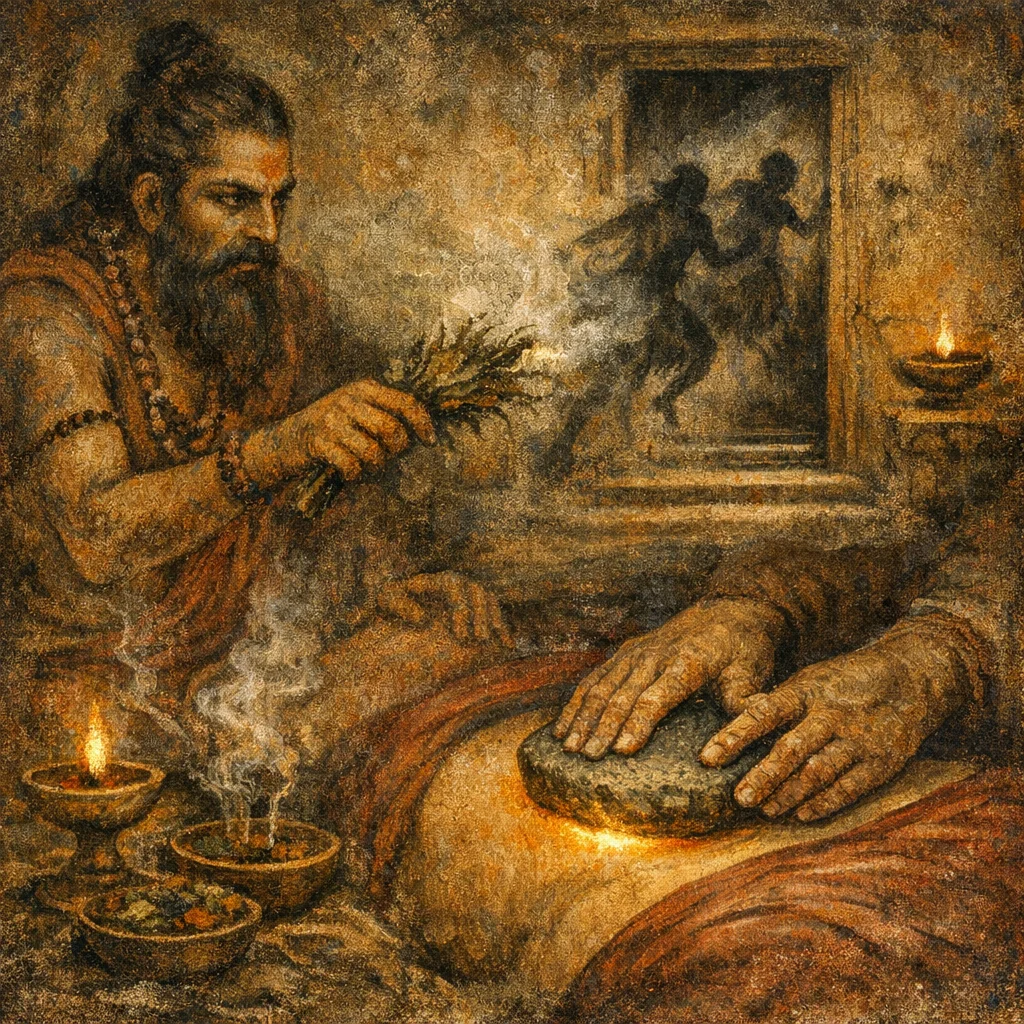
These, which are thine—thy hundred veins, and thy thousand ducts besides—over the mouth of them all for thee, I, with a stone, have laid a covering.
Mantra 3
परं योनेरवरं ते कृणोमि मा त्वा प्रजाभि भून्मोत सूनुः । अस्वं१ त्वाप्रजसं कृणोम्यश्मानं ते अपिधानं कृणोमि
The upper and the lower of thy womb I set in order: let not offspring oppress thee, nor yet a son. Barren, without progeny, I make thee; a stone for thee I make as covering-stopper.
Frequently Asked Questions
It aims to drive away rivals and hostile forces while making the realm ‘full’ of good fortune under the approval of all the gods, and it adds a protective technique of ‘sealing’ vulnerability with a stone.
In Atharvanic ritual logic, a stone embodies firmness and closure; placing it as an apidhāna symbolically blocks harmful flow or entry, making protection tangible and durable.
Both readings exist in Atharvavedic usage: in a protective frame it can mean securing the womb against danger (e.g., loss, intrusion), while in an adversarial or contraceptive frame it can be used to inhibit conception—context and ritual intention decide the sense.