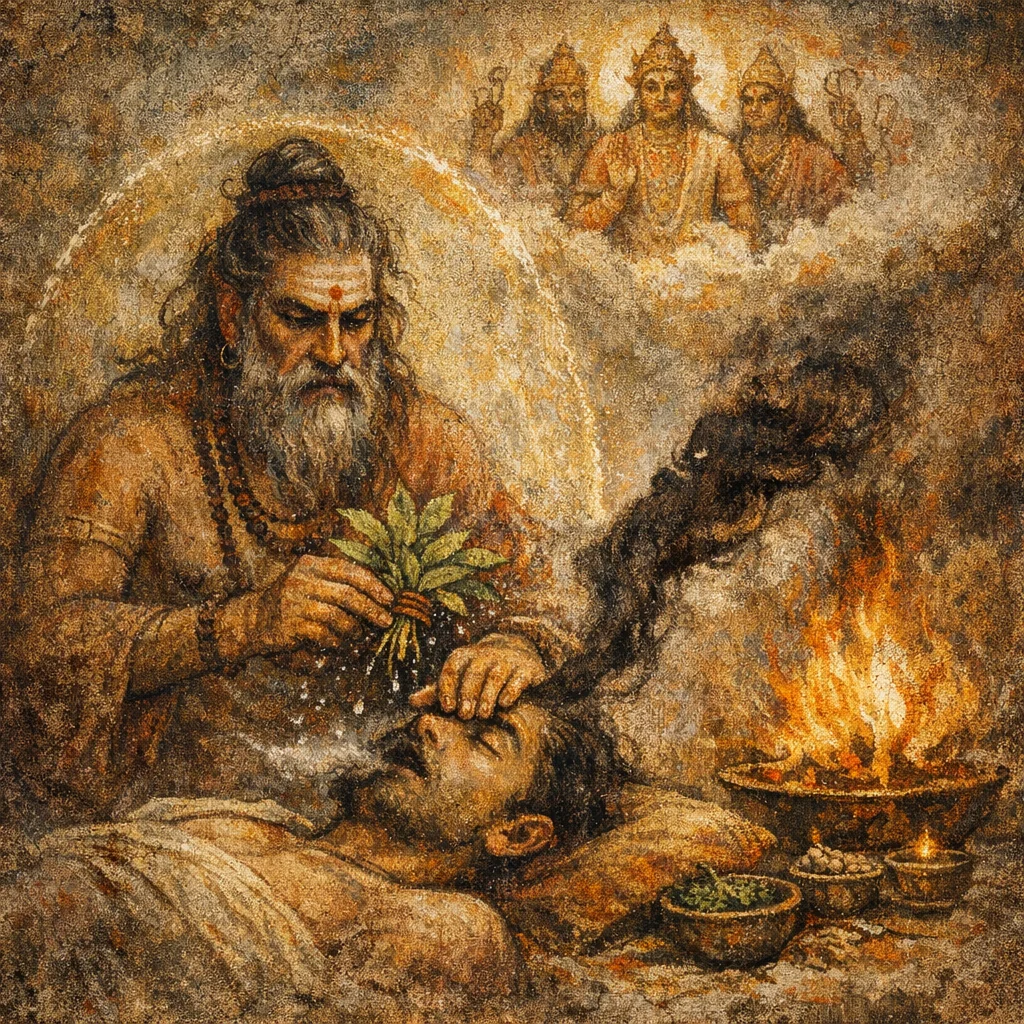
Sukta 85
Rishi: Atharvanic tradition (often transmitted under Atharvan/Angiras rubric; specific r̥ṣi attribution requires pada-anukramaṇī confirmation)
Devata: Varana/Vanaspati as divine healer; secondarily ‘the Gods’ as expellers of yákṣma
Chandas: Anuṣṭubh (probable; to be confirmed against metrical scansion in a critical edition)
Mantras
Mantra 1
यक्ष्मनाशनम्। वरणो वारयाता अयं देवो वनस्पतिः । यक्ष्मो यो अस्मिन्नाविष्टस्तमु देवा अवीवरन्
A slayer of wasting-sickness: let Varana, this god, the Lord of the Forest, repel it. The wasting-disease which hath entered into this man—him have the Gods driven forth and kept afar.
Mantra 2
इन्द्रस्य वचसा वयं मित्रस्य वरुणस्य च । देवानां सर्वेषां वाचा यक्ष्मं ते वारयामहे
With Indra’s word, with Mitra’s and with Varuṇa’s, yea with the speech of all the Gods, we ward from thee the wasting-sickness and repel it.
Mantra 3
यथा वृत्र इमा आपस्तस्तम्भ विश्वधा यतीः । एवा ते अग्निना यक्ष्मं वैश्वानरेण वारये
As Vṛtra stayed these Waters, flowing every way, and held them fast; even so with Agni, with Vaiśvānara, I ward from thee the wasting-sickness and repel it.
Frequently Asked Questions
Yákṣma is a wasting, consuming illness (often compared with chronic consumption). In this hymn it is treated as an intrusive affliction that can be expelled and kept away by mantra and protective substances.
Vanaspati means “lord of the forest/plant,” a way of personifying a powerful medicinal tree as a divine healer. The hymn asks Varana-as-Vanaspati to actively repel the disease and guard the patient.
It uses a mythic example of restraint—Vṛtra ‘checking’ the Waters—to symbolize stopping the disease’s spread and movement. Agni Vaiśvānara is then invoked to perform that restraining, purifying action in the patient.