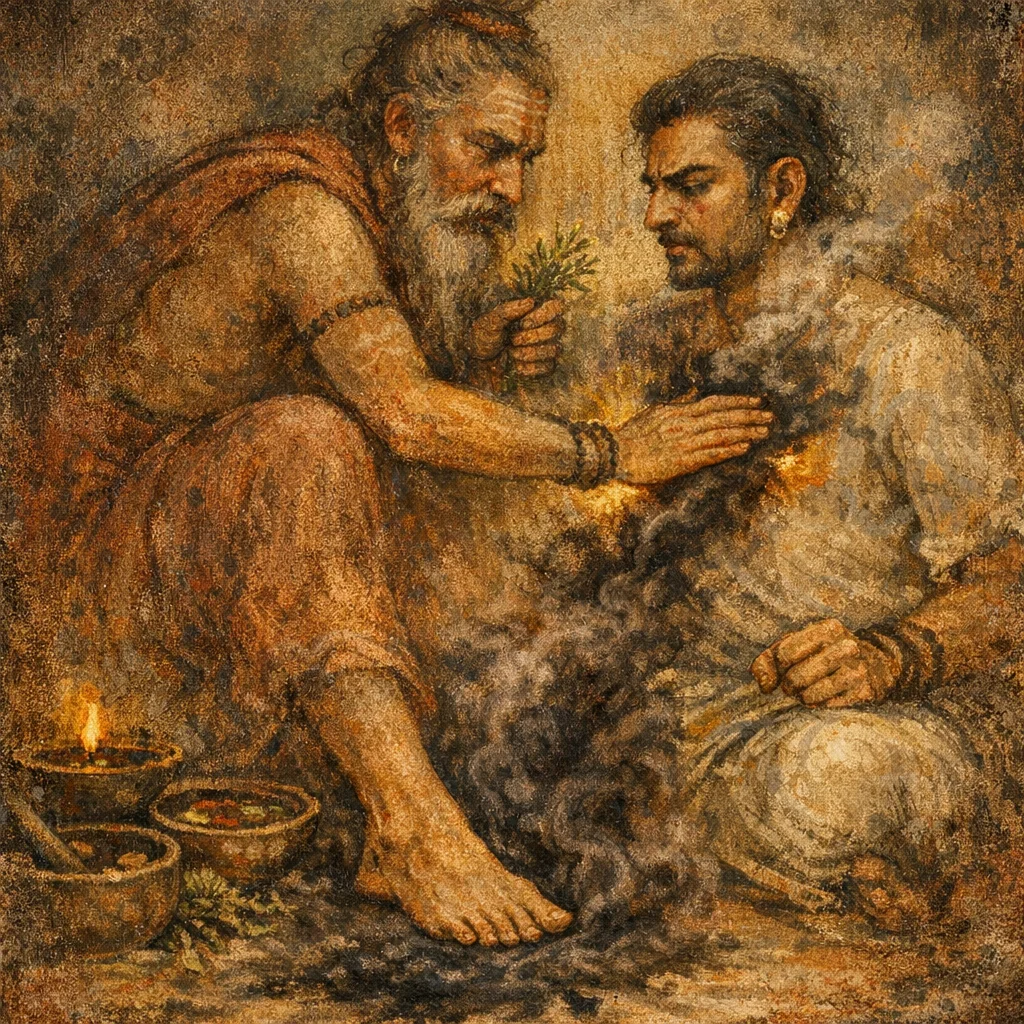
Sukta 42
Rishi: Atharvanic tradition (unspecified in the supplied excerpt; commonly treated as Atharvan/Angirasic in anukramaṇī groupings)
Devata: Manyu (wrath) / the opponent’s anger as the operative target
Chandas: Anuṣṭubh (probable; typical for such quatrain structure)
Mantras
Mantra 1
परस्परचित्तैकीकरणम्। अव ज्यामिव धन्वनो मन्युं तनोमि ते हृदः । यथा संमनसौ भूत्वा सखायाविव सचावहै
Down, as a bowstring from the bow, I let thy wrath fall from the heart; that, becoming of one mind, we two may fare together, even as friends in fellowship.
Mantra 2
सखायाविव सचावहा अव मन्युं तनोमि ते । अधस्ते अश्मनो मन्युमुपास्यामसि यो गुरुः
As friends in fellowship may we go together: down I let thy wrath fall. That wrath of thine, heavy as a stone, we will press down beneath (us).
Mantra 3
अभि तिष्ठामि ते मन्युं पार्ष्ण्या प्रपदेन च । यथावशो न वादिषो मम चित्तमुपायसि
I set my foot upon thy wrath, with heel and with the fore-step; so shalt thou, powerless, not speak against me, and unto my will thy mind shall draw near.
Frequently Asked Questions
It is used to pacify and subdue another person’s anger, prevent them from speaking against you, and bring the relationship back into concord and cooperation.
These are ritual-psychological images: anger is ‘slackened’ like a released bowstring, ‘weighed down’ like a heavy stone, and finally ‘dominated’ underfoot to make it powerless.
Both layers are present: it aims at friendship and one-mindedness (saṃmanas), yet it achieves this through coercive suppression of the opponent’s manyu, typical of Atharvanic pragmatic rites.