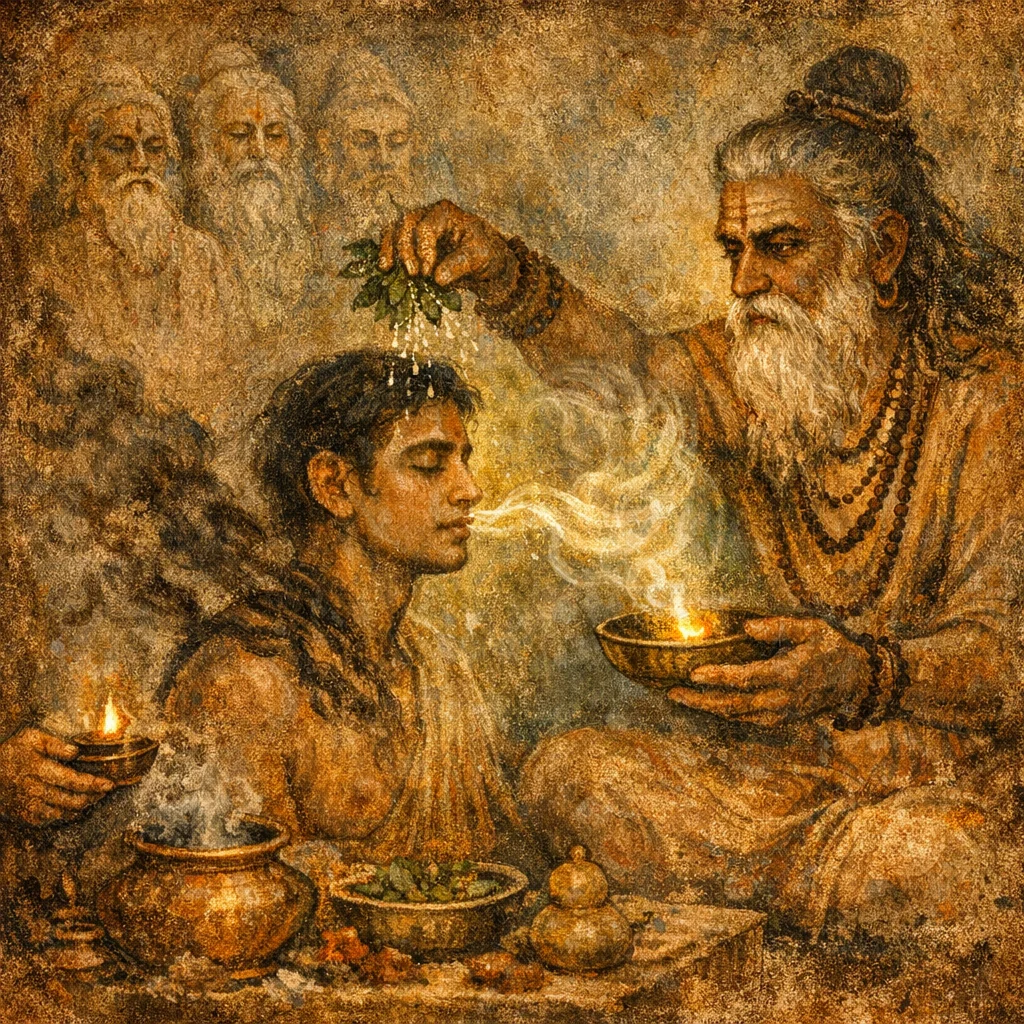
Sukta 41
Rishi: Atharvanic tradition (often treated as anonymous/collective in AV ancillary rites)
Devata: Manas–Cetas–Dhī–Ākūti etc. (personified faculties); implicitly Āyus (Life) as the goal
Chandas: Anuṣṭubh (4 pādas of 8 syllables; Atharvanic anuṣṭubh style)
Mantras
Mantra 1
दीर्घायुःप्राप्तिः। मनसे चेतसे धिय आकूतय उत चित्तये । मत्यै श्रुताय चक्षसे विधेम हविषा वयम्
To Mind, to Consciousness, to holy Thought, to Purposes, and to fixed Attention; to Understanding, to Hearing, to Vision—may we render worship with oblation, even we.
Mantra 2
अपानाय व्यानाय प्राणाय भूरिधायसे । सरस्वत्या उरुव्यचे विधेम हविषा वयम्
To Down-breath, to Pervading-breath, to Life-breath, the bounteous disposer; to Sarasvatī of wide-reaching utterance—may we render worship with oblation, even we.
Mantra 3
मा नो हासिषुर्ऋषयो दैव्या ये तनूपा ये नस्तन्वऽस्तनूजाः । अमर्त्या मर्त्यां अभि नः सचध्वमायुर्धत्त प्रतरं जीवसे नः
Let not the divine Seers abandon us—those guardians of the body, those body-born protectors of our persons. Immortals, cleave unto us mortals; bestow on us life, more lengthened, for our living.
Frequently Asked Questions
It is used to seek long life by stabilizing mental faculties (mind, attention, understanding) and harmonizing the vital breaths (prāṇa, apāna, vyāna), along with protective support from divine guardians.
In Atharvanic ritual language, key functions of life are treated as personified powers; honoring them with oblation is a way to ‘secure’ their steady presence so they do not weaken or wander.
No special herb is required by the hymn itself; the basic medium is havis (ghee/food offering). The main emphasis is correct recitation with calm breath and a clear intention for āyus (extended life).