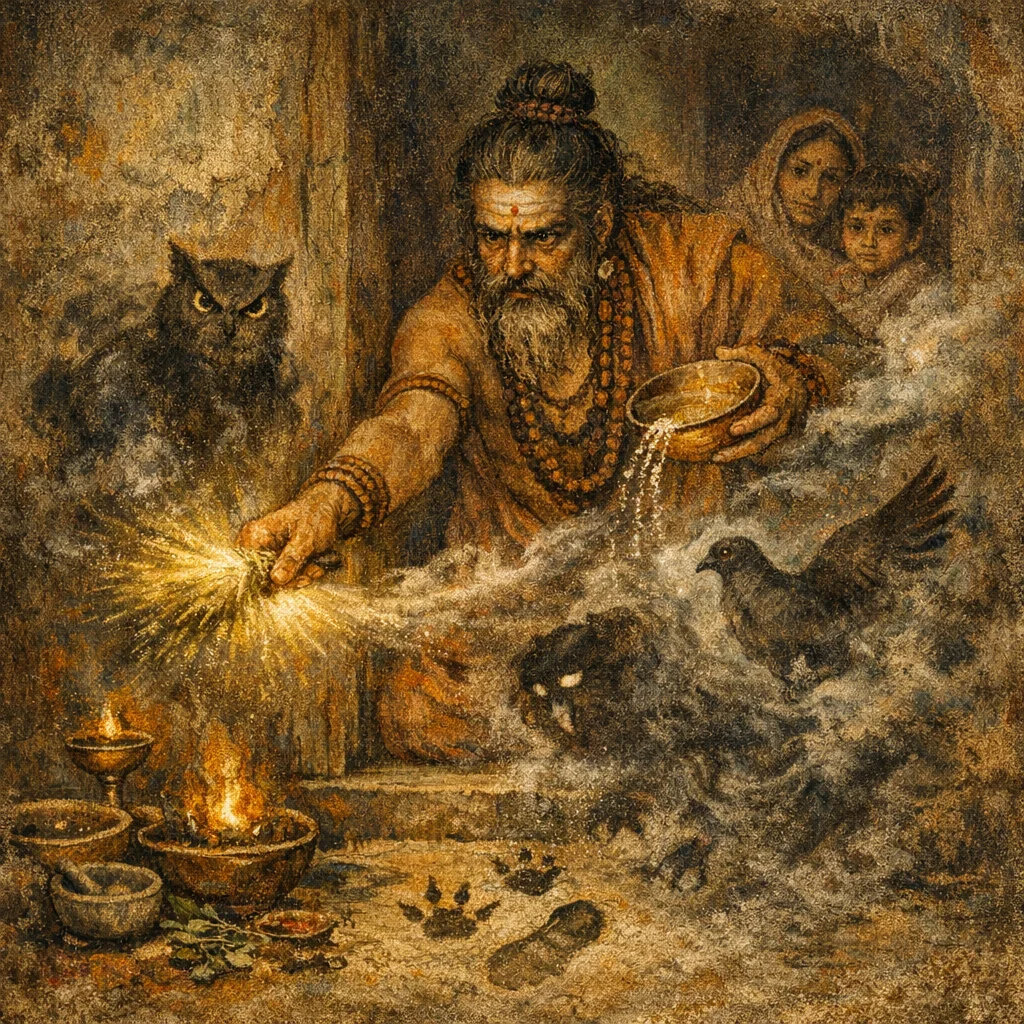
Sukta 29
Rishi: Atharvanic/Angirasa tradition (per anukramaṇī for ariṣṭa material; confirm in critical apparatus).
Devata: Śānti (functional), with focus on the omen-birds (ulūka, kapota) as agents/signs.
Chandas: Mixed/irregular (Atharvanic omen-verses often deviate; confirm by metrical count).
Mantras
Mantra 1
अरिष्टक्षयणम्। अमून् हेतिः पतत्रिणी न्येऽतु यदुलूको वदति मोघमेतत्। यद् वा कपोत पदमग्नौ कृणोति
Averting ill. Let yonder winged missile pass away and down: when the owl crieth, vain be this; or when, O pigeon, thou makest thy footprint in the fire.
Mantra 2
यौ ते दूतौ निरृत इदमेतोऽप्रहितौ प्रहितौ वा गृहं नः । कपोतोलूकाभ्यामपदं तदस्तु
What two messengers of thine, O Nirṛti, come hither—unsent or sent—unto our house: from pigeon and from owl let that be trackless, let it find no foothold.
Mantra 3
अवैरहत्यायेदमा पपत्यात् सुवीरताया इदमा ससद्यात्। पराङेव परा वद पराचीमनु संवतम्। यथा यमस्य त्वा गृहेऽरसं प्रतिचाकशानाभूकं प्रतिचाकशान्
For freedom from hatred may this fly hither; for goodly heroism may this here settle. As one turned outward, speak thou away—awayward through the year. Even as in Yama’s house, joyless, looking back—so, looking back, depart thou harmless.
Frequently Asked Questions
In Atharvanic omen-logic, certain bird behaviors are read as portents that can ‘carry’ misfortune into the home. This hymn treats them as Nirṛti’s messengers and neutralizes their sign-value so they cannot establish entry.
Mogha means the omen is declared ineffective—its harmful message is annulled. Apada means it has no ‘footing’ or track in the house: the channel by which misfortune could take hold is ritually denied.
It does both: it sends the threatening force outward (even toward Yama’s domain as a banishment image) and simultaneously petitions for non-enmity and ‘good heroism’—a positive, stabilizing outcome for the household.