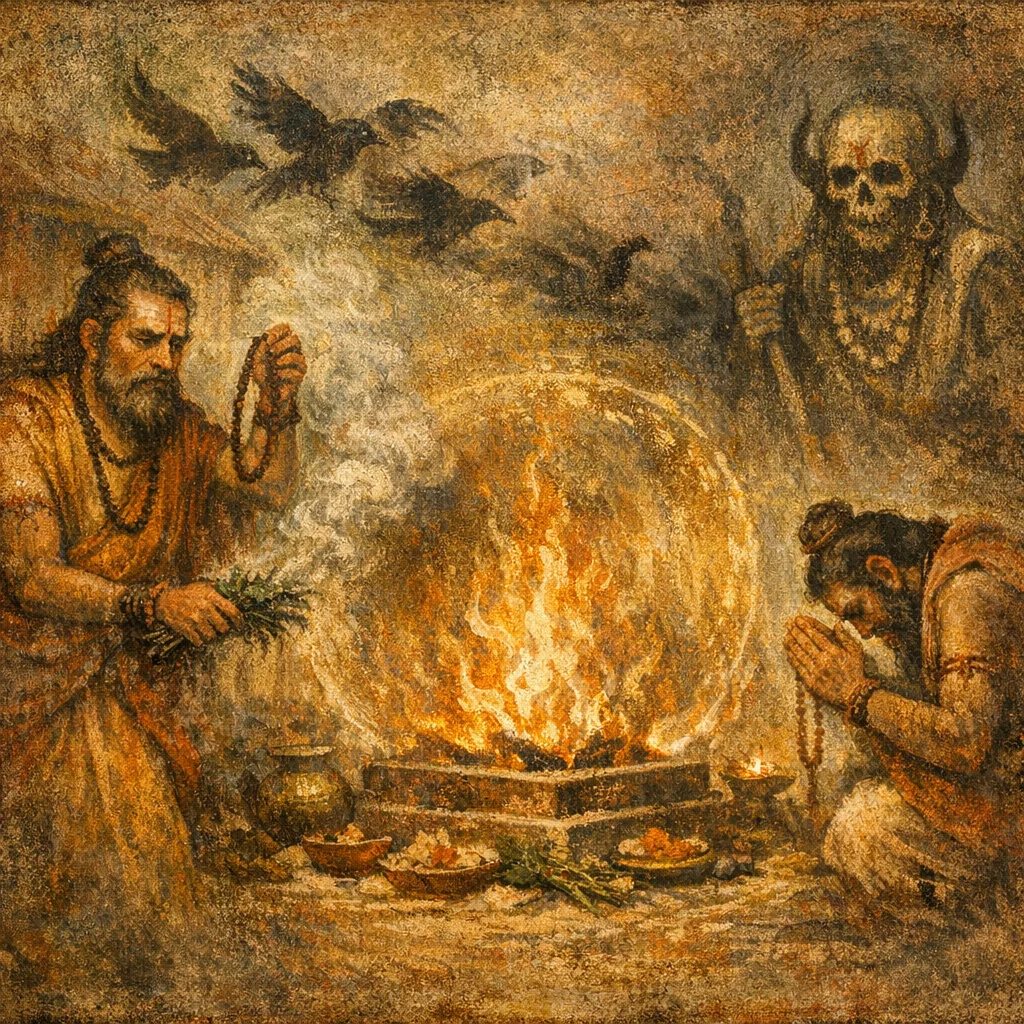
Sukta 28
Rishi: Atharvanic tradition (arishta-kṣayaṇa complex)
Devata: Primarily the operative mantra-force (ṛc) and the household’s Śānti/Ūrj; adversary is the omen and attached durita
Chandas: Triṣṭubh-like (AV irregular)
Mantras
Mantra 1
अरिष्टक्षयणम्। ऋचा कपोतं नुदत प्रणोदमिषं मदन्तः परि गां नयामः । संलोभयन्तो दुरिता पदानि हित्वा न ऊर्जं प्र पदात् पथिष्ठः
With a verse thrust ye the Pigeon forth—drive him away: with bait, exulting, we will lead him round unto the open ground; enticing him, let him leave behind the evil tracks, and step forth from our nourishment by the best of paths.
Mantra 2
परीमे३ग्निमर्षत परीमे गामनेषत । देवेष्वक्रत श्रवः क इमाँ आ दधर्षति
Round about have these streamed about Agni; round about have these led the Cow. Among the Gods have they established glory: who is he that shall dare to assail these here?
Mantra 3
यः प्रथमः प्रवतमाससाद बहुभ्यः पन्थामनुपस्पशानः । यो३स्येशे द्विपदो यश्चतुष्पदस्तस्मै यमाय नमो अस्तु मृत्यवे
He who, the first, hath reached the steep descent, who, for the many, hath espied and traced the pathway; who hath dominion over this—over the two-footed and the four-footed: to him, to Yama, be reverence; reverence to Death.
Frequently Asked Questions
In Atharvavedic omen-logic, certain birds entering or lingering in the house-space can be read as nimitta (a sign) that durita (misfortune) has ‘caught’ the household. The hymn’s goal is not to harm the bird but to detach and export the attached ill-luck.
It means the misfortune is imagined as having a “trail” (padāni) that can cling to a place. By luring the omen outward and commanding it to depart by the best path, the rite aims to keep the household’s vitality (ūrj) intact while the durita goes away with the omen.
In this ritual grammar, respectful propitiation is a seal that prevents escalation. By acknowledging Yama/Mṛtyu as the ultimate authority over bipeds and quadrupeds, the performer seeks to pacify the fatal edge of the omen and secure postponement or averting of death-loss.