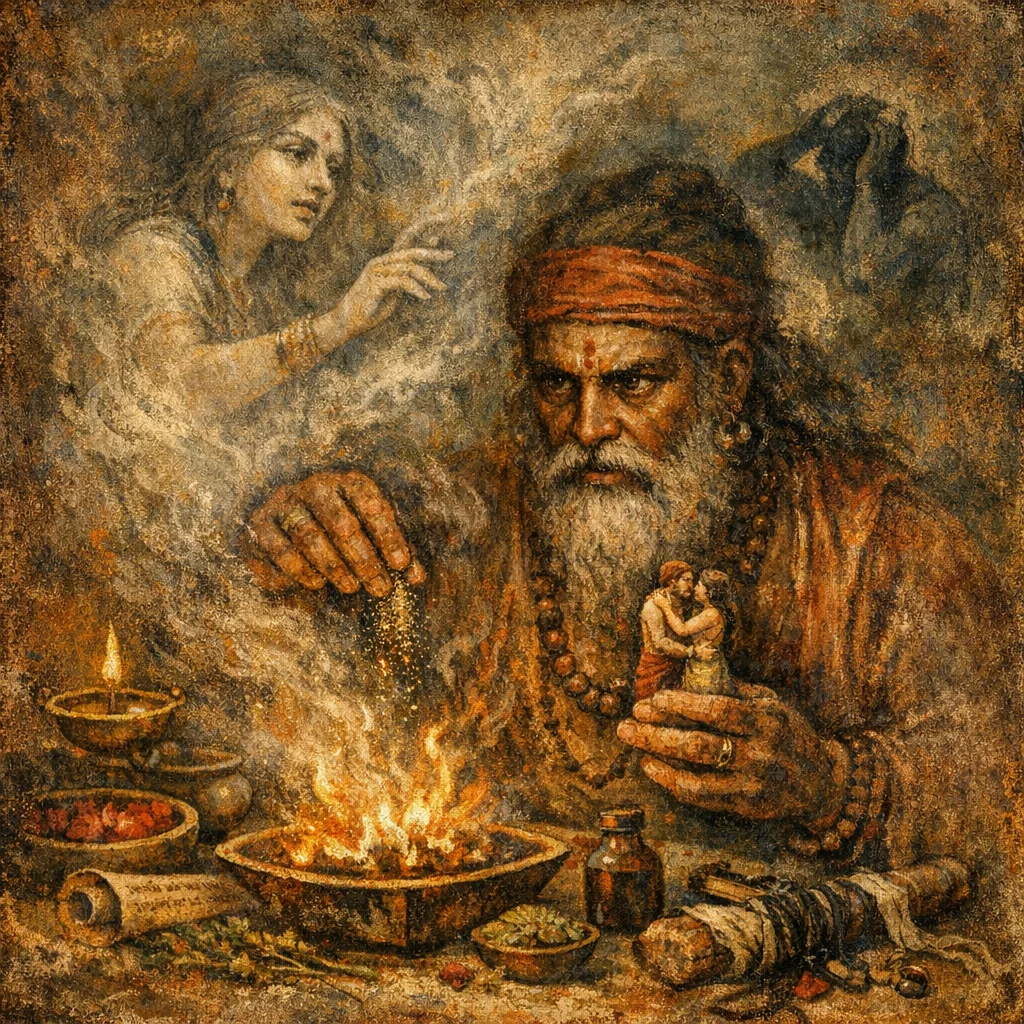
Sukta 130
Rishi: Atharvanic tradition (often treated as anonymous/atharvanic for such kāmya hymns)
Devata: Smara (Kāma) empowered through Apsarases; Gods as dispatchers
Chandas: Mixed/Anuṣṭubh-like cadence (edition-dependent; many AV love-spells are treated as anuṣṭubh)
Mantras
Mantra 1
स्मरः। रथजितां राथजितेयीनामप्सरसामयं स्मरः । देवाः प्र हिणुत स्मरमसौ मामनु शोचतु
Smara. This is the Smara of the Apsarases, of the Rathajitās, of the Rathajiteyīs. O Gods, drive forth Smara: let yonder one pine after me and burn with longing.
Mantra 2
असौ मे स्मरतादिति प्रियो मे स्मरतादिति । देवाः प्र हिणुत स्मरमसौ मामनु शोचतु
‘Let yonder one remember me,’ thus; ‘let my dear one remember me,’ thus. O Gods, drive forth Smara: let yonder one pine after me.
Mantra 3
यथा मम स्मरादसौ नामुष्याहं कदा चन। देवाः प्र हिणुत स्मरमसौ मामनु शोचतु
So may yonder one remember me—and never that other—at any time at all. O Gods, drive forth Smara: let yonder one burn after me.
Mantra 4
उन्मादयत मरुत उदन्तरिक्ष मादय । अग्न उन्मादया त्वमसौ मामनु शोचतु
Madden him, O Maruts; intoxicate the mid-air. O Agni, do thou madden him: let yonder one burn after me.
Frequently Asked Questions
It is used to intensify attraction and compel a specific person to pine after the performer, with an emphasis on exclusive remembrance and longing.
Apsarases embody enchantment and irresistible allure; the hymn treats Smara as their empowered force, making desire a summoned and directed potency.
In the received text of this sukta, no specific substances are prescribed; it functions primarily as a spoken/recited ‘sending’ of Smara, though later practice may add customary purifications.