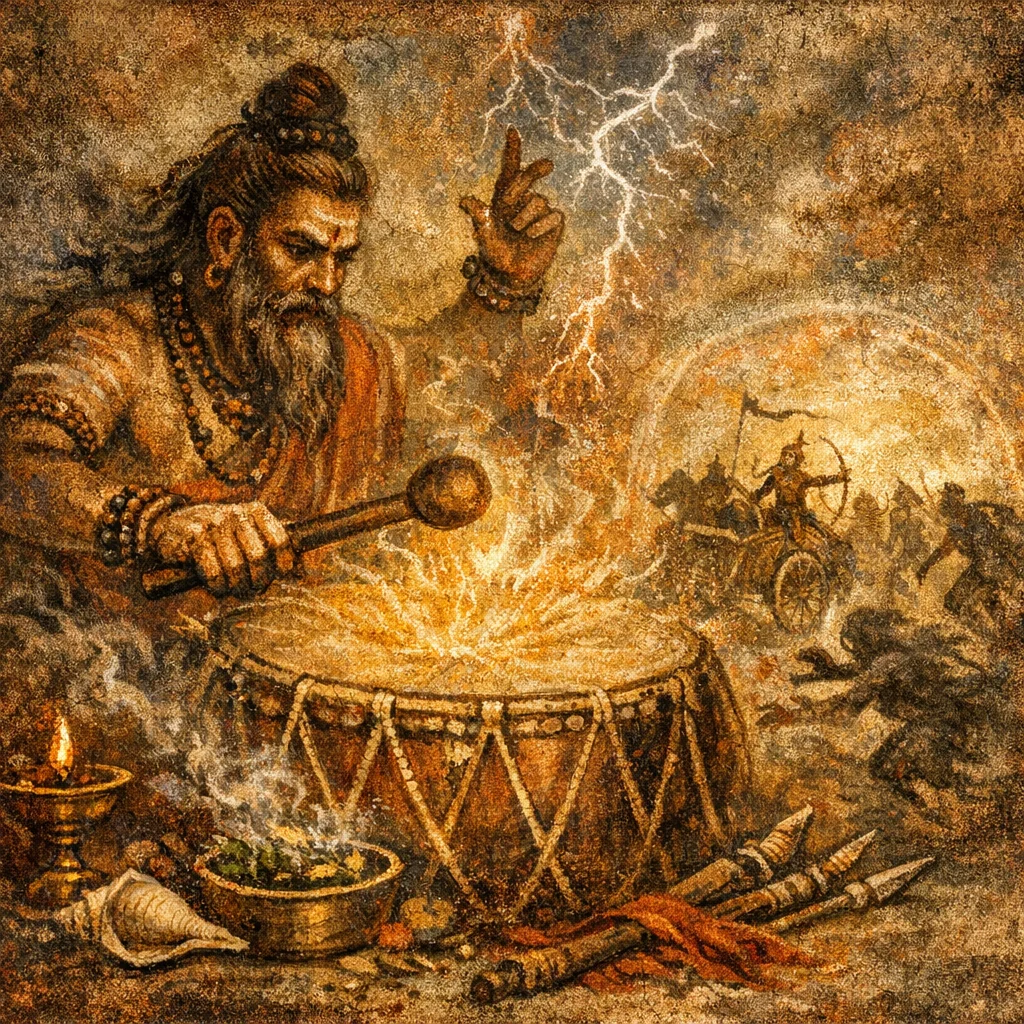
Sukta 126
Rishi: Atharvanic tradition (anukramaṇī-dependent).
Devata: Dundubhi (personified drum) allied with Indra
Chandas: Jagatī/triṣṭubh-like mixed cadence (edition-dependent).
Mantras
Mantra 1
दुन्दुभिः। उप श्वासय पृथिवीमुत द्यां पुरुत्रा ते वन्वतां विष्ठितं जगत्। स दुन्दुभे सजूरिन्द्रेण देवैर्दूराद् दवीयो अप सेध शत्रून्
With the drum set thou earth and heaven a-breathing; far and wide let the established world bestir itself for thee. O Drum, in company with Indra and the Gods, from far, from farther yet, repel away the foes.
Mantra 2
आ क्रन्दय बलमोजो न आ धा अभि ष्टन दुरिता बाधमानः । अप सेध दुन्दुभे दुच्छुनामित इन्द्रस्य मुष्टिरसि वीडयस्व
Roar forth; set for us strength and vigor; thunder against the evils, driving them away. O Drum, repel ill-hap: thou verily art Indra’s fist—show thy might.
Mantra 3
प्रामूं जयाभी३मे जयन्तु केतुमद् दुन्दुभिर्वावदीतु । समश्वपर्णाः पतन्तु नो नरोऽस्माकमिन्द्र रथिनो जयन्तु
Forward—conquer yonder! let these here conquer: let the bannered drum resound aloud. In unison let our men, horse-winged, swoop on; and, O Indra, let our chariot-fighters be victorious.
Frequently Asked Questions
Because its sound is viewed as an active power: a living, breath-like force that can frighten enemies, remove ill-omens, and carry Indra’s martial energy into the human battlefield.
It is a metaphor of embodiment: the drum becomes Indra’s striking power in sonic form—its thunder functions like a divine blow that drives away durita and hostile forces.
Primarily for battle-protection and victory (rakṣoghna/paustika). It also has a ‘healing’ edge only in the sense of removing durita—misfortune and harmful influences—from the patron’s side.