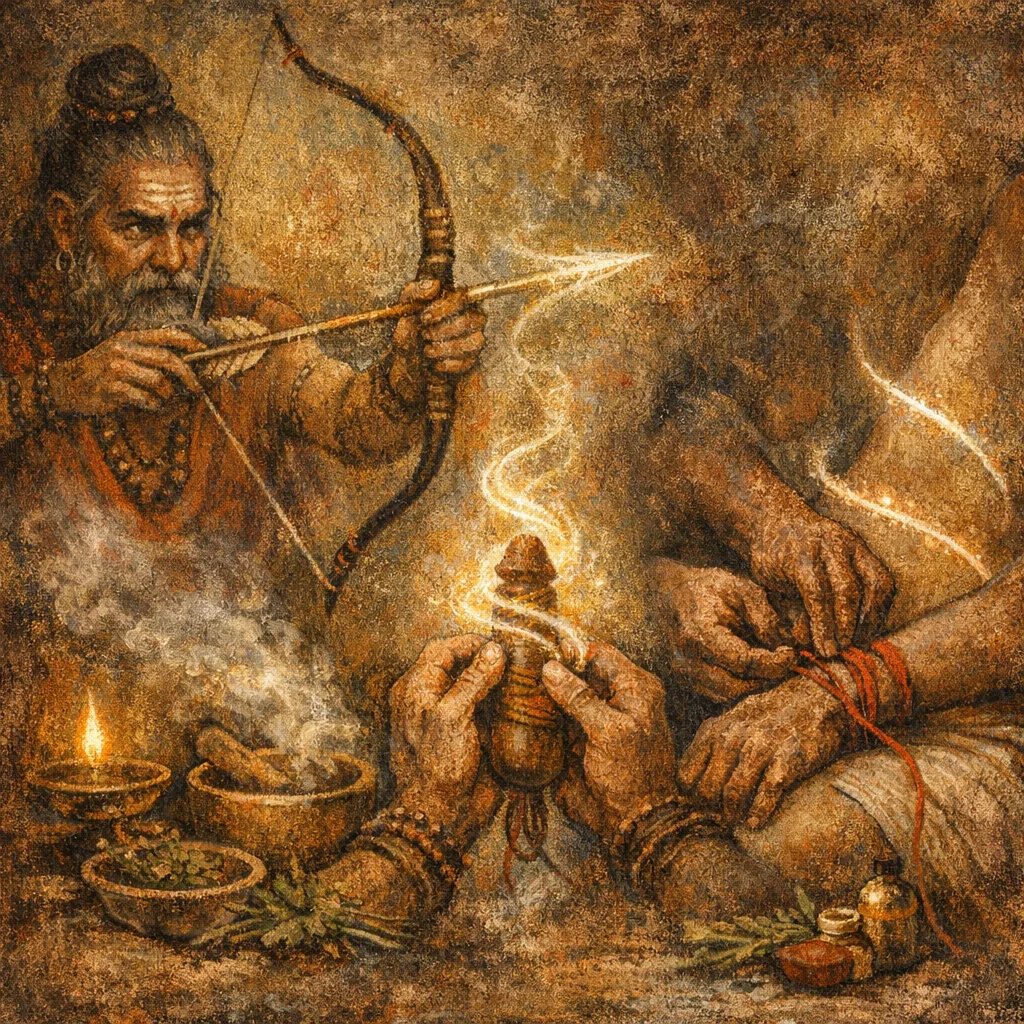
Sukta 101
Rishi: Atharvanic tradition (Anukramaṇī attribution varies)
Devata: Vājīkaraṇa (virility) / the empowered ‘member’ as functional devatā
Chandas: Anuṣṭubh
Mantras
Mantra 1
वाजीकरणम्। आ वृषायस्व श्वसिहि वर्धस्व प्रथयस्व च । यथाङ्गं वर्धतां शेपस्तेन योषितमिज्जहि
Wax bull-like; breathe forth in ardour; increase and spread abroad; so that the member may grow—the penis—therewith do thou indeed overcome the woman.
Mantra 2
येन कृषं वाजयन्ति येन हिन्वन्त्यातुरम्। तेनास्य ब्रह्मणस्पते धनुरिवा तानया पसः
Wherewith they make the lean man vigorous, wherewith they impel the sick to strength—therewith, O Brahmaṇaspati, stretch thou his member taut, as one a bow.
Mantra 3
आहं तनोमि ते पसो अधि ज्यामिव धन्वनि । क्रमस्वर्श इव रोहितमनवग्लायता सदा
I stretch for thee the noose above, as on the bow the tightened string. Step onward, like the Rohit that glides; unfaltering, ever without slack.
Frequently Asked Questions
It is used as a vājīkaraṇa (potency) charm to restore strength and induce firm, sustained sexual vitality, especially when weakness or illness has reduced vigor.
The bowstring image ritualizes ‘tautness’: the mantra is imagined to tighten and stabilize potency the way a string is drawn tight on a bow—firm, directed, and not slack.
The verses themselves do not name a specific herb; practice often pairs such charms with a strengthening tonic (e.g., milk/ghee with vājīkaraṇa herbs) and a symbolic cord (pāśa) to enact the ‘tightening’ motif.