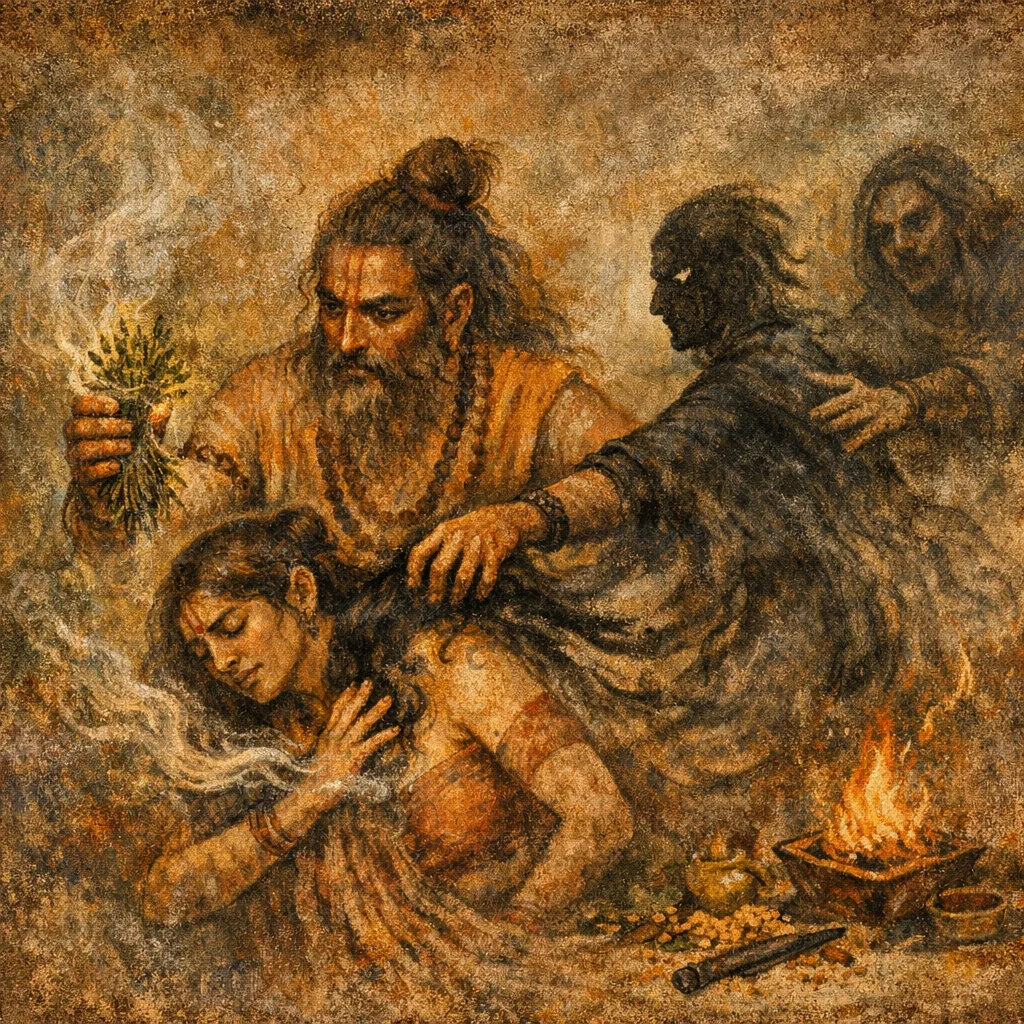
Sukta 14
Rishi: Atharvanic/Angirasa tradition (as typical for kṛtyā-hymns; specific attribution depends on Anukramaṇī).
Devata: Kṛtyā (as personified sorcery) directed back to the kartṛ (agent).
Chandas: Anuṣṭubh (probable; common in AV counter-sorcery verses).
Mantras
Mantra 1
कृत्यापरिहरणम्। सुपर्णस्त्वान्वविन्दत् सूकरस्त्वाखन्नसा। दिप्सौषधे त्वं दिप्सन्तमव कृत्याकृतं जहि
The Fair-winged found thee out; the Boar with snout dug thee from the earth. O Herb that foilest hostile craving, smite down the plotter, slay the worker of the Kṛtyā.
Mantra 2
अव जहि यातुधानानव कृत्याकृतं जहि । अथो योअस्मान् दिप्सति तमु त्वं जह्योषधे
Smite down the Yātudhānas; smite down the maker of the Kṛtyā. And whoso seeketh to assail us—him verily do thou smite, O Herb.
Mantra 3
रिश्यस्येव परीशासं परिकृत्य परि त्वचः । कृत्यां कृत्याकृते देवा निष्कमिव प्रति मुञ्चत
As one would strip the antelope’s hide, so strip it off from the skin: the Kṛtyā—O Gods—release it back unto the Kṛtyā-maker, as one returns a niṣka-ornament.
Mantra 4
पुनः कृत्यां कृत्याकृते हस्तगृह्य परा णय । समक्षमस्मा आ धेहि यथा कृत्याकृतं हनत्
Back to the Kṛtyā-maker lead thou the Kṛtyā, having seized it in the hand; set it upon him, face to face, that it may smite the worker of the Kṛtyā.
Mantra 5
कृत्याः सन्तु कृत्याकृते शपथः शपथीयते। सुखो रथ इव वर्ततां कृत्या कृत्याकृतं पुनः
Let Kṛtyās be for the Kṛtyā-maker; let the oath-curse bind him who adjures. Smooth as a chariot let the Kṛtyā roll back again upon the worker of the Kṛtyā.
Mantra 6
यदि स्त्री यदि वा पुमान् कृत्यां चकार पाप्मने । तामु तस्मै नयामस्यश्वमिवाश्वाभिधान्या
If woman, if perchance a man, hath wrought the Kṛtyā for evil’s end, that very spell—yea, her—we drive and lead back unto him, as with a bridle one leads on a horse.
Mantra 7
यदि वासि देवकृता यदि वा पुरुषैः कृता। तां त्वा पुनर्णयामसीन्द्रेण सयुजा वयम्
If thou be wrought by Gods, or if by men thou hast been wrought, thee—this same spell—we lead we back again, we in joint yoke with Indra.
Mantra 8
अग्ने पृतनाषाट् पृतनाः सहस्व । पुनः कृत्यां कृत्याकृते प्रतिहरणेन हरामसि
O Agni, conqueror in battle, overpower thou the battles. Back to the maker of the Kṛtyā, by the act of counter-carrying, we bear the Kṛtyā away.
Mantra 9
कृतव्यधनि विध्य तं यश्चकार तमिज्जहि । न त्वामचक्रुषे वयं वधाय सं शिशीमहि
O piercer of the wrought device, pierce him—who made it—him, even him, smite down. We have not wrought thee; for slaughter of the guilty we wholly whet our power.
Mantra 10
पुत्र इव पितरं गच्छ स्वज इवाभिष्ठितो दश । बन्धमिवावक्रामी गच्छ कृत्ये कृत्याकृतं पुनः
Go, like a son unto his father; like one’s own driven kinsman, fasten and bite. Like a bond that slips away, depart: O Kṛtyā, go back unto the maker of the Kṛtyā.
Mantra 11
उदेणीव वारण्यऽभिस्कन्दं मृगीव । कृत्या कर्तारमृच्छतु
Like a wild forest-doe in sudden onset, like a hind in the chase, let the Kṛtyā reach the maker—let the witchcraft go back upon him.
Mantra 12
इष्वा ऋजीयः पततु द्यावापृथिवी तं प्रति । सा तं मृगमिव गृह्णतु कृत्या कृत्याकृतं पुनः
As an arrow, straighter yet, let it fly—Heaven and Earth against that man. Let her seize him as a beast is seized: the Kṛtyā, back again, the doer of the Kṛtyā.
Mantra 13
अग्निरिवैतु प्रतिकूलमनुकूलमिवोदकम्। सुखो रथ इव वर्ततां कृत्या कृत्याकृतं पुनः
Let it go like Agni, even against the stream, as water yet runs with the stream; smoothly, like a chariot, let the Kṛtyā roll back again upon the doer of the Kṛtyā.
Frequently Asked Questions
Kṛtyā is personified, deliberately made sorcery—harm ‘constructed’ and sent by someone. The hymn treats it like a force that can be caught, redirected, and made to return to its sender.
It mainly commands the hostile agency itself. The speaker uses Atharvanic authority to order the kṛtyā to leave the victim and go back to the kṛtyā-maker, where it is to strike.
Not necessarily. The verses emphasize grasping and transferring the kṛtyā through ritual speech and gesture; a simple cord/knot or held bundle can be used as a symbolic ‘carrier,’ but the mantra is primary.