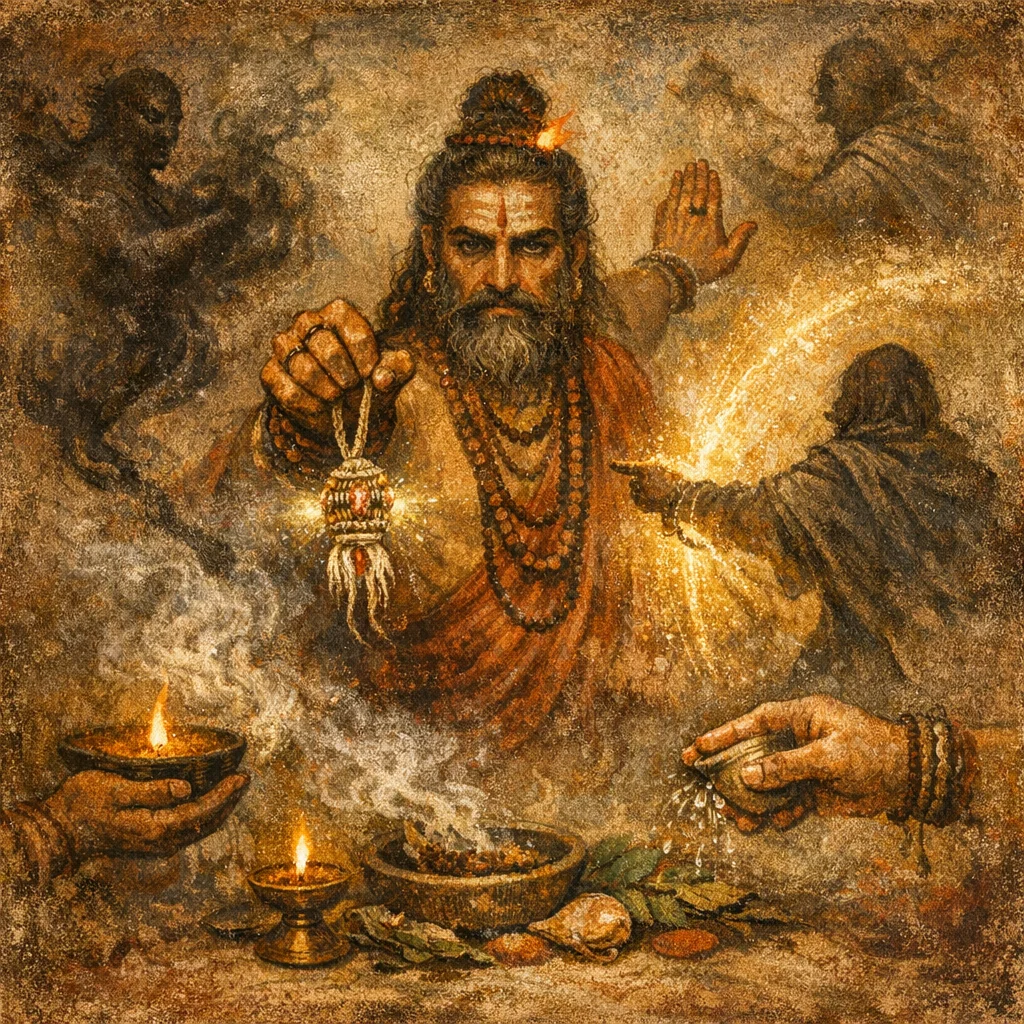
Sukta 40
Rishi: Atharvanic tradition (often anonymous/Angiras-type in AV counter-sorcery hymns)
Devata: Agni Jātavedas; with Soma invoked as supporting power; directions as operative field
Chandas: Anuṣṭubh (predominant in AV protective formulae; verse is anuṣṭubh-like)
Mantras
Mantra 1
शत्रुनाशनम्। ये पुरस्ताज्जुह्वति जातवेदः प्राच्या दिशोऽभिदासन्त्यस्मान्। अग्निमृत्वा ते पराञ्चो व्यथन्तां प्रत्यगेनान् प्रतिसरेण हन्मि
For the slaying of foes. Whoso from the forepart offer, O Jātavedas—who from the eastern quarter assail us: taking Agni in due order, let them be turned away and tremble; with the counter-turning, with the counter-charm, I smite them down.
Mantra 2
ये दक्षिणतो जुह्वति जातवेदो दक्षिणाया दिशोऽभिदासन्त्यस्मान्। यममृत्वा ते पराञ्चो व्यथन्तां प्रत्यगेनान् प्रतिसरेण हन्मि
Whoso from the south offer, O Jātavedas—who from the southern quarter assail us: taking Yama in due order, let them be turned away and tremble; with the counter-turning, with the counter-charm, I smite them down.
Mantra 3
ये पश्चाज्जुह्वति जातवेदः प्रतीच्या दिशोऽभिदासन्त्यस्मान्। वरुणमृत्वा ते पराञ्चो व्यथन्तां प्रत्यगेनान् प्रतिसरेण हन्मि
Whoso from behind offer, O Jātavedas—who from the western quarter assail us: taking Varuṇa in due order, let them be turned away and tremble; with the counter-turning, with the counter-charm, I smite them down.
Mantra 4
य उत्तरतो जुह्वति जातवेद उदीच्या दिशोऽभिदासन्त्यस्मान्। सोममृत्वा ते पराञ्चो व्यथन्तां प्रत्यगेनान् प्रतिसरेण हन्मि
Whoso from the northern side maketh offering, O Jātavedas,—the northern regions assail us: taking Soma for the effective stay, let them, turned away, be shaken; with the returning counter-force, with the Pratisara, I smite them down.
Mantra 5
ये३धस्ताज्जुह्वति जातवेदो ध्रुवाया दिशोऽभिदासन्त्यस्मान्। भूमिमृत्वा ते पराञ्चो व्यथन्तां प्रत्यगेनान् प्रतिसरेण हन्मि
Whoso from beneath maketh offering, O Jātavedas,—the steadfast regions assail us: taking Earth for the effective stay, let them, turned away, be shaken; with the returning counter-force, with the Pratisara, I smite them down.
Mantra 6
ये३ऽन्तरिक्षाज्जुह्वति जातवेदो व्यध्वाया दिशोऽभिदासन्त्यस्मान्। वायुमृत्वा ते पराञ्चो व्यथन्तां प्रत्यगेनान् प्रतिसरेण हन्मि
Whoso from the mid-air maketh offering, O Jātavedas,—the wandering regions assail us: taking Wind for the effective stay, let them, turned away, be shaken; with the returning counter-force, with the Pratisara, I smite them down.
Mantra 7
य उपरिष्टाज्जुह्वति जातवेद ऊर्ध्वाया दिशोऽभिदासन्त्यस्मान्। सूर्यमृत्वा ते पराञ्चो व्यथन्तां प्रत्यगेनान् प्रतिसरेण हन्मि
Whoso from above maketh offering, O Jātavedas,—the upper regions assail us: taking the Sun for the effective stay, let them, turned away, be shaken; with the returning counter-force, with the Pratisara, I smite them down.
Mantra 8
ये दिशामन्तर्देशेभ्यो जुह्वति जातवेदः सर्वाभ्यो दिग्भ्योऽभिदासन्त्यस्मान्। ब्रह्मर्त्वा ते पराञ्चो व्यथन्तां प्रत्यगेनान् प्रतिसरेण हन्मि
Whoso from the in-between regions of the quarters maketh offering, O Jātavedas,—from all the directions they assail us: taking Brahman for the effective stay, let them, turned away, be shaken; with the returning counter-force, with the Pratisara, I smite them down.
Frequently Asked Questions
It is meant to repel and reverse hostile rites, curses, or occult offerings believed to be sent from particular directions (north, west, etc.) or from in-between directions.
The hymn treats harm as arriving through spatial channels; by naming each quarter and sealing it, the practitioner closes the pathways through which the attack is thought to travel.
A pratisara is a protective binding—often a consecrated cord or amulet—used as a physical ‘seal’ that supports the mantra’s reversal and warding effect.