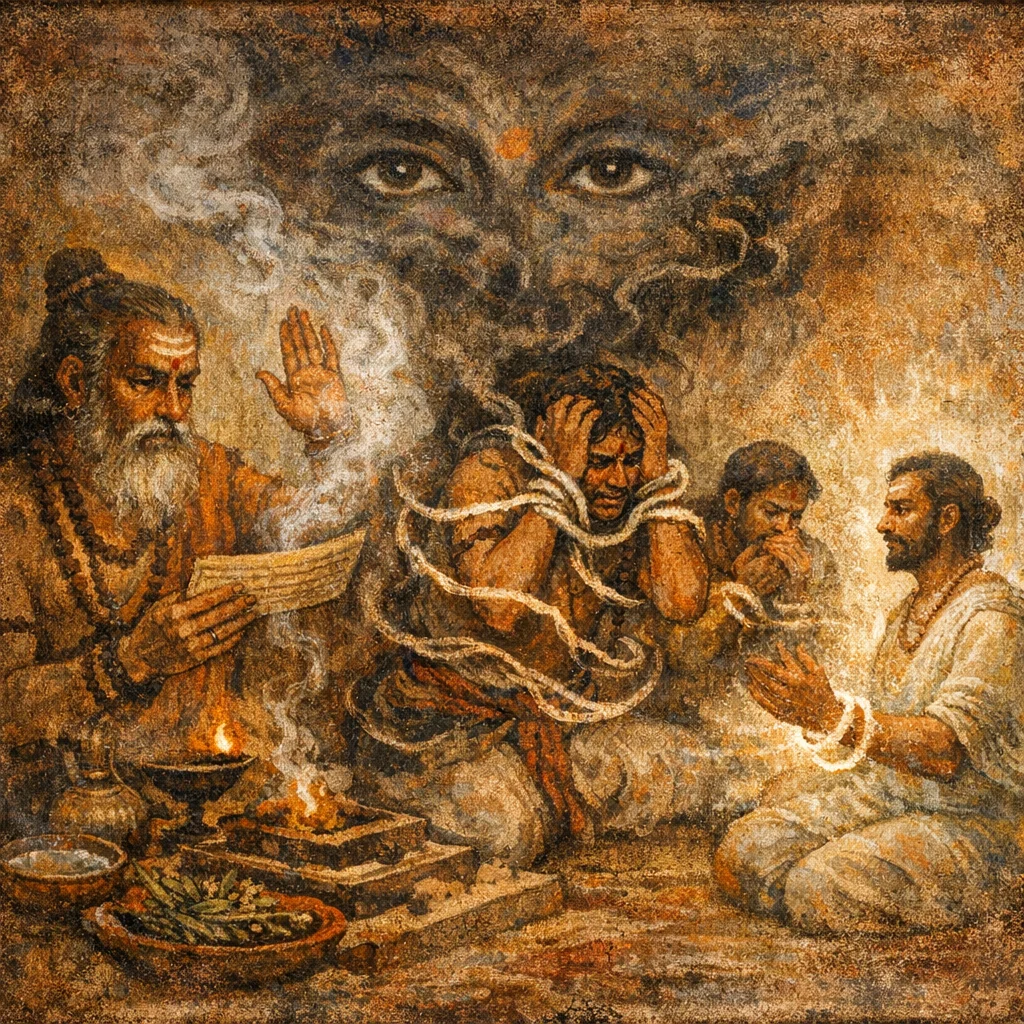
Sukta 16
Rishi: Atharvanic/anonymous
Devata: Varuṇa (as satyānṛta-samīkṣaka) and the Viśve Devāḥ as witnesses
Chandas: Anuṣṭubh (didactic-judicial tone)
Mantras
Mantra 1
सत्यानृतसमीक्षकः। बृहन्नेषामधिष्ठाता अन्तिकादिव पश्यति । य स्तायन्मन्यते चरन्त्सर्वं देवा इदं विदुः
The discerner of truth and falsehood—the Great One, their Overlord—beholds as though from close at hand. He who, moving about, deems himself stealing unseen: all this the Gods do know.
Mantra 2
यस्तिष्ठति चरति यश्च वञ्चति यो निलायं चरति यः प्रतङ्कम्। द्वौ संनिषद्य यन्मन्त्रयेते राजा तद् वेद वरुणस्तृतीयः
Whoso standeth, whoso moveth, and whoso dealeth deceit; who goeth to hiding, who slinketh stealthily—what two, sitting down together, may whisper in counsel, that the King doth know: Varuṇa is the third.
Mantra 3
उतेयं भूमिर्वरुणस्य राज्ञ उतासौ द्यौर्बृहती दूरेअन्ता । उतो समुद्रौ वरुणस्य कुक्षी उतास्मिन्नल्प उदके निलीनः
And this Earth is of Varuṇa the King; and yonder Heaven, the mighty, whose bounds are far away. And the two Oceans are Varuṇa’s bellies; and in this scant water also he lieth hidden.
Mantra 4
उत यो द्यामतिसर्पात् परस्तान्न स मुच्यातै वरुणस्य राज्ञः । दिव स्पशः प्र चरन्तीदमस्य सहस्राक्षा अति पश्यन्ति भूमिम्
And he who should creep beyond, far past even Heaven—he shall not so be loosed from Varuṇa the King. His spies of Heaven roam abroad through this world; thousand-eyed, they look over and behold the Earth.
Mantra 5
सर्वं तद् राजा वरुणो वि चष्टे यदन्तरा रोदसी यत् परस्तात्। संख्याता अस्य निमिषो जनानामक्षानिव श्वघ्नी नि मिनोति तानि
All that doth King Varuṇa behold, in clear discernment—what is between the Two Worlds, and what is beyond. Counted are the winkings of men unto him: as dice, the sure arranger setteth them in order.
Mantra 6
ये ते पाशा वरुण सप्तसप्त त्रेधा तिष्ठन्ति विषिता रुशन्तः । छिनन्तु सर्वे अनृतं वदन्तं यः सत्यवाद्यति तं सृजन्तु
Those nooses of thine, O Varuṇa—seven and seven—threefold they stand, sent forth, and gleaming. Let them all cut down the speaker of untruth; but him who speaketh truth, let them release.
Mantra 7
शतेन पाशैरभि धेहि वरुणैनं मा ते मोच्यनृतवाङ् नृचक्षः । आस्तां जाल्म उदरं श्रंसयित्वा कोश इवाबन्धः परिकृत्यमानः
With a hundred nooses bind thou him about, O Varuṇa; let not the untruth-speaking man be loosed from thee, O Seer of men. Let the knave abide—his belly made to sag—like an unbound pouch, being cut and trimmed about.
Mantra 8
यः समाम्यो३वरुणो यो व्याम्यो३यः संदेश्यो३वरुणो यो विदेश्यः । यो दैवो वरुणो यश्च मानुषः
What Varuṇa is of our own bounds, what Varuṇa is of the outer bounds; what Varuṇa is pointed out by report, what Varuṇa is of foreign land—what Varuṇa is divine, and what is human:
Mantra 9
तैस्त्वा सर्वैरभि ष्यामि पाशैरसावामुष्यायणामुष्याः पुत्र । तानु ते सर्वाननुसंदिशामि
With all those nooses I encompass and bind thee—thou here, O son of such an one, of such a lineage. Those all, for thee, I now specify and appoint in order.
Frequently Asked Questions
It is used in situations of suspected theft or disputed truth, to invoke Varuṇa and the Gods as witnesses so that hidden wrongdoing is exposed and truthful speech is compelled.
Water is Varuṇa’s domain and a symbol of his omnipresence; the hymn says he is present even in a small amount of water, making it a powerful oath-token in truth-testing.
It targets the anṛta-vāk—the one who speaks falsehood. The binding language (Varuṇa-pāśa) is meant to restrain and punish deliberate lying, while protecting the truthful by restoring ṛta (right order).