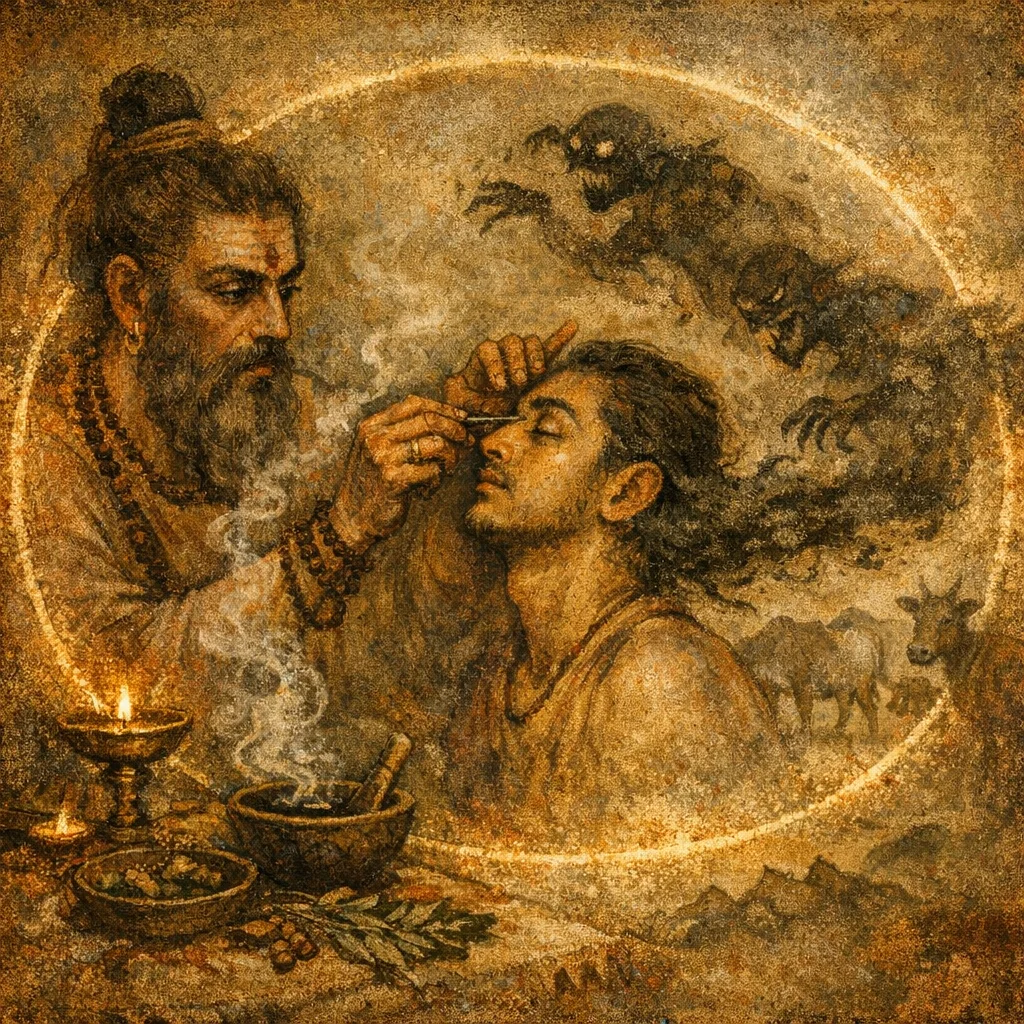
Sukta 9
Rishi: Atharvanic tradition (uncertain)
Devata: Āñjana (personified remedy) / Viśve Devāḥ (as guarantors)
Chandas: Anuṣṭubh-like (irregular)
Mantras
Mantra 1
आञ्जनम्। एहि जीवं त्रायमाणं पर्वतस्यास्यक्ष्यम्। विश्वेभिर्देवैर्दत्तं परिधिर्जीवनाय कम्
Collyrium! Come thou—life-giving, protecting—this mountain-born eye-remedy; bestowed by all the Gods, a guarding enclosure for life and for well-being.
Mantra 2
परिपाणं पुरुषाणां परिपाणं गवामसि । अश्वानामर्वतां परिपाणाय तस्थिषे
A guarding hand for men art thou, a guarding hand for cattle; for horses, for swift steeds, thou standest established as protection.
Mantra 3
उतासि परिपाणं यातुजम्भनमाञ्जन । उतामृतस्य त्वं वेत्थाथो असि जीवभोजनमथो हरितभेषजम्
Thou too art a guarding hand, O Collyrium, a smiter-down of sorcerous beings; thou knowest, moreover, the lore of immortality: yea, thou art life’s nourishment, and further a green healing-drug.
Mantra 4
यस्याञ्जन प्रसर्पस्यङ्गमङ्गं परुष्परुः । ततो यक्ष्मं वि बाधस उग्रो मध्यमशीरिव
O Collyrium, when the Creeping ill hath run through limb on limb, through joint on joint, from thence thou drivest forth the yakṣma—fierce—cleaving its very midst as with an axe.
Mantra 5
नैनं प्राप्नोति शपथो न कृत्या नाभिशोचनम्। नैनं विष्कन्धमश्नुते यस्त्वा बिभर्त्याञ्जन
No curse shall overtake him, nor kṛtyā-witchcraft, nor hostile scorching; nor shall the Viṣkandha seize upon him—whoso beareth thee, O Collyrium.
Mantra 6
असन्मन्त्राद् दुष्वप्न्याद् दुष्कृताच्छमलादुत। दुर्हार्दश्चक्षुषो घोरात् तस्मान्नः पाह्याञ्जन
From evil spells, from evil dreaming, from ill-deed and from taint, and also from the dread ill-hearted bane that smiteth through the eye—from all that, guard thou us, O Collyrium.
Mantra 7
इदं विद्वानाञ्जन सत्यं वक्ष्यामि नानृतम्। सनेयमश्वं गामहमात्मानं तव पूरुष
This, O Collyrium, as one that knoweth, I will utter—truth, and not untruth: may I win a horse, a cow; may I win mine own self—O Person that is thine.
Mantra 8
त्रयो दासा आञ्जनस्य तक्मा बलास आदहिः । वर्षिष्ठः पर्वतानां त्रिककुन्नाम ते पिता
Three are the Dāsa-foes of Añjana—Takman the Fever, Balāsa the Phlegm, and Ādahi the Burner. Most mighty among the mountains is he: Trikakud by name, thy father.
Mantra 9
यदाञ्जनं त्रैककुदं जातं हिमवतस्परि । यातूंश्च सर्वाञ्जम्भयत् सर्वाश्च यातुधान्यः
When Añjana, Trikakud-born, was brought to birth from about the Himavant, it crushed down all Yātus, and all the Yātudhānī demonesses.
Mantra 10
यदि वासि त्रैककुदं यदि यामुनमुच्यसे । उभे ते भद्रे नाम्नी ताभ्यां नः पाह्याञ्जन
Whether thou art Trikakud by name, or whether thou art called Yāmuna, both thy names are auspicious: by those twain, O Añjana, do thou protect us.
Frequently Asked Questions
Āñjana is collyrium/eye-salve, treated here as a personified protective remedy—both a medicine for the eyes and a spiritual guard against harmful influences.
No. Along with eye-healing, it is strongly apotropaic: it asks protection from hostile spells, nightmares, taint, and the feared harm that comes ‘through the eye’ (evil-eye type affliction).
It uses nāmabala (the power of names): even if the collyrium is known by different regional names or varieties, invoking its auspicious names ensures the protection remains effective.