Sukta 75
Rishi: Indra-stuti tradition (RV-derived material in AV 20; specific r̥ṣi not determinable here)
Devata: Indra
Chandas: Triṣṭubh-like movement (RV-style), with complex cadence
Mantras
Mantra 1
वि त्वा ततस्रे मिथुना अवस्यवो व्रजस्य साता गव्यस्य निःसृजः सक्षन्त इन्द्र निःसृजः । यद् गव्यन्त द्वा जना स्व१र्यन्ता समूहसि । आविष्करिक्रद् वृषणं सचाभुवं वज्रमिन्द्र सचाभुवम्
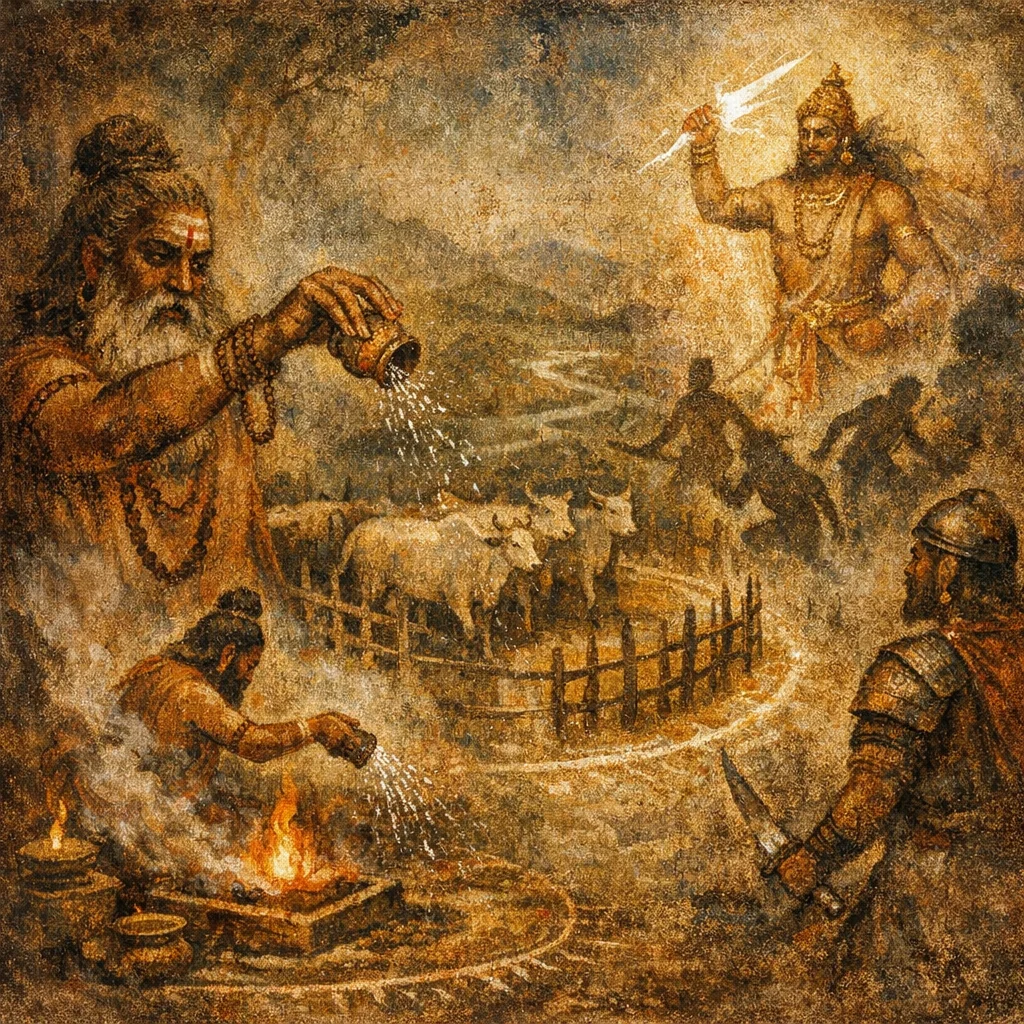
Forth have they spread themselves, in pairs, the seekers of thy aid—winning the cattle-pen; they are able, O Indra, to release the cattle-wealth, to release it. When two parties, craving kine, and striving for the light, thou bringest into encounter—make manifest the bull-like might, the bolt that goeth with thee, O Indra, that goeth with thee.
Mantra 2
विदुष्टे अस्य वीर्यऽस्य पूरवः पुरो यदिन्द्र शारदीरवातिरः सासहानो अवातिरः । शासस्तमिन्द्र मर्त्यमयजुं शवसस्पते । महीममुष्णाः पृथिवीमिमा अपो मन्दसान इमा अपः
The Pūrus know this thy heroic might—when, conquering, thou didst overthrow the autumnal forts, O Indra, didst overthrow them. Most lordly, Indra, smite the mortal who sacrificeth not, O lord of strength. Thou hast not reft away the mighty Earth; these Waters—rejoicing—these Waters (are thine to uphold).
Mantra 3
आदित् ते अस्य वीर्यऽस्य चर्किरन् मदेषु वृषन्नुशिजो यदाविथ सखीयतो यदाविथ । चकर्थ कारमेभ्यः पृतनासु प्रवन्तवे । ते अन्यामन्यां नद्यं सनिष्णत श्रवस्यन्तः सनिष्णत
Then have they celebrated this thy heroic power, O Bull, in raptures—when thou didst help the zealous, when thou didst help the friendly. Thou hast achieved for the singers, in battles, for the forward-rushing champion: they, seeking fame, have won each river in turn, have won (it).
Frequently Asked Questions
It is used to secure prosperity through victory: releasing or recovering cattle-wealth, overcoming obstacles or fortified resistance, and gaining successful passage and renown in a contested situation.
They function as supports of welfare: the hymn recalls that Indra does not destabilize the earth and that the waters are upheld, signaling stability, fertility, and safe grounding for the sacrificer’s success.
No specific medicinal herbs are required here; a simple ritual use of clean water (āpas), contact with earth (pṛthivī), and optional symbolic items (a staff as vajra, a cord as boundary/pen token) matches the hymn’s imagery and intent.