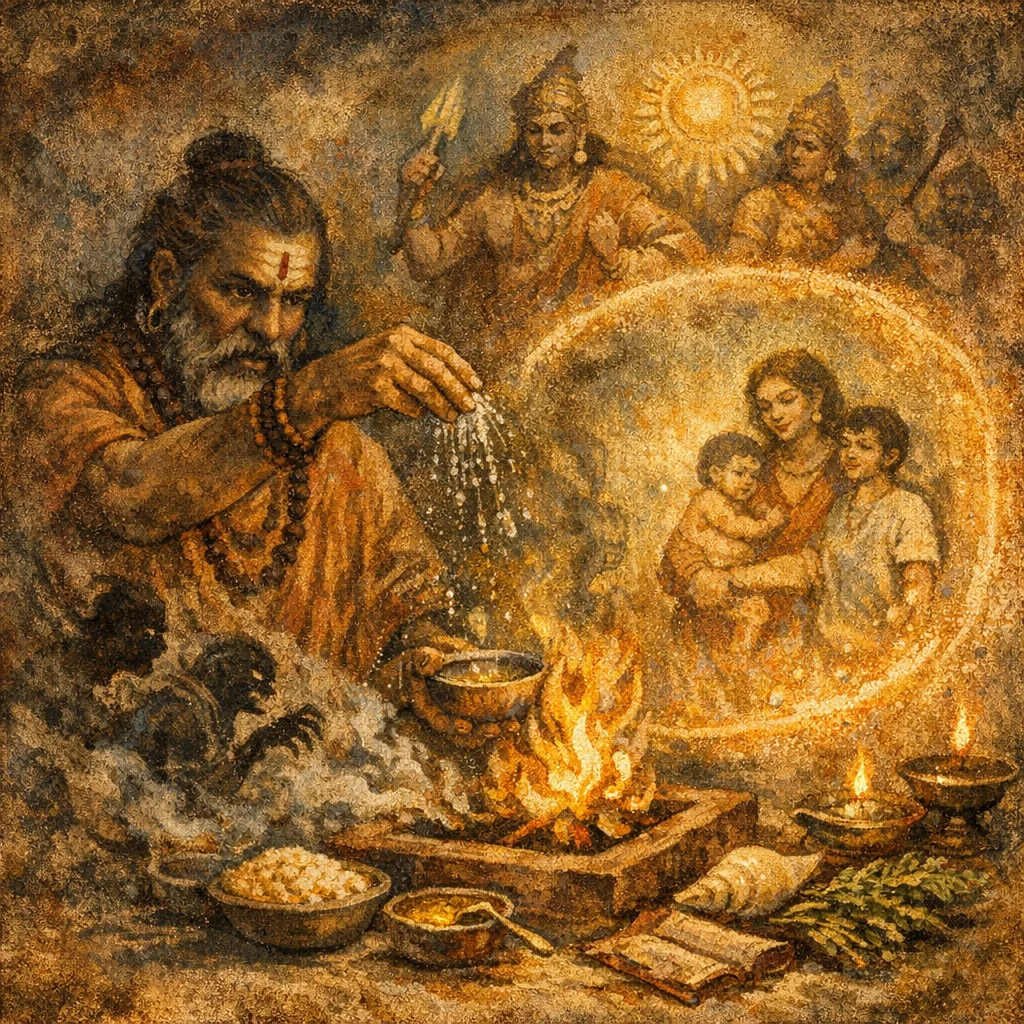
Sukta 63
Rishi: Traditionally Indra-stuti material; in AV 20 many hymns are RV-derived; specific r̥ṣi attribution follows the RV source-hymn lineage (requires padapāṭha/anukramaṇī confirmation).
Devata: Indra
Chandas: Anuṣṭubh (likely; requires metrical confirmation against the RV original)
Mantras
Mantra 1
इमा नु कं भुवना सीषधामेन्द्रश्च विश्वे च देवाः । यज्ञं च नस्तन्वं च प्रजां चादित्यैरिन्द्रः सह चीक्लृपाति
Now may we bring these worlds to good order—Indra and all the Gods: our sacrifice, our body, and our progeny—Indra, together with the Ādityas, doth effectually set (them) in due array.
Mantra 2
आदित्यैरिन्द्रः सगणो मरुद्भिरस्माकं भूत्वविता तनूनाम्। हत्वाय देवा असुरान् यदायन् देवा देवत्वमभिरक्षमाणाः
With the Ādityas, Indra—with his troop, with the Maruts—having become for us a protector of our bodies: when the Gods went forth to slay the Asuras, the Gods guarding on every side their godhead.
Mantra 3
प्रत्यञ्चमर्कमनयं छचीभिरादित् स्वधामिषिरां पर्यपश्यन्। अया वाजं देवहितं सनेम मदेम शतहिमाः सुवीराः
Backward he led the radiant Ray with Chacī’s cunning arts; then gave he his own proper might, swift-moving, and they looked it round about. By this may we win the Prize that Gods have set, and may we joy, a hundred winters old, with noble sons and heroes.
Mantra 4
य एक इद् विदयते वसु मर्ताय दाशुषे । ईशानो अप्रतिष्कुत इन्द्रो अङ्ग
He who alone, yea he, can win and deal out wealth unto the mortal who hath offered—sovereign, not to be gainsaid—’tis Indra, verily.
Mantra 5
कदा मर्तमराधसं पदा क्षुम्पमिव स्फुरत्। कदा नः शुश्रवद् गिर इन्द्रो अङ्ग
When will he spurn with foot the mortal churl, as one kicks off a stump? When will Indra, verily, give ear unto our words?
Mantra 6
यश्चिद्धि त्वा बहुभ्य आ सुतावां आविवासति । उग्रं तत् पत्यते शव इन्द्रो अङ्ग
For even he who, Soma-pressing, would from among the many court thee and do thee service—unto him that fierce might falls for lordship: ’tis Indra, verily.
Mantra 7
य इन्द्र सोमपातमो मदः शविष्ठ चेतति । येना हंसि न्य१त्त्रिणं तमीमहे
That rapture, Indra, best of Soma-drinkers, O mightiest, which shows itself as power—wherewith thou smitest down the Devourer—this same we crave and supplicate.
Mantra 8
येना दशग्वमध्रिगुं वेपयन्तं स्वर्णरम्। येना समुद्रमाविथा तमीमहे
By that same might wherewith thou madest Daśagva shake Adhrigu, and Svaṇara quake; by that wherewith thou didst succour through the sea—Thee do we invoke.
Mantra 9
येन सिन्धुं महीरपो रथां इव प्रचोदयः । पन्थामृतस्य यातवे तमीमहे
By that wherewith thou dravest on the Sindhu’s mighty waters, as one impelleth chariots; to make a path for travel in the course of Ṛta—Thee do we invoke.
Frequently Asked Questions
It is used for protection and coercive removal of obstruction—asking Indra to guard the body, make opponents tremble, and clear a path through danger.
No. The mantra-text itself does not prescribe substances; it works primarily through Indra-stuti and precedent-deed invocation (calling the same power ‘again’ for the present need).
The ‘sea’ functions as a model of extreme peril or liminal crossing; by recalling Indra’s rescue there, the reciter seeks safe transit through whatever danger they face now (journey, conflict, crisis).