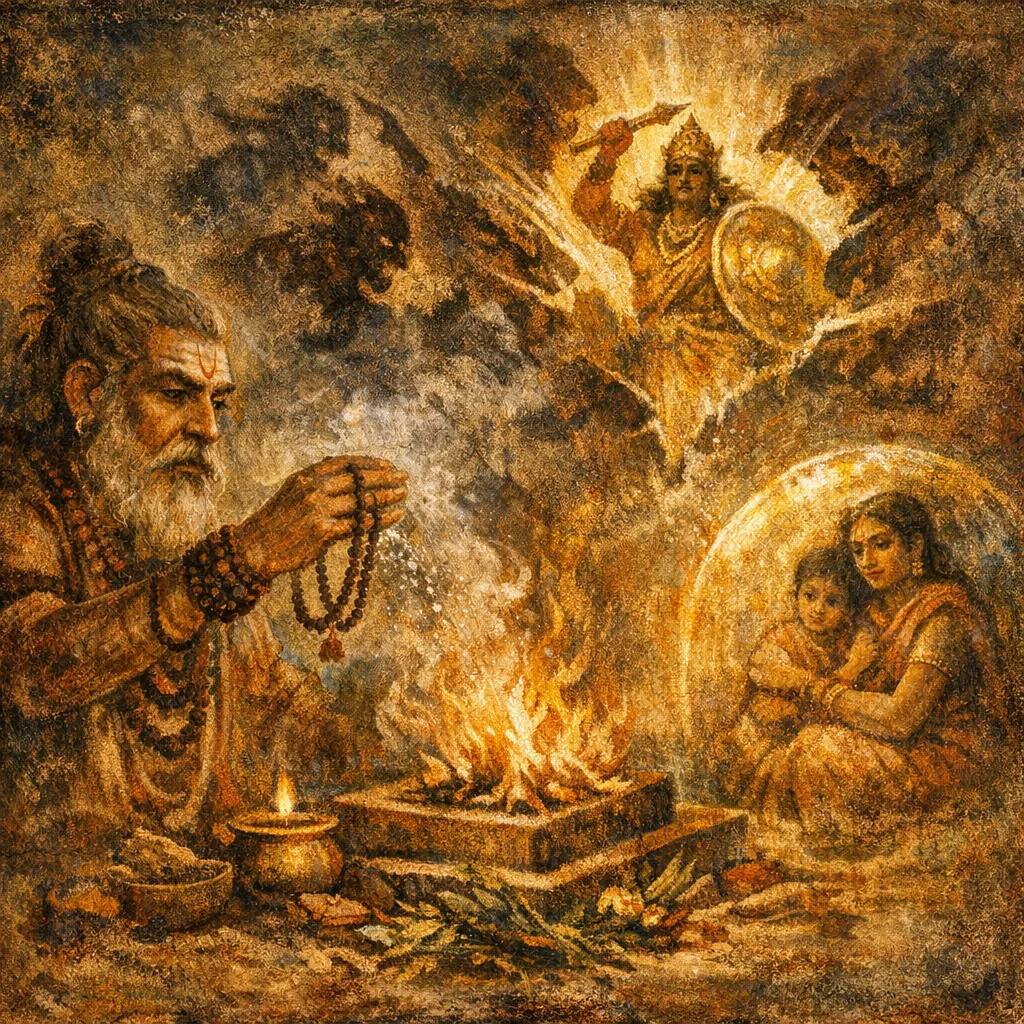
Sukta 39
Rishi: Ṛgvedic provenance; not determinable from excerpt alone.
Devata: Indra
Chandas: Likely Anuṣṭubh/Triṣṭubh-type depending on full stanza; excerpt insufficient for certainty.
Mantras
Mantra 1
इन्द्रं वो विश्वतस्परि हवामहे जनेभ्यः । अस्माकमस्तु केवलः
Indra, for you, from every side we call, away from other peoples: let him be ours—ours only.
Mantra 2
व्य१न्तरिक्षमतिरन्मदे सोमस्य रोचना। इन्द्रो यदभिनद् वलम्
Forth through the mid-air they passed, in Soma’s rapture, to the shining realms—when Indra clave the Vala fastness.
Mantra 3
उद् गा आजदङ्गिरोभ्य आविष्कृण्वन् गुहा सतीः । अर्वाञ्चं नुनुदे वलम्
Forth drave he the Cows; for the Angirases he made them manifest, though they abode in hiding-caves: hitherward he thrust away Vala.
Mantra 4
इन्द्रेण रोचना दिवो दृल्हानि दृंहितानि च । स्थिराणि न पराणुदे
By Indra the shining realms of heaven—firm-set and strengthened—stand stable; he doth not thrust them from their place.
Mantra 5
अपामूर्मिर्मदन्निव स्तोम इन्द्राजिरायते । वि ते मदा अराजिषुः
Like a wave of waters, as though in rapture, the hymn speeds on to thee, O Indra: forth have thy exultations flashed in splendour.
Frequently Asked Questions
To draw Indra’s help exclusively to the reciter’s side—so that strength, luck, and victory turn toward one’s own group rather than rivals.
They refer to the classic Indra myth where hidden wealth/light (the ‘cows’) is released from an enclosure; it is used here as a model for breaking present obstacles and recovering gains.
No. Its primary ‘instrument’ is the stoma (praise) itself; optional simple preparation like sipping water and focused intention can accompany recitation.