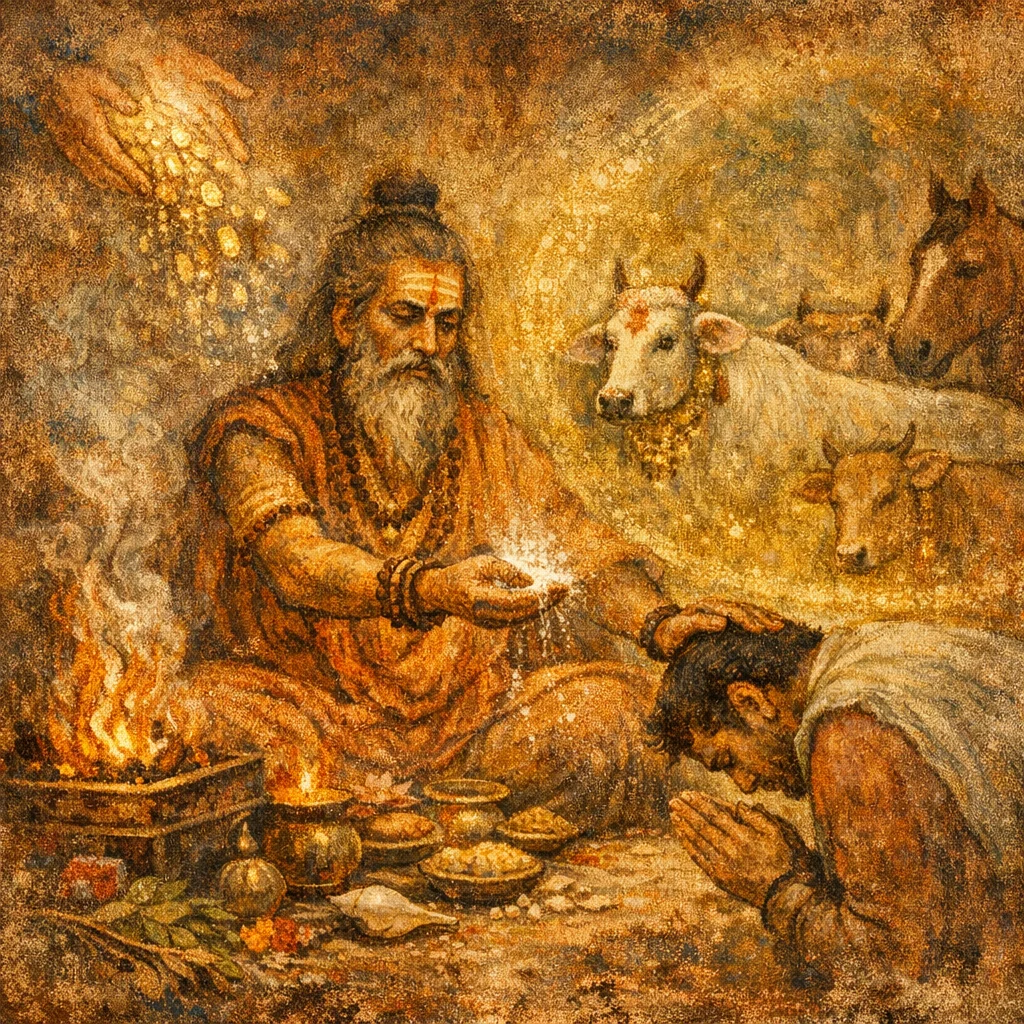
Sukta 27
Rishi: Indra-stuti tradition (RV-derived); in AV 20 generally RV seers; specific r̥ṣi attribution depends on RV parallel for this verse.
Devata: Indra
Chandas: Anuṣṭubh (RV-style stotra cadence; exact metrical classification depends on RV parallel).
Mantras
Mantra 1
यदिन्द्राहं यथा त्वमीशीय वस्व एक इत्। स्तोता मे गोषखा स्यात्
If, O Indra, even as thou, I might have lordship over wealth, alone indeed—then may my praiser be a cow-friend unto me.
Mantra 2
शिक्षेयमस्मै दित्सेयं शचीपते मनीषिणे । यदहं गोपतिः स्याम्
May I gain skill; may I bestow for him—O Lord of Śacī, wise in counsel—so that I may become a lord of cows.
Mantra 3
धेनुष्ट इन्द्र सूनृता यजमानाय सुन्वते। गामश्वं पिप्युषी दुहे
Thy milch-cow, O Indra—benign and true of speech—unto the sacrificer, the presser, doth milk forth, full-swelling, cow and horse.
Mantra 4
न ते वर्तास्ति राधस इन्द्र देवो न मर्त्यः ।यद् दित्ससि स्तुतो मघम्
No bound hath thy bounty, O Indra—thou art a god, not mortal—when, praised, thou art fain to give the gift.
Mantra 5
यज्ञ इन्द्रमवर्धयद् यद् भूमिं व्यवर्तयत्। चक्राण ओपशं दिवि
The sacrifice strengthened Indra, when he rolled forth the earth, making in heaven aid and support.
Mantra 6
वावृधानस्य ते वयं विश्वा धनानि जिग्युषः । ऊतिमिन्द्रा वृणीमहे
We, as conquerors, would win all treasures of thee who waxest ever stronger; we choose, O Indra, thy succouring aid.
Frequently Asked Questions
It is primarily a paustika hymn: recited to attract prosperity—especially cattle-wealth—and to secure Indra’s supportive protection for success and winning gains.
In Indra-stuti logic, stuti ‘activates’ the god’s giving. The hymn states that Indra’s bounty has no limit when he is praised and inclined to grant a gift.
No specific substance is required in the text. It works as a stotra-centered recitation, though a simple respectful offering (like water and intention) may be added by custom.