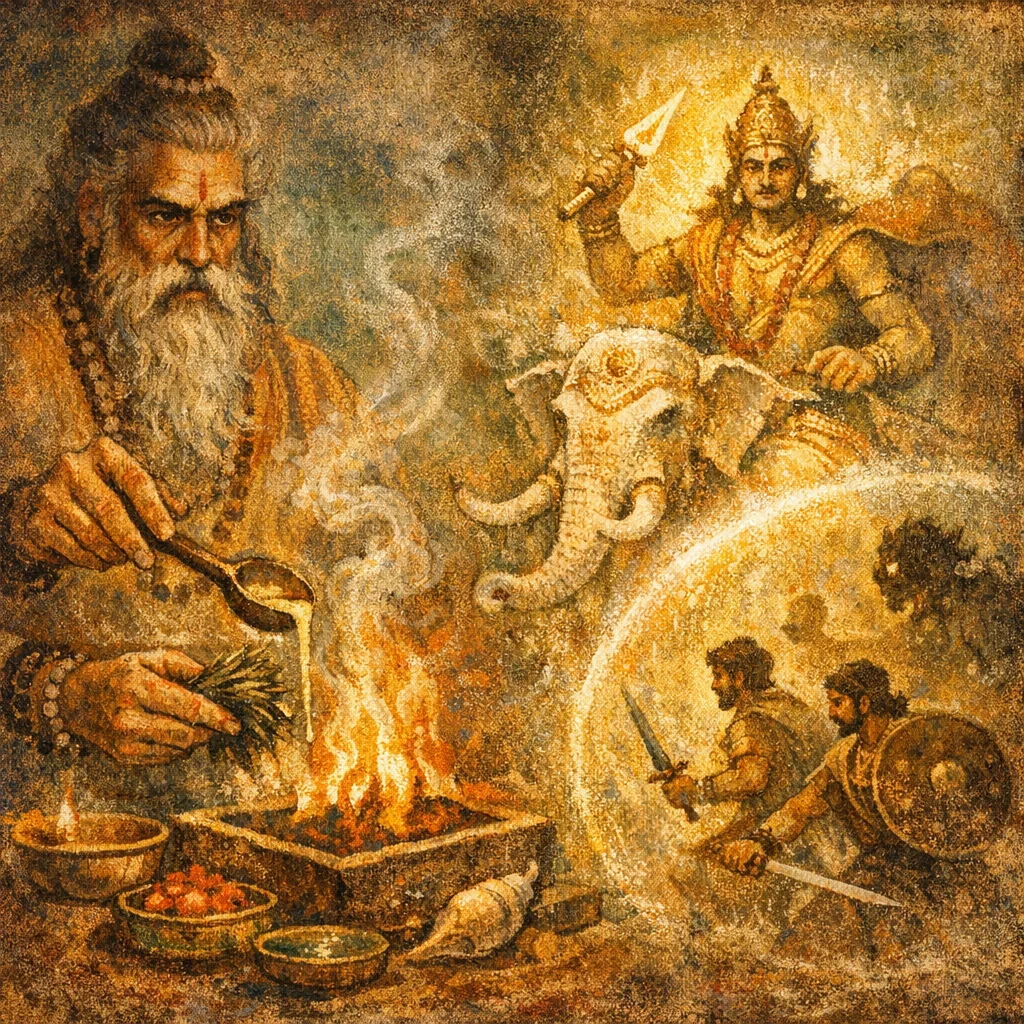
Sukta 26
Rishi: As in RV parallel tradition: attributed within Indra-hymn cycles (exact assignment varies by anukramaṇī for AV 20).
Devata: Indra (by RV correspondence of AV 20.26).
Chandas: Anuṣṭubh (by RV-style cadence; exact metrical tagging may vary).
Mantras
Mantra 1
योगेयोगे तवस्तरं वाजेवाजे हवामहे । सखाय इन्द्रमूतये
At every yoking, at every prize, we comrades call upon Indra, the mightier, for aid.
Mantra 2
आ घा गमद् यदि श्रवत् सहस्रिणीभिरूतिभिः । वाजेभिरुप नो हवम्
Hither, yea, let him come—if he but hear—with thousandfold succours; with winning strengths let him draw near unto our call.
Mantra 3
अनु प्रत्नस्यौकसो हुवे तुविप्रतिं नरम्। यं ते पूर्वं पिता हुवे
In accordance with the ancient seat I call the hero of mighty counterforce—him whom, in former time, thy father called.
Mantra 4
युञ्जन्ति ब्रध्नमरुषं चरन्तं परि तस्थुषः । रोचन्ते रोचना दिवि
They yoke the tawny, ruddy one that moves, while all that stand encompass him; the luminous realms shine forth in heaven.
Mantra 5
युञ्जन्त्यस्य काम्या हरी विपक्षसा रथे । शोणा धृष्णू नृवाहसा
They yoke for him the wish-granting pair of bays, wide-flanking, upon the car—ruddy, bold, man-bearing.
Mantra 6
केतुं कृण्वन्नकेतवे पेशो मर्या अपेशसे । समुषद्भिरजायथाः
Making a signal for the signless, fair form for the unadorned, O youth—together with the Dawns thou wast brought to birth.
Frequently Asked Questions
It is used to invoke Indra for recurring help—protection, strength, and success—especially at the start of an undertaking or when seeking a ‘winning outcome’ (vāja).
No. The text functions primarily as an invocation; it can be recited without substances. If desired, a simple offering such as ghee in a fire rite may accompany it, but it is optional.
‘Yoking’ (yoga) symbolizes mobilizing power for action, and the yoked bay horses (harī) depict Indra’s swift readiness—signaling that divine assistance is being actively brought to the caller.