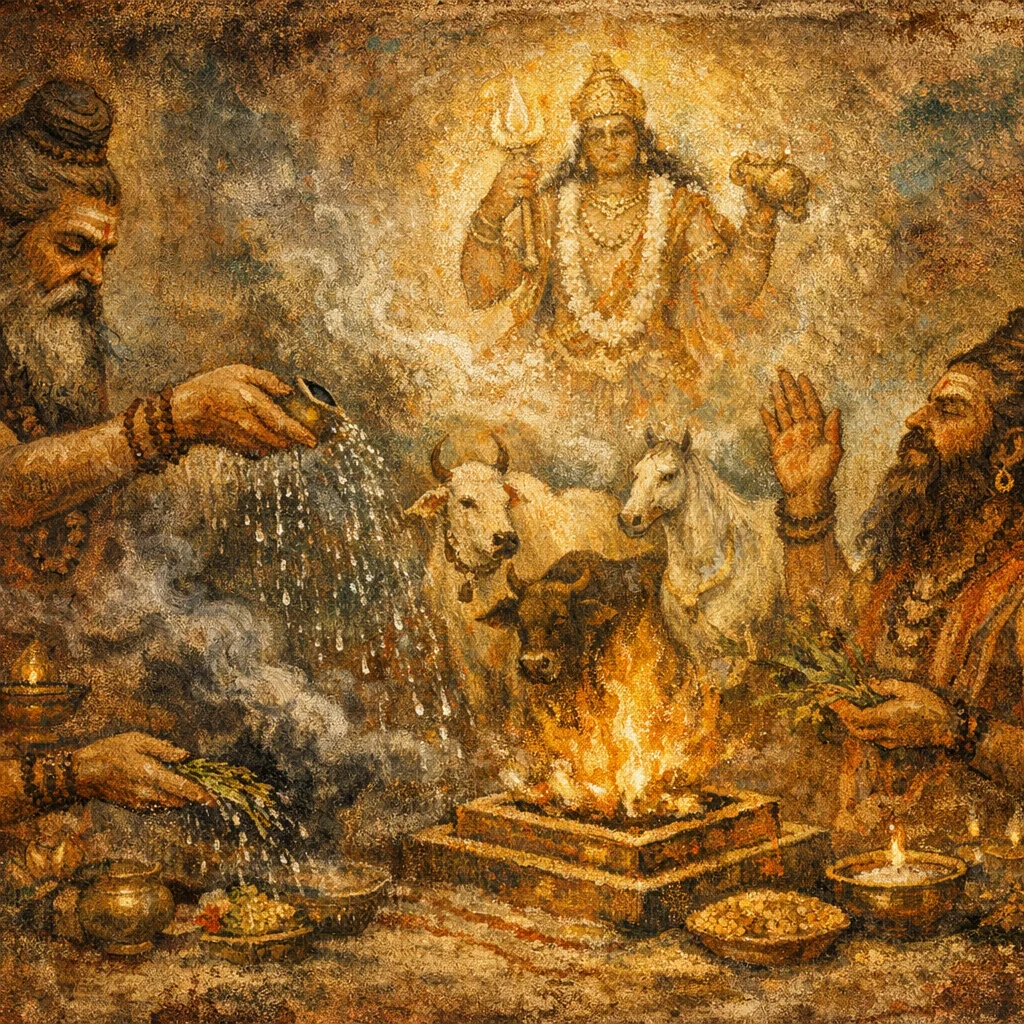
Sukta 25
Rishi: As in RV parallel (Indra prosperity hymn; RV-derived in AV 20)
Devata: Indra (with implicit Āpas in simile)
Chandas: Triṣṭubh (longer pādas; RV-style)
Mantras
Mantra 1
अश्वावति प्रथमो गोषु गच्छति सुप्रावीरिन्द्र मर्त्यस्तवोतिभिः । तमित् पृणक्षि वसुना भवीयसा सिन्धुमापो यथाभितो विचेतसः
Foremost in horse-wealth, foremost amid kine, the mortal fares on, O Indra, by thy succouring aids. Him verily thou fillest with ampler treasure, as the Waters from all sides fill the River, wide-working.
Mantra 2
आपो न देवीरुप यन्ति होत्रियमवः पश्यन्ति विततं यथा रजः । प्राचैर्देवासः प्र णयन्ति देवयुं ब्रह्मप्रियं जोषयन्ते वरा इव
As goddesses, the Waters draw near the Hotṛ; they look upon the aid spread forth, as on the wide expanse. With leaders in the van the Gods lead onward the god-devoted man, dear unto sacred prayer, and cherish him as wooers a chosen maid.
Mantra 3
अधि द्वयोरदधा उक्थ्यं१ वचो यतस्रुचा मिथुना या सपर्यतः । असंयत्तो व्रते ते क्षेति पुष्यति भद्रा शक्तिर्यजमानाय सुन्वते
Upon the twain thou hast set the laud-worthy word—those paired ones with well-guided ladles who do thee service. Unchecked within thine ordinance it dwelleth and it thriveth: auspicious power for the sacrificer who presseth.
Mantra 4
आदङ्गिराः प्रथमं दधिरे वय इद्धाग्नयः शम्या ये सुकृत्यया । सर्वं पणेः समविन्दन्त भोजनमश्वावन्तं गोमन्तमा पशुं नरः
Then the Angirases first established vital power; the kindled Fires, by the Śamyā, they who by well-wrought rite. All sustenance from the Paṇi they won back together—food rich in horses, rich in kine, yea, cattle besides—for men.
Mantra 5
यज्ञैरथर्वा प्रथमः पथस्तते ततः सूर्यो व्रतपा वेन आजनि । आ गा आजदुशना काव्यः सचा यमस्य जातममृतं यजामहे
By sacrifices Atharvan first stretched out the paths; thereafter the Sun, the guardian of ordinance—Vena—was born. Forth drove the Cows did Uśanā Kāvya, in fellowship: that deathlessness, born of Yama, we worship with oblation.
Mantra 6
बर्हिर्वा यत् स्वपत्याय वृज्यतेऽर्को वा श्लोकमाघोषते दिवि। ग्रावा यत्र वदति कारुरुक्थ्य१स्तस्येदिन्द्रो अभिपित्वेषु रण्यति
When sacred grass is strewn for rightful lordship, or when a hymn, a verse, is sounded forth in heaven; where the pressing-stone speaks and the Ukthya singer chants—thereat, even there, Indra rejoiceth amid the draughts.
Mantra 7
प्रोग्रां पीतिं वृष्ण इयर्मि सत्यां प्रयै सुतस्य हर्यश्व तुभ्यम्। इन्द्र धेनाभिरिह मादयस्व धीभिर्विश्वाभिः शच्या गृणानः
Forth send I the mighty, the true draught for the Bull—for thy delight, O tawny-horsed, of the pressed Soma. Indra, with streaming ‘cows’ here do thou be gladdened, while praised with every hymn, with Śacī at thy side.
Frequently Asked Questions
It is used for prosperity and eminence—especially gaining or maintaining first rank in horse-wealth, cattle-wealth, provisions, and social/political standing through Indra’s support.
The image teaches that true prosperity is not a one-time gain but a steady replenishment from many directions—like waters continuously filling and sustaining a riverbed.
In Vedic myth the Paṇi represent hoarding or withholding forces. By recalling how the Angirasas and the sacred fires recovered sustenance from them, the hymn frames present-day recovery of blocked wealth as ritually achievable.