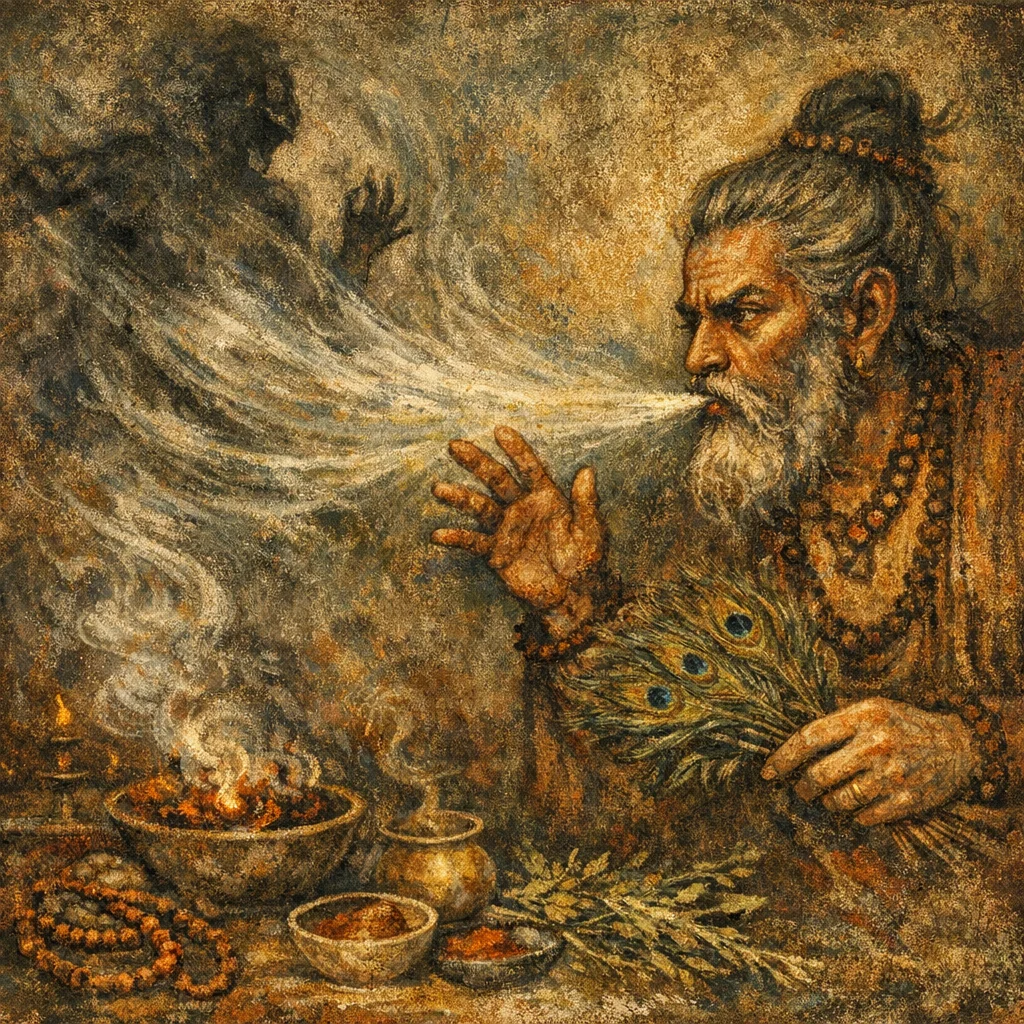
Sukta 20
Rishi: Atharvanic/Angirasa tradition (enemy-destroying hymns are typically attributed to Atharvan/Angiras lineages; specific r̥ṣi attribution depends on the Anukramaṇī).
Devata: Vāyu (as bearer of tapas/tejas used for punitive reversal)
Chandas: Anuṣṭubh (likely; to be confirmed against pada-count in the Saunaka metrical listing)
Mantras
Mantra 1
शत्रुनाशनम्। वायो यत् ते तपस्तेन तं प्रति तप यो३स्मान् द्वेष्टि यं वयं द्विष्मः
O Vāyu, with that ardent might of thine—thy tapas—do thou in turn scorch him, who hateth us, whom we ourselves do hate.
Mantra 2
वायो यत् ते हरस्तेन तं प्रति हर यो३स्मान् द्वेष्टि यं वयं द्विष्मः
O Vāyu, with that smiting power of thine—therewith smite him back in return—who hateth us, whom we ourselves do hate.
Mantra 3
वायो यत् तेऽर्चिस्तेन तं प्रत्यर्च यो३स्मान् द्वेष्टि यं वयं द्विष्मः
O Vāyu, with that flame of thine, shine thou back upon him—who hateth us, whom we do hate.
Mantra 4
वायो यत् ते शोचिस्तेन तं प्रति शोच यो३स्मान् द्वेष्टि यं वयं द्विष्मः
O Vāyu, with that flame of thine, scorch him in requital—who hateth us, whom we ourselves do hate.
Mantra 5
वायो यत् ते तेजस्तेन तमतेजसं कृणु यो३स्मान् द्वेष्टि यं वयं द्विष्मः
O Vāyu, with that splendour which is thine, thereby make him splendourless—who hateth us, whom we do hate.
Frequently Asked Questions
It is used to reverse active hatred or hostile intent by invoking Vāyu’s burning power (tapas/śociṣ) and by draining the adversary’s tejas (effective strength).
The refrain marks a formal reversal: it identifies the hostile agent and frames the rite as a return of harm to its source, rather than a general prayer for wellbeing.
In the verses provided, no substances are specified; it functions primarily as a spoken act of reversal centered on Vāyu’s tapas/tejas, though traditions may add simple breath and directional observances.