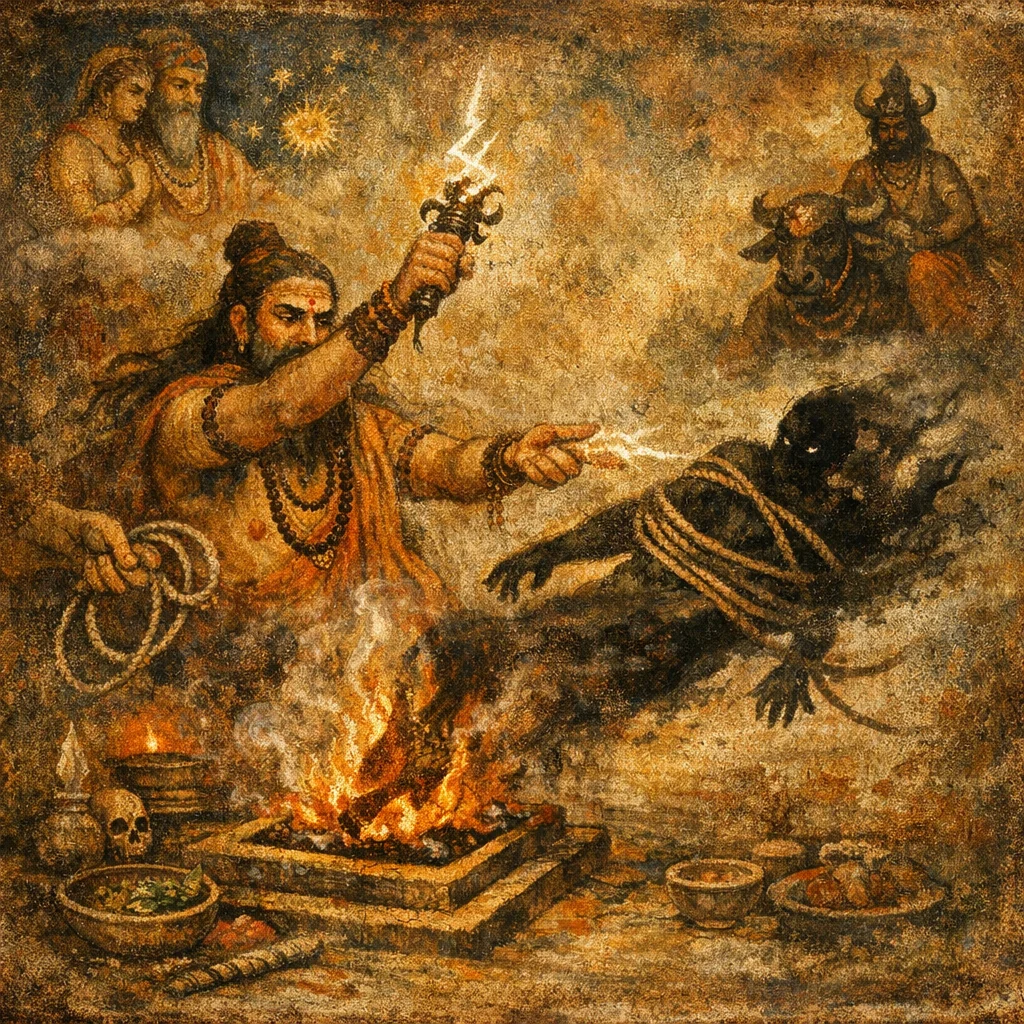
Sukta 12
Rishi: Atharvanic tradition (attribution varies by anukramaṇī; commonly classed under Atharvan/Āṅgirasa protective charms)
Devata: Dyāvāpr̥thivī and Antárikṣa (cosmic regions) with Vāta as guardian; also the personified Kṣetrasya Patnī (Field’s Lady)
Chandas: Tr̥ṣṭubh-like cadence (mixed/irregular in Atharvanic transmission; requires metrical verification against pada counts)
Mantras
Mantra 1
शत्रुनाशनम्। ५ सोम्यासः पितरः, ६ मरुतः, ७ यमसादनम्, ब्रह्म, ८ अग्निः। द्यावापृथिवी उर्व१न्तरिक्षं क्षेत्रस्य पत्न्युरुगायोऽद्भुतः । उतान्तरिक्षमुरु वातगोपं त इह तप्यन्तां मयि तप्यमाने
Heaven and Earth, the broad Mid-air; the Field’s Lady, wide-ranging, wondrous: yea, the ample atmosphere, guarded by the Wind—let those (powers) here scorch (the foes), when I am the one assailed.
Mantra 2
इदं देवाः शृणुत ये यज्ञिया स्थ भरद्वाजो मह्यमुक्थानि शंसति । पाशे स बद्धो दुरिते नि युज्यतां यो अस्माकं मन इदं हिनस्ति
Hear this, O Gods, ye who are meet for sacrifice: Bharadvāja for my behoof proclaimeth solemn praises. In the noose—bound—let him be fastened down in evil plight, whoso assaileth this our mind.
Mantra 3
इदमिन्द्र शृणुहि सोमप यत् त्वा हृदा शोचता जोहवीमि । वृश्चामि तं कुलिशेनेव वृक्षं यो अस्माकं मन इदं हिनस्ति
Hear this, O Indra, Soma-drinker: for thee, with heart aflame in sorrow, I incessantly invoke. I hew him down, as with the thunderbolt an axe felleth a tree—him who assaileth this our mind.
Mantra 4
अशीतिभिस्तिसृभिः सामगेभिरादित्येभिर्वसुभिरङ्गिरोभिः । इष्टापूर्तमवतु नः पितॄणामामुं ददे हरसा दैव्येन
With the Eighty, with the Three, with Sāman-singers; with the Ādityas, with the Vasus, with the Aṅgirases—may the merit of sacrifice and of pious gift protect us. Unto the Fathers’ yonder one I assign it, with divine impetuous might.
Mantra 5
द्यावापृथिवी अनु मा दीधीथां विश्वे देवासो अनु मा रभध्वम्। अङ्गिरसः पितरः सोम्यासः पापमार्छत्वपकामस्य कर्ता
O Heaven and Earth, in due course shine ye upon me; all ye Gods, in due course lay hold on me. Ye Angirases, ye Fathers, Soma-linked: let the evil pass away—unto the maker of harm, the ill-wisher’s agent.
Mantra 6
अतीव यो मरुतो मन्यते नो ब्रह्म वा यो निन्दिषत् क्रियमाणम्। तपूंषि तस्मै वृजिनानि सन्तु ब्रह्मद्विषं द्यौरभिसंतपाति
Whoso, O Maruts, beyond all measure deemeth ill of us, or whoso revileth the holy spell while it is being wrought,—for him let burnings and misfortunes be: Heaven on the hater of the Brahman shall scorch down fiercely.
Mantra 7
सप्त प्राणानष्टौ मन्यस्तांस्ते वृश्चामि ब्रह्मणा । अया यमस्य सादनमग्निदूतो अरंकृतः
Seven life-breaths, and eight—those, O Wrath, from thee I sever with the holy spell. By this, unto Yama’s dwelling, with Agni as envoy, the way is duly made ready.
Mantra 8
आ दधामि ते पदं समिद्धे जातवेदसि । अग्निः शरीरं वेवेष्ट्वसुं वागपि गछतु
I set for thee thy footing in Jātavedas duly kindled. Let Agni fold the body round; let breath, let Speech also, come again.
Frequently Asked Questions
It is used to counter hostile magic or affliction, protect the practitioner’s territory (kṣetra), and—by the end—restore strength, breath, and speech to someone in danger of collapse.
Because the hymn treats them as a vast protective enclosure: by placing the person inside that cosmic ‘fence,’ hostile forces are constrained and pushed back toward their source.
Indra is invoked to strike down the mind-harming attacker (a decisive counter-blow), while Agni Jātavedas is invoked to stabilize and revive the victim by ‘wrapping’ the body and calling back breath (asu) and speech (vāk).