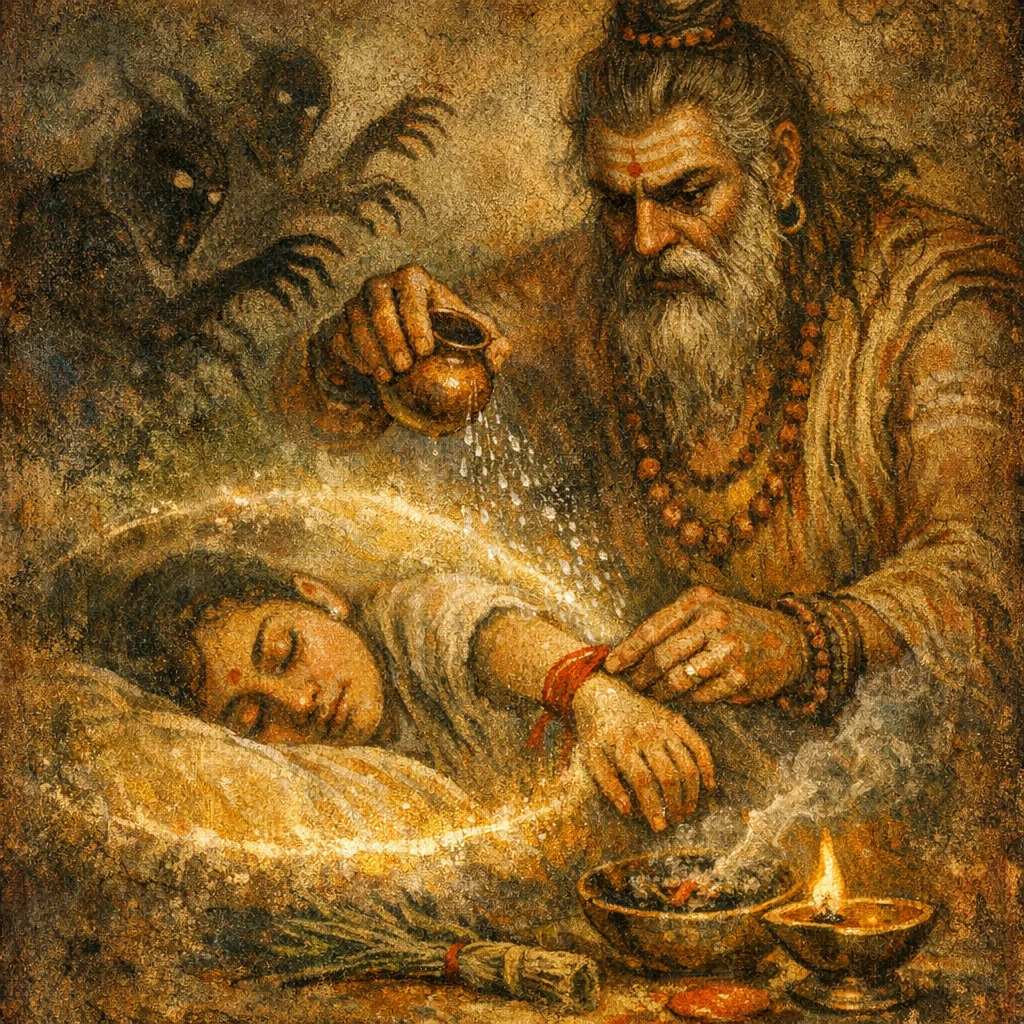
Sukta 56
Rishi: Atharvanic tradition (Book 19; duḥsvapna-śānti collection)
Devata: Personified Svapna (Dream) / Duḥsvapna as afflicting agent; with Yama as contextual authority
Chandas: Triṣṭubh-like (longer pādas; late Atharvanic style)
Mantras
Mantra 1
दुःष्वप्ननाशनम्। यमस्य लोकादध्या बभूविथ प्रमदा मर्त्यान् प्र युनक्षि धीरः । एकाकिना सरथं यासि विद्वान्त्स्वप्नं मिमानो असुरस्य योनौ
Destroyer of evil dream: from Yama’s realm hast thou arisen; beguiling, thou dost yoke mortals onward—the wise one. Alone, with chariot, thou goest, the knowing one, meting out dream within the Asura’s womb, the source.
Mantra 2
बन्धस्त्वाग्रे विश्वचया अपश्यत् पुरा रात्र्या जनितोरेके अह्नि । ततः स्वप्नेदमध्या बभूविथ भिषग्भ्यो रूपमपगूहमानः
The Binding One first beheld thee, with vision ranging everywhere, of old—before Night—within the single day of the Two Begetters. Thence, in Dream, didst thou here come into being, hiding thy form away from the physicians.
Mantra 3
बृहद्गावासुरेभ्योऽधि देवानुपावर्तत महिमानमिच्छन्। तस्मै स्वप्नाय दधुराधिपत्यं त्रयस्त्रिंशासः स्वरानशानाः
The Great-Cows turned the Gods back over from the Asuras, seeking majesty. To Dream they gave lordship—the Thirty-and-Three, possessors of the heavenly light.
Mantra 4
नैतां विदुः पितरो नोत देवा येषां जल्पिश्चरत्यन्तरेदम्। त्रिते स्वप्नमदधुराप्त्ये नर आदित्यासो वरुणेनानुशिष्टाः
Neither Fathers know this, nor yet the Gods—this muttering that wanders in the interval within this world. In Trita Āptya they set Dream, the Ādityas, as strong ones, schooled by Varuṇa.
Mantra 5
यस्य क्रूरमभजन्त दुष्कृतोऽस्वप्नेन सुकृतः पुण्यमायुः । स्वर्मदसि परमेण बन्धुना तप्यमानस्य मनसोऽधि जज्ञिषे
Whom the evil-doers have allotted cruelty, him the well-doers—by dreamlessness—(allot) holy life. Thou exultest in the heavenly light by the highest bond; from upon the mind of him that is tormented wast thou brought to birth.
Mantra 6
विद्म ते सर्वाः परिजाः पुरस्ताद् विद्म स्वप्न यो अधिपा इहा ते । यशश्विनो नो यशसेह पाह्याराद् द्विषेभिरप याहि दूरम्
We know all thy modes of birth from of old; we know, O Dream, who is thy lord here. Guard us—fame-possessing—for our renown in this place; from the haters, close at hand, go thou away—far hence!
Frequently Asked Questions
It treats duḥsvapna as a real afflicting power—Dream personified—linked with Yama’s realm and a demonic source, able to mislead and frighten sleepers unless ritually constrained.
They function as regulators and a containment-locus: Dream is ‘set’ in Trita Āptya under Varuṇa’s ordinance, meaning the hymn relocates and limits Dream’s harmful roaming.
The reciter claims knowledge of Dream’s origins and lordship, asks for protection of social standing (fame/renown), and commands Dream to depart far away—especially away from nearby ‘haters’ who may work harm through ominous dreams.