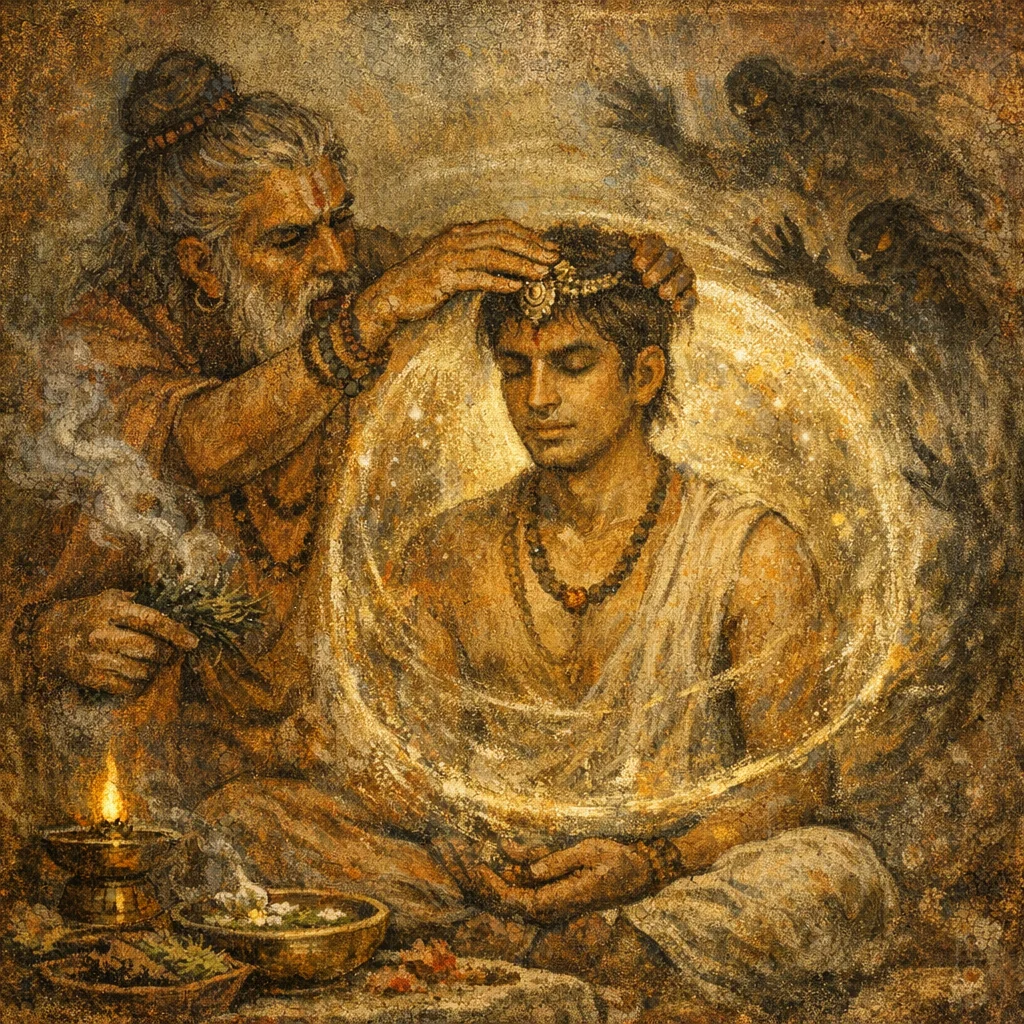
Sukta 20
Rishi: Atharvanic tradition (protective hymn; r̥ṣi attribution varies in ancillary lists)
Devata: Sarvadevatā with emphasis on Pūṣan as guardian against Mṛtyu
Chandas: Mixed/Anuṣṭubh-like cadence with extended pādas (late Atharvanic style)
Mantras
Mantra 1
सुरक्षा। अप न्यधुः पौरुषेयं वधं यमिन्द्राग्नी धाता सविता बृहस्पतिः । सोमो राजा वरुणो अश्विना यमः पूषास्मान् परि पातु मृत्योः
A sure defence have they set up, thrusting away the man-wrought stroke of slaughter: Indra with Agni, Dhātṛ, Savitar, and Bṛhaspati; King Soma, Varuṇa, the Aśvins, Yama—let Pūṣan guard us round about from Death.
Mantra 2
यानि चकार भुवनस्य यस्पतिः प्रजापतिर्मातरिश्वा प्रजाभ्यः । प्रदिशो यानि वसते दिशश्च तानि मे वर्माणि बहुलानि सन्तु
What armours he hath made for creatures—the Lord of the world, Prajāpati, and Mātariśvan—for offspring; what dwell in the fore-quarters and in the quarters of space: let those be mine, protections many and abundant.
Mantra 3
यत् ते तनूष्वनह्यन्त देवा द्युराजयो देहिनः । इन्द्रो यच्चक्रे वर्म तदस्मान् पातु विश्वतः
What on thy bodies the Gods, the sky-swaying, bound fast for the embodied; what armour Indra forged—let that protect us from all sides.
Mantra 4
वर्म मे द्यावापृथिवी वर्माहर्वर्म सूर्यः । वर्म मे विश्वे देवाः क्रन् मा मा प्रापत् प्रतीचिका
Mine be the armour Heaven and Earth; armour be Day, armour the Sun. Mine be the armour which all the Gods have fashioned: let not the counter-coming evil reach me—no, let it not strike.
Frequently Asked Questions
It is used to establish a protective ‘armor’ around a person—repelling human-caused harm, blocking hostile forces, and especially guarding against the approach of untimely death.
Pūṣan is the guardian of paths and safe passage; in this hymn he is asked to encircle the person and keep Death from gaining access, acting as the focused protector within the All-Gods’ collective shield.
No. The primary ‘substance’ is the spoken varman itself. If desired, a simple protective thread or cloth amulet can be charged by recitation and worn as a reminder and support for the protective intention.