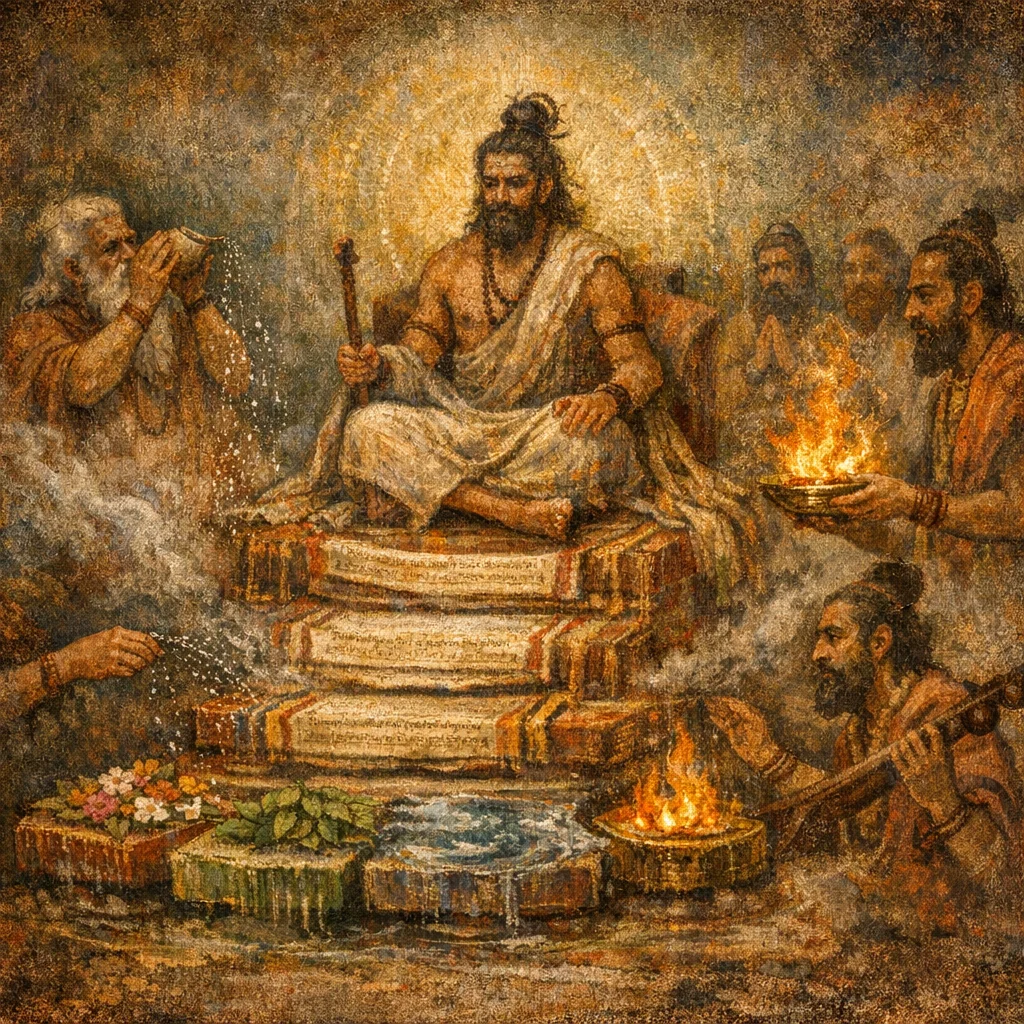
Sukta 3
Rishi: Traditionally associated with speculative Atharvanic seers in the Vrātya/cosmological stratum (exact r̥ṣi assignment varies by anukramaṇī traditions).
Devata: Kāla/Ṛtu (Time/Seasons) or the cosmic person/year as the implicit subject.
Chandas: Mixed/prose-leaning triṣṭubh-jagatī tendencies in this section; not a strict RV-style metrical hymn.
Mantras
Mantra 1
स संवत्सरमूर्ध्वोऽतिष्ठत् तं देवा अब्रुवन् व्रात्य किं नु तिष्ठसीति
He stood upright for a year. The Gods addressed him: ‘O Vratya, wherefore standest thou thus?’
Mantra 2
सोऽब्रवीदासन्दीं मे सं भरन्त्विति
He said: ‘Let them bring together for me a seat.’
Mantra 3
तस्मै व्रात्यायासन्दीं समभरन्
For him, for the Vratya, they brought together a seat.
Mantra 4
तस्या ग्रीष्मश्च वसन्तश्च द्वौ पादावास्तां शरच्च वर्षाश्च द्वौ
Of her, Summer and Spring stood as the two feet; and Autumn and the Rains stood as the other two.
Mantra 5
बृहच्च रथंतरं चानूच्ये३ आस्तां यज्ञायज्ञियं च वामदेव्यं च तिरश्च्ये
Bṛhat and Rathantara stood in the lengthwise line; Yajñāyajñiya and Vāmadevya stood in the crosswise.
Mantra 6
ऋचः प्राञ्चस्तन्तवो यजूंषि तिर्यञ्चः
The Ṛc-verses are the forward-running threads; the Yajus-formulas are the crosswise.
Mantra 7
वेद आस्तरणं ब्रह्मोपबर्हणम्
The Veda is the spreading-bedding; the Brahman is the bolster.
Mantra 8
सामासाद उद्गीथोऽपश्रयः
The Sāman is the seat; the Ud्गītha is the stay and refuge.
Mantra 9
तामासन्दीं व्रात्य आरोहत्
Upon that seat-bench the Vrātya mounted.
Mantra 10
तस्य देवजनाः परिष्कन्दा आसन्त्संकल्पाः प्रहाय्या३ विश्वानि भूतान्युपसदः
His were the divine peoples as encircling guards; his purposes were sent forth; all beings were his sitters-near, his attendants.
Mantra 11
विश्वान्येवास्य भूतान्युपसदो भवन्ति य एवं वेद
All beings, even so, become his attendants—whoso thus hath knowledge.
Frequently Asked Questions
It ritually establishes a central authority (the Vrātya) by seating him on the āsandī, while also teaching that the seasons form the supports of the cosmic year-body. The result is stability in society and in seasonal order.
It is a cosmological image: the year or cosmic person stands upon the seasons. By naming them as supports, the hymn affirms that prosperity depends on the seasons being in correct order (ṛtu).
Primarily it is a śānti (stabilizing) and sovereignty-installation hymn: it legitimizes authority and aligns communal life with cosmic timing. Any ‘benefit’ is expected to come through restored order rather than a single medicinal substance.