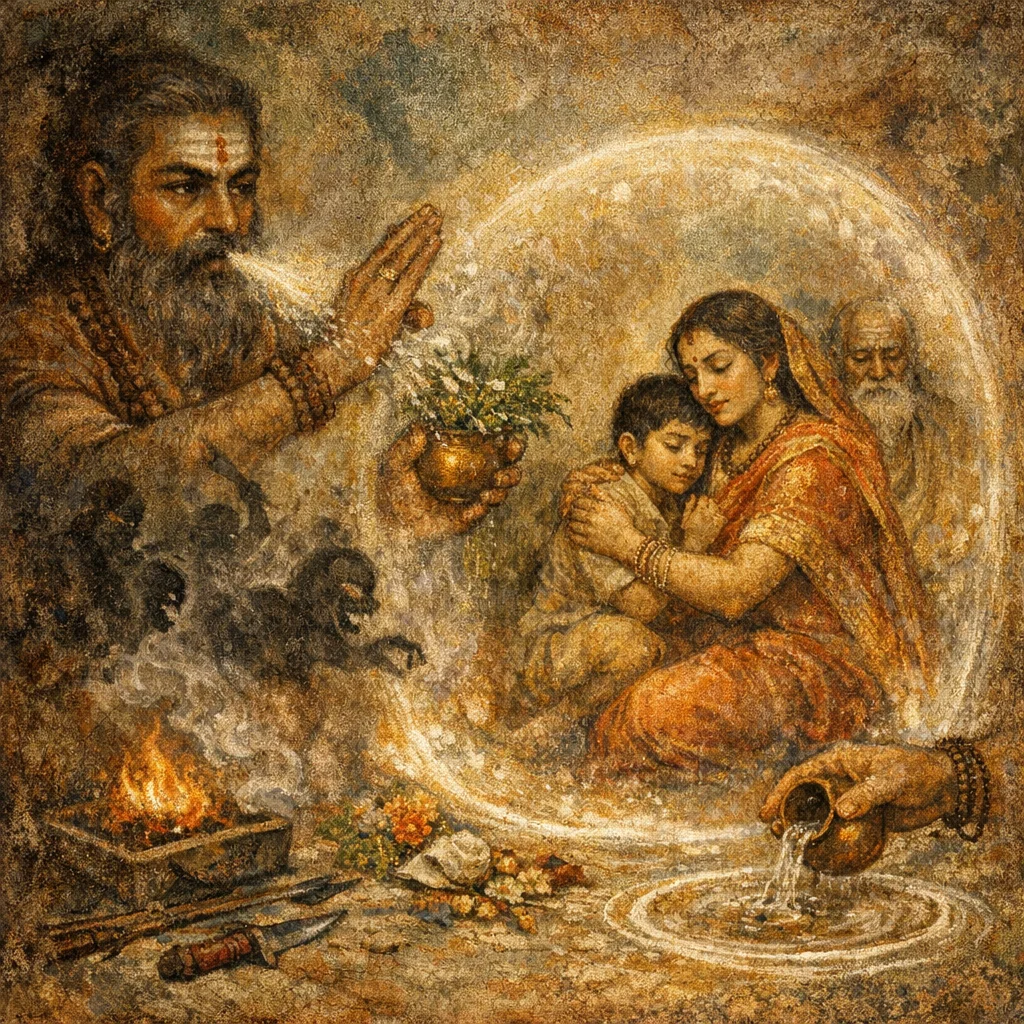
Sukta 26
Rishi: Atharvanic tradition (seer attribution varies by anukramaṇī for the surrounding hymn)
Devata: A propitiated protective/healing power (often addressed as a benevolent agent capable of both expulsion and grace; specific devatā depends on the hymn’s heading in the anukramaṇī)
Chandas: Anuṣṭubh-like cadence (short imperative cola; exact metrical classification depends on pada-counting in the full hymn context)
Mantras
Mantra 1
शर्मप्राप्तिः। आरे३सावस्मदस्तु हेतिर्देवासो असत्। आरे अश्मा यमस्यथ
Far from us be that missile: O Gods, so be it. Far off be the stone of Yama thereafter.
Mantra 2
सखासावस्मभ्यमस्तु रातिः सखेन्द्रो भगः सविता चित्रराधाः
May that bounty come down to us; as friend be Indra, as friend be Bhaga, and Savitar of manifold riches.
Mantra 3
यूयं नः प्रवतो नपान्मरुतः सूर्यत्वचसः । शर्म यच्छाथ सप्रथाः
Ye, O Maruts, offspring (of the heights), sun-skinned, from the slopes—grant unto us shelter, wide-extended.
Mantra 4
सुषूदत मृडत मृडया नस्तनूभ्यो मयस्तोकेभ्यस्कृधि
Drive thou our harms far off; be gracious, be gracious unto us: for our bodies make thou welfare, and for our children establish bliss.
Frequently Asked Questions
For protection: it sends away hostile harm and death’s reach, and then asks for bodily well-being and safety/prosperity of children in the household.
Yama represents the death-principle; the “stone” (aśman) functions as a symbol of fatal strike or death’s claim, which the mantra pushes far away (āre).
No. In the supplied verses it functions primarily as a spoken charm; optional simple acts like sprinkling clean water or symbolically setting aside a stone may accompany recitation in some traditions.